Module #1 - Introduction
The Nature of Child Development (introduction A)
To better care for children, we need to examine:
areas in which children’s lives need to be improved
the roles of resilience and social policy in development
Development is the pattern of movement or change that begins at conception and continues through the life span (growth and decline, but we focus on conception through adolescence)
Improving the lives of children
some topics of contemporary concern:
health and well-being
parenting and education
checking on both the child and the parent - how one affects another
sociocultural contexts and diversity
Resilience, Social Policy, and Children’s Development
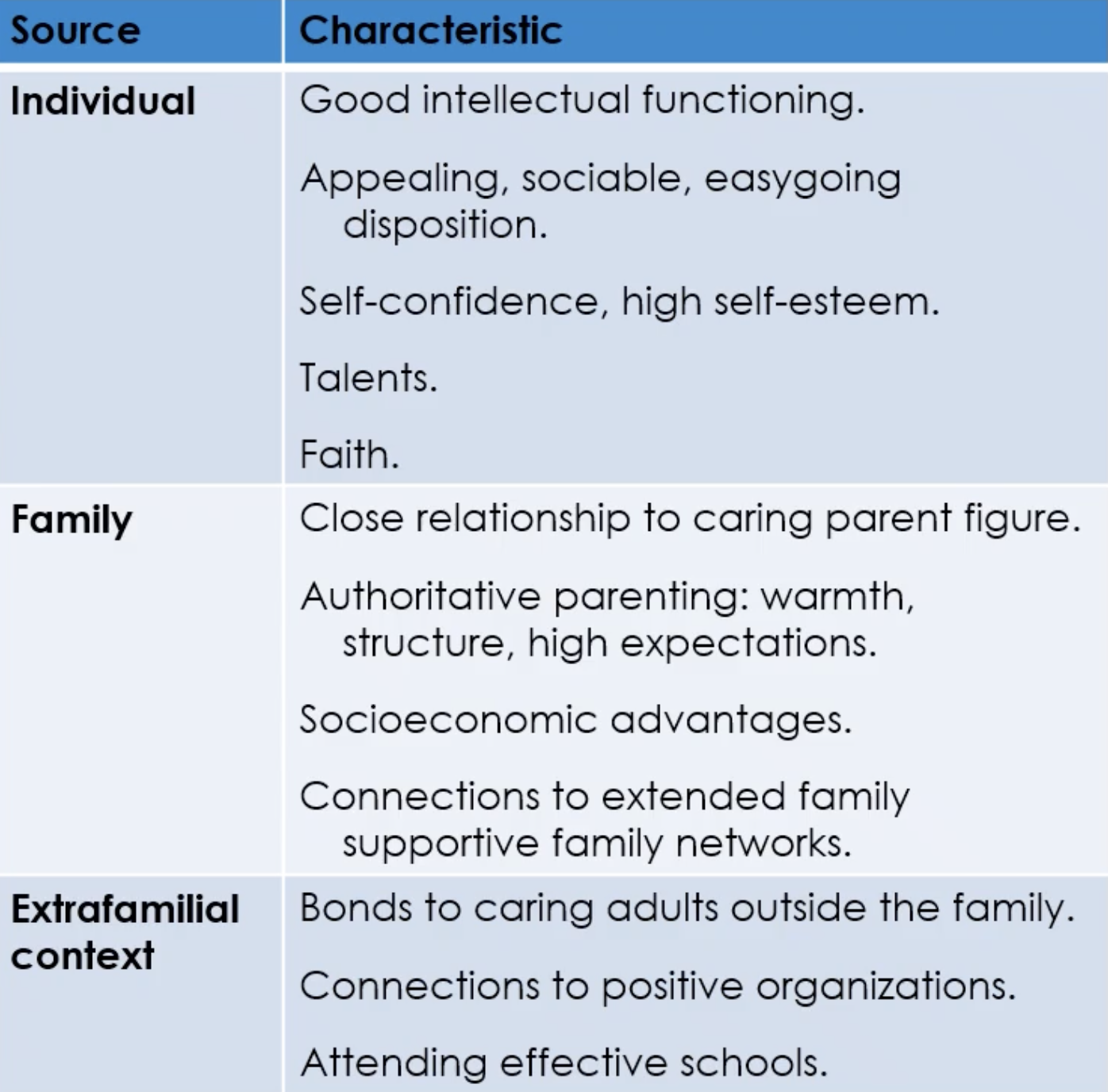
resilience is exemplified by children who develop confidence in their abilities despite serious obstacles
how much will individuals fight
Characteristics of Resilient Children and Their Contexts:
Social policy: governments course of action designed to promote the welfare of its citizens
developmental psychologists and other researchers seek ways to help families living in poverty improve. their well-being
Developmental Processes, Periods, and Issues
psychologists who study development are drawn to both our shared characteristics and those that make us unique
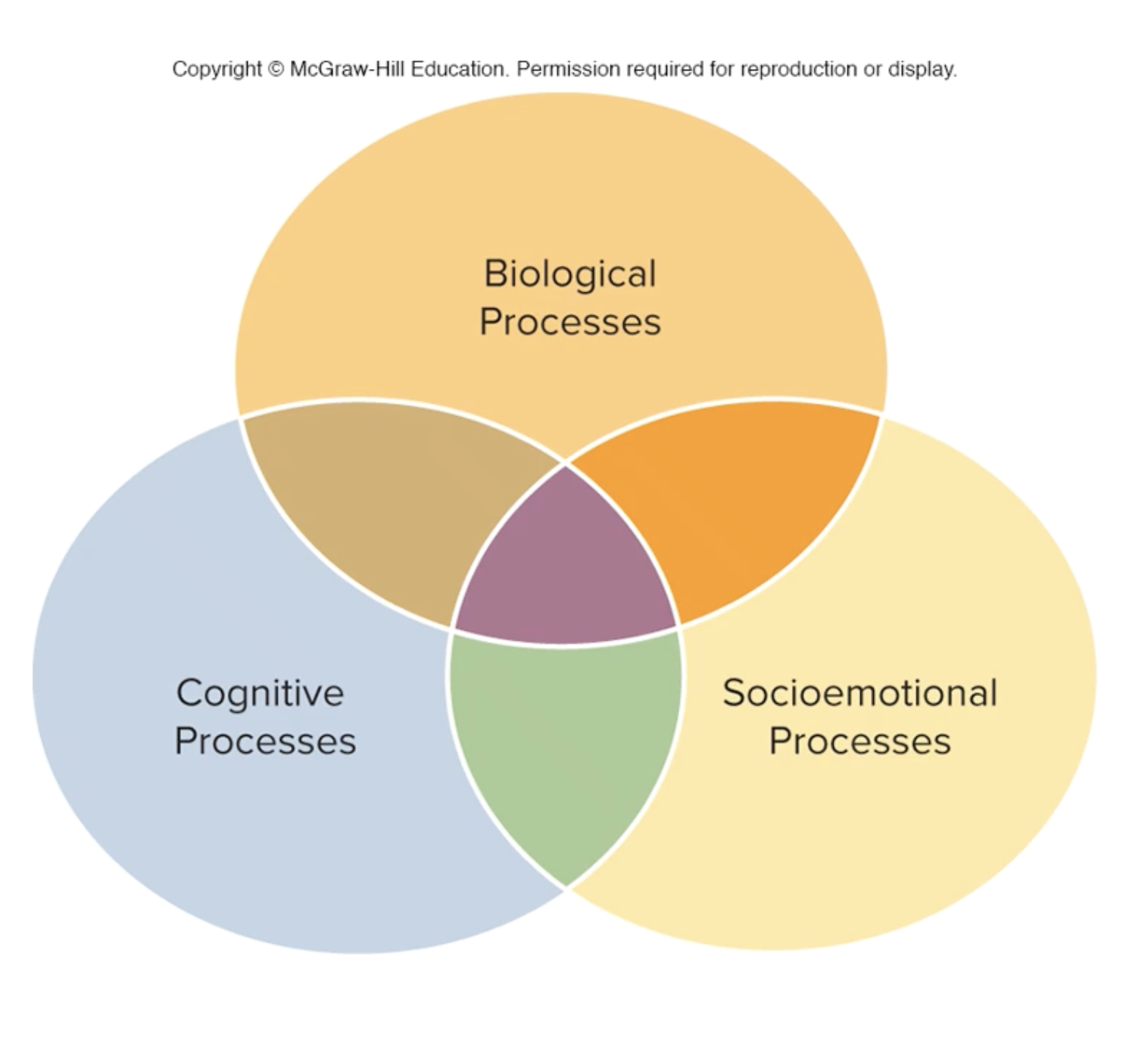
Biological processes: height, weight, and motor skills (change in the body)
Cognitive processes: two-word sentences and solving a puzzle (change in thought and language)
Socioemotional processes: smiling in reponses to a parent’s touch (how one interacts with the world)
Changes in development are the result of Biological, Cognitive, and socioemotional processes
Periods of Development:
Prenatal period: the time from conception to birth, roughly 9 months
Infancy: from birth to 18-24 months of age
Early childhood: the end of infancy to about 5-6 years of age (learn to be self sufficient)
Middle and late childhood: 6-11 years (elementary school years, becomes more exposed to world. Self control increases)
Adolescence: a period of transition from childhood to early adulthood. from 10 or 12 to about 18 or 19 (seeking independence outside of the family)
The Nature of Child Development (Introduction B)
Cohort Effects
A cohort is a group of people born at a similar point in history who share similar experiences as a result
Cohort effects: effects due to a person’s time of birth, era, or generation but not to actual age
ex. baby boomers, millenials, gen Z
share similar experiences with those born around the same time
people who experienced 9/11 as adults have a bigger impact on their lives than those who were infants at the time
Issues in Development
Nature/Nurture Issue
Nature: Traits/characteristics based on genetics
Nurture: Traits/characteristics based on environment
Both work together
Continuity/Discontinuity Issue
Continuity: development is a gradual/continuous change (quantitative change: height, weight, size of vocab)
Discontinuity: development is (organismic, qualitative: emergence of new phenomenon)
Early/Later experience Issue
Early: keys to determining development (if someone develops early,
Late: keys to determining development
The Science of Child Development
Child development as a science:
how parents nurture children
the ways in which children’s thinking develops over time
whether mentoring can improve children’s achievement
it is the way in these topics are studied that makes the approach scientific
The Importance of Research
Scientific research is objective, systemic, and testable
the scientific method used by researchers is a four step process:
conceptualize a process or problem to be studied
collect research information (data)
analyze data
draw conclusions
Theory: interrelated, coherent set of ideas that helps to explain and make predictions
Hypothesis: a specific, testable assumption or prediction
if ____, then ____, because____
can use hypothesis to create theorys
Theories of Child Development: Psychoanalytic Theories #1:
psychanalytic theories describe development as primarily unconscious (beyond awareness) and heavily colored by emotion
Sigmund Freud
Erik Erikson
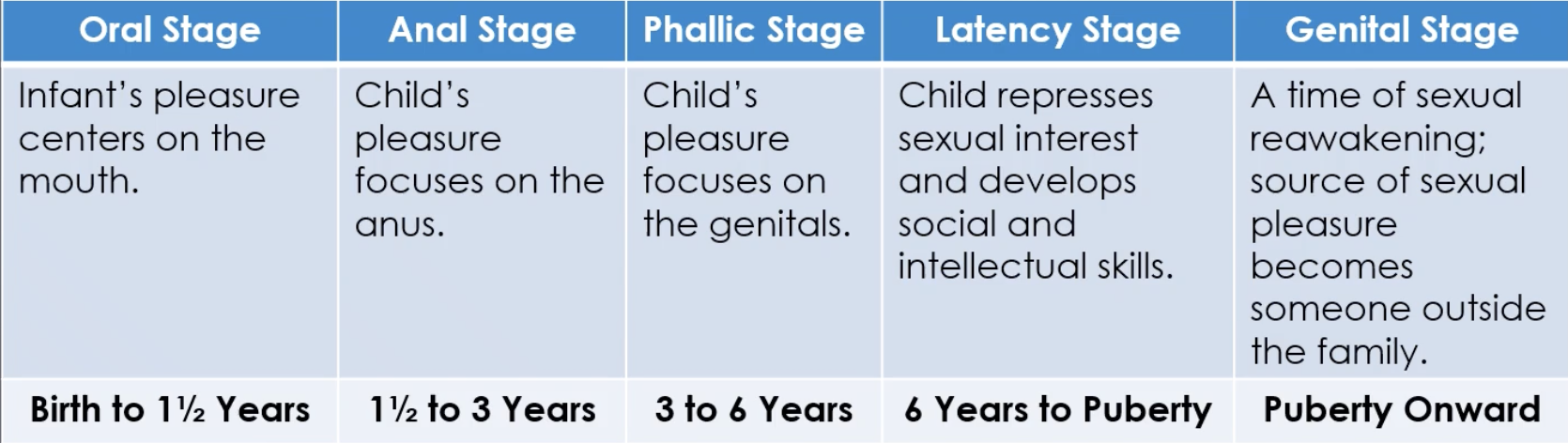
Sigmund Freud (1856-1939) envisioned five stages of psychosexual development: oral, anal, phallic, latency, and genital
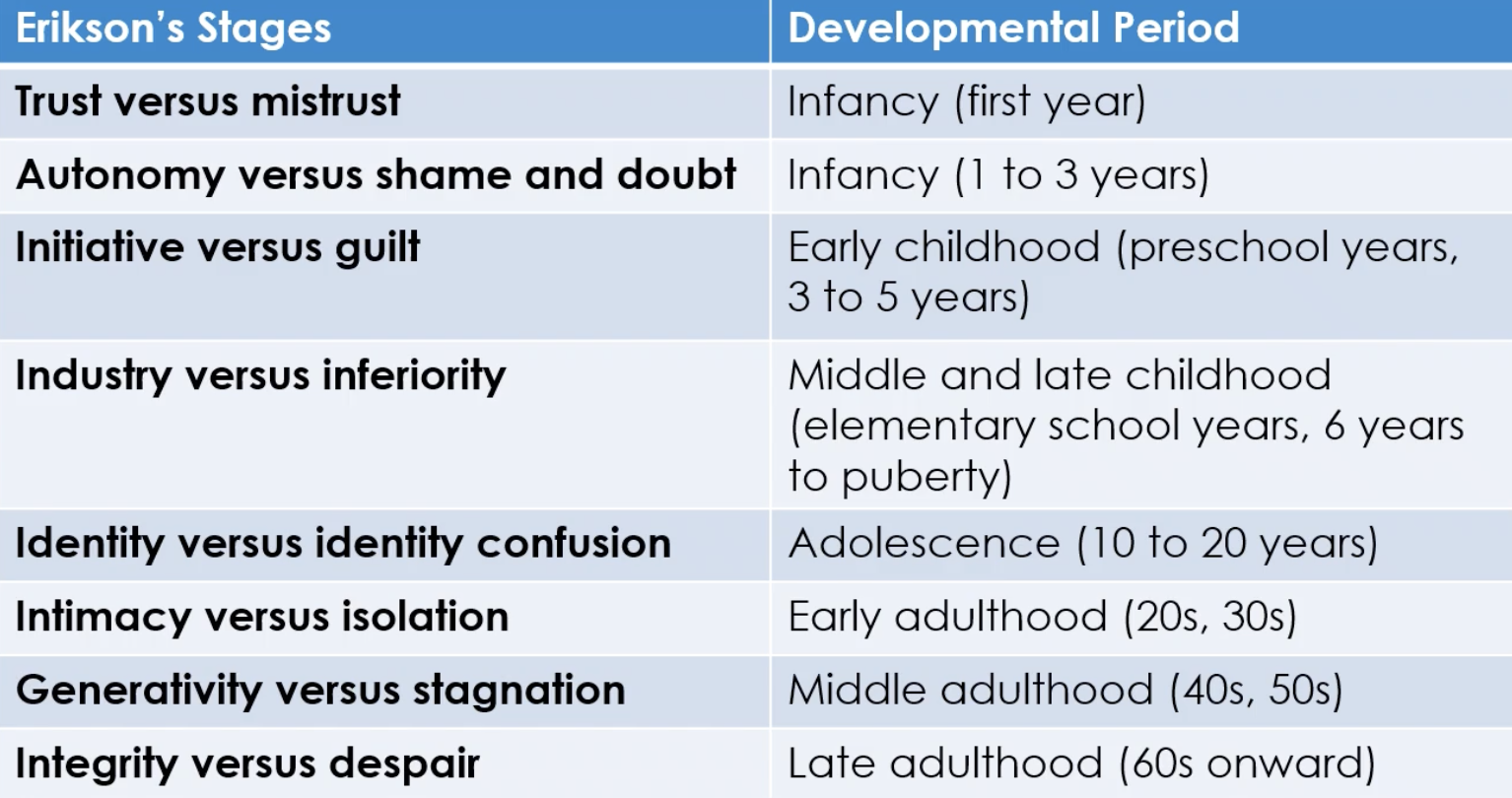
Erik Erikson (1902-1994) said we develop in psychosocial rather than psychosexual stages
Theories of Child Development: Cognitive Theories (Introduction C)
Cognitive theories emphasize conscious thought
Piaget
Vygotsky
Information Processing
Theories of Child Development: Cognitive Theories
among these is the cognitive developmental theory of Jean Piaget (1896-1980)
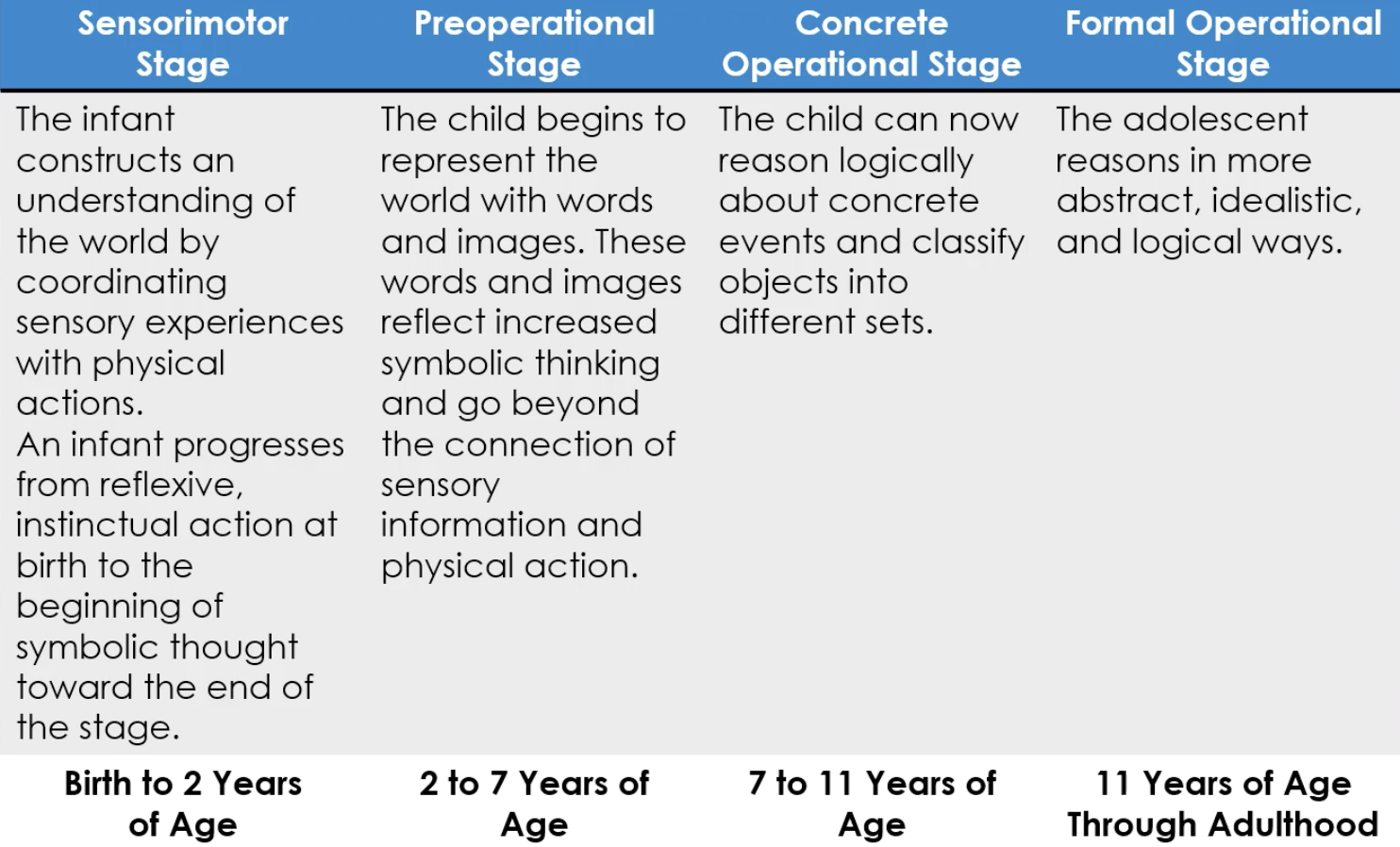
Lev Vygotsky (1896-1945) also argued that children actively construct their knowledge
with the advent of computers, psychologists began to draw analogies between computer hardware and the brain, and between computer software and cognition (information processing)
helps with scaffolding of child’s brain
Theories of Child Development:Social Cognitive Theories
behaviorism holds that we can study scientifically only what can be directly observed and measured
Pavlov
Skinner
Bandura
Theories of Child Development: Behavioral and Social Cognitive Theories
in the early 1900’s, Ivan Pavlov discovered the principle of classical conditioning: a neutral stimulus produces a response originally produced by another stimulus
B.F. Skinner argued that a second type of conditioning — operant conditioning — accounts for other types of behavior
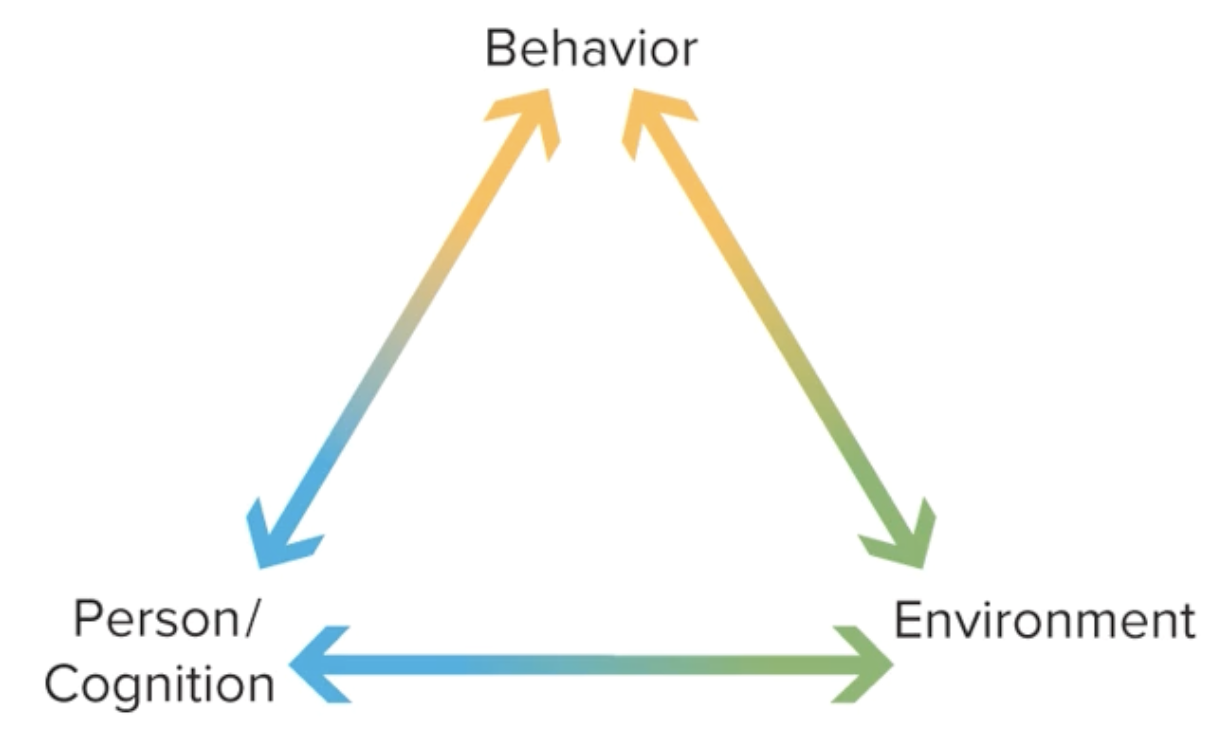
Social cognitive theory: behavior, environment, and cognition are the key factors in development
Albert Bandura (1925) is the leading architect
Theories of Child Development: Ethological Theory
ethology: a field that stresses that behavior is strongly influenced by biology, is tied to evolution, and is characterized by critical or sensitive periods
John Bowlby
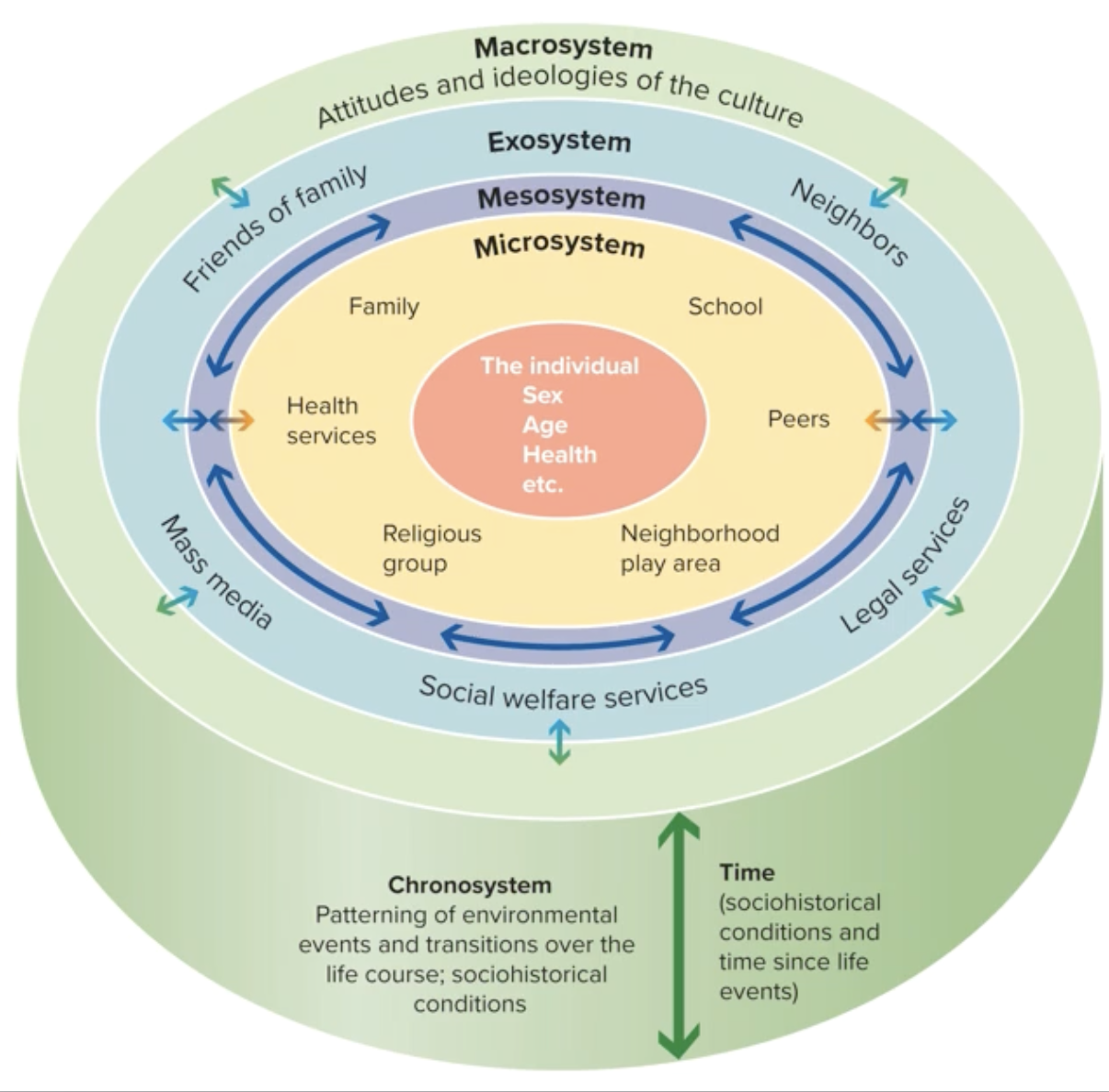
Ecology theory emphasizes environmental factors
one such theory significant to children’s development was proposed by Urie Bronfenbrenner (1917-2005)
Bronfenbrenner’s ecological theory: development reflects the influence of five environmental systems
Research Methods (Introduction D)
Research Methods for Collecting Data
observation: systemic observation takes place in the laboratory and in the everyday world
laboratory: a controlled setting where many complex factors of the “real world” have been removed
Naturalistic Observation: observing behavior in real-world setting with no effort to manipulate the situation
Surveys (or questionnaires) and interviews are conducted in person, over the phone, and online
Standardized test: a test with uniform procedures for administration and scoring
case study: an in-depth look at a single individual
physiological measures include:
blood samples, showing the blood levels of certain hormones, neuroimaging (especially fMRI)
Research Designs
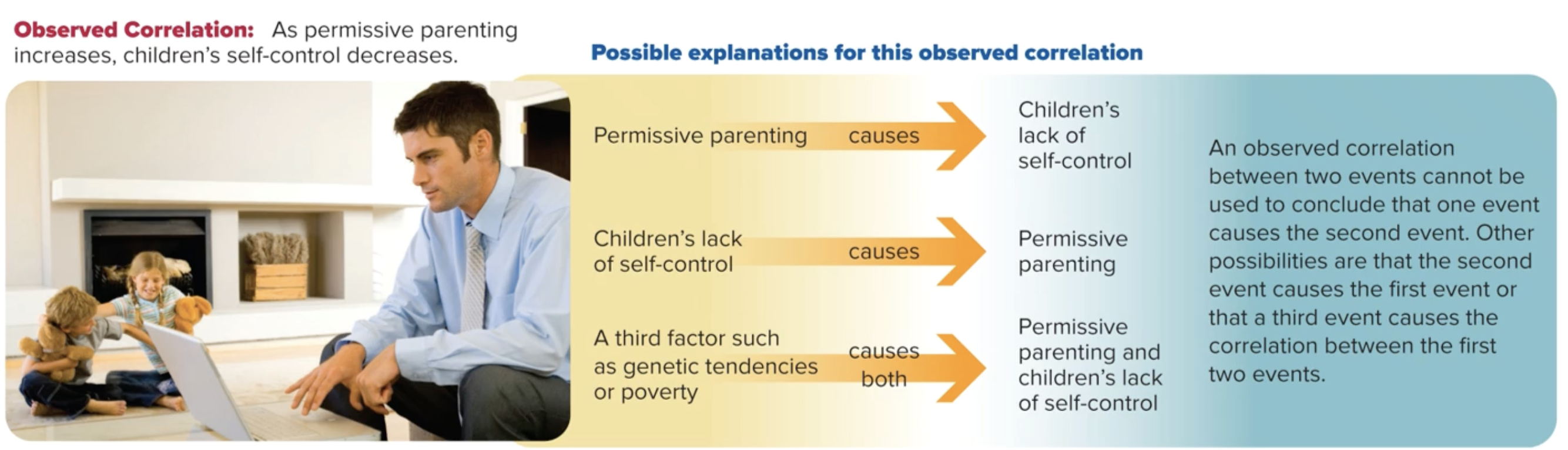
Descriptive research: aims to obsesrve and record behavior; cannot prove cause/why
correlational research: aims to describe the strength of the relationship between two or more events or characteristics
Experiment: a carefully regulated procedure in which one or more of the factors believed to influence the behavior being studied are manipulated while all other factors are held constant
independent variable is the manipulated factor
dependent variable is a factor that can change in response to changes in the independent variable
experimental group is a group whose experience is manipulated
control group is a comparison group that is treated the same way except for the manipulated factor (independent variable)
Research Methods for Collecting Data: Time Span of Research
Cross-Sectional approach: a research strategy in which individuals of different ages are compared at the same point in time
test different people at different ages
longitudinal approach: a research strategy in which the same individuals are studied over time - usually several years or more
test same person over time
Challenges in Child Development Research: Conducting Ethical Research
The American Psychological Association (APA) has developed ethical guidelines for its members
informed consent
confidentiality
debriefing
deception
studies are most useful when they are conducted without bias or prejudice
of special concern is bias based on gender and bias based on culture or ethnicity