Copy of Cycles of Matter Study Guide
Cycles of Matter Study Guide
***Matter is not lost or gained, rather just constantly recycled over and over again.***
The oxygen and carbon cycles:
- Producers, consumers, and decomposers all play roles in recycling carbon and oxygen.
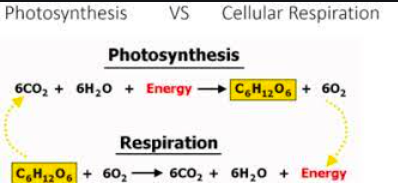
- The 2 main processes in both cycles are photosynthesis and cellular respiration – know the formula for each (they are opposites)
Carbon Cycle:
- Long-Term Cycle:
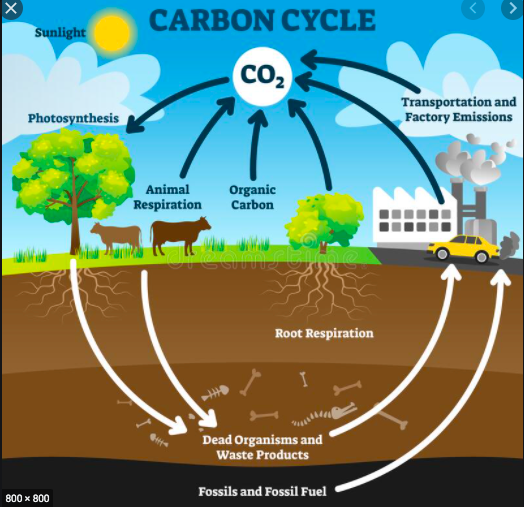
- Carbon-compounds are not broken down and over millions of years turn into fossil fuels. Burning of fossil fuels (coal, oil, gas) releases carbon dioxide.
- Short-Term Cycle:
- Photosynthesis - Producers use carbon dioxide to make glucose.
- Cellular respiration - Consumers eat carbon-compounds (food) and release carbon dioxide. Decomposers feed on dead organisms that contain carbon-compounds and also release carbon dioxide.
Oxygen Cycle
- Two sides or parts to the oxygen cycle are:
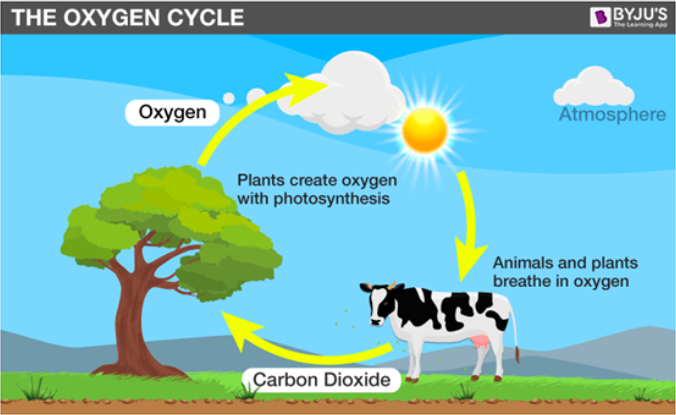
- Photosynthesis - Producers use carbon dioxide and water to make oxygen. Plants produce nearly all the oxygen in the atmosphere with about 30% from plants in the rainforest.
- Cellular respiration - Consumers and decomposers use oxygen to release carbon dioxide and water.
- 2 oxygen atoms = atmospheric oxygen; 3 oxygen atoms = ozone
- Oxygen is very reactive and combines with most elements. Oxidation is when oxygen combines with other elements.
- Rapid Oxidation - combustion/burning
- Slow Oxidation - rusting and cellular respiration
The nitrogen cycle
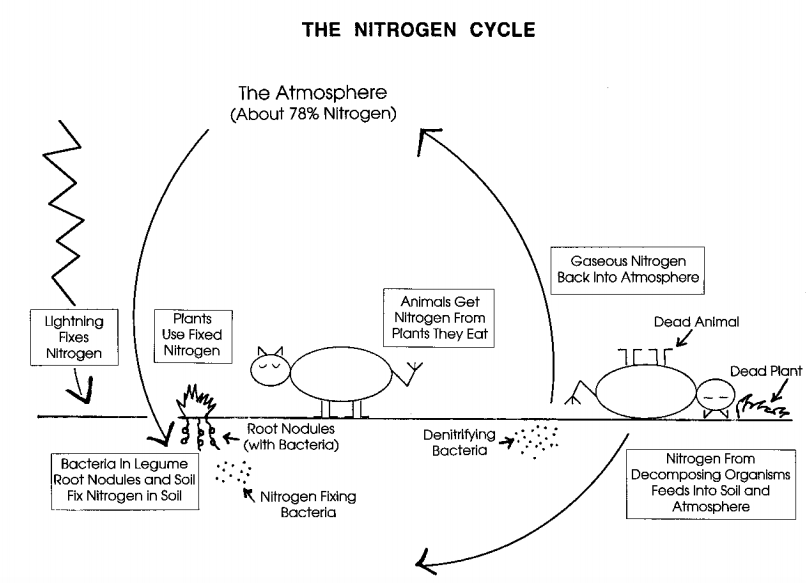
- About 78% of the atmosphere is “free” nitrogen gas that is unusable for most organisms.
- Nitrogen is essential to make amino acids and proteins.
- Most organisms can only use nitrogen that has been “fixed” or combined with other elements to form nitrogen-containing compounds through nitrogen fixation.
- Nitrogen can be fixed by lightning or by bacteria that live in the nodules on the roots of legumes (soybeans and clover).
- Nitrogen is also found in fertilizers and animal manure. If excess nitrogen gets washed into water it can cause Eutrophication.
- Eutrophication is from excess nutrients (nitrogen) that increase plant growth (algae blooms) which deplete dissolved oxygen levels and suffocation aquatic life leading to “dead zones.”
*See worksheets/concept maps that were provided (posted in google classroom) and reviewed in class for more detail about each cycle*