5.13 Japan Multi Hazardous Environment
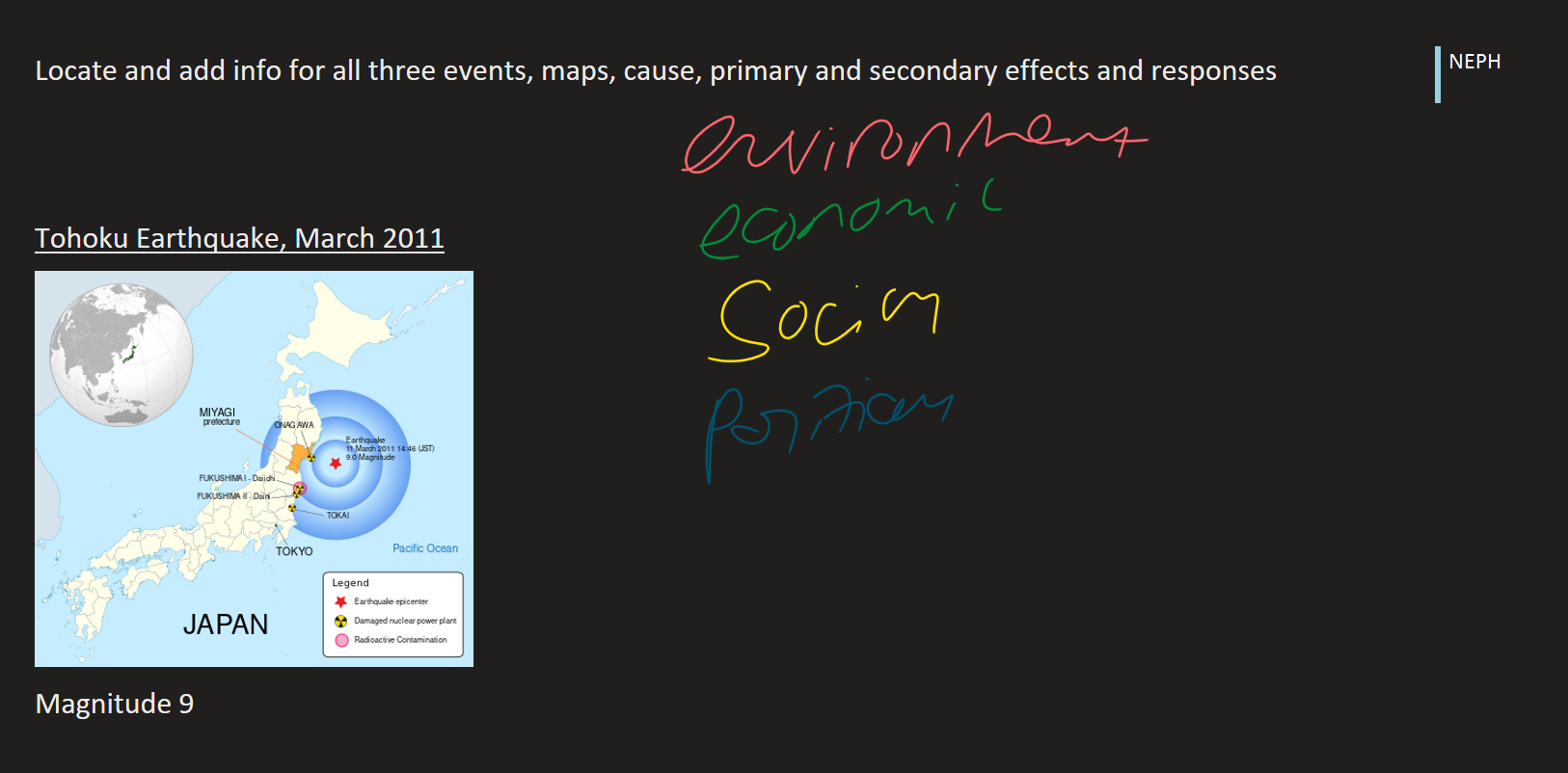
Primary effects:
Moved Honshu 2.4m closer to North America
Shifted the Earth's axis by at least 10cm
Made days shorter by 1.8 microseconds
Calved 125km2 from the Antarctic glaciers
Visible waves in Norwegian Fjords
Ground shaking
Buildings collapsed
Fires from broken gas and petrol pipes
Tsunami which wiped out entire areas in the north east
~500km2 flooded
Entire vehicles were thrown around and left in the middle of streets
Limited damage to skyscrapers as they had earthquake proof designs
Oil refineries burnt down
Many areas were fully wiped out with thousands dead and few buildings still standing
Despite many being saved by the tsunami warning over 18000 were dead or missing
Secondary effects:
Half a million people were homeless
150000 people were in temporary shelters for weeks
Over 1 million homes had no water
6 million homes had no electricity
Food, water, fuel and medical shortages
Over 700 aftershocks causing more damage in the two weeks after
Explosions and leakages from the Fukushima Daiichi power plant which caused half of the reactors to meltdown
Nuclear disaster panics caused panic selling of stocks
Immediate responses:
Helicopter crews were taking survivors from remote places like rooftops and flooded farmland
100000 soldiers were used to organise rescues, distribute supplies and keep order
Aid from other countries starts coming in
Exclusion zone made around the Fukushima Daiichi power plant
Most Japanese nuclear power plants shut down
Long term responses:
Coped well with the earthquake but was severely damaged by the tsunami so they started building up plans for tsunamis too
Upgraded the tsunami alert system
Government created the reconstruction design council to plan for reconstruction in Tohoku
5 years until nuclear power stations were allowed to reopen
Juvenile thyroid cancer increased due to Fukushima Daiichi
100000 people did not return to the Fukushima area until 2019 where the evacuation order was slightly lifted
$300 billion
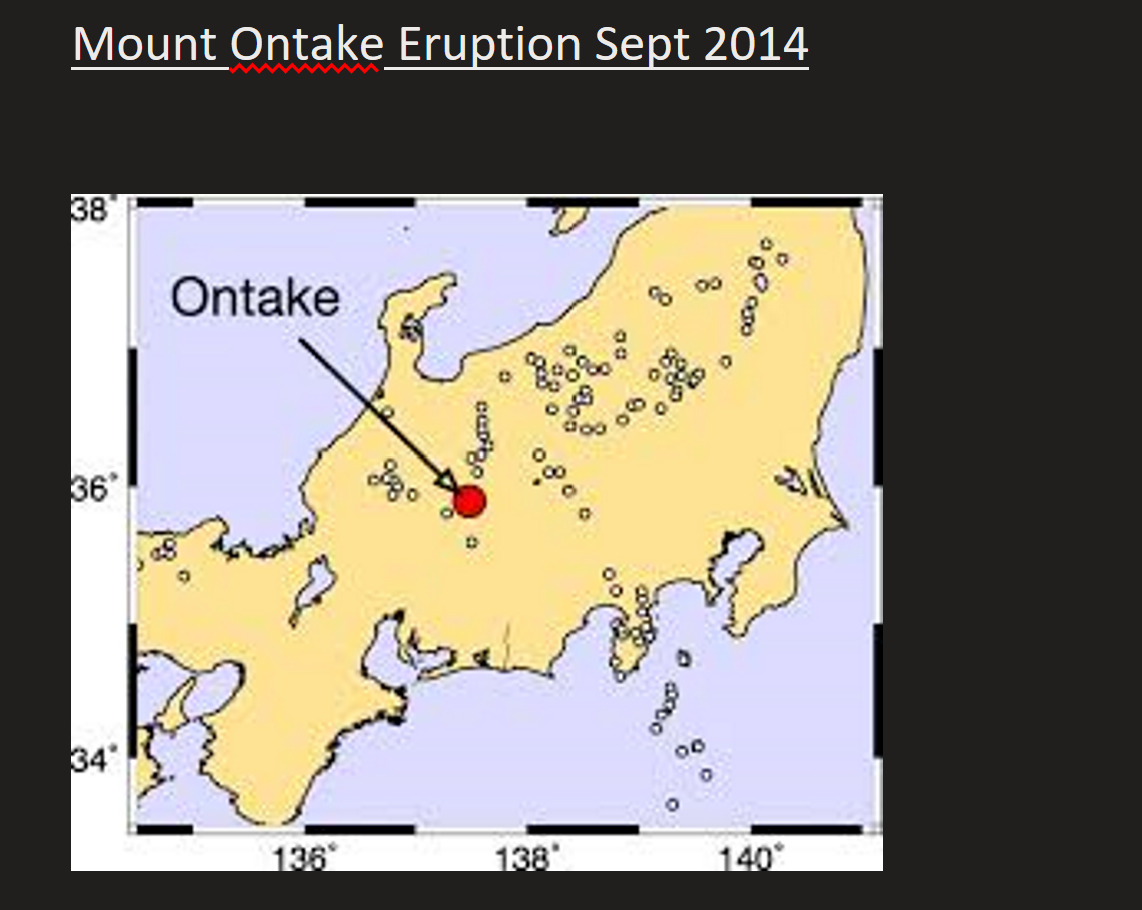
Primary effects:
Sudden steam-driven eruption at Mount Ontake with little warning
Ash cloud rose 7–10 km into the atmosphere
Heavy ash fall limited visibility and covered most of the mountain
Large volcanic bombs flew out at high speed
Hot gas, ash and rock came down slopes
63 people, mostly hikers near the summit, were killed
Many more injured by falling rocks and ash inhalation
Buildings were damaged or destroyed
Hiking trails and infrastructure were buried or blocked
Secondary effects:
Around 200 hikers were stranded on the mountain during the eruption
Ash contamination polluted local water supplies
Tourism was disrupted in the surrounding region
Economic losses for local businesses that rely on tourism
Psychological impacts on survivors and families of victims
Ongoing volcanic activity led to continued restrictions
Immediate responses:
Search and rescue teams form including police, fire services, and military
Helicopters were used to evacuate injured and stranded survivors
Emergency services issued hazard warnings and restricted access to the volcano
Medical treatment provided to burn victims and those with respiratory issues
Recovery operations continued for several days despite dangerous conditions
Long term responses:
They reviewed and improved the volcanic monitoring systems in Japan
More emphasis on monitoring hard to predict eruptions
Improved hazard maps and risk communication implemented for hikers
Installation of better warning systems and signage on active volcanoes
Stricter access controls during periods of increased volcanic activity
Greater public awareness of volcanic hazards in Japan
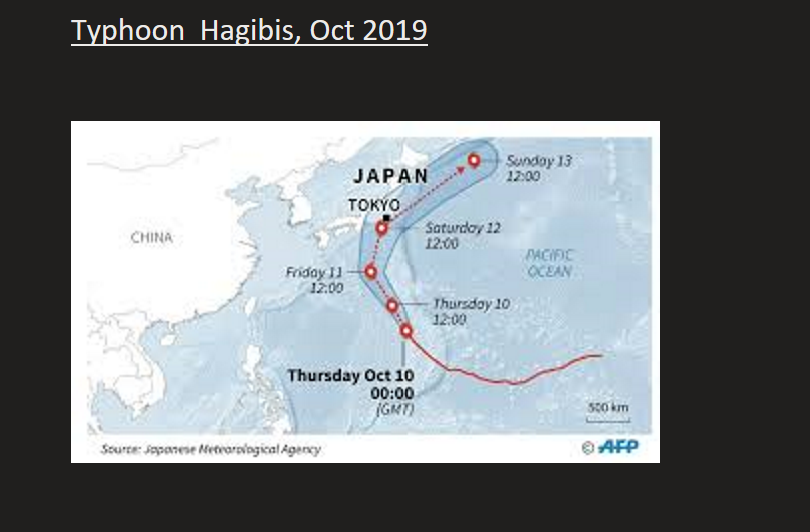
Primary effects:
Rainfall of over 900mm in some areas, causing widespread flooding
Rivers like the Shinano River burst their banks
Landslides destroyed homes, especially in the mountains
Over 100 people killed and nearly 400 injured
Around 40,000 homes were damaged
Rail lines, roads, and bridges flooded or washed away which disrupted transport
Power outages in roughly 270,000 homes
Water supplies were cut off in thousands of homes
Tokyo and surrounding areas experienced severe flooding
Cars, debris, and buildings left in streets by floodwaters
Secondary effects:
Over 200,000 people evacuated to emergency shelters
Shortages of food, water, and medical supplies in affected areas
Economic losses estimated at around $15 billion
Businesses and factories shut down
Agricultural damage
Long term displacement for many people
Risk of disease increased due to contaminated floodwater
Clean up and rebuilding took months
Immediate responses:
The Japan self-defence forces deployed thousands of troops for rescue operations
Emergency warnings issued early leading to mass evacuations
Rescue teams used helicopters and boats to reach stranded people
Emergency shelters set up in schools and community centres
International aid and support offered
Emergency services worked to restore power and water supplies
Long term responses:
Government invested in improving flood defences and river management
Review and upgrade of early warning systems
Reinforcement of embankments and drainage systems
Improved disaster preparedness and evacuation planning
Financial aid provided to rebuild homes and infrastructure
Focus on making cities more resilient to extreme weather events
Using the notes on P 246 link the Bullet points to each section of the Hazard Management Cycle:
Prepare
Defence walls have been built for tsunamis
Japan has a tsunami warning system
Earthquake proof skyscrapers
Has implemented these after previous tsunamis
Respond
People leaving after early warning system
Prepared to evacuate at minutes notice
Areas near sea damaged by tsunami as it was worse than prepared for
18000 dead or missing
Half a million people homeless
150k people in temporary shelter
Fukushima Daiichi meltdowns
Recover
Aid from other countries
Soldiers used to distribute supplies and maintain order
Shut down nuclear power plants
Rescuing people from remote areas
Temporary shelters made
Mitigate
Improved tsunami defences for future
Upgraded tsunami warning system
Created the reconstruction design council
Reduced the amount of nuclear energy