Unit 4 - Hearing and Other Senses
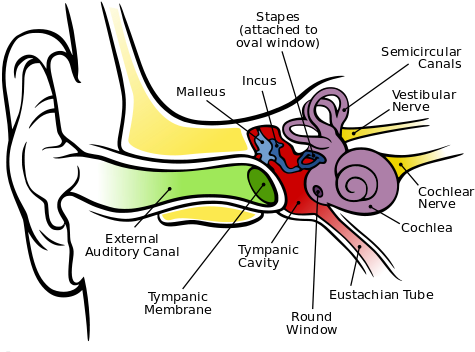
The Process of Hearing
Sound Wave to Receptor Cells
A sound wave goes into the auditory canal from the pinnae and reverberates on the eardrum (tympanic membrane) which initiates the three small bones in the middle ear: the hammer (malleous), next the anvil (incus), and then the stirrup (stapes). The stirrup attaches to the cochlea through the oval window. The vibration sent through the oval window then stimulates the receptor hair cells on the basilar membrane of the cochlea.
Neural Impulse to Brain
The hair cells lining the basilar membrane ripple from the vibrations sent through the oval window. This triggers a neural message to be sent through the auditory nerve. The auditory nerve then sends this message to the thalamus in the cerebral cortex. Next, the thalamus transmits the message to the auditory cortex in the temporal lobe for the brain to interpret. Depending on the speed of the message travelling through the auditory nerve (frequency theory), and where the basilar membrane was stimulated (place theory), the brain will read the pitch as high (frequency) or low (place).
Sound Waves
- Amplitude determines a sound’s loudness
- Frequency determines the pitch
- Loudness is measured in decibels (d)
- Every 10d increase = 10x louder sound
Stereophonic hearing allows us to determine the %%direction and distance%% of a sound.
Hearing Loss and Deaf Culture
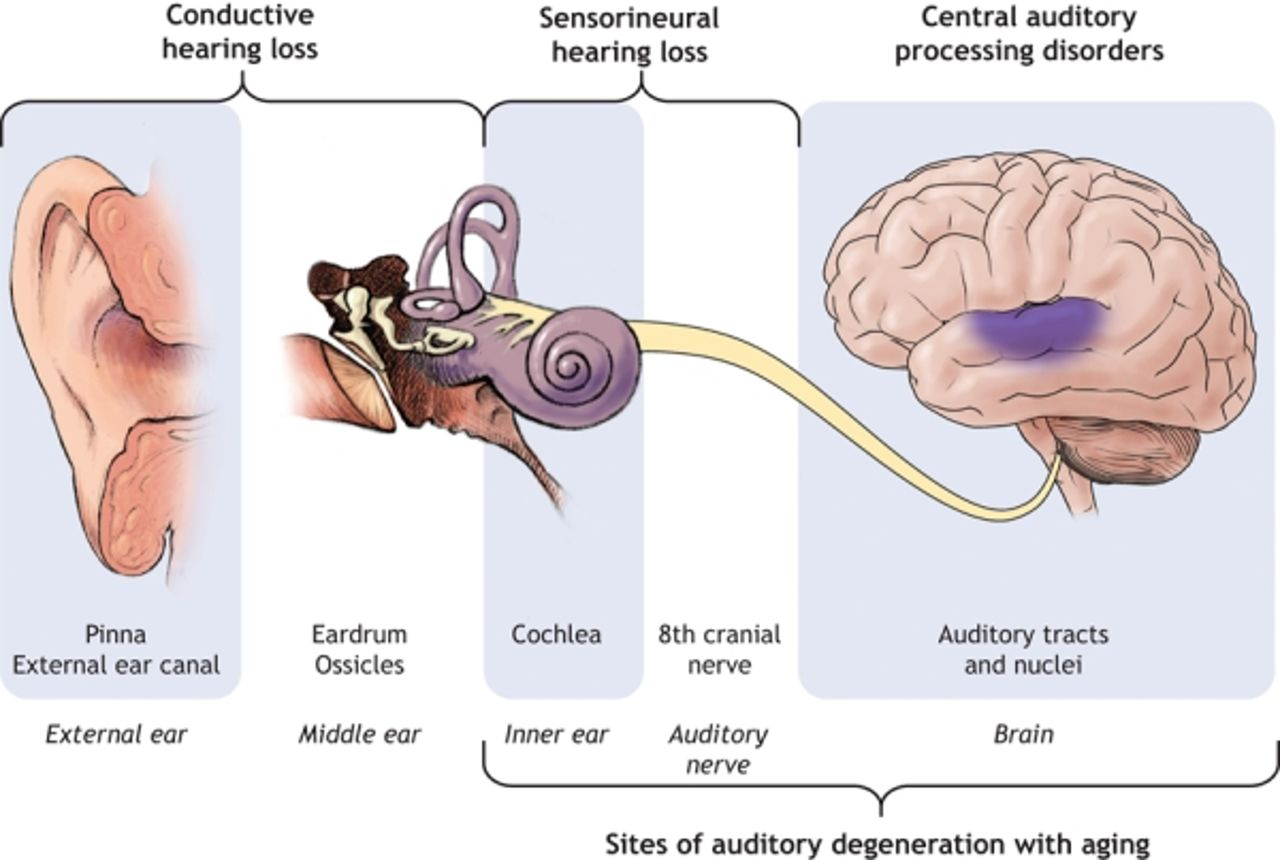
- Conduction hearing loss is caused by
- Treatment - Hearing aids
- Sensorineural hearing loss (nerve deafness) is caused by ==damage to the cochlea’s receptor hair cells or to the auditory nerve.==
- Treatment - Cochlea implants
Other Senses
Touch
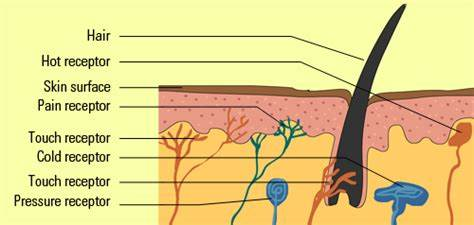
Pain
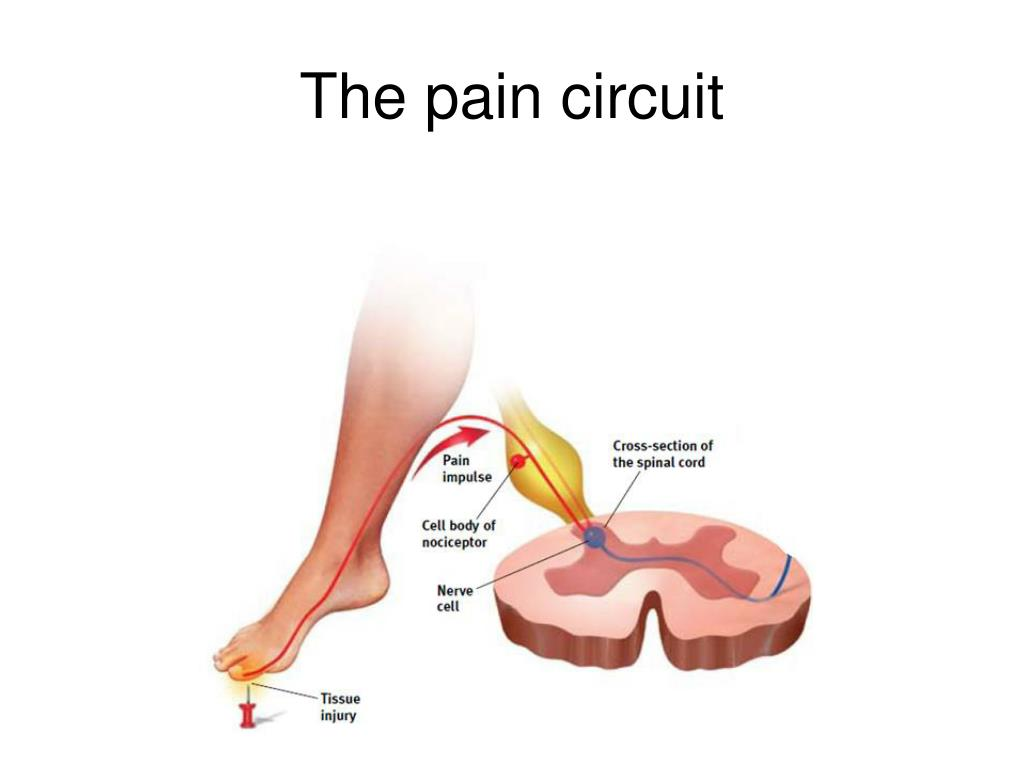
Many things influence pain:
- socio-cultural influences
- “suck it up”
- psychological influences
- memories of pain
- rubber-hand illusion
- placebo
Biopsychosocial Approach = biological influences + psychological influences + social influences = personal experience of pain
Gate control theory - spinal cord contains neurological “gate” that blocks or allows pain signals to pass onto the brain
how to block the "gate"
1. massage
2. medication/accupunture
3. release of endorphins
4. distraction
5. placebo
6. empathy of cargiver
Smell
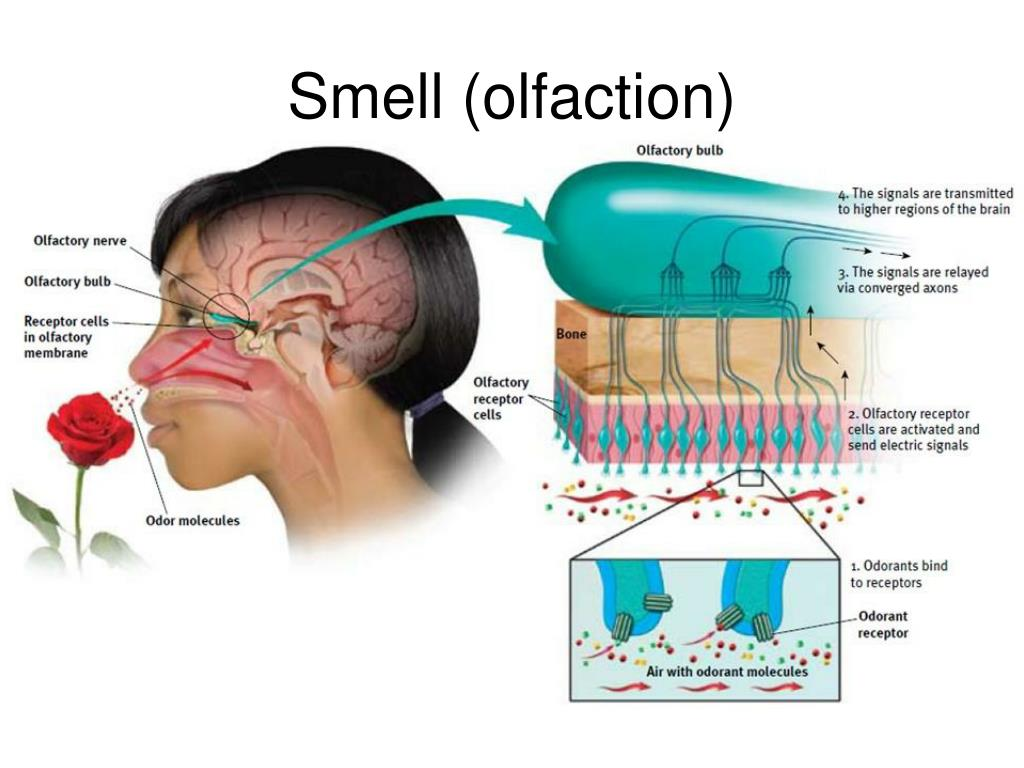
Sensory adaptation in smell is faster than other senses.
Taste (Gustation)
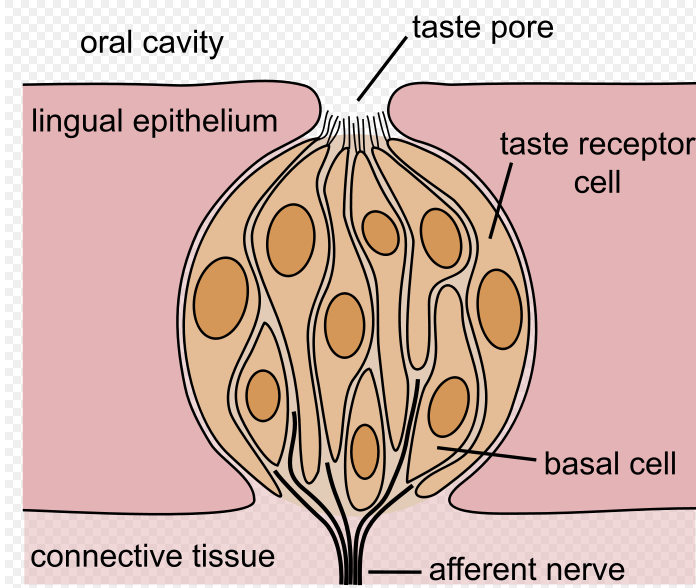
The different types of taste are based on survival instincts from our ancestors who’ve evolved to associate certain tastes with certain dangers.
| Taste | Indicates |
|---|---|
| sweet | energy source |
| salty | sodium essential for physiological processes |
| sour | potentially toxic acid |
| bitter | potential poisonous |
| umami | proteins to grow and repair tissue |
{{CHILDREN = MORE SENSITIVE TO TASTE{{
McGurk Effect - shows interaction between sense…smell and taste*