Intro to COMMS1_ppt1.1
Introduction to Electronic Communication Systems
Overview of course module highlighting key aspects of electronic communication.
Technological University of the Philippines - Manila as the educational context.
History of Electronic Communication
19th Century Innovations
1837: Invention of Telegraph by Samuel Finley Breese Morse.
1843: Invention of Facsimile by Alexander Bain.
1864: Discovery of Electromagnetism by James Clerk Maxwell.
Later Developments
1866: Installation of the first transatlantic cable.
1876: Invention of Telephone by Alexander Graham Bell.
1877: Invention of Phonograph by Thomas Alva Edison.
1880: Discovery of Electromagnetic Waves by Heinrich Hertz.
1887: Discovery of Radio Waves by Heinrich Hertz and demonstration of wireless radio propagation by Marconi.
20th Century Advances
1906: Invention of Amplitude Modulation (AM) by Reginald Fessenden.
1918: Invention of Superheterodyne Receiver by Edwin Armstrong.
1934: Creation of the Federal Communications Commission (FCC).
1937: Invention of Pulse Code Modulation (PCM) by Alec Reeves.
Components of Electronic Communication System
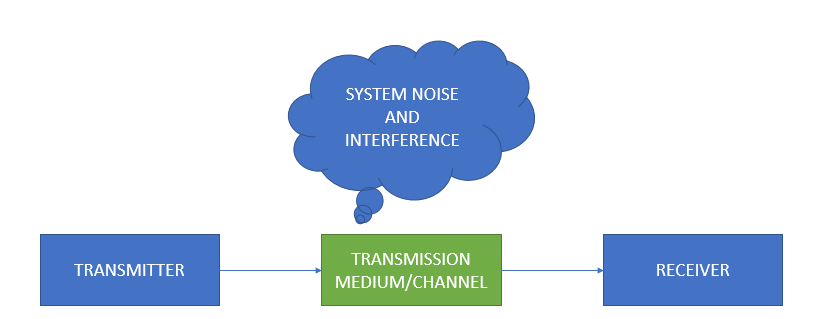
Transmitter: Device to send information.
Transmission Medium/Channel: Path for the signal, can introduce noise and impairment.
Receiver: Device to receive and interpret the signal.
System Noise and Interference: Factors affecting communication quality.
Transmission Modes
Simplex Mode: Unidirectional transmission; signal only sent in one direction.
Duplex Mode: Bidirectional transmission but not simultaneous; can send and receive, but not at the same time.
Full Duplex: Bidirectional transmission; can send and receive simultaneously.
Half Duplex: Bidirectional, but only one direction at a time; can switch directions.
Transmission Impairments
Signals may suffer from impairment during transmission; the original signal differs from the received signal.
Causes of impairment include insufficient media quality and environmental factors.
Electrical Noise
Defined as random, undesirable electrical energy unnecessarily injected into the communication system, impacting signal integrity.
General Classification of Noise
Correlated Noise
Present within the signal itself; relevant when there is an active signal.
Distinguished by presence alongside the signal.
Uncorrelated Noise
Exists independent of any signal; similarly observed during no signal conditions.
Types of Correlated Noise
Harmonic Distortion
Occurs when integer multiples of the original signal are generated, commonly referred to as Amplitude Distortion.
Intermodulation Distortion
Arises from the generation of unwanted frequency products when multiple signals mix in nonlinear devices.