SIE Exam Part 13 - Options
Overview of Options
Definition of Option:
An option is a derivative that derives its value from an underlying asset (e.g., common stock).
The value of equity options is based on the value of the underlying common stock.
Two main types of options:
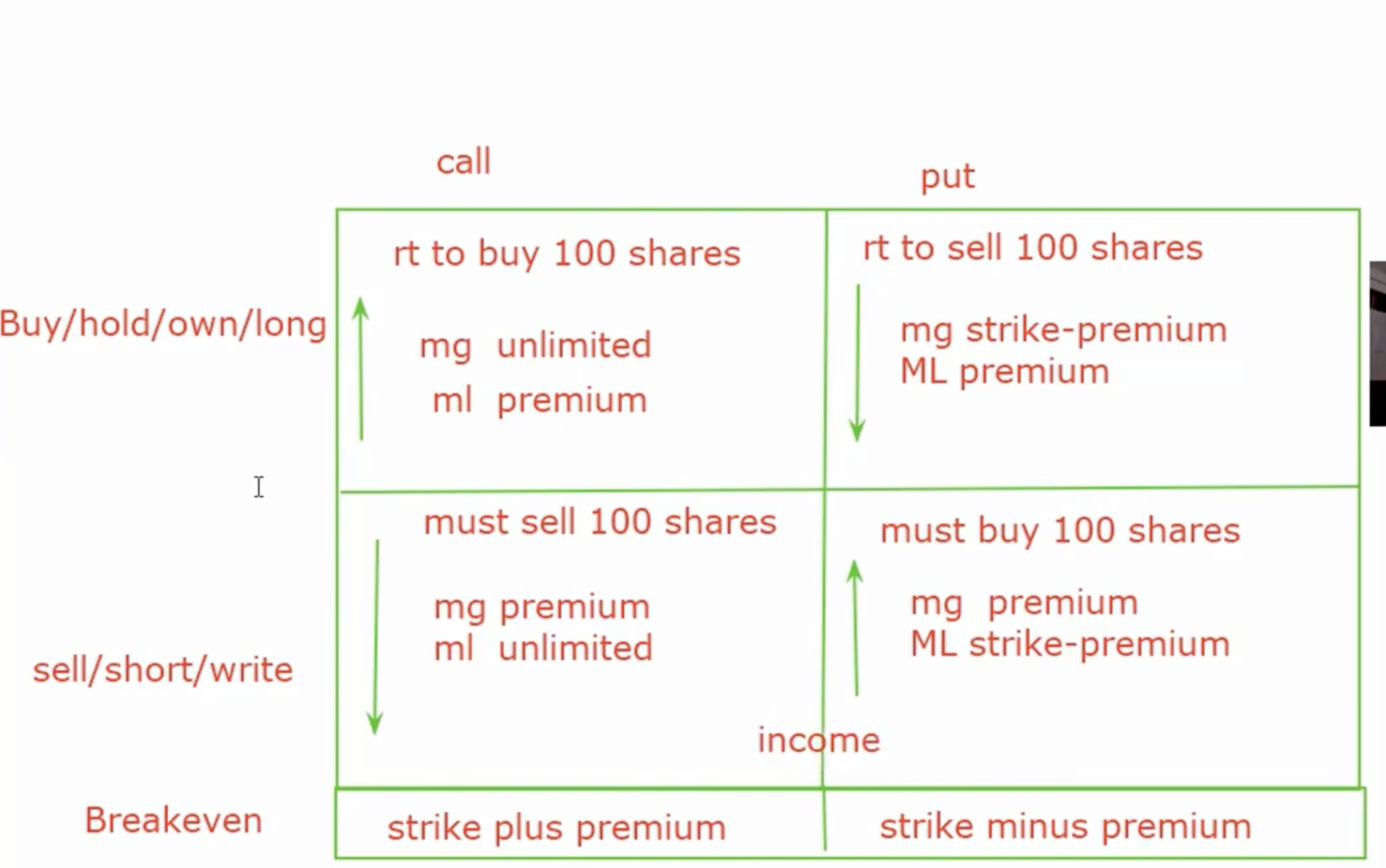
Call options: The right to buy the underlying asset.
Put options: The right to sell the underlying asset.
Basics of Options Contracts
Each option contract is a contract between two parties:
Buyers (owners/holders) have rights and pay a premium for the option.
Sellers (writers or shorts) have obligations to fulfill the terms of the option.
Example for a call option:
Buyer of a call has the right to buy the stock at the strike price.
Seller of a call is obligated to sell the stock at the strike price when exercised.
Example for a put option:
Buyer of a put has the right to sell the stock at the strike price.
Seller of a put is obligated to buy the stock at the strike price when exercised.
Call and Put Options Explained
Call Option Details:
If you buy a call option at a strike price of $50 for $5 premium:
You gain profit if the stock price increases beyond the strike price plus premium.
Break-even point for a call option:
ext{Break-even} = ext{Strike Price} + ext{Premium} = 50 + 5 = 55
Illustration:
Example with stock price at $52:
Cost to buy at 50, but selling at 52 results in a loss of $3 (due to premium).
At stock price of $55, you break-even (gain nothing).
At stock price of $57, profit of $2.
Put Option Details:
If you buy a put option at a strike price of $50 for $5 premium:
You gain profit if stock price declines below the strike price minus premium.
Break-even point for a put option:
ext{Break-even} = ext{Strike Price} - ext{Premium} = 50 - 5 = 45
Illustration:
Example with stock price at $48:
Buy at 48, sell at 50 leads to a loss of $3 (due to premium).
At stock price of $40, profit of $5.
At stock price of zero, maximum profit of $45.
Characteristics of Option Buyers and Sellers
Buyers:
Buyers of calls expect the underlying stock price to increase.
Buyers of puts expect the underlying stock price to decrease.
Sellers (Writers):
Sellers of calls expect the stock to decline or remain stagnant (so the option expires worthless).
Sellers of puts expect the stock to rise or remain above the strike price (so the option expires worthless).
Options Expiration and Trading
Expiration Dates:
Options typically expire on the third Friday of the expiration month at 11:59 PM.
Trading options:
An opening transaction occurs when you buy/sell an option for the first time.
A closing transaction occurs when you liquidate or close your position.
American vs. European Options
American Options:
Can be exercised at any time up to the expiration date.
European Options:
Can only be exercised on the expiration date.
Options and Their Values
Intrinsic Value:
The real, tangible value of an option when it is in-the-money.
For calls, any stock price above the strike price is in-the-money; for puts, any stock price below the strike price.
Time Value:
The additional amount that traders are willing to pay for an option above its intrinsic value, based on the time remaining until expiration.
Formula: ext{Premium} = ext{Intrinsic Value} + ext{Time Value}
Example: If premium is 6 and IV=2, then TV=4
Speculation and Hedging
Speculation:
Buying an option to speculate on stock price movement.
Buying calls bets on increases, whereas buying puts bets on decreases.
Long stock - You’re either going to buy a put or sell a call (Buying a put is for protection and selling a call is for income)
Hedging:
Protecting against losses in underlying stock positions using options.
Example: If you own 100 shares at $50 and fear a drop, buying a put option allows selling at a pre-set price.
Short stock - You’re either going to buy a call or sell a put (Buying a call is for income and selling a put is for protection)
Final Tips and Recap
Remember:
Buyers have rights while sellers have obligations.
Max loss for buyers is the premium paid; potential for unlimited gains exists for calls.
Max gain for sellers of options is the premium received; potential for total loss can occur.
Important concepts summarized:
Breakeven points for calls and puts.
Components of option pricing.
Risk management strategies using options.
Encouragement to stay engaged, seek help, and reach out for clarification.