Types of clutch Assemblies
Diaphragm Spring
Clutch Cover
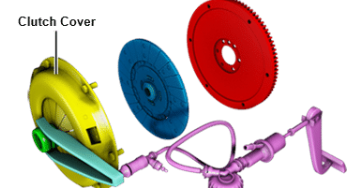
Three types of clutch pressure plate assemblies.
Includes : a diaphragm spring, coil spring, and semi-centrifugal spring type.
Also called pressure plate cover
holds all components together, covers the springs, levers, and pressure plate.
Pressure plate
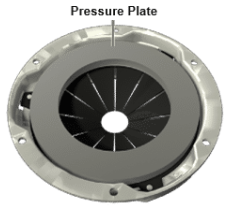
smooth surface, made up of cast iron
strong / dissipates heat well
pressing and releasing the clutch pedal moves the pressure plate back and fourth.
moves the pressure plate away from the clutch disc
Leaf Spring
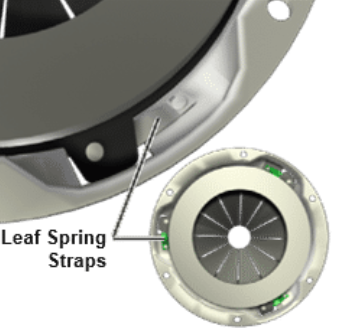
strip of spring steel, riveted to the pressure plate & clutch cover, connecting them together.
flexes the leaf spring to allow the spring to move back and forth.
Diaphragm Spring
is cone-shaped until pushed on by release bearing pushes on it.
flattens out when pushed & pulls back on the pressure plate.
when released, it goes back to cone-shape allowing it to reengage the plate.
Pivot (spacer bolt)
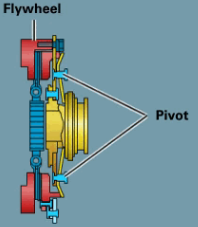
attaches to the diaphragm spring to the pressure plate.
the diaphragm spring moves & flattens, it pulls back on the pivot.
Coil Spring - Clutch cover
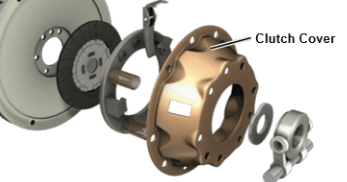
perform the same function as the ‘diaphragm spring’
holds components such as, springs, pivots, and release levers all together in one.
found usually in heavy duty trucks / heavy duty vehicles
Coil Spring - Pressure plate
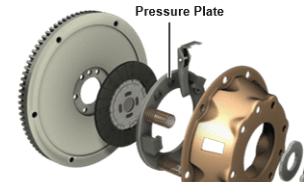
similar to the diaphragm plate version.
flat, made of iron to wear and dissipate heat.
moves back and forth against the clutch disc as it engages and disengages from the transmission.
Coil Spring - Release Lever
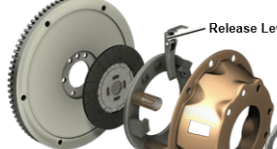
pulls back on the pressure plate when release bearing pushes on it.
can be weighted at the release-bearing end to multiply the holding force used to clamp against the clutch disc. (added for leverage)
Coil spring
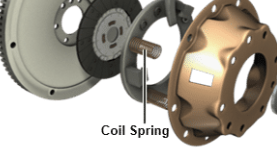
maintain pressure on the clutch disc.
spring pushes on the clutch cover and the pressure plate
The release lever must overcome the spring pressure to pull back the pressure plate.
different springs change the spring pressure placed on the pressure plate
Coil spring - Pivot pin ( Fulcrum pin )
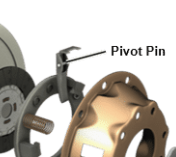
allows the release lever to move the pressure plate back and forth.
this disengages the clutch by pulling the pressure plate forward, away from the clutch cover towards the clutch disc.
the pivot, along with the tension of the coil springs, determine how much pedal pressure is needed
Semi-centrifugal Spring - Variation of coil spring
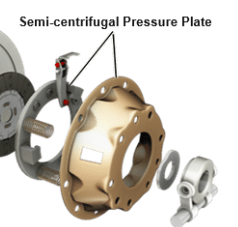
variation of the coil spring pressure plate
speed determines the holding pressure of the clutch disc
Weighted Release Lever
uses a weighted release lever to increase the holding force on clutch disc.
The faster the engine spins, the more weighted the release lever pushes on the pressure plate.
the weighted release lever allows the use of a lighter-strength spring to push on pressure plate
Less clutch pedal effort is needed to disengage the clutch
-Characteristics of a diaphragm spring
component is cone-shaped until pressed on by released bearing
many fingers act to pull back on the pressure plate
-Characteristics of coil spring
release lever must overcome spring pressure to pull back the pressure plate
components uses weighted release levers
Mechanical Clutch linkage
engage and release the clutch :
Pedal
release fork
mechanical linkage
clutch cable
adjuster
Clutch Pedal
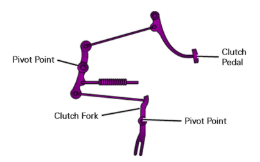
clutch foot pedal is apart of the lever, attaches to a pivot.
pivot is part of the dash frame & typically cannot be removed without removing other dash components
molded rubber cover that goes over the foot pedal for grip
Adjustment Rod
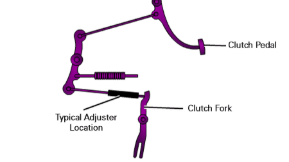
attaches to the adjustment rod & clutch cable
adjustment rod and clutch cable transfers the clutch pedal movement to the clutch
Over-center Spring
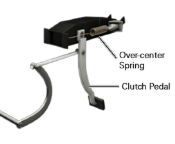
Uses a return spring ( over-center spring )
to return the clutch pedal back to the up position so that it is back to operational again
spring is attached to the clutch pedal and the dash frame
Clutch Release Fork
Clutch release fork :
moves the release bearing
operates the clutch
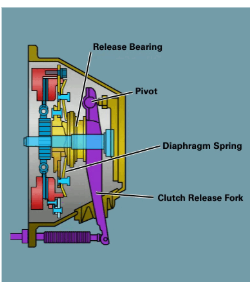
Clutch release forks connect to the :
release bearing
clutch release system
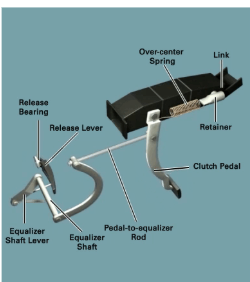
Mechanical Linkage :
uses adjustment rod that connects between the clutch pedal and relay lever
moves in and out to adjust free play in the linkage
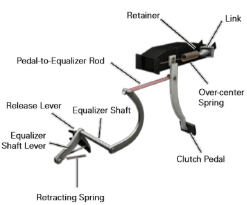
relay lever ( equalizer rod )
transfers the clutch pedal movement from the adjustment rod to the clutch release lever
could use a retracting spring to ensure the clutch release lever stays in contact with the release rod
Cable and cable ends
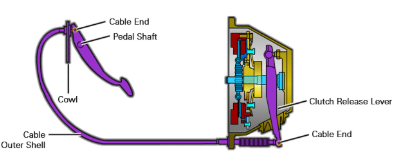
clutch cable connects into a groove or snaps on stud on the clutch pedal
cable pulls through the outer shell, the other end connects the cables outer shell secures to a stationary bracket on the transmission
moves the release lever
Outer Shell
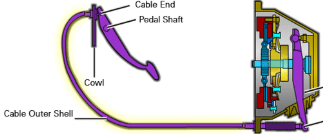
made up of flexible plastic material, protects the cable from water, dirt, other contaminants.
also uses guides that are steel shell, preventing bindings and touching of other components
Cable boot
flexible rubber covers attached to the end of the outer shell and the end and the end of the cable
protects from elements and other possible damage
Manual Adjustment
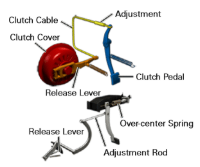
can be made of a cable or lever system.
threaded rod moves in or out to shorten or lengthen the cable
Automatic adjuster
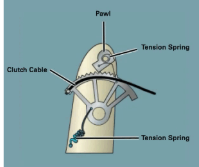
is used on a cable system
tension pawl lifts when the clutch is released.
completes when free play is automatically reduced by the pawl and gear mechanism