Meiosis
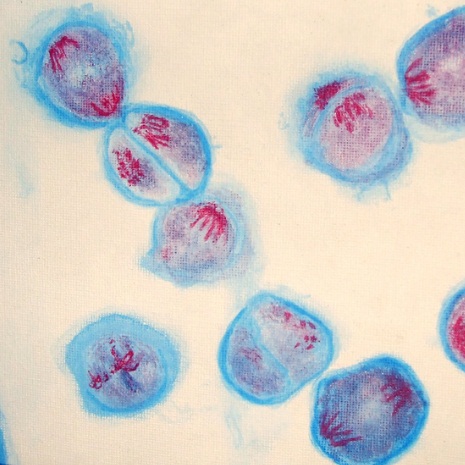
Meiosis produces four haploid nuclei from one diploid nucleus.
Haploid nuclei allow a life cycle with fusion of gametes.
DNA is replicated before meiosis so that all chromosomes at start of meiosis are 'double stranded' with two sister chromatids.
The early stages of meiosis involve pairing of homologous chromosomes and crossing over followed by condensation.
Random orientation of pairs of homologous chromosomes.
Separation of pairs of homologous chromosomes in the first division of meiosis halves the chromosome number.
Genetic variation is the result of crossing over and random orientation.
Different parents providing gametes promotes genetic variation.
SKILLS NEEDED:
Describe how non-disjunction can cause Downs syndrome and other chromosome abnormalities.
Remember studies showing age of parents influences chances of non-disjunction.
Describe methods used to obtain cells for karyotype analysis e.g. chorionic villus sampling and amniocentesis and the associated risks.
Draw diagrams to show the stages of meiosis (possibly using prepared slides), and resulting in the formation of four haploid cells. (Chiasmata not required)