AnSc 121 LESSON 6
Lesson 6:
Egg
hard-shelled reproductive body that can develop into a new individual.
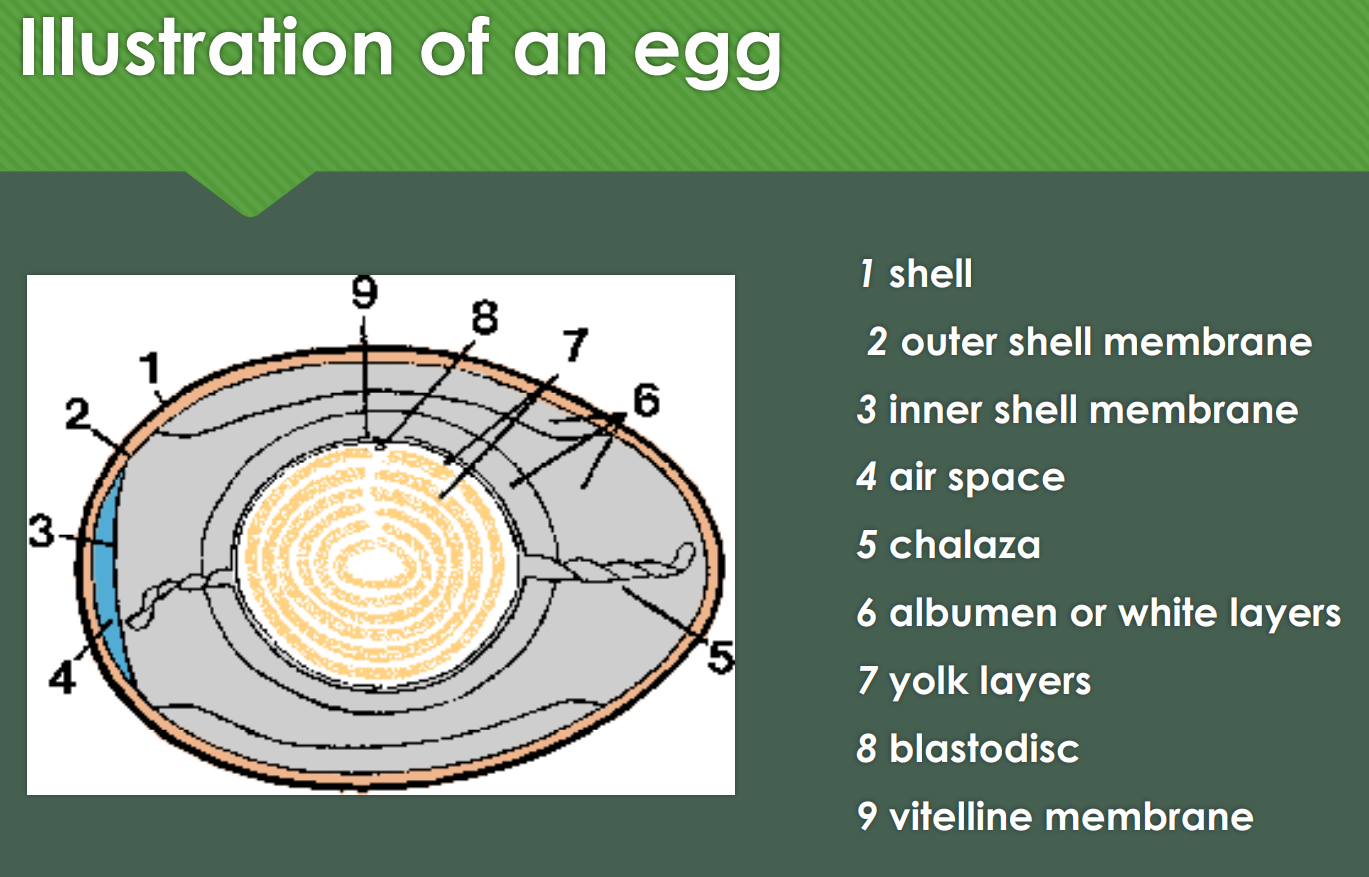 Egg Quality
Exterior egg quality - based on shell cleanliness, shell soundness, shell texture, and shell shape.
Interior egg quality - based on the viscosity of the albumen, shape, and firmness of the yolk, free from yolk defects.
Fertile Egg Quality
alive
contains living cells
undamaged, fresh, clean, and fertile eggs
Egg quality and embryo survival are influenced by hen/sire’s:
age
health
nutrition
stress
environment
Factors that affect hatchability
Breeder
breeder nutrition
disease
mating activity
egg damage
correct body weight
egg sanitation and storage
Hatchery
sanitation
egg storage/damage
incubation (management)
chick handling
Egg storage
store less than 10 days
maintain temp between 55 and 65°F / 12.78 - 18.33° C
keep humidity at 75%
turn eggs stored for more than a week
handle with care
Cleaning and Culling
do not incubate cracked, misshapen, soiled, unusual size egg
do not wash eggs or wipe with damp clothes
General Care
storage time: incubate eggs within 7-10 days of being laid
temp and humidity during storage: 55 and 65°F or 12.78 - 18.33° C, and 70-80% relative humidity
positioning and turning eggs during storage: place them on flats with the large end-up
Incubation
process of changing of fertile egg to a living organism capable of walking and eating
Type of Incubation
Natural incubation (broody hen)
Artificial incubation (incubator)
Incubation Period of Poultry Species
Chicken - 21
Pheasant - 23 to 37
Muscovy Duck - 35
Mallard Duck - 28
Turkey - 28
Falcon - 28
Geese - 28 to 35
Pigeon - 17 to19
Quail - 17 to 18
Ostrich - 42