Cell Size and Compartmentalization Notes
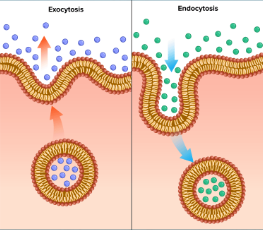
Vesicles can seamlessly form from, travel between, and fuse with membrane-bound organelles bc of membrane fluidity
Process that increases cell membrane size: Exocytosis —> vesicles fuse w/ membrane & increase membrane size
Process that decreases membrane size: Endocytosis —> vesicles created from the membrane & decreases membrane size
Explain why most cells are small (Concept of SA:V ratio):
large cells require lots of nutrients & energy to survive —> generate lots of waste that needs to be excreted
transport is most efficient over SHORT distances (if the cell is too large = NOT EFFICIENT)
For a cell to be efficient, there needs to be enough cell membrane compared to the size of the cell
surface area to volume ratio must be large for cell efficiency
State what relative SA:V ratio equates to high efficiency of cells:
cells require a HIGH surface area: volume ratio —> high SA: V ratio = high efficiency
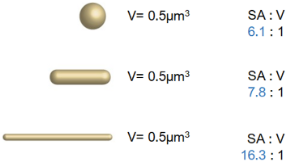
SA: V ratio increases if SA increases or V decreases
high SA: V ratio = shorter diffusion pathways (higher efficiency)
Two ways to mathematically increase the SA: V ratio —> increase SA OR decrease V
high SA: V ratio = shorter diffusion rate —> bc w/ more surface area the diffusion rate is higher (shorter distance)
increasing surface area, volume stays constant
high ratios: long, skinny, flat shape OR folds in the membrane
EX: Villi & Microvilli
Larger organisms are multicellular bc they’re made of many small cells (instead of a few large cells) to maintain a high SA:V ratio —> basis for multicellularity
Compartmentalization
Compartmentalization: presence of membrane-bound organelles allows for different functions & processes to occur in different organelles
presence of a phospholipid bilayer (membrane) allows separation & different conditions w/in different organelles in the same cell
allows for specialization of different organelles & more complex cellular functions (faster reactions)
defining characteristic of Eukaryotic cells
compartmentalization is necessary bc Lysosomes contain hydrolytic enzymes that need to be packaged to prevent cellular damage
3 Organelles that have double membranes: Nucleus, Mitochondrion, Chloroplasts
Endosymbiosis created the double membrane around mitochondria & chloroplasts —> inner membrane was the original prokaryotic membrane
Evidence for Endosymbiosis: 70s ribosomes & circular DNA
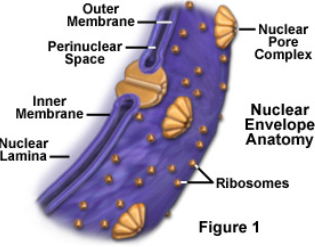
Nuclear Membrane/Envelope
involved in compartmentalization —> surrounds nucleus/protects DNA (regulates gene expression) —> contains pore complexes
Pore Complexes: integral proteins —> allow materials to enter/exit the nucleus
the outer membrane is continuous w/ the Rough ER