Medieval Law & Magna Carta
How did trial by ordeal and trial by battle work?
Most common ways to decide person’s innocence/guilty of offense
Trial by ordeal
Trial by combat
Trial by water
Trial by fire
Trial by ordeal common in Anglo-Saxon (England)
Trial by combat later introduced to Normans (France)
Believed that outcome of trials, rested in God’s hands
Reasoned that God would punish guilt & save innocent
Trial by Ordeal:
Person be subjected to torture
Includes submerged into water, forced to swallow poison, carry hot iron bar for certain distance
If person died from ordeal/injury from ordeal became infected, judge ruled person guilty
Gradually became less used
Outlawed in 16th century (1500)
Trial by Battle:
Person charged with crime, fights person accusing them of crime
Fights carried out with weapons (Ex. Swords & axes)
Whoever won, declared right
If loser still alive, generally be hanged
Only noblewoman had right for trial by battle
Could select champion to fight on her behalf
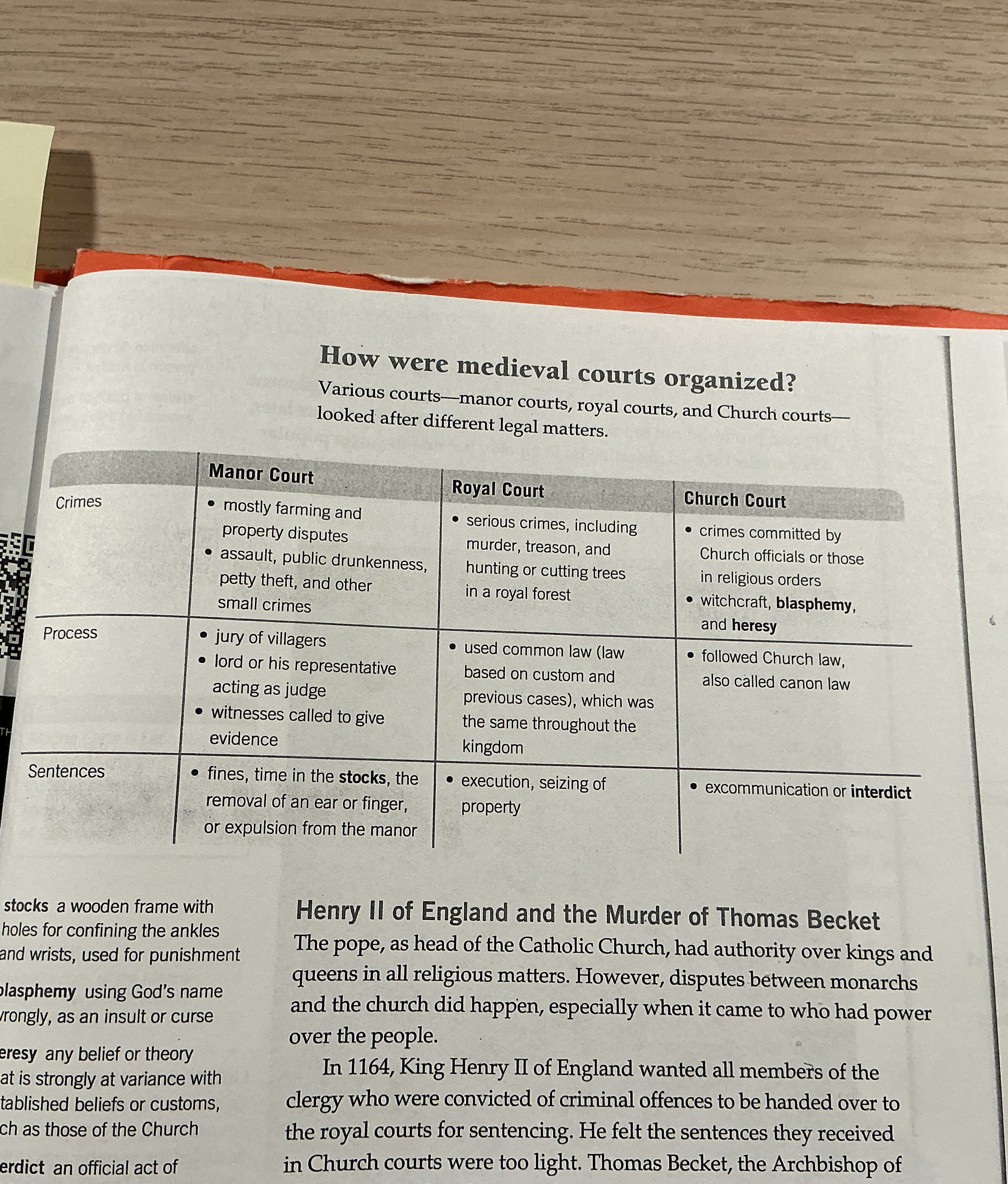
How were medieval courts organized?:
Various courts (Ex. Manor, royal & church courts) looked after different legal matters
Henry II of England and the Murder of Thomas Becket:
Pope had authority over kings & queens in religious matters
Disputes between monarchs happened, especially when who had power over the people
In 1164, King Henry wanted all members of clergy convicted of criminal offences be handed over to royal courts for sentencing
Felt that sentence received in Church courts were too light
Thomas Beckett, Archbishop of Canterbury refused to sign documents giving these powers to king
Even though he was King Henry’s close friend, he refused
Also had support of other clergy in England Church
To punish Thomas, Henry took away all his property & forced him to flee to France
6 yrs later, King Henry let Thomas return to England as head of English Church
Not long after, Thomas angered king
Henry said to have complained about Thomas, wanting to get rid of him
4 knights overheard and did what he said
Rode to Canterbury, on Dec. 29, 1170, Thomas killed at foot of altar in Canterbury Cathedral
Though King Henry denied intention of killing Thomas, had to submit to public flogging as punishment
Promised to not interfere in Church courts
2 yrs later, Thomas canonized
Quickly became most popular saint in England, & Canterbury Cathedral became country’s greatest religious shrine
What were the powers of the medieval monarch?
Feudal society & Catholic Church had strict hierarchies
In Middle Ages, many believed that ruled by a monarch was part of God’s plan
The Balance of Power
Medieval monarchs had to power to make & change laws, collect taxes, choose advisors, & give titles & estates
Monarch’s power wasn’t unlimited
Also had to obey feudal contract
King kept in check by small, wealthiest and powerful group of nobles (barons)
If monarch broke contract, barons could feel justified in declaring war on him
Barons had large armies, string castles & vassals to fight for them
Royal army, needed time to collect knights from all over kingdom
Since barons posed real threat, monarchs made great efforts to fulfill feudal obligations to barons
Also had to treat them with respect ( people were easily offended
Slight insults considered blot on family’s honour if not avenged
King John and the Magna Carta
King John ruled England from 1199 - 1216 (during reign, extremely unpopular)
When he lost war against French King (Philip II), had to give up land in France
When he argued with pope for new archbishop, pope excommunicate (cutting him off from church) him and placed England under interdict (suspending religious services)
No one in country could properly be marry, baptized / buried
King John forced to give in, but oppressive taxes & other abuses of power continued to anger barons
By 1214, John so hated that barons, townspeople & churchmen rebelled against him
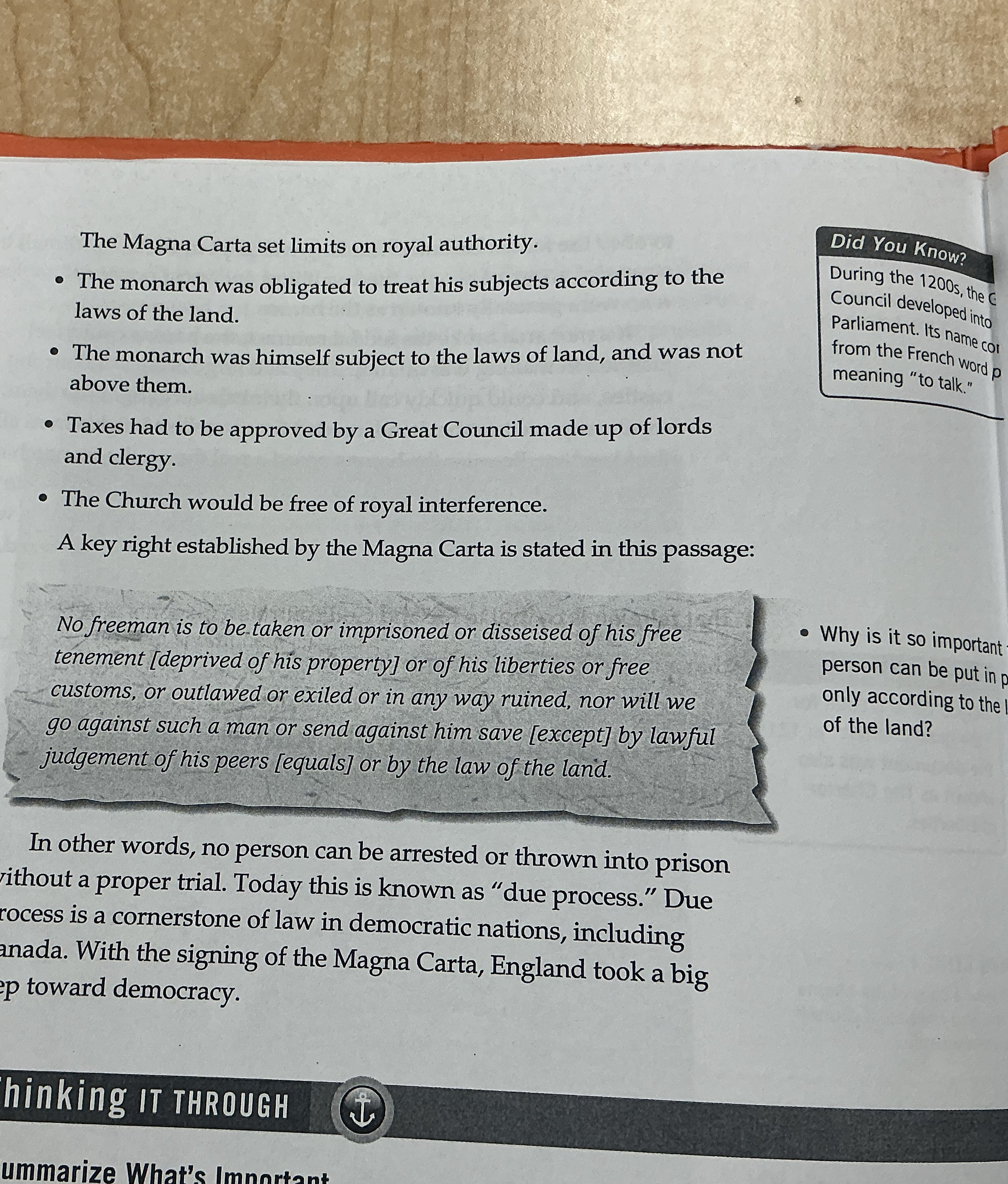
On June 15, 1215, barons forced John to sign new terms of power which were in document (Magna Carta = Great Charter)
No one can be arrested / thrown into prison without proper trial.
Today known as “due process”
Examples of the Magna Carta