(Module 36) The Second Agricultral Revolution
Second Agricultural Revolution: Period that brought improved methods of cultivation, harvesting, and storage of farm produce that began in late 1600s and continued through the 1930s.
Mechanization of Agriculture
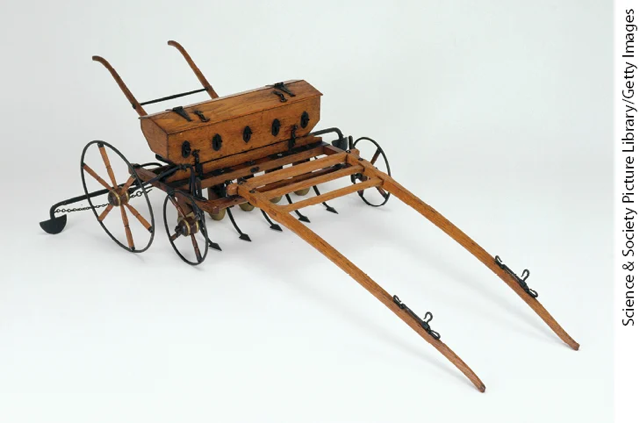
Seed Drill: A machine for planting seeds in a row.
Pulled by horses or oxen. After drilling holes in the soil neatly, organized rows, the seed drill sowed the seeds by shooting them into the newly dug rows.
Scythe: An agriculture hand tool with a curved blade used for cutting grain in the fields.
Mechanical Reaper: A machine used to harvest grain crops mechanically; patented by Cryus McCormick in 1831.
Tractor: The earliest tractors (mid-nineteenth century) were steam-powered, heavy, cumbersome, and difficult to transport. Until the invention of the internal combustion engine (late-nineteenth century) most famers used oxen and horses to pull farm machines.
Railroads: Railroads made it cheaper to transport produce and grain crops from farms to markets and ports. Railroads also allowed farmers to haul equipment and livestock to their farms.
Shipping Canals: Nineteenth century shipping canals also increased farm productivity [eg., Erie Canal (finished in 1825) allowed transport at one-tenth the overhead cost and in less than half of the previous time].
Agrichemicals:
Agrichemicals: Chemicals compounds obtained from petroleum and natural gas for use in agriculture; agriculture chemicals include fertilizers, pesticides, and herbicides.
Synthetic Fertilizers: Industrially manufactured nitrogen, phosphorus, and potassium, made from petroleum by-products; contains higher concentrations of nutrients for plants than natural fertilizers.
Pesticides: Material used to kill or repel animals or insects that can damage, destroy, or inhibit crop growth.
Herbicides: Pesticides designed to kill or inhibitors the growth of unwanted plants (weeds) that compete with crops.
Impact on Society:
Better Diets and Increased Population:
Better diets resulted in increased populations and increased rural-to-urban migration.
Economic Shift:
An increase in agricultural productivity also led to a shift from primarily subsistence farming to the production of cash crops. Farming to meet the family’s needs changed to faring for market demands.
Shift to major cooperations and away from smaller family farms.
Women’s Roles and Labor:
Individual farm women, who were once known for certain production (e.g., cheese), lost their role in their local economy.
Rural-to-urban migration, led to the rapid increase in the urban population, affecting urban infrastructure (e.g., increased demand for water, problems with sanitation, housing shortage).
Fewer people needed in rural farm-work; more people needed for factory jobs.
Impact on the Environment:
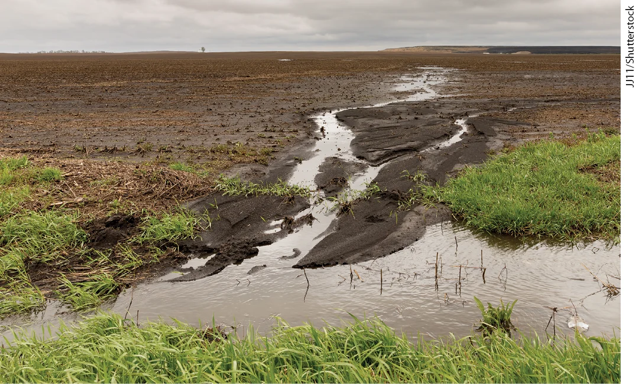
Nutrient Pollution: Consequence of overuse of fertilizer; occurs when excess nutrients seep down into ground-water or are carried into nearby rivers by runoff.
Runoff: The flow of rain or irrigation water over land.