3.4-3.7 ECONOMICS
Trade union = is an organization created by the workers, for the workers in order to promote better working conditions and improving wages.
Advantages Disadvantages | |
Fights to maintain individual’s jobs | Have to pay membership fee |
Protect wages and other benefits | No choice but to follow one union |
Prevent Discrimination | Less control over who to hire |
Can provide Education and courses | More disruptive actions taken by employees |
Can provide legal advice | Higher unemployment due to lack of demand |
Provides a single point of contact to the workers | May contribute to inflation |
protect skills of the firms workers | |
Can help improve labour productivity (provides incentive) | |
(For government) provides a single point of contact |
Functions of trade unions
Negotiating wages
Defending employees rights
Improving working conditions, better working hours and better health + safety policies
Improving pay and other health benefits: holiday, sick pay and pensions.
Encourages firms to increase employees say in decision making
Supporting members who are taking industrial action.
Developing skill of members, providing education and training
Influencing government policies to protect jobs
More people → increase negotiating power
Collective Bargaining → The process of negotiating wages and working conditions between trade unions and firms
Industrial Dispute → when collective bargaining between trade unions and employers fails to reach an agreement
Single Union Agreement → When employers agree to let a single union represent the workers
Official Industrial Action → Disruptive actions taken by employees that have the backing of their trade union; strikes
Arbitration → when employers and unions agree to let a third party resolve their issue
Test Practice
A. Define Trade Union
B.Explain two reasons why people would join trade unions
C. Analyse three factors that might determine an individuals choice of occupation
D. Discuss why some occupations receive higher wages than other occupations
3.5: Firms
Classification
Firms → An organisation where production takes place, and decisions are made to manage what is produced.
Industry → A collection of organisations that have something in common.
Primary Sector → Firms specialising in production using raw resources
Secondary Sector → Use unprocessed natural ingredients to make other goods
Tertiary Sector → Non-physical services
Industrial Sector, Economic Sector
Sizes of firms: Small, Medium sized enterprise, Micro enterprise
Small Firms
Why do some firms stay small?
The size of their market is small
Access to capital is limited
New technology has reduced the scale of production
Some business owners choose to stay small
They may be content with staying small, growing bigger would be stressful and harder to manage
Advantages Disadvantages | |
Flexibility | Higher Cost |
Personalised Services | Lack of Finance |
Better Communication | Staff |
Lower Wages | Vulnerability |
Internal Growth → A firm increasing its own scale of production by investing in equipment and technology
Develop new product ranges
Launch existing products into international markets
Opening new business locations
Purchasing latest technology/capital
Advantages Disadvantages | |
Firm can grow at a steady pace: adjust to environment | Need to develop new resources |
Provides Maximum control | If there is a failed investment, it is hard to recoup the money |
Preserves Organisational culture | Slow form of growth |
External Growth → A firm combining its factors of production with another firm
Friendly: Merging
Hostile: Takeover
Advantages Disadvantages | |
Reduces Competition | Incompatibility of top management |
Gains access to new markets and products | Clash of corporate cultures |
Economies of Scale | Operational problems |
Horizontal merging: Combining two firms that produce the same type of goods/services
Advantages Disadvantages | |
Combined business will have a larger market share | Become more difficult to coordinate and manage |
Reduce number of competing firms (consolidation) | disadvantage for consumers, as prices may rise |
Economies of scale, cost advantages (also reduce transportation costs) | clash of working cultures |
Vertical Merging: Combining two firms at different stages of the supply chain, (Could be either backwards or forward merging)
Advantages Disadvantages | |
Can be certain it has a retailer | Could require a lot of capital |
Can tell retailer not to stock rival company products | Excess capacity in one part of the chain |
Absorb more profit | Clash of working culture |
Lateral integration (conglomerate) - combining two firms that produce different types of products/services. They are unrelated.
Advantages Disadvantages | |
Expand customer base, increase profits | Difficult to manage |
Allows company to diversify product range | Have to devote a lot of time to learning new things = loss of focus = loss of productivity |
Significant economies of scale | Disputes can occur = loss of productivity |
Economies of scale
Economies of Scale - cost saving due to large scale production As a firm’s scale of production increases its average costs decrease. Cost saving from a large-scale production is called economies of scale.
Internal EoS - cost saving resulting from large scale production due to decisions within the firm
Purchasing Economies - large firms can buy supplies in bulk, they are likely to get a discount (will cut purchasing costs)
Risk bearing Economies - expanding product range, diversification, because there is less risk. (if one product fails, they will still make profit from another one.)
Financial Economies - banks are willing to lend more to bigger companies, due to less risk
Marketing Economies - advertisements
Technical Economies - investing in technology
External EoS - cost advantages that arise due to the industry growing
Access to skilled workers
Shared Infrastructure
Joint Market benefits
Specialist Service providers (firms that supply materials to large firms) being closer together could reduce traveling costs
Diseconomies of scale - cost disadvantages because firms grow so large its average costs rise
Average Cost = the cost per unit output, calculated by dividing total cost by quantity output
total cost = fixed cost + variable cost
Average fixed cost = total fixed costs/quantity output
Average variable costs = total variable costs/quantity output
Firms and Production
Production Process - A firm combining factors of production to make goods and services to satisfy customer demand.
Added Value - the difference between the selling price of a good and the cost of the materials required to make the good.
A firm combines all FACTORS OF PRODUCTION to add value at each stage of the production process, so that the consumer will pay more for the good/service. This extra is called ‘added value’
Specialisation - employees focusing effort on something they are skilled at
Diversification - firms producing a range of products
Production - the amount of goods produced
Productivity - the amount of goods that can be produced during a given unit of time
Labour Productivity -total output/number of employees (measure of employee’s productivity)
How to increase Labour Productivity?
Train staff
Reward staff with bonuses
Encourage staff to buy shares
Increase job satisfaction
Invest in new technology and efficient capital
Reduce waste and adopt lean production techniques (focus on cutting out waste)
Labour Intensive production
- a production process that uses more labour relative to capital
Advantages | Disadvantages |
Labour costs can be kept low if workers are unskilled | Wages can be high |
Lower risk of losses due to machinery (workers won't malfunction) | Disputes with trade unions can result in production loss |
Production quality is easier to observe at each stage | Average cost of producing items will be higher, then if you used machines |
Capital Intensive Production - a production process that uses more capital relative to labour
Advantages | Disadvantages |
Products can be mass produced | Can be expensive to hire/buy |
Wages are far lower | Training costs for workers to manage machines may be high |
Less risk of work disruption | Breakdowns and power cuts may hold production |
Factor Substitution - Replacing one factor of production with another in order to maximize profit
Derived Demand - the demand for the factors of production depend on the demand for goods/services (from consumers)
How to influence rate of production?
level of investment
entrepreneurial spirit
skills and expertise
innovation
competition
3.7: Firms, costs, revenues and objectives.
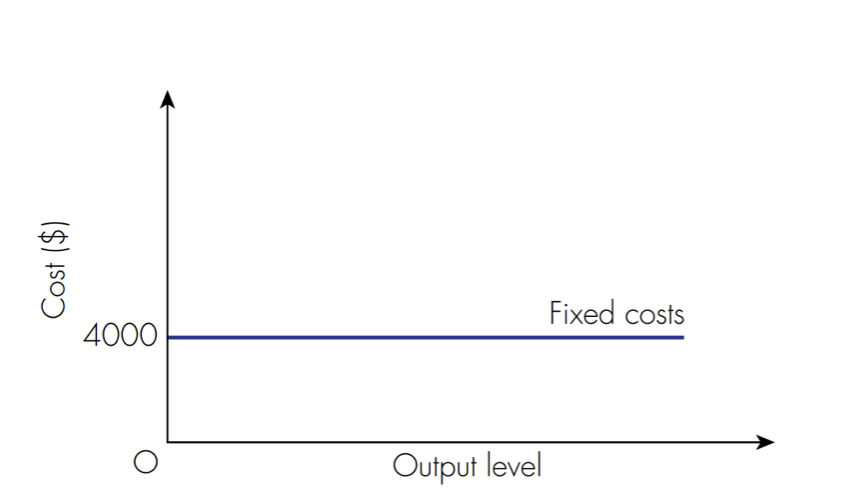
Fixed Cost - costs that do not vary with the level of output
Variable Cost - costs that do very with the level of output
Average Cost per Unit - the cost for one product. Calculated by total cost/total output
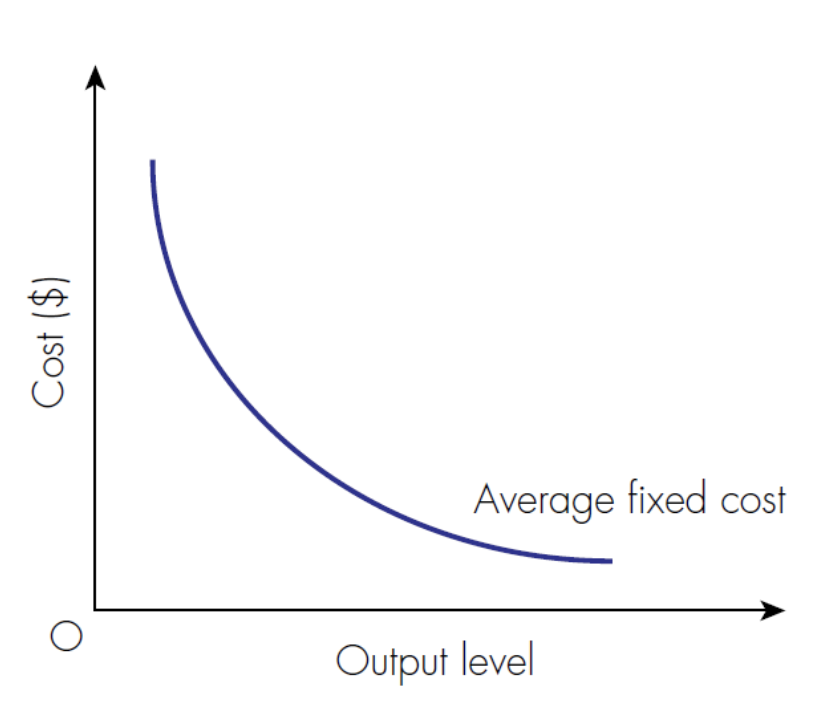
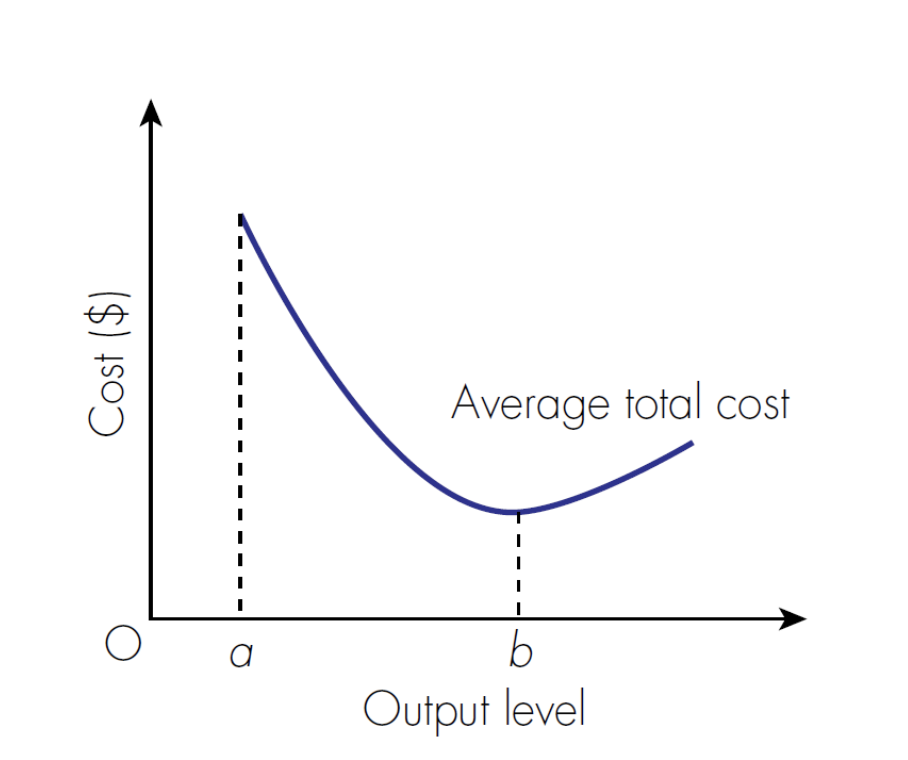
Total Cost, Average cost, fixed cost, variable cost, average total cost, average fixed cost, average variable cost
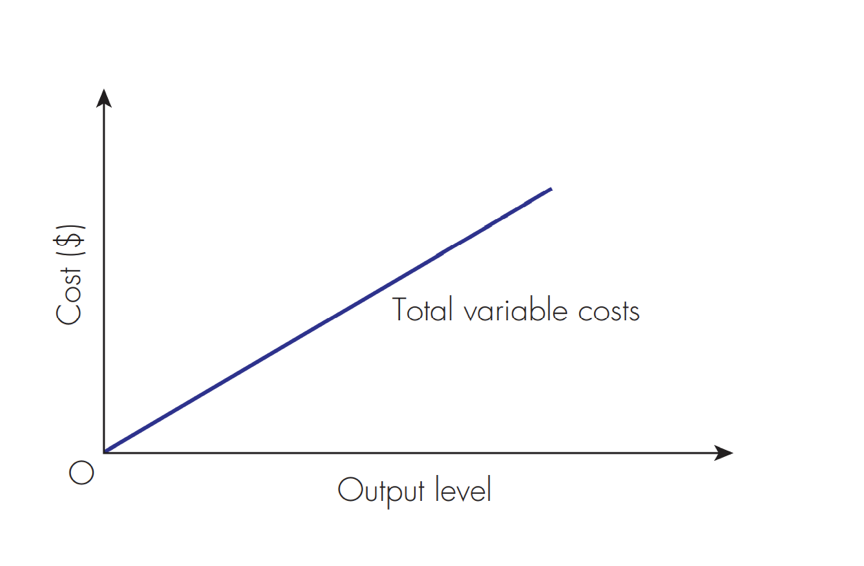
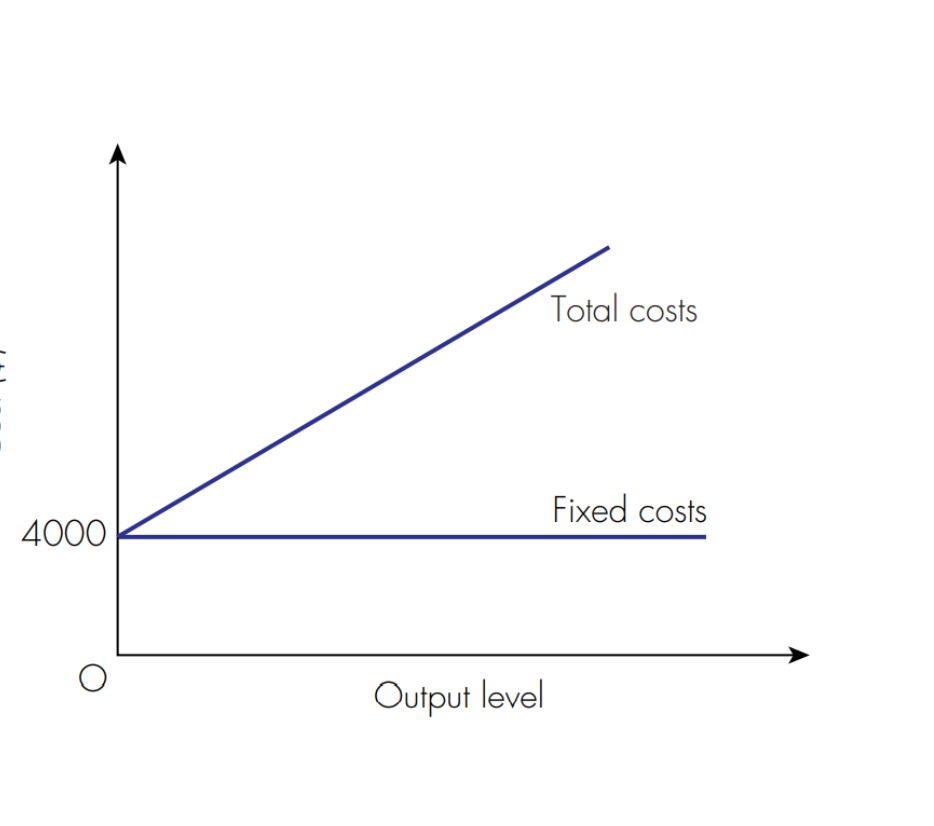
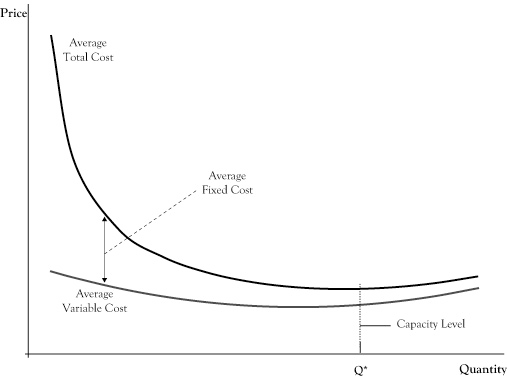
Average Variable cost = Total variable costs/quantity
Average fixed cost = Total fixed cost/quantity
Average Revenue - the revenue for one product sold, Total Revenue/Quantity sold
Total Revenue - amount sold x price
Break Even Output - Where if you sold all of the products, it would equal the cost of the factors of production. This is when no profit is being made
Profit - a surplus of revenue from the sale of output
Profit Maximisation - to increase the greatest possible extent the surplus of revenue over costs
Objectives
Break-event output
Survival
Growth
Social