L2- The Invasion of Land
LOs:
evidence for the invasion of land by plants
nature of the earliest flora
a hint of terrestrial animals
There is a long history of Precambrian life but it is microbial:
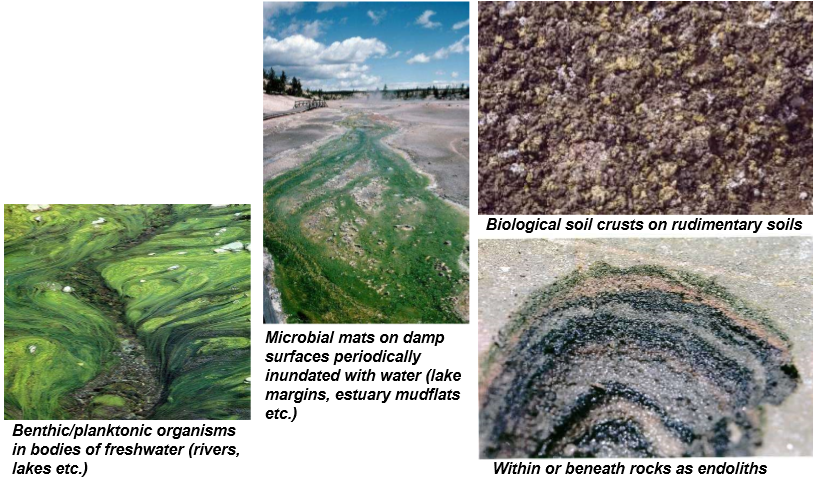
Major macroevolutionary event→ land plants appear:
evolution→ a monophyletic multicellular group appears- land plants (embryophytes)
ecology→ invade land, create soil, create multicellular ecosystem for others to come onto land too
environment→ are primary producers, creating another carbon cycle, greener landscape, create soil
Evidence for the origin of land plants:
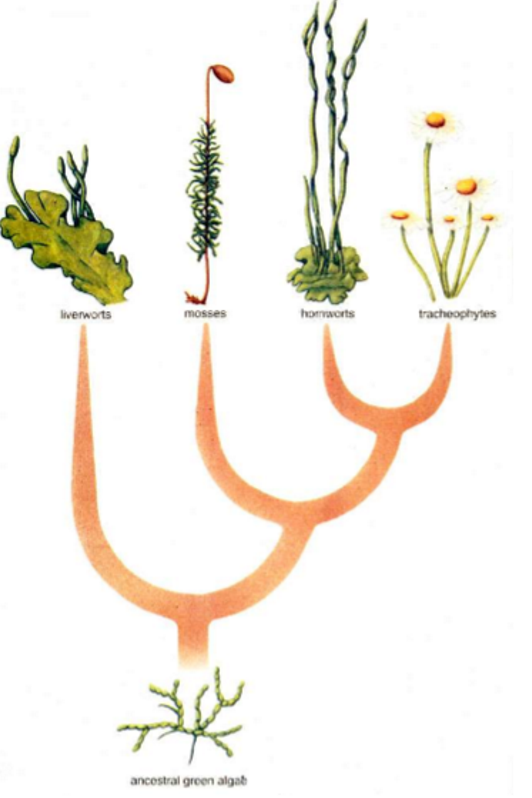
extant plants
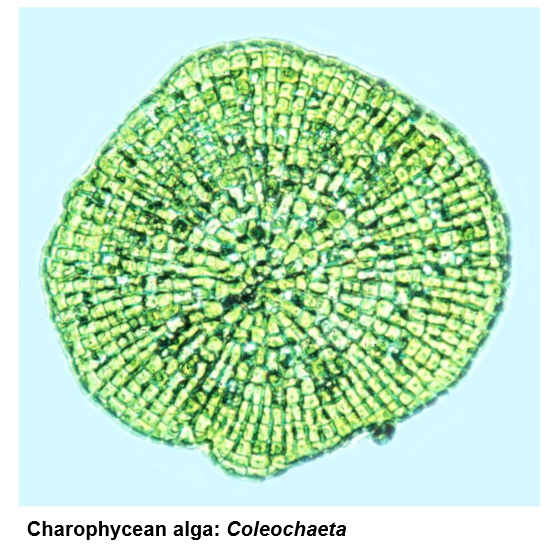
ancestors→ phylogenetic analysis, sister group are multicellular green algae that lived in freshwater, crawled out to become land plants
evolutionary relationships→ there are 2 major groups of living plants
bryophytes→ non-vascular plants, mosses
tracheophytes→ vascular plants
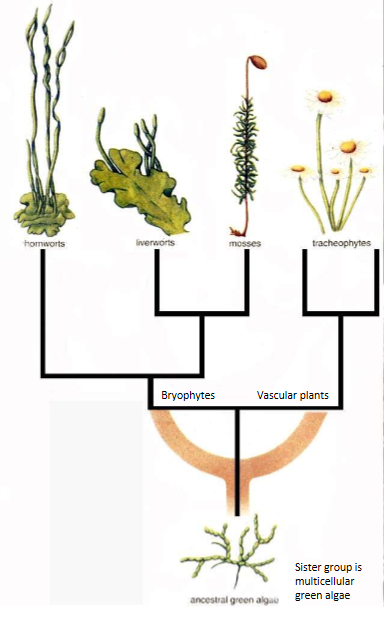
most basal plants are in between these two groups
physiological comparisons→ comparing the physiology of multicellular green algae in freshwater and basal land plants to see the jump (evo-devo)
molecular clocks→ not very good for major events though
fossils
dispersed spores and megafossils→
earliest land plants reproduced through spores in sporopollenin walls
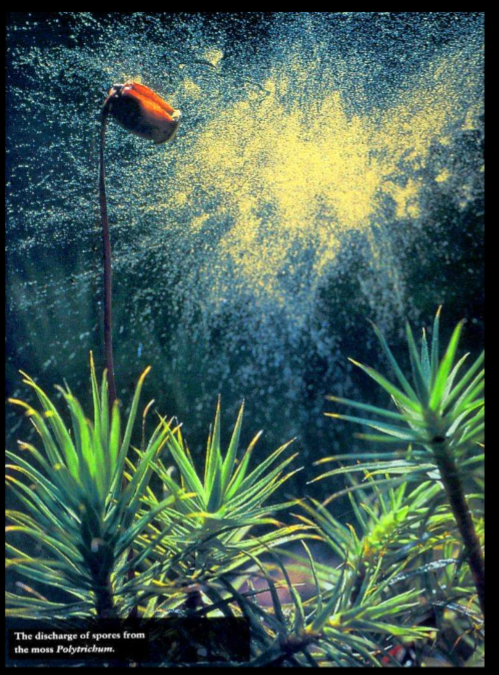
2 fossil records
studying spores method→ take siltstone rock, dissolve up in hydrofluoric acid to take out inorganic, leaves organic content, put onto slide or embed in resin, study under a microscope
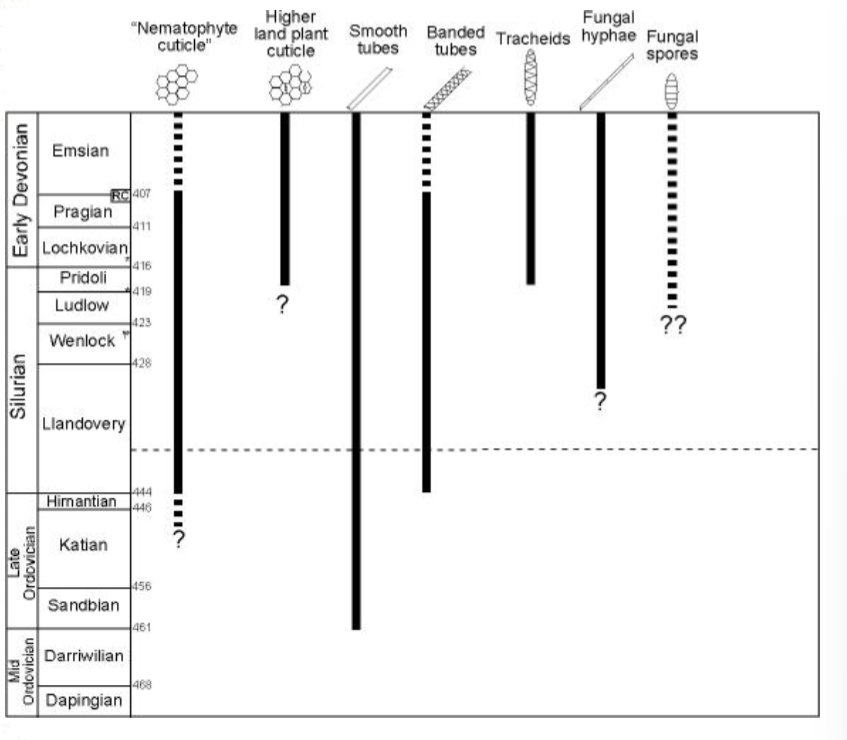
found weird spores from the mid-ordivican called cryptospores (Jane Grey)→ evidence that land plants reproducing, are spores from the earliest plants- evidence of this:
are modern plant spore analogues→ are the same size as modern plant spores, different in morphology though, some liverworts are tetrads w/ envelopes, form in tetrads→ evidence of meiosis, have a tough sporopollenin wall
are found in non-marine sediments→ lived in or around freshwater
old phylogeny suggested basal plants were the liverworts where these spores came from
walls of spores are made of parallel lamellae- same as modern plants
found Eophyte fossils from the Silurian that were producing cryptospores
found entire sporangia (used to make and store spores) in Oman from the Ordivican
spore wall chemical composition is identical to sporopollenin in modern plants
→ all evidence shows that these cryptospores derived from land plants in the mid-Ordivician
dispersed fragments→ find cuticles and tubular fragments that were suggested to be bits of plants
palaeoenvironments
palaeogeography→
Ordovician world→ Gondwana supercontinent (equator to the pole), find cryptospores all over the world (red dashes)
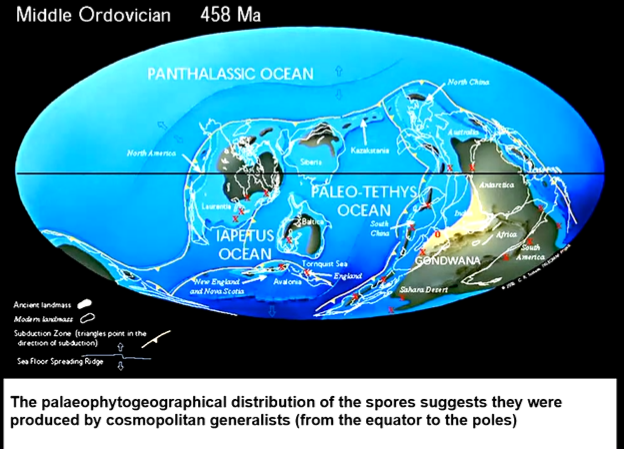
→ plants invaded the planet, spread quickly, live everywhere as generalists as spores are found everywhere and are the same types
get identical assemblages around world for 30million years
palaeoclimate→
huge ice age at the end of the ordovician, ice cap over gondwana, mass extinctions, get same plant spores above and below the ice age→ generalists
climatically sensitive sediment fossils→ cold area in the upper ordovician
palaeoenvironment→
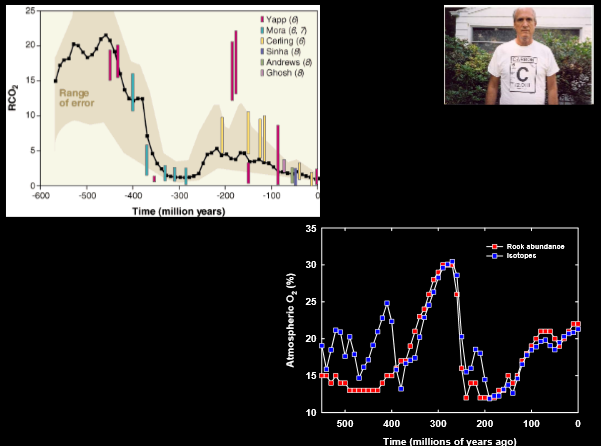
when plants invaded the land there was high co2 levels and low o2 levels→ doesn’t make sense with the ice age
reconstruction of earliest plant communities:
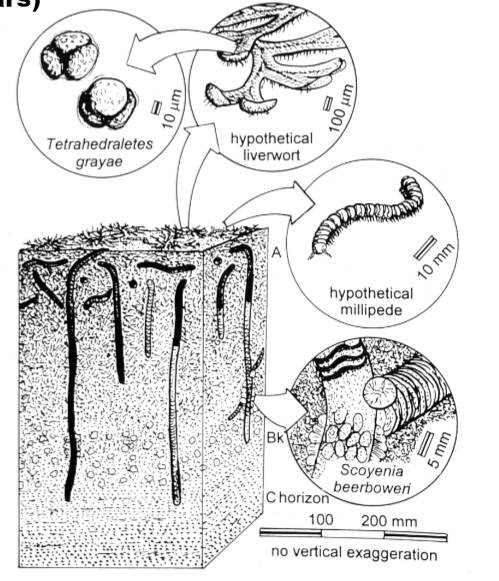
before→ microbial soil crusts and mats→ bind surface together, release acids, build up soil
after plants evolve→ are mm in size, ground huggers, plants create more organics in soil, more acid dissolving up the rock, increases soil thickness
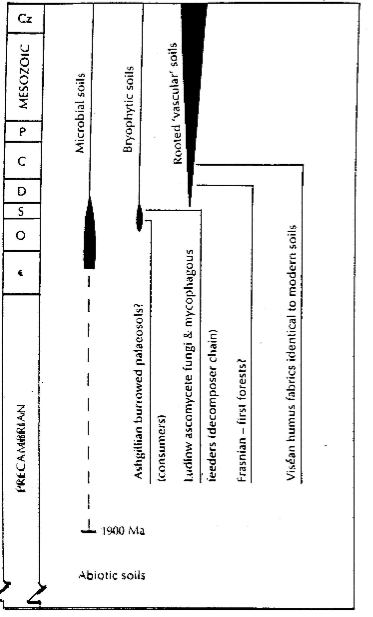
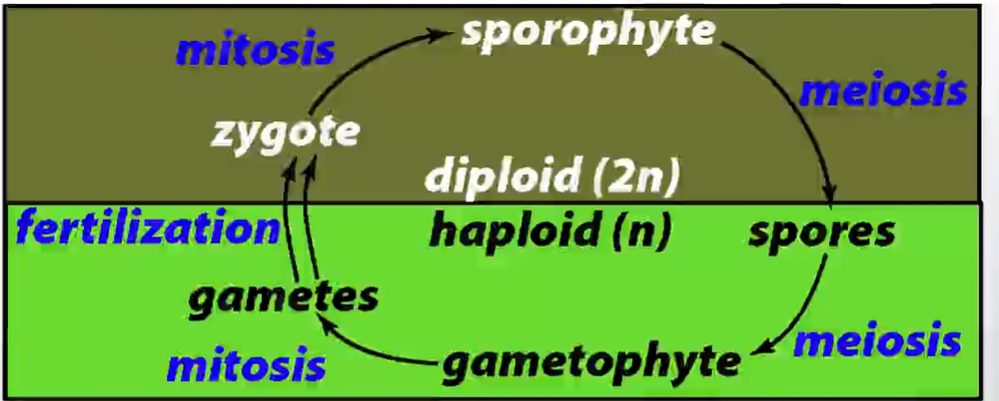
soils are cm thick, on top are eophytes (predate liverwort/vascular plant split), sit on surface, create soil, photosynthesise, every now and then produces a sporophyte, releases cryptospores, have tetrads that can produce a new gametophyte, lands on damp soil and can reproduce into male and female parts, can self-reproduce
also may have had animals→ find fossil soils called palaeosols that have burrows- similar to millipeed, but are overlayed by marine sediments so others think these are marine worms
Jane Grey found more organic content when dissolving up rock- arthropod (made of chitin)- survives acid digestion, unsure if these lived on land or freshwater
→ there are aquatic arthropods at this time
in Australia there is are non-marine series of sediment (tumblagooda sandstones)- have ripples and arthropod traces
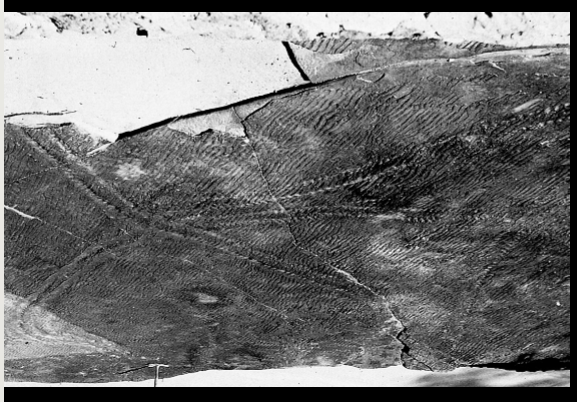
→ large animals have come out onto this surface when it was dry
spores and pollen- sporopollenin
cutan- plant cuticles
lignin- wood, conducting tissues
chitin remains- fungi, animals
sporophyte→ diploid multicellular generation, produces spores- haploid reproductive cells produced by meiosis in sporangia, released in the air
gametophyte→ haploid multicellular generation, spore undergoes meiosis to become a gametophyte
→ plants invade land, go worldwide, animals are possibly there/thinking of coming onto land, is like this for 30million years