Comprehensive Anatomy, Physiology, Homeostasis, and Cellular Dynamics Flashcards
Anatomical Prefixes, Suffixes, and Root Words
a-, a-(without): avascularaer-, aeros(air): aerobic metabolism-algia, algos(pain): neuralgiaarter-, arteria(artery): arterialarthro-, arthros(joint): arthroscopyauto-, auto(self): autonomicbio-, bios(life): biology-blast, blastos(germ): osteoblastbronch-, bronchus(windpipe, airway): bronchialcardi-, cardio-, -cardia, kardia(heart): cardiac, cardiopulmonarycerebr-, cerebrum(brain): cerebral hemispherescervic-, cervicis(neck): cervical vertebraechondro-, chondros(cartilage): chondrocytecranio-, cranium(skull): craniosacralcyt-, cyto-, kytos(a hollow cell): cytology, cytokinederm-, derma(skin): dermatome-ectomy, ektome(excision): appendectomyend-, endo-, endon(within): endergonic, endometriumepi-, epi(on): epimysiumex-, ex(out of, away from): exocytosishemo-, haima(blood): hemopoiesishemi-, hemi(one-half): hemispherehisto-, histos(tissue): histologyhomo-, homos(same): homozygoushyper-, hyper(above): hyperpolarizationhypo-, hypo(under): hypothyroidinter-, inter(between): interventriculariso-, isos(equal): isotonicleuk-, leuko-, leukos(white): leukemia, leukocytelyso-, -lysis, -lyze, lysis(a loosening): hydrolysismeso-, mesos(middle): mesodermmicr-, mikros(small): microscopemorph-, morpho-, morphe(form): morphology, morphotypemyo-, mys(muscle): myofilamentnephr-, nephros(kidney): nephronneur-, neuri-, neuro-, neuron(nerve): neural, neurilemma, neuromuscular-ology, logos(the study of): physiology-osis, -osis(state, condition): neurosisost-, oste-, osteo-, osteon(bone): osteal, ostealgia, osteocyteoto-, otikos(ear): otolithpath-, -pathy, patho-, pathos(disease): pathergy, idiopathy, pathogenesisperi-, peri(around): perineuriumphago-, phago(to eat): phagocyte-phil, -philia, philo(love): neutrophil, hemophilia-phot, -photo, phos(light): photalgia, photoreceptorphysio-, physis(nature): physiologypre-, prae(before): precapillary sphincterpulmo-, pulmo(lung): pulmonaryretro-, retro(backward): retroperitonealsarco-, sarkos(flesh): sarcomerescler-, sclero-, skleros(hard): sclera, sclerosis-scope, skopeo(to view): colonoscopesub-, sub(below): subcutaneoussuper-, super(above or beyond): superficial-trophy, trophe(nourishment): atrophyvas-, vas(vessel): vascular
Foundations of Anatomy and Physiology
Definition of Anatomy: The structural study of the body and the physical relationships among its constituent parts.
Definition of Physiology: The study of how living organisms perform their vital functions and mechanisms.
Anatomical Position:
Standard universal reference posture required for precise clinical communication regardless of actual patient orientation.
Characteristics:
Body standing erect.
Feet slightly apart.
Palms facing forward.
Anatomical Terminology and Orientation
Precise Spatial Navigation Example:
Clinical Scenario: A projectile enters the left posterior scapular region, lateral to the vertebral region and inferior to the cervical region. The penetration depth is deep to muscle and bone, but superficial to the parietal pleura.
Structural Context: The entry point is located on the back side (posterior) in the upper body region. The parietal pleura is the delicate membrane surrounding the lungs.
Navigational Mapping Domains:
Surface Anatomical Landmarks:
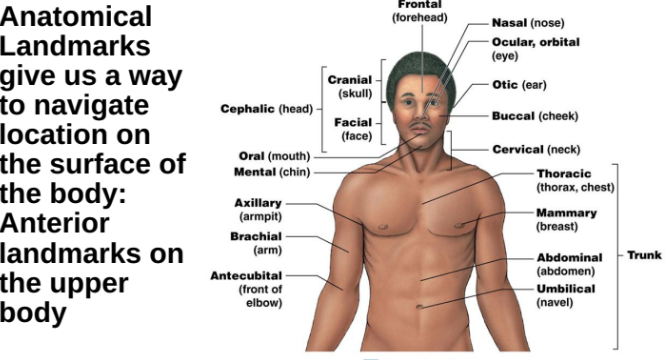
Upper body anterior/posterior landmarks (e.g., cervical, axillary, brachial, umbilical).
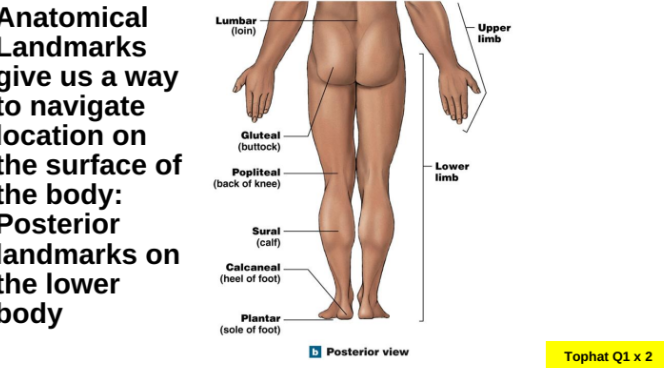
Lower body anterior/posterior landmarks (e.g., femoral, popliteal).
Directional Terminology: Positional descriptions relative to reference structures including medial versus lateral, anterior versus posterior, and superior versus inferior.
Body Planes: Frontal (coronal), sagittal, and transverse planes.
Major Body Cavities: Dorsal and ventral cavities along with their underlying sub-cavities and resident organs.
Abdominopelvic Division: Partitioning into four quadrants and nine distinct regions to map internal organs.
Organ System Profiling: Identification of essential organs and fundamental functional roles across each system.
Homeostasis and Feedback Mechanisms
Definition of Homeostasis: The essential dynamic process by which an organism maintains a stable internal environment despite continuous fluctuations in internal and external conditions.
Definition of Stimulus: An environmental or internal modification that triggers a physiological reaction or homeostatic response.
Critical Physiological Set Points (Normal Ranges):
Body Temperature: ().
Blood pH: (strict functional range: ).
Blood Volume: ( total volume).
Resting Blood Pressure: .
Fasting Blood Glucose: < 100\,\text{mg/dL}.
Systemic Regulatory Overview:
All body organ systems actively participate in homeostatic maintenance.
The Nervous and Endocrine systems serve as overarching regulatory centers controlling and integrating overall response mechanisms.
Negative Feedback Loops:
Represents a continuous, closed-loop regulatory cycle designed to counteract deviations and restore equilibrium.
Sequential Steps:
A physiological factor exists within a defined set point range.
Receptors sense a stimulus or environmental change.
The brain integrates sensory data and formulates an appropriate command.
An effector system executes a response that negates the initiating stimulus.
Homeostasis is fully restored.
Positive Feedback Loops:
Non-homeostatic, self-amplifying cascade cycles where an initial stimulus causes progressive intensification of the response.
Example (Childbirth): Head pressure from the fetus against the uterine cervix stimulates progressively stronger uterine contractions, driving the fetal head further into the birth canal until delivery concludes the cycle.
Homeostatic Imbalance and Disease Breakdown:
Breakdown of homeostatic mechanisms directly causes illness or death.
Etiology of Internal Failures: Abnormal cell proliferation, autoantibody production damaging host tissue, premature cell death, and inherited genetic disorders.
Etiology of External Disruption: Exposure to toxic chemicals, physical trauma, and invasion by pathogenic organisms.
Atomic Structure, Principal Elements, and Ion Dynamics
Hierarchical Organization of Biological Matter: Atoms Elements Monomers (composed of Carbon, Nitrogen, Hydrogen, Oxygen) Functional Polymers Intracellular Structures and Cells.
Atomic Architecture:
Protons: Positively charged subatomic particles ().
Neutrons: Uncharged neutral subatomic particles.
Electrons: Negatively charged subatomic particles ().
Atomic Number: Total proton count defining element identity.
Neutral state: Number of protons equals number of electrons.
Principal Chemical Elements in the Human Body:
Oxygen (): total body weight. Key constituent of water and biological compounds; gaseous form is critical for aerobic cellular respiration.
Carbon (): total body weight. Basic structural backbone of all organic molecules.
Hydrogen (): total body weight. Component of water and biological compounds.
Nitrogen (): total body weight. Critical constituent of proteins, nucleic acids, and organic compounds.
Calcium (): total body weight. Found in skeletal system (bones and teeth); essential for cell membrane function, nerve impulse conduction, muscle contraction, and blood coagulation.
Phosphorus (): total body weight. Found in bones, teeth, nucleic acids, and high-energy cellular compounds.
Potassium (): total body weight. Critical for cell membrane potential, nerve impulse transmission, and muscle contraction.
Sodium (): total body weight. Critical for regulating blood volume, membrane potential, nerve impulse transmission, and muscle contraction.
Chlorine (): total body weight. Regulates blood volume, membrane function, and osmotic water absorption.
Magnesium (): total body weight. Essential enzymatic cofactor.
Sulfur (): total body weight. Component of structural and functional proteins.
Iron (): total body weight. Essential for oxygen binding/transport and metabolic energy capture.
Iodine (): total body weight. Fundamental constituent of thyroid hormones.
Human Trace Elements: Silicon (), Fluorine (), Copper (), Manganese (), Zinc (), Selenium (), Cobalt (), Molybdenum (), Cadmium (), Chromium (), Tin (), Aluminum (), Boron (), and Vanadium ().
Ions and Ionic Bonding:
Ions are atoms carrying net electrical charge due to unequal proton and electron counts.
Cations: Positively charged ions formed when atoms donate electrons.
Anions: Negatively charged ions formed when atoms accept electrons.
Ionic Bonds: Electrostatic attraction between opposing cations and anions (e.g., ).
Ionization of Calcium: Calcium atom loses to yield , resulting in 2 more protons than electrons.
Electrochemical Ion Gradients Across Cell Membranes:
Extracellular Fluid (ECF / Outside Cell): , , .
Intracellular Fluid (ICF / Inside Cell): , , , (fixed intracellular protein anions).
Transmembrane gradient drives cellular communication via neural action potentials.
Molecules of Life: Organic Macromolecules
General Characteristics: Carbon-containing bio-molecules providing cellular architecture and metabolic substrate energy.
Structural Definitions:
Monomer: Single functional molecular unit.
Polymer: Macromolecule comprising linked monomeric units.
The Four Major Organic Classes:
Carbohydrates:
Function: Primary energetic fuel and cell structures.
Monomer Examples: Glucose, Fructose.
Polymer Examples:
Starch: Glucose storage form in plants.
Cellulose: Structural cell wall polysaccharide of plants.
Glycogen: Animal/human storage polymer of glucose concentrated within skeletal muscle and liver tissue.
Nucleic Acids:
Function: Cellular energy transfer, storage of hereditary genetic material, and protein synthesis.
Adenosine Triphosphate (ATP): Nucleotide monomer comprising adenine, ribose sugar, and three phosphate groups ().
Deoxyribonucleic Acid (DNA): Polymer consisting of four distinct nucleotide monomers (adenine containing a single phosphate group, thymine, guanine, cytosine).
Proteins:
Structure: Polymers composed of linked amino acid monomers forming primary chains that fold into functional tertiary or quaternary structural shapes.
Functional Categories:
Enzymes: Catalytic proteins.
Hormones: Signaling messengers.
Contractile Components: Actin and myosin in muscle tissue.
Structural Frameworks: Collagen fibers in bone and connective tissues.
Membrane Transporters: Channel and carrier proteins embedded in plasma membranes.
Lipids / Fats:
Triglycerides: Energy storage depot and thermal insulation. Formed by 3 long fatty acid carbon chains bonded to a 3-carbon glycerol backbone.
Steroids: Plasma membrane structural stability components and steroid hormones.
Phospholipids: Primary structural constituent of plasma and organelle membranes. Structure comprises a polar, hydrophilic phosphate head linked via glycerol to two non-polar, hydrophobic fatty acid tails.
Cellular Structures, Organelles, and Gene Expression
Intracellular Organelles:
Cytoplasm / Intracellular Fluid (ICF): Internal fluid cytosol hosting metabolic reactions including enzymatic cellular respiration for ATP synthesis.
Nucleus: Double-membrane organelle storing genetic DNA, bounded by a lipid nuclear envelope regulating transport via nuclear pores.
Endoplasmic Reticulum (ER): Lipid-membrane network responsible for protein translation and lipid processing; studded with ribosomes.
Ribosomes: Non-membranous organelle structures composed of ribosomal RNA and proteins that catalyze protein assembly.
Golgi Apparatus / Bodies: Stacked membranous sacs that process, sort, and package newly synthesized proteins into vesicles for intracellular routing or exocytosis.
Mitochondria: Double-membranous powerplants driving ATP generation via cellular respiration. Contain maternal circular mitochondrial DNA (mtDNA); genetic mutations cause metabolic disorders.
Cytoskeleton: Complex protein filament network (microtubules, actin filaments) providing cellular framework, mechanical support, vesicle delivery tracks, and muscle contraction capability.
Pathway of Gene Expression Across Organelles:
Nucleus: Transcription converts DNA code into messenger RNA (mRNA), which exits across the lipid nuclear membrane.
Endoplasmic Reticulum: Ribosomes translate mRNA sequences into linear amino acid chains to form proteins.
Golgi Body: Modifies and packages synthesized proteins into membranous vesicles destined for intracellular organelles or extracellular secretion.
Plasma Membrane Dynamics and Fluid Compartments
Boundary Function: Establishes physical isolation between internal cellular environment and external surroundings.
Body Fluid Compartment Divisions:
Intracellular Fluid (ICF): Cytosol within cell boundaries.
Extracellular Fluid (ECF): External fluid systems including blood plasma, interstitial fluid (IF), lymph, and matrix fluids of dense connective tissue and bone.
Plasma Membrane Architecture:
Amphipathic Phospholipid Bilayer: Arranged with hydrophilic heads interacting with water and hydrophobic fatty acid tails forming a non-polar core.
Cholesterol: Interspersed lipid regulating membrane fluidity and stability.
Membrane Proteins: Integral and peripheral proteins serving transport and receptor functions.
Selective Permeability Rules:
Hydrophilic / Polar: Charged or uncharged polar molecules interact with aqueous boundaries.
Hydrophobic / Non-polar: Uncharged non-polar molecules interact with lipid core. Non-charged fatty acid tails repel charged ions.
Molecular Permeability: Small polar molecules can slowly permeate the hydrophobic core, whereas large, polar, or fully charged molecules require transport proteins.
Solute movement naturally follows established concentration gradients.
Cellular Transport Mechanisms and Osmosis
Passive Transport: Movement down a concentration gradient (high concentration to low concentration) without expenditure of cellular ATP.
Simple Diffusion: Unassisted passage of lipophilic or tiny molecules directly across the lipid bilayer.
Facilitated Diffusion:
Channel-Mediated Transport:
Leak Channels: Transmembrane protein channels that remain continuously open.
Gated Channels: Transmembrane channels requiring specific stimuli (voltage, chemical ligand, mechanical regulation) to open.
Carrier-Mediated Passive Transport: Transmembrane carrier proteins bind specific target solutes, undergoing conformational changes to move solutes down their concentration gradient.
Active Transport: Transmembrane carrier proteins, termed cellular pumps, move solutes against concentration gradients (low concentration to high concentration). Requires cellular energy via ATP hydrolysis.
Osmosis:
Selective diffusion of solvent water across a semi-permeable membrane.
Water moves along its own concentration gradient, moving from regions of low solute concentration (high relative water concentration) toward regions of high solute concentration (low relative water concentration).
Surface Anatomical Landmarks: Anterior View
Cephalic (Head) Region:
Cranial: Skull.
Facial: Face.
Frontal: Forehead.
Nasal: Nose.
Ocular or Orbital: Eye.
Otic: Ear.
Buccal: Cheek.
Oral: Mouth.
Mental: Chin.
Cervical Region: Neck.
Anterior Trunk Regions:
Thoracic: Thorax or chest.
Mammary: Breast.
Abdominal: Abdomen.
Umbilical: Navel.
Pelvic: Pelvis.
Inguinal: Groin.
Pubic: Pubis.
Anterior Upper Limb and Manual (Hand) Regions:
Axillary: Armpit.
Brachial: Arm.
Antecubital: Front of elbow.
Antebrachial: Forearm.
Manual: Hand.
Carpal: Wrist.
Palmar: Palm.
Pollex: Thumb.
Digits: Fingers.
Anterior Lower Limb and Pedal (Foot) Regions:
Femoral: Thigh.
Patellar: Kneecap.
Crural: Leg.
Pedal: Foot.
Tarsal: Ankle.
Digits: Toes.
Hallux: Great toe.
Surface Anatomical Landmarks: Posterior View
Posterior Head, Neck, and Upper Body/Limb Regions:
Cephalic: Head.
Cervical: Neck.
Acromial: Shoulder.
Dorsal: Back.
Olecranal: Back of elbow.
Upper Limb: Upper extremity region.
Posterior Lower Body and Lower Limb Regions:
Lumbar: Loin.
Gluteal: Buttock.
Popliteal: Back of knee.
Sural: Calf.
Calcaneal: Heel of foot.
Plantar: Sole of foot.
Lower Limb: Lower extremity region.