What is energy and energy efficiency
What is energy?
Energy is a fundamental part of the universe and is how things function. It exists in various forms, including kinetic, potential, thermal, and chemical energy, and it is essential for performing work and facilitating processes in both living organisms and inanimate systems. Light can be considered kinetic as well, however it is controversial. Energy cannot be destroyed, only transformed or transferred.
There are many types of energy, as listed before, but the main two are active and potential. Potential is when there is energy stored, but not being used. An example of this is the chemical energy in the nutrients uneaten food. Types include potential elastic, potential nuclear, potential chemical, etc. Active on the other hand is in use. The biggest example is kinetic energy, the energy of movement. Other active energies include sound, light, chemical, etc. However, other than light, all forms of energy can be considered kinetic, if they are active, or in other words, non-potential. For example, sound is basically just the movement of air particles, and kinetic energy is the energy of movement. The formula to measure kinetic energy is ½MV², where M=mass and V=velocity.
Energy transfer and transformation
Energy transfer is the movement of energy from one location to another. Energy transformation is the changing of energy from one type of energy to another. For example, TVs transform, whereas a transfer example is the kettle heat to the boiling water. This is an important thing to know.
Energy efficiency
Energy efficiency is basically when you try to eliminate as much waste energy as possible. Waste energy is basically energy that is being produced when you do not actually need it. For example, you want the electric energy to transform into light and sound for TVs, thermal energy will also come in the transformation process. To show this orts of inefficiencies, there are sankey diagrams, in the format being of the example attached below. The most common form of wasted energy is thermal. Formula: q(energy)=M(mass)*C(heat capacity)*ΔT(change in temperature).
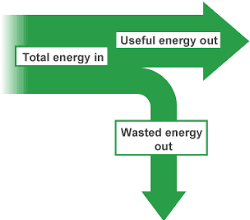
The diagram is not only used for science, however also for things such as budgeting, showing you where your money is going. There are ways to calculate energy inefficiency, such as with thermal losses.