Evolution
Essential Question: What is the evidence that demonstrates organisms have evolved over time?
Evidence for Evolution - Patterns in the Anatomical, Genetic, and Fossil Evidence
Fossils
Fish w/ Fingers: The fossils of water dwellers from 400 million years ago showed that they had hands, proving that the evolution of limbs was from creatures still in water rather than animals crawling onto shore.
Explore Your Inner Animals:
Ardi the hominid - Pelvis
- she had a pelvis and feet similar to humans
- The top pelvis looked more human because the hip bone is short and broad
- The top pelvis is a sign of bipedalism
- The lower pelvis is for climbing
- Ardi’s foot structure is a grasping foot, so she can walk
- Ardi can walk on 2 legs, but not perfectly, so she was a “creature in transition”
Reptiles - Ears
- All mammals (humans included) have three bones in the middle ears
- Malleus
- Incus
- Stapes
- They form a leaver system that urns the vibrations of air into sound
- The nervous system perceives this
- Mammalian ears are more sensitive to sound than reptiles because the malleus and incus amplify sounds
To understand how mammals evolved from reptiles, opossums are used as an example. Opossum’s ears go through evolution as they grow. The early embryos resemble reptile ears: 1 ear bone and 2 extra middle ear bones and the ears are part of the jaw. The jaw joint between the skull and the jaw resemble reptiles. When the opossum grows, the bones get disconnected from the jaw.
Hands
The modern human hand shares the following traits with the Notharctus’ hand. Notharctus is a 50 year old primate.
- Long fingers
- Fingernails instead of claws
- Divergent thumbs
- Divergent thumbs allow for a tighter grip
Brain
The human brain and the amphioxus brain both have control genes that determine the form of the brain.
- Modern human brain’s first roots rose around 500 million years ago
Human brains and primate brains have large areas of the brain devoted to processing visual information and having specialized functional regions (ex. on an area for grasping objects).
- The large number of neurons are why humans are smarter than other primates
Back
How humans went from primates with tails to humans without:
- Another word for coccyx is tail
- It hurts to fall on our coccyx because its not covered by much tissue or muscle
- Apes don’t have tails
The shape of the sacral vertebrae of the fossil ape Proconsul is a tiny bone of the base of the spine, it may be one of the first tailless apes.
The spine:
- The weight of our body hangs down on our spine when we’re on all fours
- The weight is all on the front when on 2 feet
Anatomy
__Homologous Structure__ - Organisms with similar physical traits and that share a common ancestors, but the traits are used in different ways.
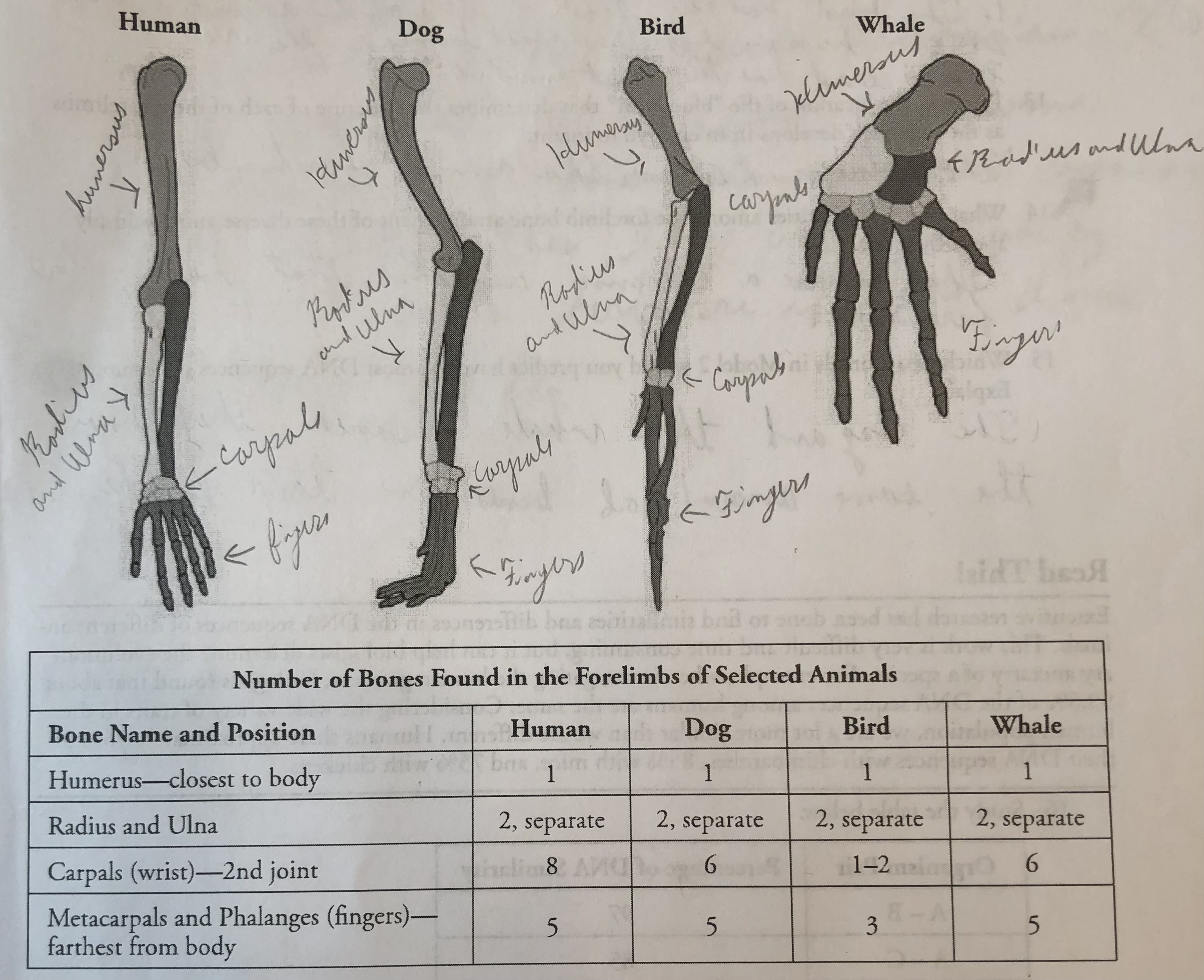
__Analogous structure__ - Physical traits among different organisms that have similar functions but different structures.
Ex. Butterfly and bird wings
Vestigial structure - A trait inherited from an ancestor but the trait is now less elaborate and functional.
“Usually, vestigial structures are formed when a __[lineage](https://evolution.berkeley.edu/glossary/lineage/)__ experiences a different set of selective circumstances than its ancestors, and __[selection](https://evolution.berkeley.edu/glossary/natural-selection/)__ to maintain the elaboration and function of the feature ends or is greatly reduced. Thus, they provide strong evidence of common ancestry and can help us trace the evolutionary origin of the species with the vestigial structures.” - Berkeley, University of California
Genetics
Explore Your Inner Animals:
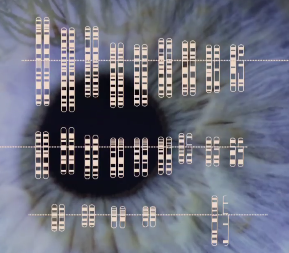
Monkeys will be compared to humans, and the subject will be about eyes to understand genetics.
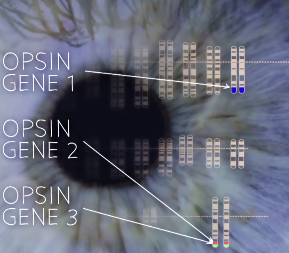
- Opsins are special proteins in the cells on retinas that help you see color
- Monkeys can’t see the same range of colors that humans can because they have 2 opsins and humans have 3
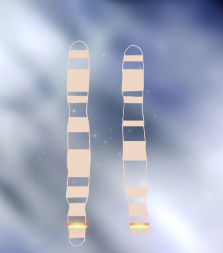
Clues scientists found in our DNA: The gene for the newer opsin sits right next to the old one and they’re similar. The old one was duplicated and there was a mutation. This is how humans might have evolved enhanced color vision.
Evidence of Evolution:
The table below shows the percentage similarity the list organisms have with humans
| Organism | Percentage of DNA similarity |
|---|---|
| Among Humans | 99.5% |
| Chimpanzees | 96% |
| Mice | 85% |
| Chickens | 75% |
Predicting Evolutionary Relationships
Cladograms
__Cladogram__ - Diagram that shows evolutionary relationships among groups.
- Cladograms are based on @@phylogeny@@
__Phylogeny__ - The study of evolutionary relationships.
__Cladistics__ - A type of evaluation in which you examine the @@traits of organisms that are considered newer traits that serve some kind of purpose@@.
- Characteristics that came from an organism’s ancestor.
__Derived characteristics__ - Newer traits that serve some kind of purpose and appear in later organisms but no earlier ones.
__Outgroup__ - The organism on a cladogram with the least derived trait
__Ingroup__ - The organisms on a cladogram with derived traits
What Evidence Supports the Theory of Evolution?
HHMI: The Original of Species - What did Darwin & Wallace learn?
Darwin went to the Galàpagos Islands and noticed:
- Tortoises from different islands of the Galàpagos have different shells
- Fossils of extinct animals resemble animals living today
- Mockingbirds on different islands of the Galàpagos have different markings
Wallace noticed that:
- Two species are very similar when they live closer to each other
- The bones in the flippers of manatees are similar to the ones in whales
They concluded that:
- traits of organisms change when their environment changes
- Organisms w/ traits that help them survive will outnumber others