2.7 Proteins
Proteins
polymer of amino acids
Amino Acid - composed of central carbon atom linked to amino group, carboxyl group, hydrogen atom, and variable group of atoms called side chain or R-group
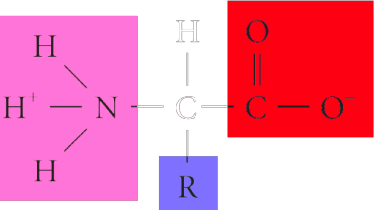
20 different amino acids synthesized by ribosomes
R group makes one amino acid different from another
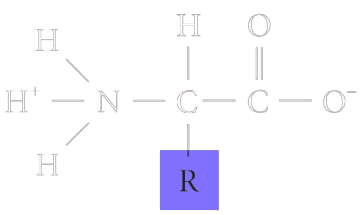
There are 9 Essential Amino Acids - must get from diet
Series of amino acids link together to form a protein
Structure and function of protein are determined by sequence of amino acids and is coded for by genes
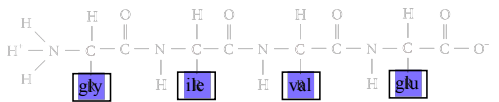
Amino acids are joined together through condensation reactions between a carboxyl group and amino group
Amino acids linked by covalent bond (peptide bond)
Primary Structure
linear sequence of aa’s in polypeptide chain
Amino acid sequence determines 3D shape of a protein and therefore its function
Secondary Structure
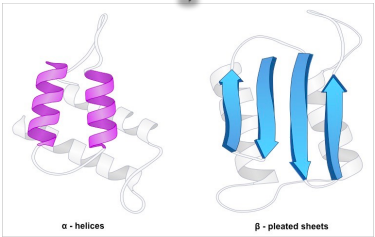
portions of repeated coils or folds caused by hydrogen bonding between adjacent amino acids
Polypeptide chain develops α-helix (delicate coil) or a β-pleated sheet (side by side alignment of aa chain - provides strength)
 Tertiary Structure
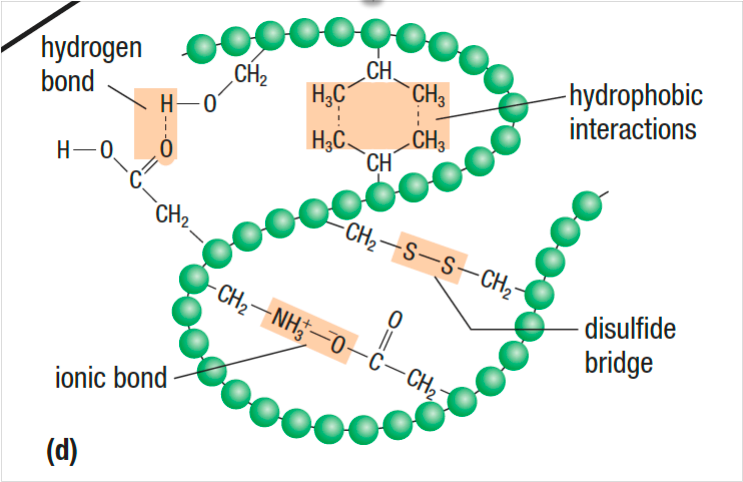
3D shape due to interaction of R-groups - ionic and H bonds, disulphide bridges, hydrophobic interactions
Disulfide bridge - S-S covalent bond - stabilize shape
Quaternary Structure
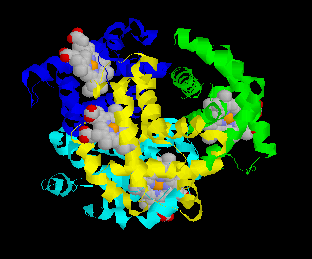
two or more polypeptides held together by same forces above or contains an inorganic prosthetic groups
Creates very specific 3D shape with unique surfaces and pockets
 Denaturation
Proteins becomes denatured when shape gets deformed because hydrogen bonds are broken by heat or solubility is altered by pH changes
Changing structure usually results in loss of function
Proteome
totality of proteins expressed within a cell, tissue or organism at a certain time
Each individual has a unique proteome which is coded for by our genes
Proteome is always significantly larger than number of genes in an individual
Functions of Proteins
• Enzyme (catalyze reactions - Rubisco, catalase)
• Immunity (protection - antibodies, immunoglobulins)
• Hormones (chemical messengers - insulin, glucagon)
• Movement (contractile - actin, myosin)
• Sensation (receptors - rhodopsin)