Exam 3 Equation Sheet
✅ Exam Notes — N1 to N7
✅ N1 — Motion & Newton’s 2nd Law
🔹 Newton’s 2nd Law (Center of Mass)
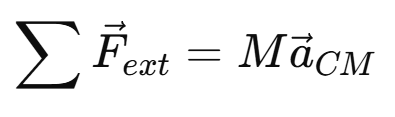
The net external force equals the total mass times the acceleration of the center of mass.
🔹 Definitions
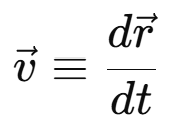
Velocity = rate of change of position.
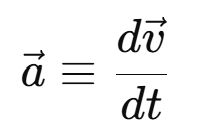
Acceleration = rate of change of velocity.
✅ N2 — Fundamental Forces
🔹 Gravitational Force
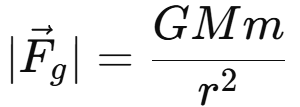
Attractive force between two masses.
(G): universal gravitational constant
(r): separation between masses
🔹 Electric Force (Coulomb’s Law)
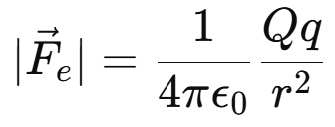
Force between two charges.
Attractive or repulsive depending on sign.
🔹 Spring Force (Hooke’s Law)
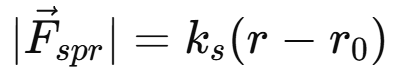
Force exerted by a spring.
Direction pulls toward equilibrium length r0.
✅ N3 — Kinematics
🔹 Constant acceleration

Straight-line motion at constant acceleration.
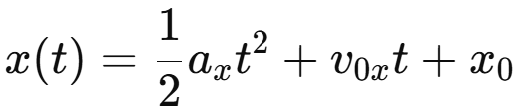
Position function under constant acceleration.
🔹 General motion — Integrals
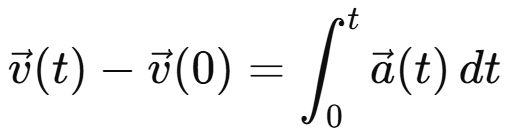
Velocity is the integral of acceleration.
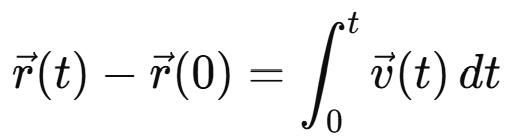
Position is the integral of velocity.
✅ N4 — Torque

Torque is a rotational analog of force.
Depends on angle between vectors r and F.
Maximum torque occurs at 90 degrees.
✅ N5 — Friction & Drag
🔹 Static Friction
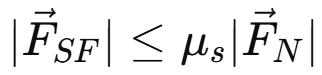
Prevents motion.
Increases up to a maximum value.
🔹 Kinetic Friction
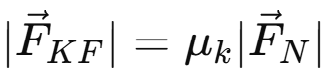
Opposes motion once sliding begins.
🔹 Drag Force
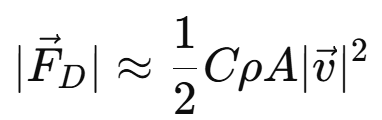
Opposes motion through fluid.
Depends on speed, cross-sectional area, drag coefficient, density.
✅ N7 — Circular Motion
🔹 Constant Speed
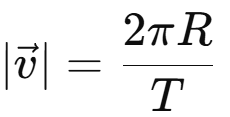
Speed around a circular path.
R = radius, T = period.
🔹 Uniform Circular Motion
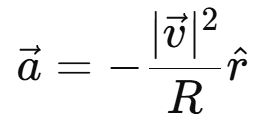
Acceleration points radially inward (centripetal).
🔹 Nonuniform Circular Motion
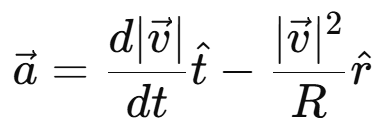
Acceleration has:
Tangential part (speed change)
Radial part (direction change)
✅ Quick Summary Table
Chapter | Topic | Key Ideas |
|---|---|---|
N1 | Newton’s laws | Net force → acceleration |
N2 | Forces | Gravity, electric, spring |
N3 | Kinematics | Constant accel + integrals |
N4 | Torque | (r \times F), rotational force |
N5 | Friction/Drag | Static, kinetic, air drag |
N7 | Circular motion | Centripetal accel; uniform vs nonuniform |