Rhythm
Rhythm
aspects of music having to do with the duration of the notes in Time
When listening to music, many aspects of music we perceive are rhythmic in nature. These can be grouped into
Beat
Tempo
Quality
Beat
A Beat is the basic unit of pulse in music
The basic premise of western Art music (with regard to rhythm) is that rhythms are all contingent on having an underlying Beat or “pulse” in the music.
beat is divisible
Organizing Beats
Music is written with regular vertical lines demarking “bars” or groups of beats
The number of beats per bar is user determined, and identified to the reader by using a “time signature
make longer notes: Several beats can be added together to make notes of longer lengths. We might perceive these as “slower notes”
make shorter notes: Single beats can be divided (and sub-divided, and sub-sub-divided, and sub-sub-sub- divided, etc.) into notes of shorter lengths. We would perceive these as faster notes. Notes of various lengths give us the surface rhythm
Meter
tell us how many beats per bar
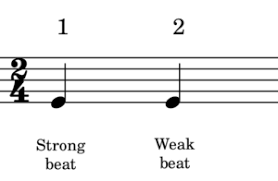
shows how not all beats are equal
example below shows how the 2nd one will always be weaker than the first
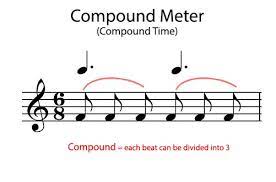
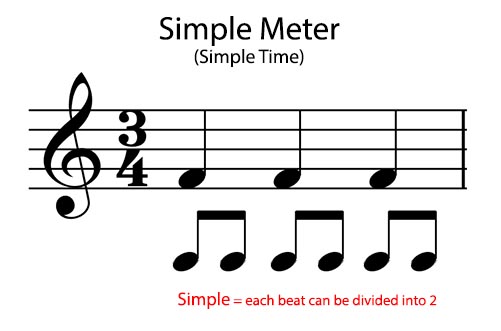
Types of Meters
Syncopation
Syncopation occurs when a piece of music emphasizes unexpected beats in the measure. Instead of the regular, predictable beats that form the backbone of the rhythm, syncopated notes are thrust into the spotlight, creating a dynamic and often surprising musical experience