Genetic variation
Variation: differences between
Discontinuous variation is when there are distinct differences for a characteristic e.g whether someone can roll their tongue or not - there’s no in-betweens
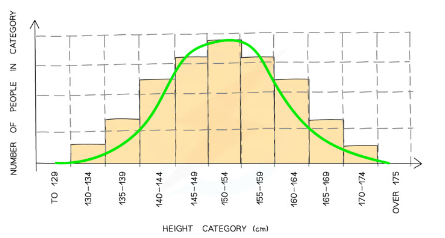
When graphs of these data are plotted, continuous variation gives smooth bell curves (a result of all the small degrees of difference), whereas discontinuous gives a ‘step–like’ shape
Phenotypic variation
can be caused in two main ways:
It can be genetic - controlled entirely by genes
Or it can be environmental - caused entirely by the environment in which the organism lives
Genetic variation
Meiosis creates genetic variation between the gametes produced by an individual
This means each gamete carries substantially different alleles
During fertilization, any male gamete can fuse with any female gamete to form a zygote
This random fusion of gametes at fertilization creates genetic variation between zygotes as each will have a unique combination of alleles
Zygotes eventually grow and develop into adults
Examples of genetic variation in humans include:
Blood group
Eye colour
Gender
Ability to roll tongue
Whether ear lobes are free or fixed

Environmental variation
Characteristics of all species can be affected by environmental factors such as climate, diet, accidents, culture and lifestyle
In this instance ‘environmental’ simply means ‘outside of the organism’ and so can include factors like climate, diet, culture, lifestyle and accidents during lifetime
Examples include:
An accident may lead to scarring on the body
Eating too much and not leading an active lifestyle will cause weight gain
Genetic and environmental causes
Discontinuous variation is usually caused by genetic variation alone
Continuous features often vary because of a combination of genetic and environmental causes, for example:
Tall parents will pass genes to their children for height
Their children have the genetic potential to also be tall
However if their diet is poor then they will not grow very well
Therefore their environment also has an impact on their height
Human Genome Project
In 2003, scientists completed a 13-year project in which they sequenced the genes that make up the whole human genome
This project was named the human genome project and it has:
improved the understanding of the genes linked to different types of diseases
helped in the treatment of inherited disorders
helped in tracing human migration patterns from the past
Mutations
are rare,random changes that continuously occur in the sequence of DNA bases in a gene/chromosome
As the DNA base sequence determines the sequence of amino acids that make up a protein, mutations in a gene can sometimes lead to a change in the protein that the gene codes for
Most mutations do not alter the protein or only alter it slightly so that its appearance or function isn’t changed
Insertions
A new base is randomly inserted into the DNA sequence
An insertion mutation changes the amino acid that would have been coded for by the group of three bases in which the mutation occurs
Remember – every group of 3 bases in a DNA sequence codes for an amino acid
An insertion mutation also has a knock-on effect by changing the groups of 3 bases further on in the DNA sequence

Deletions
A base is randomly deleted from the DNA sequence
Like an insertion mutation, a deletion mutation changes the amino acid that would have been coded for by the group of three bases in which the mutation occurs
Like an insertion mutation, a deletion mutation also has a knock-on effect by changing the groups of 3 bases further on in the DNA sequence
Substitutions
A base in the DNA sequence is randomly swapped for a different base
Unlike an insertion or deletion mutation, a substitution mutation will only change the amino acid for the group of three bases in which the mutation occurs; it will not have a knock-on effect

The Effects of Mutations
Most mutations don’t alter the protein or only alter it slightly so that its appearance or function is not changed
However, a small number of mutations code for a significantly altered protein with a different shape
This may affect the ability of the protein to perform its function. For example:
If the shape of the active site on an enzyme changes, the substrate may no longer be able to bind to the active site
A structural protein (like collagen) may lose its strength if its shape changes
On rare occasions mutations lead to the development of new alleles and so new phenotypes
Occasionally, the new allele (and its resulting phenotype) gives the individual a survival advantage over other members of the species
e.g:
A bird develops a mutation leading to a change in feather colours
This makes it more attractive to birds of the opposite gender
Which causes the bird to breed more frequently and have more chances of passing on the mutated phenotype to the next generation
Mutations also leads to harmful changes that can have dramatic effects on the body - e.g, sickle cell anaemia in humans
Sickle cell anaemia
Sickle cell anaemia was the first genetic disease to be described in terms of a gene mutation ( change in the base sequence of DNA). The mutation changes the molecule haemoglobin, causing the red blood cells (RBC’s) to become stiff and sometimes sickle-shaped when they release oxygen to the body tissues then the sickled cells tend to get stuck in narrow blood vessels, blocking the flow of blood. As a result, those with sickle cell disease suffer painful “crises” in their joints and bones
They may suffer strokes, blindness, or damage to the lungs, kidneys, or heart. They must often be hospitalized for blood transfusions and are at risk for a life-threatening complication called acute chest syndrome, although many sufferers of sickle cell disease die before the age of 20, modern medical treatments can sometimes prolong these individuals’ lives into their 40s/50s

The Causes of Mutations
Mutations happen spontaneously and continuously but their frequency can be increased by exposure to the following:
Gamma rays, x - rays and ultraviolet rays - all types of ionising radiation which can damage bonds and cause changes in base sequences
Certain types of chemicals - for example chemicals such as tar in tobacco
Increased rates of mutation can cause cells to become cancerous, which is why the above are linked to increased incidence of different types of cancer