Understanding Teratogens and Prenatal Health
Teratogens 🚨
Teratogens are substances or agents that can cause harm or damage to a developing fetus or embryo, resulting in birth defects, brain damage, intellectual impairment, or behavioral issues.
Examples of Teratogens
Alcohol
Prescription medication
Over-the-counter medication
Cigarettes and other tobacco products, vaping
Illegal drugs
Pollution
Viruses and bacteria
Food-borne illnesses
Radiation (X-rays)
Genetic Vulnerability
"Genetic vulnerability refers to the susceptibility of an individual's genes to the effects of teratogens."
Timing of teratogen exposure is critical, and the same teratogen may cause irreparable damage at one stage of pregnancy but have no effect at another stage. Frequency and duration of exposure also play a role.
Reducing Teratogen Risks
General good maternal health before pregnancy is a protective factor
Good nutrition and health habits during pregnancy
Start prenatal health care as early as possible
Avoid use of alcohol, tobacco, illegal drugs
Consult your doctor regarding any prescription drugs you are already on and before taking any new ones, as well as before taking over-the-counter medicines or herbal remedies
Follow doctor's advice on any foods or activities to avoid
The Beginning of Life 🌱
All living things are composed of cells that promote growth and sustain life according to instructions in their molecules of DNA.
DNA (Deoxyribonucleic acid)
"DNA contains the chemical instructions for cells to manufacture various proteins."
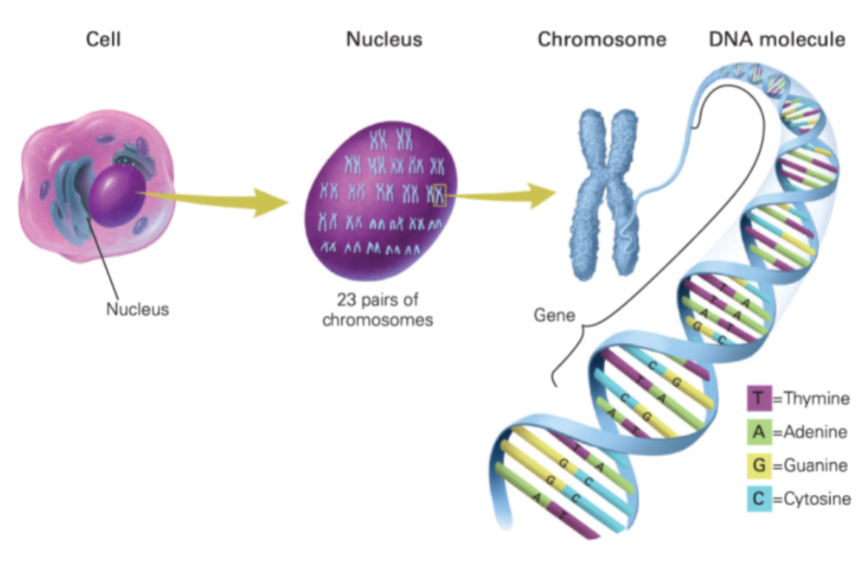
Chromosomes
"Chromosomes are molecules of DNA that consist of 46 chromosomes arranged in pairs."
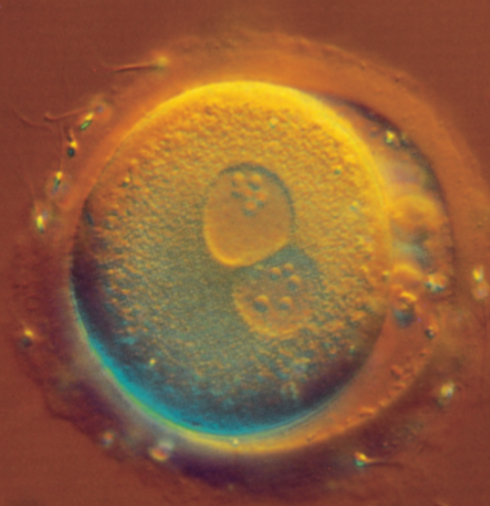
Conception
When sperm and ova unite and fertilization occurs, a zygote is formed. Zygotes have 23 chromosomes from each parent, resulting in a total of 46 chromosomes.
The Human Genome Project 🧬
The Human Genome Project is a research study that aimed to sequence and map all of the genes in human DNA.
Interesting Data
Genetic similarity between any two humans (regardless of ethnicity, gender, or race): 99.5%
Genetic similarity between humans and any mammal: 90%
Genetic Variations and Similarities 🌈
Humans have approximately 23,000 genes. This means that while many genes are identical for all humans, some genes have variations.
Allele
"An allele is a variation of a gene or any of the possible forms in which a gene for a particular trait can occur."
Effects of Variations
Effects of variations vary greatly, from having no detectable effect at all to causing observable physical differences to causing life-threatening diseases.
Genetics 🧬
Genotype
"An organism's genetic inheritance or genetic potential, unique for every individual."
Phenotype
"The observable characteristics of an organism, including appearance, personality, intelligence, and other traits."
The 23 Pairs of Chromosomes 🧬
Humans should possess 46 chromosomes (however, chromosomal errors can occur). 44 of them are considered autosomes, and the remaining 2 are sex chromosomes (XY for male, XX for female).
Sex Determination
The sex of offspring is determined by whether the ovum is fertilized by the father's X sperm or his Y sperm.
Gender Differences in Vulnerability 🚨
Males are genetically more vulnerable than females. Many genetic disorders are X-linked disorders, meaning they are related to the X chromosome.
X-Linked Disorders
Color blindness
Hemophilia
Duchenne's Muscular Dystrophy
Allergies
Some learning disabilities
Some vision disorders
Genetic Expression 🧬
Just because a gene is present does not mean it will be expressed. The majority of traits are polygenic, meaning that more than one gene is involved.
Regulator Genes
"Regulator genes direct the interactions of other genes, controlling their genetic expression, duplication, and transmission."
Dominant Recessive Heredity 🧬
Dominant genes are more influential than recessive genes. A dominant gene can completely control the phenotype with no noticeable effect of the recessive gene.
Carrier
"A person whose genotype contains a gene that is not expressed in the phenotype, but can still be passed on to offspring."
Twins 👶
Types of Twins
Type | Description |
Monozygotic (Identical) | Originate from 1 zygote that splits very early in development |
Dizygotic (Fraternal) | Result from fertilization of 2 separate ova by 2 separate sperm |
Prenatal Development 🤰
Three Periods of Prenatal Development
Germinal Period (first 14 days)
Embryonic Period (3-8 weeks)
Fetal Period (9 weeks-birth)
Vulnerability During Prenatal Development
Period | Vulnerability |
Germinal Period | 65% of zygotes do not grow or implant properly and do not survive |
Embryonic Period | 20% of all embryos are spontaneously aborted, usually due to chromosomal abnormalities |
Fetal Period | 5% of all fetuses are spontaneously aborted before viability (22 weeks) or are stillborn (born dead after 22 weeks) |
Prenatal Testing 🧬
Many prenatal tests are done during pregnancy to identify and prevent potential issues.
Examples of Prenatal Tests
Vaccinations and immunity levels
Blood and urine tests
Ultrasound
Amniocentesis
Glucose testing
Chromosomal Anomalies 🚨
The majority of chromosomal issues cause the embryo to stop developing very early and result in miscarriage.
Examples of Chromosomal Anomalies
Down Syndrome (also called trisomy-21)
Other chromosomal anomalies (too many or too few chromosomes)
Genetic Disorders 🧬
The phenotype is only affected if the gene is dominant or if both parents carry the recessive gene.
Examples of Genetic Disorders
Huntington's disease
Cystic fibrosis
Thalassemia
Sickle cell disease
Fragile X syndrome
Preterm Versus Small for Gestational Age 🤰
Term | Description |
Preterm | Birth that occurs prior to 35 weeks |
Small for Gestational Age (SGA) | Birth that occurs on time (36+ weeks) but is significantly smaller than normal |
Low Birthweight 🚨
Infants with low birthweight will be classified into three categories: low, very low, and extremely low.
Factors Contributing to Low Birthweight
Chronic maternal health issues
Maternal illness during pregnancy
Exposure to teratogens, especially tobacco products
Maternal use of certain prescription medications
Maternal illegal drug use before or during pregnancy
Low SES
Lack of prenatal care
Chronic stress
Consequences of Low Birthweight
All developmental accomplishments are late
Cry more, have attention issues, behavioral issues, language delays, learning disabilities
By middle childhood, they continue to have neurological delays and smaller brain volume## 🤰♀ Trends in Maternal and Infant Health
Why Does the US Do Poorly in Maternal and Infant Health?
The US has the highest unplanned pregnancy rate in the developed world, which contributes to poor maternal and infant health outcomes. Several factors contribute to this issue:
Lack of comprehensive sex education: Many individuals in the US do not receive adequate education on sex and reproductive health.
Lack of education regarding birth control usage: Limited knowledge about birth control options and how to use them effectively contributes to unplanned pregnancies.
Lack of availability and affordability of more reliable forms of birth control: Access to effective birth control methods is limited for many individuals in the US.
Teen Pregnancy Rates
The US has the highest teen pregnancy rate in the developed world. Although the rate has been declining over the past decade, it remains a significant concern.
General Health Care Access
Limited access to general health care contributes to poor maternal and infant health outcomes in the US. This includes:
Lack of general health care access: Many individuals in the US do not have access to regular health care, leading to unmanaged health conditions.
Lack of maternity health coverage: Limited access to health insurance that covers maternity care contributes to poor health outcomes.
Lack of prenatal health care: Inadequate prenatal care can lead to complications during pregnancy and childbirth.
Lack of pregnancy-related hospital services and doctors in rural areas: Limited access to medical care in rural areas can lead to poor health outcomes.
Maternity Leave
The US is the only developed country without maternity leave, which can contribute to poor health outcomes for new mothers and their infants.
🏥 Medical Interventions
Fetal Monitoring
Fetal monitoring is used to track the health of the fetus during labor and delivery.
Epidurals
Epidurals are a type of pain relief used during labor.
Induced Labor
Induced labor is a medical intervention used to stimulate labor.
Cesarean Sections (C-Sections)
A Cesarean section is a surgical birth where the fetus is removed through a lower abdominal incision.
Medically Necessary Reasons for C-Section | Description |
Multiples | Carrying multiple fetuses |
Breech | The fetus is in a breech position |
Prior C-Sections | Previous C-sections |
Labor more than 24 hours | Prolonged labor |
Fetal distress | The fetus is in distress |
Advanced maternal age | The mother is over 35 years old |
👶 Newborns
Brazelton Neonatal Behavioral Assessment Scale
The Brazelton Neonatal Behavioral Assessment Scale records 46 behaviors, including 20 reflexes.
A reflex is an unlearned, involuntary action or movement in response to a stimulus. Reflexes occur without conscious thought.
Examples of reflexes include:
Sucking
Rooting
Grasping
Bonding between Mother and Child
Bonding between mother and child is especially important. Kangaroo care, or skin-to-skin contact, can help with this, particularly with preterm infants.
🤕 New Mothers
Postpartum Depression
New mothers are at risk for postpartum depression, which can be influenced by:
Physical problems after birth, especially after a C-section
Psychological symptoms, ranging from the normal baby blues to serious depression to postpartum psychosis
Struggles with adequate baby care/lack of help
Previous mental health issues
Infant health problems
Lack of sleep