Nutrition Lec 2- 1st Qtr
MODULE 2 - NCM 105 NUTRITION & DIET THERAPY ………..
NUTRITION CARE PROCESS ……….
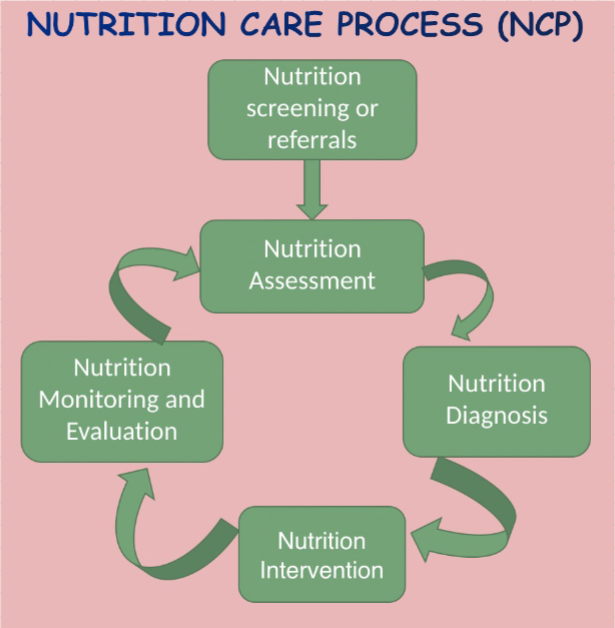
Nutrition Care Process (NCP)
Systematic problem-solving method.
Dietetics & nutrition professionals use it to critically think & make decisions.
To address nutrition-related problems.
To provide Safe / Effective / Quality nutrition care.
Provides a framework for professionals to customize care.
Taking into account the client’s needs & values.
Using the best evidence available to make decisions.
Nutrition Care Process Illustration
Assessment Of Nutritional Status
Involves a collection & analysis of health-related information.
To identify specific nutrition problems & underlying causes.
5 Standard Domains
Food Nutritional-Related History (subjective & objective data).
Anthropometric Measurement (human measurements).
Biochemical Data / Medical Test / Procedures (lab tests).
Nutrition-Focused Physical Findings (physical assessment).
Client History (underlying condition/medication that affects diet).
Food Nutritional-Related History
1.1 - Dietary Intake Data (usual intake every meal/day & food allergies).
1.2 - Nutrient Intake Analysis (identify nutritional inadequacies).
1.3 - Food Frequency (how often of consumption).
1.4 - Food Diary (detailed recording of food intake).
1.5 - 24-Hour Recall (ate/drank last 24 hours).
Physical Assessment
2.1 - Anthropometric Data (Height / Weight / BMI).
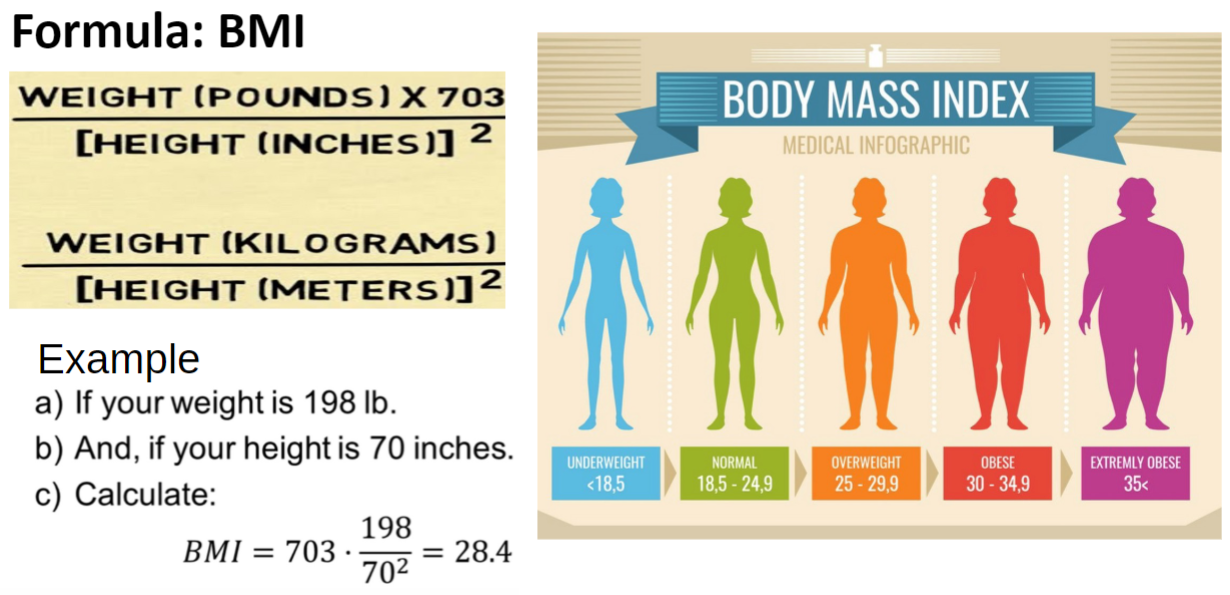
BMI Results
Underweight = Below 18.5.
Normal (Healthy Individual) = 18.5 to 24.9.
Overweight = Above 25.
Obese = Above 30.
Extremely Obese = Above 35.
Nutrition Diagnosis & Plan Of Care
Consists of the identification of nutritional problems.
Nutrition-related activities provide the primary intervention.
Each nutritional problem is formatted as a PES statement.
(P) Problem / (E) Etiology / (S) Signs & Symptoms (interrelated).
Nutrition Problems & Needs
Purpose is to identify & describe a specific nutrition problem that can be resolved/improved through treatment/nutrition intervention by a food & nutrition professional.
(P)roblem Related To (E)tiology As Evidenced By (S)igns & Symptoms
PES Format
Problem (Nutrition Diagnosis Label)
Describes alterations in the patient's nutritional status.
Etiology
Cause/contributing risk factors.
Linked to the label by the words "related to".
May be Social / Situational / Physical / Developmental / Cultural / Psychological / Pathological / Environmental nature.
Signs (Objective) & Symptoms (Subjective)
To determine that the patient has the nutrition diagnosis specified.
Linked to the label & etiology by the words “as evidenced by”.
3 Domains/Categories
Intake
Too much/little of a food/nutrient.
Compared to actual/estimated needs.
Clinical
Nutrition problems that relate to medical/physical conditions.
Behavioral
Knowledge / Attitudes / Beliefs / Physical Environment / Access To Food / Food Safety.
Example Of Nutrition Diagnosis (PES Format)
Unintentional weight gain related to long-term use of corticosteroids as evidenced by involuntary weight gain of 10% of body weight over the past 6 months.
Excessive energy intake related to poor knowledge of appropriate portion sizes as evidenced by excess weight with a BMI of 40 (obese).
Excessive energy intake related to frequent consumption of large portions of high-fat meals as evidenced by average daily energy intake exceeding the recommended amount by 2 m and 6-kilogram weight during the past 18 months.
Altered nutrition-related laboratory values related to alteration in GI function as evidenced by abnormal glomerular filtration rate (GFR).
Planning The Diet With Cultural Competency
Appropriate diet is adequate/balanced & considers the individual's characteristics: Age / Stage Development / Taste Preferences / Food Habits.
Reflects the availability of Foods / Socioeconomic Conditions / Cultural Practices / Family Traditions / Preparation Facilities / Cooking Skills.
Adequate & balanced diet meets all the nutritional needs of an individual for Maintenance / Repair / Living Processes / Growth / Development.
Includes energy & all nutrients in proper amounts & proportion.
Presence/absence of 1 essential nutrient may affect the Availability / Absorption / Metabolism / Dietary Needs of others.
Recognition of nutrient interrelationships provides further support for the principle of maintaining food variety to provide the most complete diet.
Nutrition Intervention
Planning & implementation of appropriate care after problems are identified.
Inform the dietary department & wait for diet order (nursing responsibility).
It includes:
Counseling/education about appropriate dietary & lifestyle practices.
Change in medication & other treatment.
Adjustments in the meal service provided to a hospital client.
Intervention Must Consider The Individual's:
Food Habits.
Lifestyle.
Other Personal Factors.
Goals Are Stated In Terms Of Measurable Outcomes
EXAMPLE: Goal of an overweight person with diabetes might include improvements in blood glucose level and body weight.
Other Goals May Be Positive Changes Dietary Behaviors & Lifestyle
EXAMPLE: Diabetic patient can learn how to control carbohydrate intake & portion sizes or begin a regular exercise program.
Food & Nutrient Delivery
Individualized approach for food/nutrient provision.
Including Meals / Snacks / Enteral / Parenteral / Nutrition / Supplements / Feeding Assistance / Feeding Environment / Nutrition-Related Medication Management.
Food Administration
Oral Nutritional Supplements (ONS)
Sterile Liquids / Semi-Solids / Powders that provide nutrients.
Widely used within the acute & community health settings.
For individuals who cannot meet their nutritional requirements through oral diet alone.
Enteral Nutrition
Any method of feeding that uses the gastrointestinal (GI) tract.
To deliver part or all of a person's caloric requirements.
Short-Term Enteral Access Tubes
Placed into the nares or sometimes orally (usually at the bedside).
Provides a means to meet patient nutrient needs.
Provide a change to assess tolerance of the tube feedings if more permanent long-term placement is determined to be required.
Types Of Formulation
Ready to use formula (any purchased product).
Tube feedings (should be blended).
Standard tube feeding (Milk Base / Sugar / Cooked Egg).
Blenderized tube feeding (soft diet blended & fed to patient via NGT).
Long-Term Enteral Access Tubes
Allows short/long-term delivery of nutrients to the digestive tract.
For patients who cannot maintain requirements orally & GIT obstruction.
2 Common Types Used In Enteral Nutrition
Gastro-Jejunum Tube (G-J Tube)
Used when large amounts of food are vomited out.
End-tube through abdominal wall into small intestine (jejunum).
Port remains outside the body.
Placed so that liquid food is delivered straight to small intestine.
Can include a normal oral diet, the use of liquid supplements, or the delivery of part/all of the daily requirements by use of a tube (tube feeding).
Gastrostomy Tube (G Tube)
End-tube through abdominal wall into stomach.
Port remains outside the body.
Placed so that liquid food is sent straight into the stomach.
Parenteral Nutrition
Delivery of calories & nutrients into a vein.
Many reasons for enteral & parenteral nutrition including GI disorders.
Bowel Obstruction / Short Bowel Syndrome / Crohn’s Disease / Ulcerative Colitis / Certain Cancers / Comatose Patients.
Total Parenteral Nutrition (TPN)
Provides total nutritional intake (no other food).
Contains a sufficient amount of nutrients/minerals.
High concentration (thicker).
Administered to large veins (vena cava & subclavian).
Long-term use (several weeks/months).
Peripheral Parenteral Nutrition (PPN)
Provides partial/supplemental sources of nutrients (can eat).
Contains an incomplete amount of nutrients/minerals.
Low concentration (thinner).
Administered to small veins (peripheral).
Short-term use (maximum of 2 weeks).
Monitoring Nutritional Status
Strategies To Address Age-Related Changes Affecting Nutrition
Elderly
Encourage healthier food choices.
Snacking on healthy foods.
Make food taste good.
Consider adding supplements.
Encourage exercise.
Child
Plenty of fruits & vegetables.
Plenty of starchy foods (Bread / Rice / Potatoes / Pasta).
Milk & dairy foods/non-dairy alternatives.
Sources of protein (Meat / Fish / Eggs / Beans).
Selected Therapeutic Diets
Therapeutic Diet
Meal plan that controls the intake of certain foods or nutrients.
Part of the treatment of a medical condition (observed).
Normally prescribed by a physician & planned by a dietician.
Usually a modification of a regular diet (depending on the patient’s needs).
Not all diets are the same for each patient.
Needed for Cardiovascular Disease / Gastrointestinal Disease / Diabetes.
What Disease Requires A Therapeutic Diet?
Cardiovascular Disease (Coronary Artery Disease / Hypertension / Heart Attacks / Stroke).
Diabetes.
Gastrointestinal Disease (Crohn's Disease / Ulcerative Colitis / Celiac Disease).
Factors To Be Considered In Planning Therapeutic Diets
Possible duration of the disease.
Factors in the diet that must be altered (to overcome these conditions).
Tolerance for food by mouth.
Normal diet may be modified as well.
Importance Of Diet Therapy
Diet plays a very crucial role in controlling and managing various diseases.
Especially lifestyle diseases like Diabetes / Cardiovascular Diseases / Obesity.
Known as Nutritional Therapy.
Principles Of Diet Therapy Are To:
Maintain good nutritional status & correct deficiencies/diseases.
Provide rest to the body.
Help metabolize the nutrients.
Make changes in body weight when necessary.
Types Of Medical Diet
Standard Hospital Diet
Liquid Diet
Clear Liquid Diet
Foods that have no or low residue and fat (transparent).
Nutritionally inadequate.
Not to be given more than 2 days unless ordered by a doctor.
Aims to prevent dehydration or to clear the git.
EXAMPLE: Water / Sports Drink / Ice Chips / Basic Broth / Tea.
Full / General / Medical Liquid Diet
More liberal than a clear liquid diet (viscous consistency).
Administered in small frequent feeding.
Not to be given for a long time.
Only food in liquid form or becomes liquid at room temperature.
Avoid Coffee / Tea / Alcohol / Soda.
EXAMPLE: Yogurt / Smoothie / Cream / Pureed Eggs / Milk.
Soft Diet
Bland flavor.
Given after a full liquid diet.
Meat & Poultry - Minced/ground (fish is tender).
Vegetables: Diced / Chopped / Cooked (a little longer than usual).
Fruits: Soft & raw.
Bread: Soft Rolls / Bread / Biscuits.
Dessert: Pies / Tender Crust / Cakes / Pudding.
Balanced Diet (General / Full / Complete)
Food preparation that provides complete nutrients.
Supplies Carbohydrates / Proteins / Fats / Vitamins / Minerals / Fiber.
Given in their normal proportions.
Eat 3 meals a day instead of frequent ones (in between meals).
Eat Heavy breakfast / Moderate lunch / Light supper.
Right kind / Right time & interval / Right amount / Right Mind.
Avoid Tea / Coffee / Alcohol / Carbonated beverages.
Drink at least 8 glasses of water a day between meals.
Bland Diet (CAP-Free Diet)
Provides food not irritating to the digestive tract.
Do not increase acid production in the stomach.
Free from Caffeine / Alcohol / Pepper.
Cold Diet (Tonsil Diet)
Any liquid that could be served cold & iced (avoid ice cream & milk).
Aims at giving relief to fresh mouth sores & surgery (tonsillectomy).
Surgery patients take a Clear Liquid / Full Liquid / Soft Diet.
Not nutritionally adequate.
Prescribed to patients for not more than 2 days.
Constipating Diet (Anti-Diarrhea Diet)
Aids in stool formation.
Recommended to LBM.
Combination of low Residue / Fiber / Fat diet.
Avoid fatty meats.
Avoid leafy veggies & high-fiber fruit temporarily.
Eat more Bananas / Apples / Star Apples.
Eat small frequent meals.
Drink more liquids (boil water).
Drink strained juice or fat-free broths.
Add salt & sugar to the diet.
Avoid milk for at least 2 days
Diabetic Diet (Calculated Diet)
Balanced diet measured to provide the number of exchanges/servings.
Based on the individual’s caloric requirement.
Concentrated sweets & simple carbohydrates are avoided.
High in fiber & low in fat.
Avoid Candies / Sweets / Softdrinks / Chocolates / Ice Cream / Cakes.
Use legumes & whole grains.
Eat Heavy breakfast / Moderate lunch / Light supper.
Limit fruits to 3 exchanges per day.
Drink a cup of low-fat milk daily.
Avoid Coffee / Tea Alchohol / Wine / Liquor.
Drink 6-8 glasses of water per day.
Low Salt / Fat / Cholesterol diet.
High-Calorie Diet (Up-Building & High Carbohydrate Diet)
For those with athletic events.
Allows food/drink with an energy value of 50%-100%.
Above the caloric requirement & actual food intake.
High-Fiber Diet
Modified balanced diet with higher fiber content.
Effected by including more Fruits / Nuts Vegetables / Whole Grains.
High-Protein Diet
Calls for 15 g of protein/kg ideal body weight.
Prescribed for growth & repair.
Pregnancy / Tissue & Bone Regeneration / Inflammatory / Injury.
Hypoallergenic Diet
Eliminates foods that contain identified allergens (causing allergy).
Depends on the person's sensitivity.
Individualization is important because reactions to certain food may vary.
Low-Cholesterol Diet
Limiting food choices to only those with little/no cholesterol.
Planned so that cholesterol intake is no more than 300 mg per day.
Limit all cooked meat up to a maximum of 2 exchanges per day.
Cut off fatty portions of meat.
Use sparingly Corn Oil / Soybean Oil / Peanut Oil (fat-rich).
Avoid eggs & egg products.
Boil / Pan / Oven / Broil / Bake food.
Eat fruits rather than rich desserts.
Eat Fruits / Vegetables / Unrefined Cereal / Nuts / Grains / High-fiber.
Drink 6-8 glasses of water per day.
Do not overeat.
Low-Fat Diet
Allows a minimal amount of dietary fat.
Comprises less than or equal to 15% of the total caloric requirement.
Prescribed for Liver / Gallbladder / Hyperlipidemia / Heart Disorders.
Not a no-fat diet but a low-fat diet.
Avoid Pork / Fatty Meats / Animal Fats / Skin.
Eat more unrefined/unprocessed foods.
Drink fruit juices instead of Full-Cream Milk / Shakes / Chocolate Drinks.
Use & drink only Soy / Skim / Low Fat / Non-Fat milk.
Boil / Bake / Broil food.
Prefer plain rice over fat-rich bakery products.
Choose low fat soups.
Take note of salad dressings & sauces.
Low-Protein Diet
Allows a minimal amount of dietary protein.
Ranges from 20-40 grams per day.
For kidney & liver problems.
Limit protein rich food to 1-2 exchanges/servings per day.
Recording/Reporting Of Nutrition Status Monitoring
Provide evidence that intervention is changing the patient’s behavior/status.
Ensure patient understands goals & importance (not just because).
Discuss Problems / Questions / Concerns with patients regarding goals.
Continue on the path or need to change.
Continue documentation & updates on the patient’s file.
Continue to measure to assess progress.
Evaluation
Systematic comparison of current findings with previous status.
Compare the current findings to intervention goals/reference standards and evaluate the overall impact.
Compare new data to old & compare obtained results to the desired goals.
Assess whether goals are being obtained & if they are truly helping to improve the patient’s health (if not then discuss alternatives).
Decide to discharge the patient or continue counseling.