Intro to inflammation - LPS-TLR4-NF-kB signalling
Dr Nelson Chong
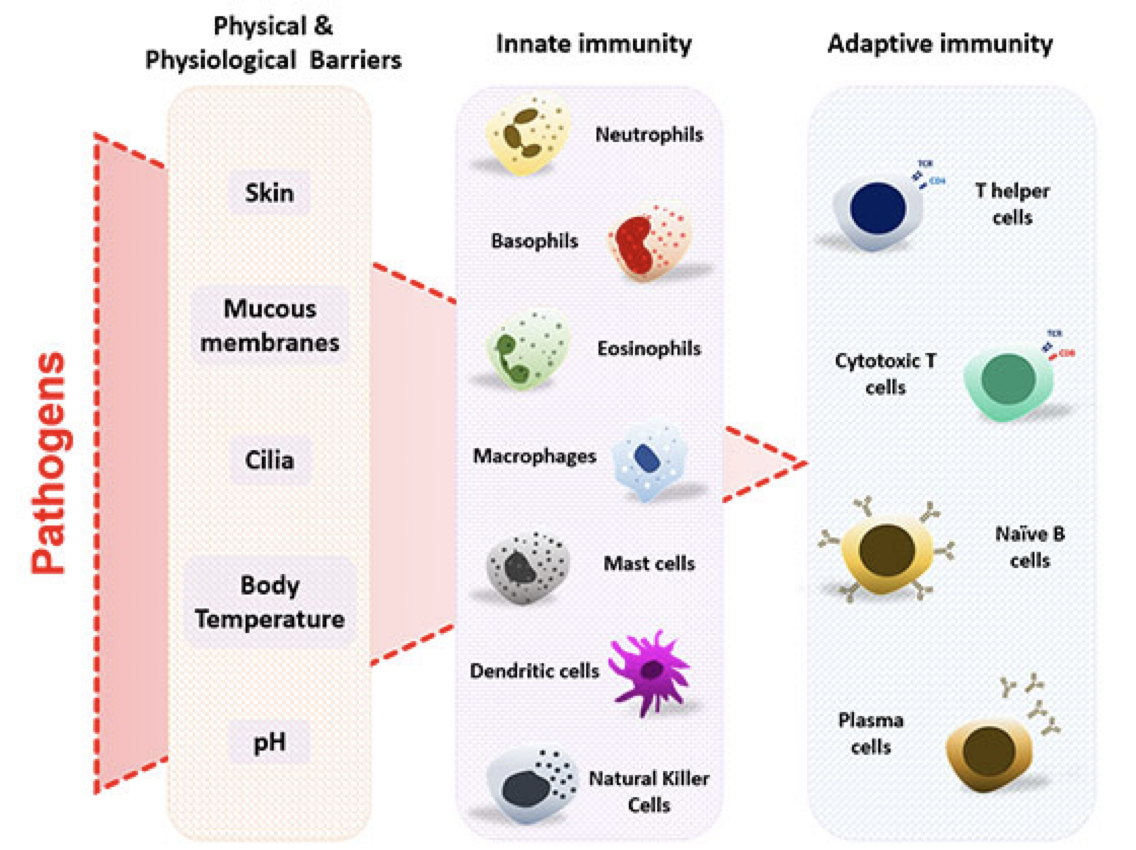
Three layers of defence
Inflammation
Body’s response to infection or injury.
Initiated by stimuli eg pathogen, toxins, trauma (exercise).
Respond to stimuli and restore balance (homeostatic switch) eg eliminate pathogens, clear out necrotic cells, initiate tissue repair.
Triggered by external (PAMPS) and internal factors (DAMPS).
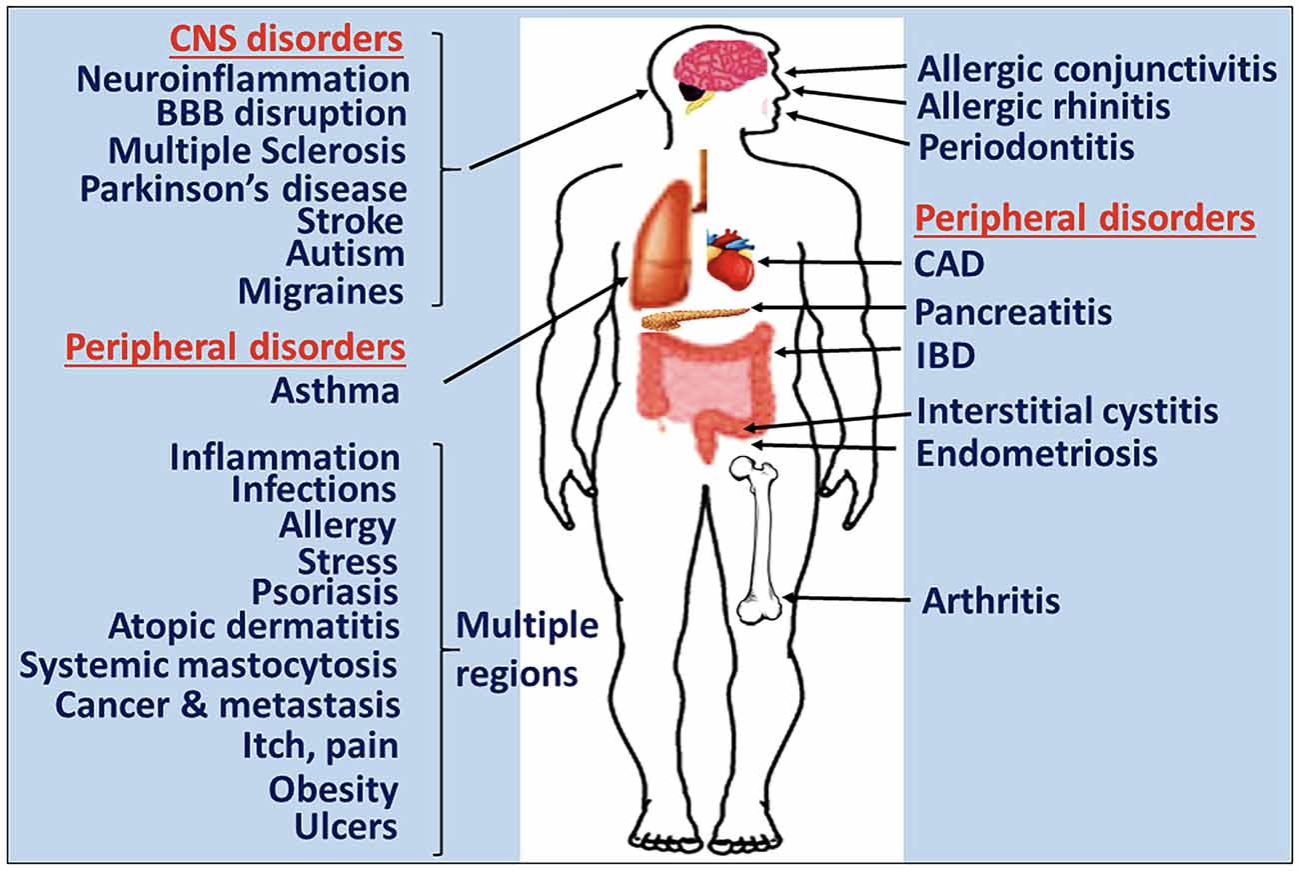
Chronic inflammation and disease
CVD e.g. Atherosclerosis, diabetes, covid heart
CNS e.g. Alzhemiers, Multiple Sclerosis
Neuromuscular disorders e.g. Muscular dystrophies, Motor Neuron Disease
GI tract e.g. Crohn’s, Celiac disease
Bones/joints Autoinflammatory e.g. Osteoarthritis, RA, Gout
Liver e.g. nonalcoholic steatohepatitis (NASH)
Inflammation-related diseases
External factors
Non-microbial – allergens, irritants, toxic compounds
Microbial – virulence factors (help pathogens colonise tissues and cause infection) and PAMPS.
PAMPS (Pathogen Associated Molecular Patterns) eg conserved patterns like bacterial wall fragments (peptidoglycan, lipopolysaccharide (LPS), Lipoteichoic acid, mannan, virus (eg viral RNA/DNA).
Immune system triggers an inflammatory response.
Internal factors
DAMPs (Damage Associated Molecular Patterns) eg HMGB1 (cardiac fibrosis, lung disease, COPD, asthma, ALI/ARDS, pulmonary fibrosis, CFRD genetics, pneumonia, TB, lung cancer, PAH,). Endogenous equivalent to PAMPS.
Intracellular proteins released when plasma membrane is injured or when cell dies (e.g. necroptosis, pyroptosis ) e.g. IL-1β.
Serious cell damage to trigger inflammation.
Pattern Recognition Receptors
PAMPs and DAMPs are recognised by Pattern Recognition Receptors (PRRs).
PRRs are cell surface receptors on certain leukocytes to activate other cells (e.g. TLRs, NOD, RIG-1, Dectins, ALRs) to initiate the inflammatory response (Innate immune system).
Fast response, occurring within minutes to hours.
LPS infection: TLR4 and Neutrophil recruitment
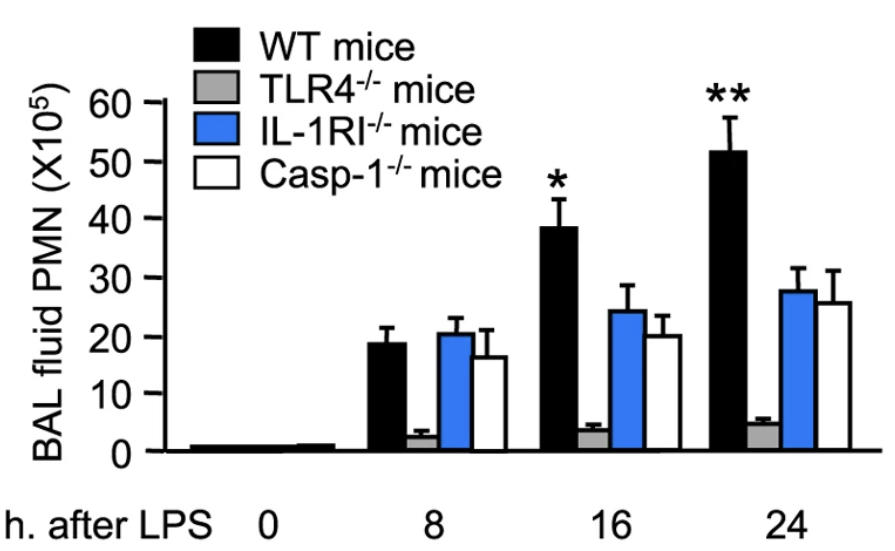
WT, TLR4−/−, IL-1RI−/− and caspase-1 (Casp-1)−/− mice were intratracheally injected with LPS (1 mg/kg B.W. in 0.2 ml of saline) using a Micro Sprayer Syringe.
BAL was performed at 0–24 h after LPS injection and PMN in the BAL fluid were counted.
Confirms TLR4 is essential for initiation of acute inflammation.
IL-1 and Casp-1 play a role downstream of TLR4 activation in acute inflammation.
Basic Processes of LPS-TRL4-NF-kB signalling
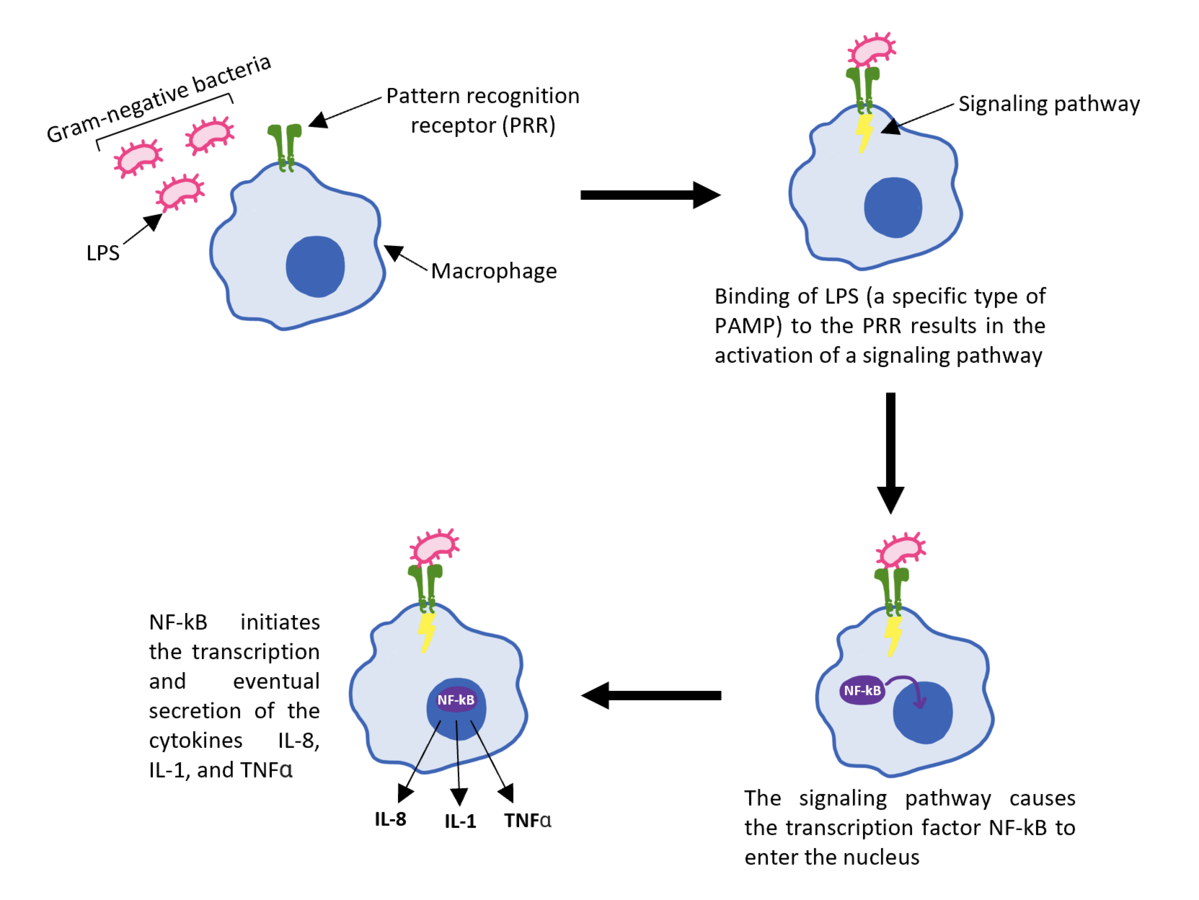
PPR, Pattern Recognition Receptors (eg TLR4)
PAMPS (Pathogen-Associated Molecular Patterns) e.g. LPS (Lipopolysaccaride). Major component of cell wall of gram negative bacteria.
LPS-TLR4-NFkB signalling simplified
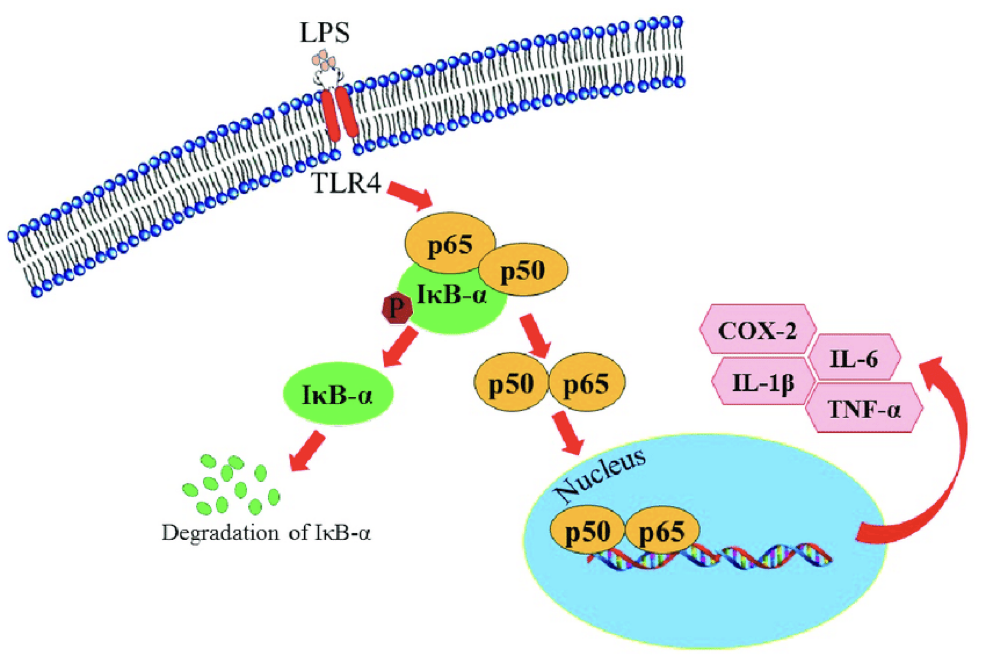
TLR activation leads to inactivation of the repressor IkB via phosphorylation.
IkB degraded via proteosomes.
NF-kB (heterodimer of p65 and p50) translocates into nucleus and transactivates pro-inflammatory genes.
TNFα, tumour necrosis factor-α; COX2, cyclooxygenase-2
IL-1β/IL-6 – early stage (acute), recruit monocytes to inflammation site. Signal to link communication between immune cells.
Canonical LPS-TLR4-NF-kB signalling- (protein phosphorylation cascades, serine/threonine kinases)
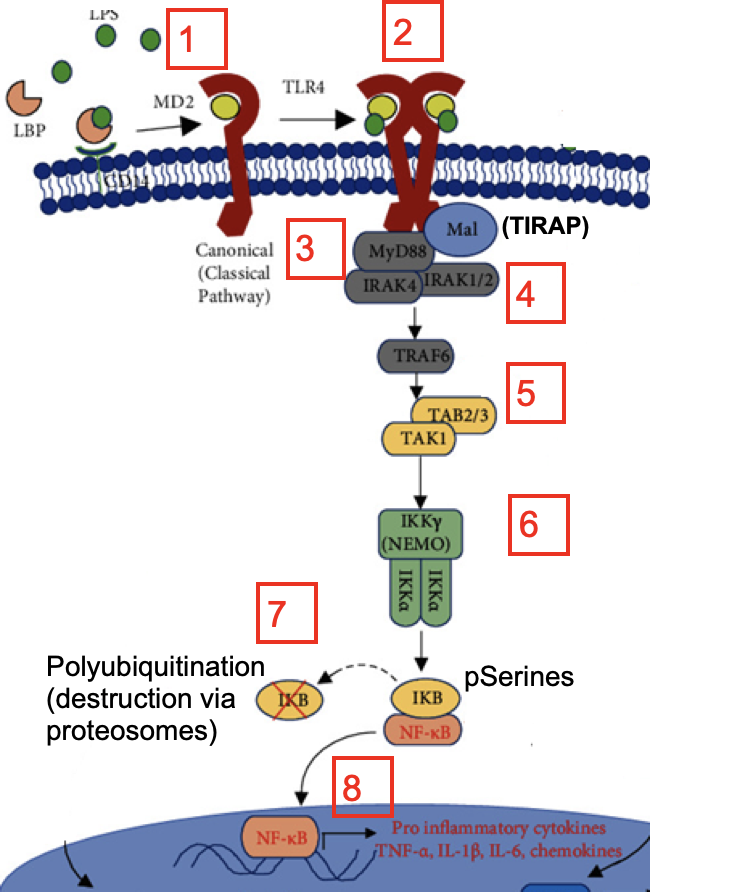
LPS uses accessary protein MD2 to recognise TLR4.
LPS binding to TLR4 induces receptor dimerization (LBP can pick up LPS and transport to TLR4).
TIR domains of TLR binds to MyD88 (TIR domain containing adaptor protein).
MyD88 recruits and activates IRAK4 and IRAK1 (adaptor proteins).
Sequential activation of TRAF6 and TAK1 (via activation by TAB2/3).
TAK1 activate IkB kinase (IKK complex).
IKK phosphorylates two specific serine residues of IkB. Tag it for proteosomal degradation.
This allows dimerisation and nuclear translocation of p65 (RelA) and p50 subunits of NF-kB.
LPS-TLR4-NFkB-IL1b induced pyroptosis
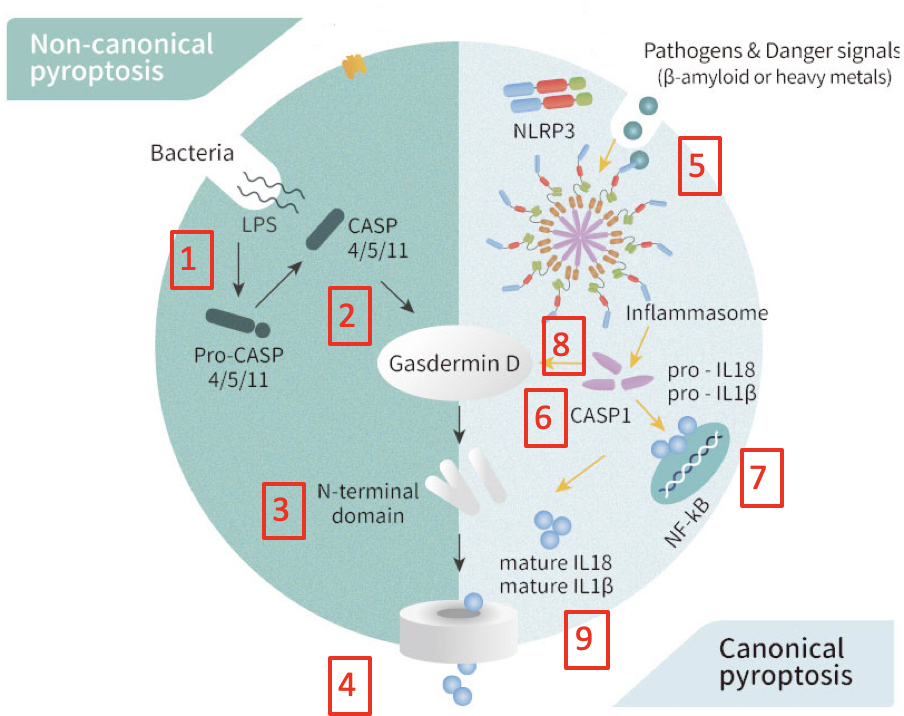
Non-canonical pathway:
LPS binds to pro-CASP 4/5/11
Mature CASP 4/5/11 cleaves Gasdermin-D
N-terminal GAS-D forms pores.
Pores – water in and K+ efflux (out) >> pyroptosis.
Canonical pathway:
Pathogens and K+ efflux activates NLRP3.
Activates CASP-1
CASP-1 activates NFkB> IL-1b etc
CASP-1 activate GAS-D.
CASP-1 activates Il-1β > leaks outside > activates more pro-inflammatory pathways.
LPS-Casp-4/5 driven Pyroptosis- (non-canonical pathway)
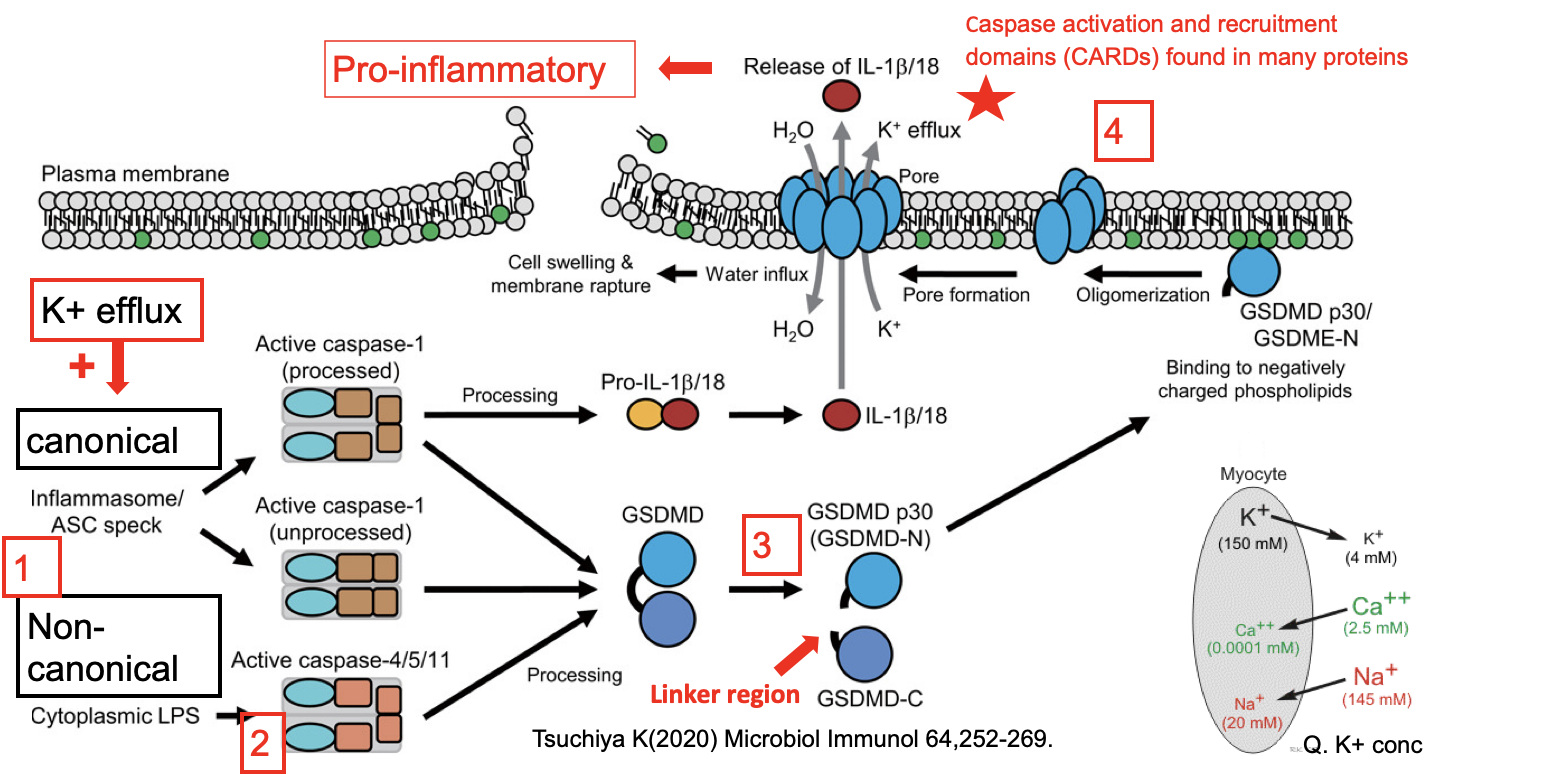
Outer membrane vesicles (OMVs) secreted by G− bacteria contains LPS (endocytosis).
LPS binds with procaspase-4/5/11 (via CARD domain) and activate Casp-4/5/11 (acts as receptors).
Casp-4/5/11 cleaves Gasdermin-D (GSDMD) at the linker region into N- and C-terminal fragments.
N-terminal oligomerises to form pores that triggers pyroptosis
Non-canonical LPS-TLR4-NF-kB signalling
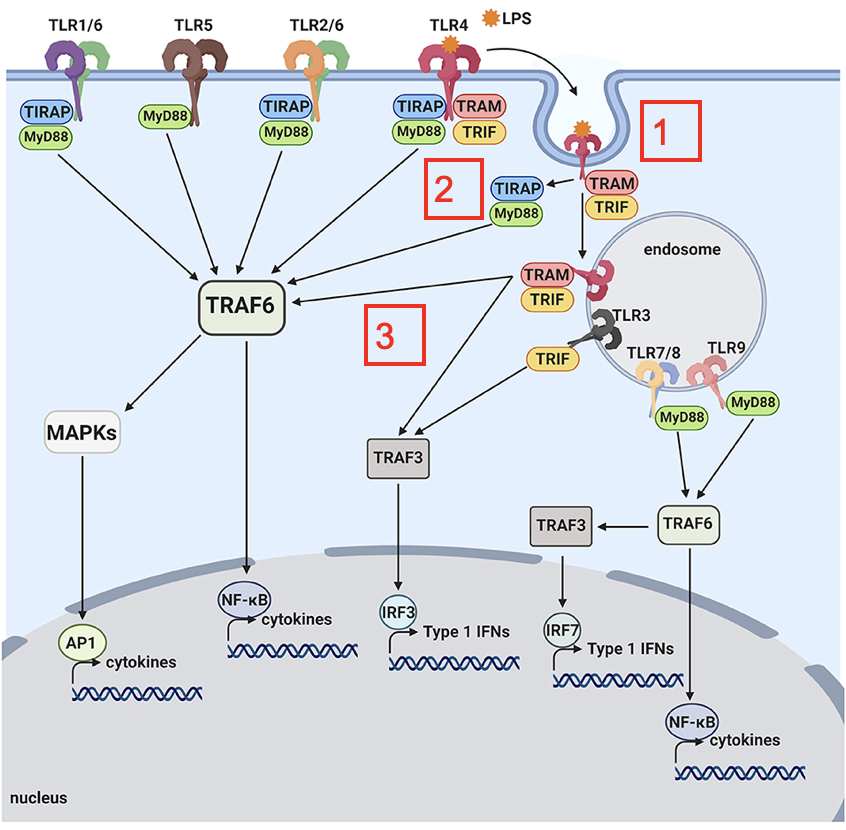
LPS activation of TLR4 leads to internalisation onto endosome surface.
Internalisation triggers release of TIRAP/MyD88 adaptor proteins> activates TRAF6.
This release allows TRAM/TRIF to commence from endosome and activate TRAF6 (and TRAF3).
Four TIR domain-containing adaptors: MyD88, TIRAP, TRAM and TRIF.