civics hass law
from the fedral court of australa
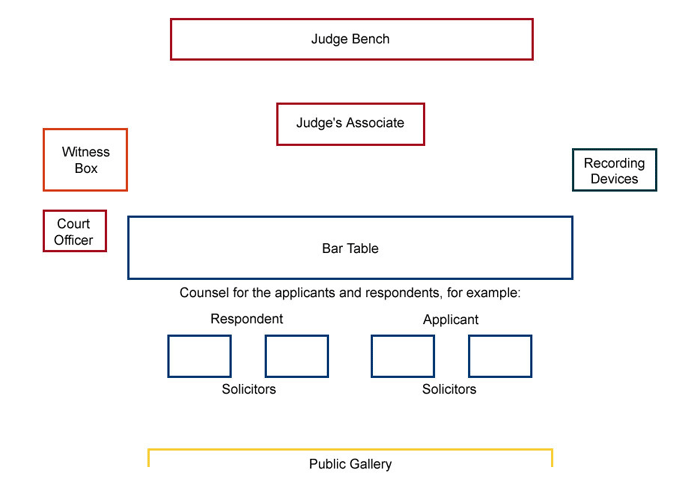
Statute Law: In Australia, statute law consists of written laws passed by the federal or state parliaments. These laws are formalized into legislative acts and published in legal codes. Statute law differs from common law, which is developed through judicial rulings and precedents.
Civil Law: In Australia, civil law governs disputes between individuals or organizations and covers issues such as contracts, property, and family law. The aim of civil law is to resolve private rights disputes and provide remedies to the affected parties.
Criminal Law: Criminal law in Australia defines offenses against the state and society. It includes prosecuting crimes like assault, theft, and fraud, with penalties such as fines or imprisonment. These laws are enforced by the state, and cases are typically heard in criminal courts.
Common Law: Australia follows a common law system, which relies on judicial decisions and precedents set by higher courts. These decisions provide a legal framework that evolves as new cases are decided, adapting to societal changes.
Democracy: Australia is a representative democracy, where citizens elect members to parliament to make laws on their behalf. It combines majority rule with protections for minority rights, ensuring a balanced approach to governance.
Government: In Australia, the government is the body that enacts and enforces laws, comprising federal, state, and local levels. These levels work together to manage and uphold public policies across the country.
Political Party: Political parties in Australia are groups that seek to influence government policy and gain legislative power. Major parties include the Australian Labor Party (ALP), Liberal Party, and others, with each advocating distinct policies.
Justice: The Australian legal system aims to uphold fairness and equality under the law, ensuring all individuals are treated fairly and justly.
Bias: Bias, whether in media, law, or personal opinions, can interfere with fair judgment and objectivity. Addressing bias is important in ensuring a balanced legal and societal system.
Rule of Law: In Australia, the rule of law emphasizes that all individuals and government bodies are subject to the law. It ensures fairness, accountability, and transparency in the application of laws.
Magistrate: In Australia, magistrates preside over lower courts and handle minor criminal cases, civil disputes, and preliminary hearings for more serious cases. They play a crucial role in the judicial system by overseeing less severe matters.
Indictable Offenses: Indictable offenses in Australia are serious crimes that require a formal indictment and are tried in higher courts. Examples include serious assaults, theft, and drug-related crimes.
Beyond a Reasonable Doubt: In criminal trials, the standard of proof in Australia requires the prosecution to prove the accused's guilt "beyond a reasonable doubt," meaning there must be no reasonable uncertainty about the defendant's guilt.
Court Hierarchy: In Australia, the court hierarchy consists of multiple levels to ensure a fair and organized legal process. The Magistrates’ or Local Court handles minor cases, the District or County Court hears more serious cases, and the Supreme Court deals with the most severe matters and appeals. At the highest level, the High Court of Australia has authority over constitutional matters and appeals from lower courts.
Difference between Criminal and Civil Law: Criminal law addresses offenses against the public, with the government prosecuting those accused of crimes. Civil law, conversely, pertains to disputes between private parties, focusing on rights, contracts, and property issues. Criminal law seeks to punish offenders, while civil law aims to resolve disputes and provide compensation.
Law-Making Process in Australia:
1. Proposal: A member of parliament (MP) or senator proposes a bill.
2. Drafting: The proposed bill is drafted in legal language.
3. First Reading: The bill is introduced in parliament for an initial reading.
4. Second Reading and Debate: Members debate the bill's merits and potential impacts.
5. Committee Review: A committee examines the bill in detail, often suggesting amendments.
6. Third Reading and Vote: The final version is read, and members vote. If passed, it moves to the other parliamentary house.
7. Senate Review (if originating in the House of Representatives): The Senate repeats the process.
8. Governor-General’s Approval: If both houses pass the bill, it is sent to the Governor-General for royal assent.
9. Enactment: Once the Governor-General signs it, the bill becomes law and is enforceable across Australia.
In Australia, the two main bodies of law are:
Common Law: This is a legal system based on judicial decisions and precedents rather than written statutes. It evolves through the decisions made by judges in courts, which create principles that are applied to future cases.
Statute Law: This comprises written laws enacted by a legislative body, such as the federal or state parliaments. These laws are codified and are part of the statutory code, and they can override common law in areas where they apply.
In Australia, the Senate is responsible for:
Reviewing Legislation: It reviews, amends, and debates bills passed by the House of Representatives, ensuring detailed examination of proposed laws.
Representing States: The Senate ensures equal representation for each state, protecting state interests in federal legislation.
Conducting Inquiries: Senate committees investigate government activities, hold inquiries, and hold the executive accountable.
Approving Budget Measures: The Senate reviews and approves financial bills, impacting national budget allocations.
In Australia, the House of Representatives is responsible for:
Initiating Legislation: Most new laws, especially financial and budget-related bills, start in the House of Representatives before moving to the Senate for approval.
Representing the Public: Each member represents an electorate, reflecting the views and interests of the Australian public in decision-making.
Forming Government: The government is formed by the party (or coalition) with the majority of seats in the House. The Prime Minister is usually the leader of this majority party.
Debating National Issues: The House discusses policies, issues, and matters affecting the nation, acting as the primary legislative forum.
what does it mean by having the right to appeal?
Having the right to appeal means that a person who is dissatisfied with a decision made by a court or tribunal can request a higher court to review and possibly overturn or modify that decision. This right ensures that errors in the original ruling can be addressed, potentially leading to a different outcome if the appeal is successful.
An appeal generally must be based on specific grounds, such as:
Legal Errors: Mistakes in the application or interpretation of the law.
Procedural Issues: Errors in the way the trial was conducted.
New Evidence: In some cases, new evidence can justify a review if it wasn't available during the original trial.
A person might appeal a court's decision for several reasons, including:
Legal Errors: If the judge misinterpreted or incorrectly applied the law, the appellant may seek to have the decision reviewed.
Unfair Procedures: If there were procedural issues, like improper admission of evidence or bias by the judge, an appeal might be filed.
Insufficient Evidence: A person might argue that the evidence presented was insufficient to justify the verdict.
Excessive or Inadequate Sentencing: In criminal cases, the defendant might appeal if they believe the sentence is too harsh, while the prosecution might appeal if they consider it too lenient.
New Evidence: If new evidence emerges that could change the outcome, an appeal may be requested to consider this information.
Four factors that can undermine the principles of justice include:
Bias or Prejudice: If judges, juries, or other legal personnel hold biases, it can lead to unfair treatment and unequal application of the law.
Limited Access to Legal Representation: People who cannot afford quality legal representation may face disadvantages in their cases, leading to unequal outcomes and undermining fairness.
Delays in the Legal Process: Lengthy delays can deny timely justice, potentially affecting the reliability of evidence and causing emotional and financial strain on the parties involved.
Corruption: Any form of corruption in the legal system, such as bribery or manipulation of evidence, can severely compromise impartiality and the pursuit of fair outcomes.
The court hierarchy makes the court system more efficient because:
Specialization of Courts: Different levels handle specific types of cases (e.g., lower courts handle minor cases, higher courts handle serious cases and appeals), allowing each court to focus on its area of expertise.
Efficient Appeals Process: A hierarchy allows for an organized system of appeals, where higher courts review decisions from lower courts, providing a structured path for addressing errors and refining legal interpretations.
Resource Allocation: Minor cases are resolved in lower courts, which prevents higher courts from being overwhelmed and allows serious cases to receive more attention and resources.
Precedent Setting: Higher courts establish precedents that lower courts follow, creating consistency in legal rulings and reducing time spent on similar legal issues.
The highest court of appeal in Australia is the High Court of Australia. It is the final court of appeal, meaning that its decisions are conclusive and binding across the country. The High Court hears appeals on significant legal issues from lower federal and state courts and has the authority to interpret the Australian Constitution, making it the ultimate arbiter on constitutional and legal matters in Australia.
An example of a court delay is a backlog of cases, where courts have more cases to process than they can handle promptly. This can lead to long waiting times for a trial or hearing, often stretching months or even years. For instance, if a criminal case is delayed because the court has too many pending cases, the accused may spend an extended period in remand awaiting trial, or victims and families might wait longer for resolution and justice.