MASTER NOTES
QUESTION 1: LEADERSHIP MODELS
1.1 Delegating Leadership Style
Principles for Successful Delegation:
Ensure employees are competent before delegating.
Delegate sufficient authority for employees to choose methods.
Ensure accountability is understood by employees.
Be specific with delegated tasks to prevent overstepping.
Set clear standards and objectives for the tasks.
Involve employees in setting objectives for engagement.
Establish a feedback system to monitor progress.
Keep employees informed to include them in decision-making.
Demand task completion from employees.
Provide necessary training for employees' shortcomings.
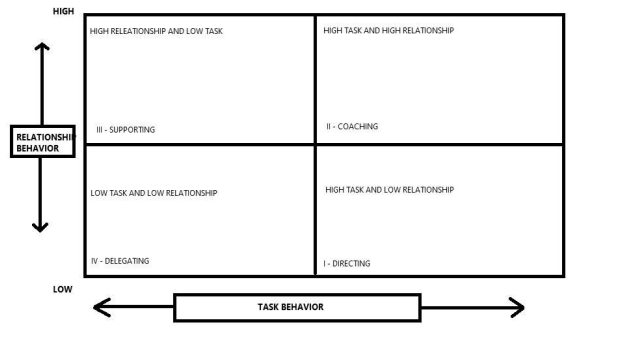
Hersey-Blanchard's Situational Leadership Model
Skills for Supervisors (7 skills)
Communication skills: The ability to clearly convey information and listen to others to foster an open dialogue.
Decision-making skills: The capacity to assess situations and make informed choices quickly and effectively.
Organizational skills: The ability to structure tasks and manage time efficiently to achieve goals.
Planning skills: The skill of outlining clear steps to achieve objectives and anticipating potential challenges.
Motivating skills: The ability to inspire and encourage team members to perform at their best.
Delegation skills: Knowing how to assign tasks effectively based on team members' strengths and development needs.
Monitoring skills: The capability to oversee team performance and provide constructive feedback.
1.2 Leadership Styles of Blake and Mouton
1.2.1 Country Club Management Style
Emphasizes relationships within the team.
Focused on team harmony and creating a supportive work environment.
Generally, demonstrates a low focus on output/production, which may impact performance outcomes.
1.2.2 Autocratic Management Style
Ignores relationships, prioritizing strict output and production.
Guidelines for Supervisors not to come across rude or aggresive
Avoid power struggles.
Maintain a respectful manner.
Communicate instructions clearly.
Limit the number of instructions given.
Ensure understanding of instructions.
Encourage feedback and questions.
Use calm body language and tone.
Improving Listening Skills
Understand the value of attentive listening.
Be aware of non-verbal cues.
Avoid assumptions.
Avoid interruptions unless clarification is needed.
Communicate actively listening (e.g., nodding).
Be patient and don't react immediately.
Ensure distraction-free environments.
Maintain eye contact and take notes (explain why).
QUESTION 2: ASSERTIVENESS
Characteristics of an Assertive Person
Honest with self and others.
Exhibits self-confidence.
Maintains a positive attitude.
Respects and understands others' opinions.
Handles conflict situations effectively.
Listens attentively.
Timely communication.
Echo Technique:
Ensures message is listened to.
Repeats message so it's not ignored.
Uses varied phrasing for reinforcement.
Aggressive Behavior Signs (5 indicators)
Facial expressions showing anger: Frowning and grimacing that indicate a heightened emotional state.
Eye contact issues: Glaring or uncomfortable staring can signal aggression or discomfort.
Gestures: Pointing or flailing arms can indicate frustration or hostility.
Body posture with chest pushed out: This can be an intimidating posture reflecting dominance or aggression.
Clenched fists: A common sign of tension and potential aggression.
QUESTION 3: LABOUR RELATIONS
Reasons for Joining Trade Unions:
Protection of jobs
Security and belonging
Platform for expression
Bargain for better wages
Voice in management decisions
Update outdated policies
Expert representation in grievances
Access to labor law information
Advocacy for safe working conditions
Objectives of Contingency Plans for Strikes
Ensure workers return as soon as possible.
Retain initiative during labor unrest.
Prevent injuries and property damage.
Identify and resolve underlying issues.
Negotiate once the problem is clarified.
3.3 Difference Between Strike and Lockout
Strike: Employee refusal to work to resolve grievances.
Lockout: Employer exclusion of workers to compel acceptance of terms.
Describe the following concepts:
3.1 Arbitration:
Settlement of disputes by impartial umpire agreed upon by both parties.
Involves a neutral third party to resolve disputes.
The arbitrator's decision is legally binding for both parties.
3.2 Collective Bargaining:
Negotiation between employer and employee to reach agreements on wages and conditions.
3.3 Grievance Procedure:
Formal process for complaints from employees to management.
Unfair Labour Practices
Definition: Any unfair act or omission that violates employee rights as outlined in the Labour Relations Act.
Examples: Withholding agreed benefits, victimization of trade union members, and retaliation for union activities.
Duties of a Shop Steward:
Represent employee in grievances and disciplinary actions.
Monitor employer’s compliance with labor standards.
Share information between union leaders and members.
Organize and attend union meetings.
Negotiate with management on behalf of members.
Ensure adherence to agreements (e.g., wages).
Recruit new members.
Participate in health and safety committees.
Purpose of a Workplace Forum:
Provides representation for all employees in decision-making.
Facilitates collaboration between employees and management.
QUESTION 4: PERSONNEL CARE
Signs of a Troubled Worker
Low levels of energy, indicating burnout or fatigue.
Increased absenteeism as employees may take more sick days.
Irritability or moodiness affecting teamwork and collaboration.
Lack of focus and poor judgment impacting productivity and decision-making.
Isolation from colleagues that may signal disengagement or distress.
Reacts badly to criticism
Behaves irrationally.
May show signs of substance abuse.
Shows little regard for authority.
Suddenly missing deadlines regularly.
Career Path Definition:
Mapping out logical career advancement within the organization, emphasizing future planning.
Benefits from Training and Development:
Show interest in development.
Seek help from personnel managers.
Self-analyze and determine improvement areas.
Stay alert for management development opportunities.
Understand training programme details.
Take responsibility for personal development.
How to ensure as a supervisor that work life quality is of highest quality.
Participative Management: Involve staff in decision-making and keep them informed.
Job Redesign: Support employee growth and prevent boredom through enrichment.
Effective Leadership: Foster communication and motivation with trained leaders.
Career Development: Provide training opportunities for employee advancement.
Reward and Recognition: Utilize both monetary and material rewards for achievements.
QUESTION 5: Group Dynamics
Characteristics of SMART Team Goals
Specific: Clear and well-defined.
Measurable: Criteria to assess progress.
Attainable: Realistic goals.
Realistic: Relevant to overall objectives.
Timely: Have a clear deadline.
Causes of Conflict from Inadequate Communication
Poor understanding leads to conflict.
Incorrect interpretations escalate misunderstandings.
Insufficient information causes inappropriate responses.
Misconceptions about issues may lead to disputes.
Disadvantages of Workplace Groups
Time-Consuming Processes:
Group decision-making can often slow down workflows as meetings may take longer than expected.
Additional time spent in discussions can lead to delays in project timelines, affecting overall productivity and efficiency.
Pressure to Conform:
In group settings, individuals may feel compelled to suppress their personal opinions to align with the majority.
This pressure can stifle innovation and prevent the exploration of diverse perspectives, ultimately leading to a lack of creativity in problem-solving.
Domination by a Few Individuals:
Some group members may dominate discussions, overshadowing the contributions of others.
This can result in ineffective decision-making as it tends to favor the views of a select few rather than fostering a balanced exchange of ideas.
Ambiguous Responsibility:
In group work, it can be unclear who is responsible for specific tasks, leading to potential overlaps or gaps in execution.
This ambiguity can cause frustration among members and hinder accountability, making it difficult to assess performance or address issues promptly.
Potential for Conflict:
Diverse viewpoints and personalities can sometimes lead to conflicts within a group.
While some conflict can be productive, excessive disagreement may create a toxic environment and distract from goals.
Groupthink:
The tendency for groups to prioritize consensus over critical analysis can lead to poor decision-making.
Groupthink results in a lack of evaluation of alternative ideas and may overlook significant risks.
Reduced Individual Accountability:
In a group context, individuals might feel less accountable for the outcome, leading to complacency in their contributions.
This can affect personal motivation and the overall quality of work produced by the team.
Diminished Learning Opportunities:
Members might miss out on personal learning and development opportunities as they rely on the group for decision-making.
This reliance can hinder growth and the ability to think independently.
Diverse Work Styles:
Variability in work styles and preferences can lead to clashes, causing friction and slowing down group progress.
Adjusting to accommodate different approaches can be challenging and may result in inefficiencies.
Components for Effective Team Management:
5.1 Climate:
Atmosphere and energy levels during discussions.
5.2 Involvement:
Commitment and self-direction of team members.
5.3 Interaction:
Connections between group members.
5.4 Cohesion:
Development of a group identity.
5.5 Productivity:
Achievements resulting from developing preceding elements.
Advantages of Group Decision-Making
Better information and knowledge base are available from diverse team members.
Diversity of views increases the range of alternative solutions and creativity in problem-solving.
Higher acceptance and satisfaction with solutions improves team morale and commitment to decisions made.
QUESTION 5: CONFLICT
Organizational Sources of Conflict
Salary policy issues.
Different leadership styles.
Changes in organizational structure.
Size of the organization impacting communication.
Conflicts between individual and group targets.
Guidelines for Conflict Resolution
Maintain eye contact and listen without interruption.
Invite open communication.
Clarify and paraphrase to show understanding.
Maintain positive body language.
Avoid planning responses while listening.
Points for managing workplace conflict:
Understanding causes.
Resolution focused on mutually beneficial goals.
Avoiding personal differences.
Workspace Conflict Definition:
Disruptive clash of interests, objectives or personalities between individual r between groups within an organization.
Conflict Resolution Definition
The process aimed at finding a peaceful solution to disagreements, which involves identifying the underlying issues and working collaboratively to resolve them.
QUESTION 6: PROBLEM-SOLVING AND DECISION-MAKING
6.1 Disadvantages of Group Decision-Making
Time-consuming process.
Pressure to conform within groups.
Potential domination by a few members.
Ambiguous accountability for group decisions.
6.2 Advantages of Group Decision-Making
Broader information and knowledge sharing.
Increased diversity of perspectives.
Greater acceptance of solutions by participants.
Enhanced legitimacy through collaborative processes.
Guidelines for Brainstorming Sessions:
Encourage quantity of ideas
Hold off on criticism during idea generation
Build on others' ideas (piggybacking)
Keep discussions for later
Utilize visible recording of ideas
Allow incubation periods for fresh ideas
Use simple language for clarity
Role of Leader in Brainstorming
Serve as participant and as group facilitator.
Encourage group members to help each other.
Motivate them in problem solving methods
Keep track of all ideas.
Be the initiator of the process
Have a creative approach
Establish clear objectives
Request ideas and add if necessary
Plan the brainstorming process
Organize and control the process.
Causes of Problems:
Change is a major factor that triggers problems.
Changes can occur unexpectedly in various factors affecting work.
QUESTION 7: PERFORMANCE APPRAISAL
Management by Objectives (MBO) Process
Planning Premises: Active support from upper management is crucial.
Organizational Goals: Clear understanding of organizational purpose and strategy.
Job Description: Initial discussions focus on the subordinate's core responsibilities.
Performance Targets: Establish quantifiable and time-related goals.
Discussion of Goals: Collaboratively set objectives and resources needed.
Evaluation: Review performance against objectives at the end of the period.
Purpose of Appraisals:
Encourages good behavior and goal awareness.
Satisfy the need for performance evaluation
Prepares basis for future employee assessments.
Steps for Preparing an Appraisal Interview:
Encourage employee preparation
Use specific accomplishments vs. targets
Recognize achievements adequately
Review unfulfilled targets and discuss improvement
Avoid judgmental language and comparisons
Set clear future targets with mutual agreement
Elements of Appraisal System
Quantity of Work: Assess volume and completion rates.
Quality of Work: Evaluate accuracy and thoroughness.
Dependability: Measure reliability in meeting commitments.
Attitude: Review demeanor towards work and peers.
Initiative: Gauge ability to identify and address issues independently.
Housekeeping: Assess cleanliness and order in workspaces.
Attendance: Monitor punctuality and absenteeism.
Potential for Growth: Review future progression and capability for advancement.
Inaccuracy in Appraisals:
Central Tendency - Evaluators avoid extremes may lack knowledge about individuals.
Biasness - Supervisors’ personal feelings may affect performance ratings.
Leniency or Strictness - Differences in rating styles can confuse employees.
Job Evaluation vs. Performance Appraisal
Job Evaluation: Determines the relative worth of jobs in an organization by analyzing skills, responsibilities, and contributions to establish fair compensation. It focuses on job positions rather than individual performance, ensuring pay scales reflect job complexity and market rates.
Performance Appraisal: Assesses individual employee performance in their roles, measuring competencies, efficiency, and contributions to team dynamics. It impacts personal development and can influence advancement, bonuses, or salary increases.
Compensation Considerations: Raises should be based on objective job evaluations rather than subjective performance appraisals to maintain equity and reduce bias in pay decisions.
Communication and Expectations: Clear communication about performance and raises is crucial to avoid misunderstandings. Employees must understand the distinction between job evaluations and performance metrics to address potential dissatisfaction.
QUESTION 8: ACCIDENTS AND RISK CONTROL
8.1 Loss Analysis vs. Hazard Analysis
Loss analysis investigates hazards causing past losses.
Focuses on identifying potential hazards beyond past incidents.
8.2 Classes of Hazards
Class A: Severe outcomes (e.g., falling wall).
Class B: Serious injury potential (e.g., acid burns).
Class C: Minor injuries expected (e.g., lack of gloves).
List of proactive accident prevention activities:
Selection based on physical job demands.
Safety induction for new employees.
Training on safe techniques.
Practicing evacuation procedures.
Taking disciplinary actions for safety compliance.
Foster a culture of accident prevention.
Rewards for contributions to safety improvements.
Investing in safety tools and training.
Reporting and analyzing accidents.
Emphasizing good housekeeping principles.
Reasons why accidents are not reported:
Fear of discipline
Concern about record
Concern about reputation
Fear of medical treatment
Dislike of medical personnel
Desire to prevent work interruption
Explain what you as a supervisor can do to motivate workers to report accidents:
React more positively to reports
Thank workers for reporting accidents
Emphasize the importance of reporting accidents
Lead by example
Advantages of Supervisor Participation in Incident Investigations:
Personal investment in safety
Knowledge of conditions and people
Access to necessary information
Immediate action capabilities
Benefits from learning and improving safety behaviors
Fire Safety Inspection Checklist
Fire Detection Systems:
Inspect all smoke detectors and fire alarms for proper functionality.
Test battery-operated units and replace batteries as needed.
Ensure all systems are interconnected to provide a comprehensive warning in case of fire.
Exits and Escape Routes:
Verify that all exits are clearly marked with illuminated signs.
Ensure that escape routes are free from obstructions and accessible at all times.
Conduct a walkthrough to familiarize all employees with the nearest exits.
Fire Extinguishers:
Review maintenance records of fire extinguishers to ensure they are tagged and operational.
Check the pressure gauge on extinguishers to confirm they are fully charged.
Train employees on how to properly use extinguishers during fire emergencies.
Fire Doors:
Inspect all fire doors for functionality and that they close tightly and latch without obstruction.
Ensure that fire doors are not propped open and that automatic closures work correctly.
Alarm Notification Systems:
Confirm that alarm notification systems are audible in all areas of the building, including restrooms and break rooms.
Test the system regularly to ensure it activates appropriately in an emergency.
Sprinkler Systems:
Inspect sprinkler heads for accessibility and ensure no obstructions, like equipment or storage, are blocking their effectiveness.
Check for signs of leakage or corrosion in pipes and fittings.
Emergency Lighting:
Test emergency lighting systems to ensure they illuminate exit paths during power outages.
Check that backup batteries are operational and charged.
Combustible Materials:
Assess storage areas for combustible materials and ensure that they are stored safely.
Maintain proper separation between flammable substances and ignition sources.
Personal Protective Equipment (PPE):
Ensure adequate PPE is available near workstations where fire hazards are present.
Train employees on the importance and use of PPE in fire situations.
Fire Evacuation Plan:
Verify that the fire evacuation plan is up to date and accessible to all employees.
Conduct regular fire drills to ensure employees know the evacuation procedure and assembly points
QUESTION 9: OCCUPATIONAL HEALTH AND SAFETY
9.1 Purpose of Occupational Health and Safety Act
Ensure health and safety of employees at work.
Protect employees using machinery.
Establish health and safety advisory councils.
Basic Rules OHS for Noise Exposure
Limit exposure to noise levels above 85 dB to protect hearing.
Provide appropriate hearing protection for employees.
Isolate sources of noise to reduce overall sound levels, etc.
All employes are informed of noise zones.
An approved audio metrist must conduct inspections.
9.2 Protective Clothing Regulations
Use of nylon or double-layer freezer suits for extreme temperatures.
Specific protective gear including balaclavas and gloves.
General Duties of Employees Under the OHS Act:
Employees play a crucial role in maintaining a safe and healthy workplace environment. Their responsibilities include:
Take Care of Personal and Others' Health:
Employees must be proactive in managing their health and safety as well as the health and safety of their co-workers. This includes avoiding actions that could harm themselves or others.
Cooperate with Employers on Safety Measures:
Employees are expected to collaborate with management in implementing safety policies and procedures. This cooperation may involve participating in safety training sessions, adhering to safety protocols, and engaging in discussions about workplace safety improvements.
Follow Lawful Orders and Safety Procedures:
Employees should comply with all safety instructions and procedures established by their employers. This includes understanding and following operational guidelines, using equipment correctly, and participating in safety drills.
Report Any Unsafe Conditions Promptly:
It is the duty of employees to alert their supervisor or relevant personnel about any hazardous conditions or unsafe practices observed in the workplace. Prompt reporting helps prevent accidents and ensures timely interventions.
Notify of Incidents Affecting Health or Causing Injury:
Employees must report any workplace incidents, injuries, or illnesses as soon as they occur. This includes providing detailed accounts of the incident to facilitate proper investigation and implementation of corrective measures. Reporting not only aids in individual protection but also contributes to the
Occupational Health and Safety (OHS) Act Stipulations
The OHS Act mandates the establishment of health and safety representatives within workplaces to ensure compliance with safety regulations. The details include:
Minimum Requirement: The Act stipulates a minimum number of health and safety representatives (HSRs) based on the total number of employees in the organization. The formula typically follows:
For workplaces with 1-5 employees: 1 Health and Safety Representative
For every additional set of up to 20 employees, 1 additional representative is required.
Role of HSRs:
HSRs are responsible for representing employee interests in matters concerning their health and safety at work.
They act as a liaison between employees and management to facilitate communication and resolution of safety concerns.
Election of HSRs:
Employees have the right to elect their health and safety representatives. This process ensures that HSRs are chosen democratically and represent the workforce effectively.
Training and Support:
The OHS Act outlines that HSRs should receive adequate training to effectively carry out their responsibilities, including recognizing hazards, communicating risks, and acting in accordance with legislation.
Powers of HSRs:
HSRs have the authority to inspect the workplace and report potential safety breaches. They can also request the establishment of safety committees if required by the workforce.
Legal Protection:
The Act provides legal protection for HSRs against discrimination, ensuring they can perform their roles without fear of retaliation.
This structured approach under the OHS Act fosters a safer workplace by encouraging active participation and vigilance towards health and safety issues.
QUESTION 10: MANAGEMENT INFORMATION SYSTEMS
Key Points for Designing a Management Information System
Involve users in the design phase.
Consider overall system costs.
Explore alternatives to in-house development.
Emphasize relevant information over volume.
Ensure thorough training for all system users.
Definition of Management Information System (MIS):
A Management Information System (MIS) is a comprehensive computer-based system that manages an organization’s operations by collecting, storing, and processing data. This sophisticated system plays a pivotal role in assisting management in decision-making by compiling information related to various business processes, thereby enhancing productivity and efficiency. The data compiled and analyzed by an MIS can inform strategic planning, identify performance trends, and optimize resource allocation.
Advantages of Management Information Systems
Informed basis for management decisions.
Keeps track of relevant management data.
Collects and analyzes production, marketing, and finance info.
Integrates company data.
Provides accessible personnel records.