Energy Systems
Energy Centralisation vs Energy Decentralisation
Energy centralisation relies on large, distant power plants sending electricity over long transmission lines. Energy decentralisation generates power close to where it is used via local renewable sources like rooftop solar. Centralised systems offer economies of scale, while decentralised networks reduce transmission losses and improve local community resilience
we can contribute by adding through interventions in our projects
Energy in Aotearoa
Aotearoa NZ currently has the fourth-highest renewable electricity percentage in the OECD. New Zealand has an aspirational goal of achieving a fully renewable electricity system, while continuing to balance affordability and energy security as electricity demand grows.
Overview - Energy in NZ
There are daily and seasonal patterns, with electricity consumption usually highest on cold winter evenings when people want to heat their houses and are also cooking.
This is a serious problem for New Zealand, as we have significantly greater electricity demand in winter months. This winter peak in demand becomes quite critical in 'dry' years, when there’s less replenishment of the hydro dams.
Energy Petal
The Energy Petal requires net positive energy, meaning the project must generate at least 105% of its annual energy needs through on-site renewable sources, without on-site combustion. Although it is grid-connected,
The Kendeda Building met this goal by prioritizing:
Passive Design Energy Conservation Measures Energy from the Sun As a result, The Kendeda Building consumes 75% less energy than the national average for college/university buildings. Its solar system produces 150 - 200% of the building’s annual electricity needs depending on seasonal variations.
reducing neergy needs but generating own electricity on site
Solar panels have active purpose (generating energy) and passive (contributing to passive design by shading the building aswell)
Local Energy & Centralised Energy
Solar energy technologies offer the opportunity to distribute power generation and storage by integrating solar power in buildings and cities.
Bringing electricity generation close to usage helps to increase resilience in case of storms and disruptions to power lines. While solar farms generate clean energy at scale, they miss opportunities by keeping energy generation far away from where it is used. By focusing only on solar farms, we are using new technologies in an old-fashioned way, by centralising power generation in certain locations, in the hands of a few companies.
Renewable vs Non-renewable
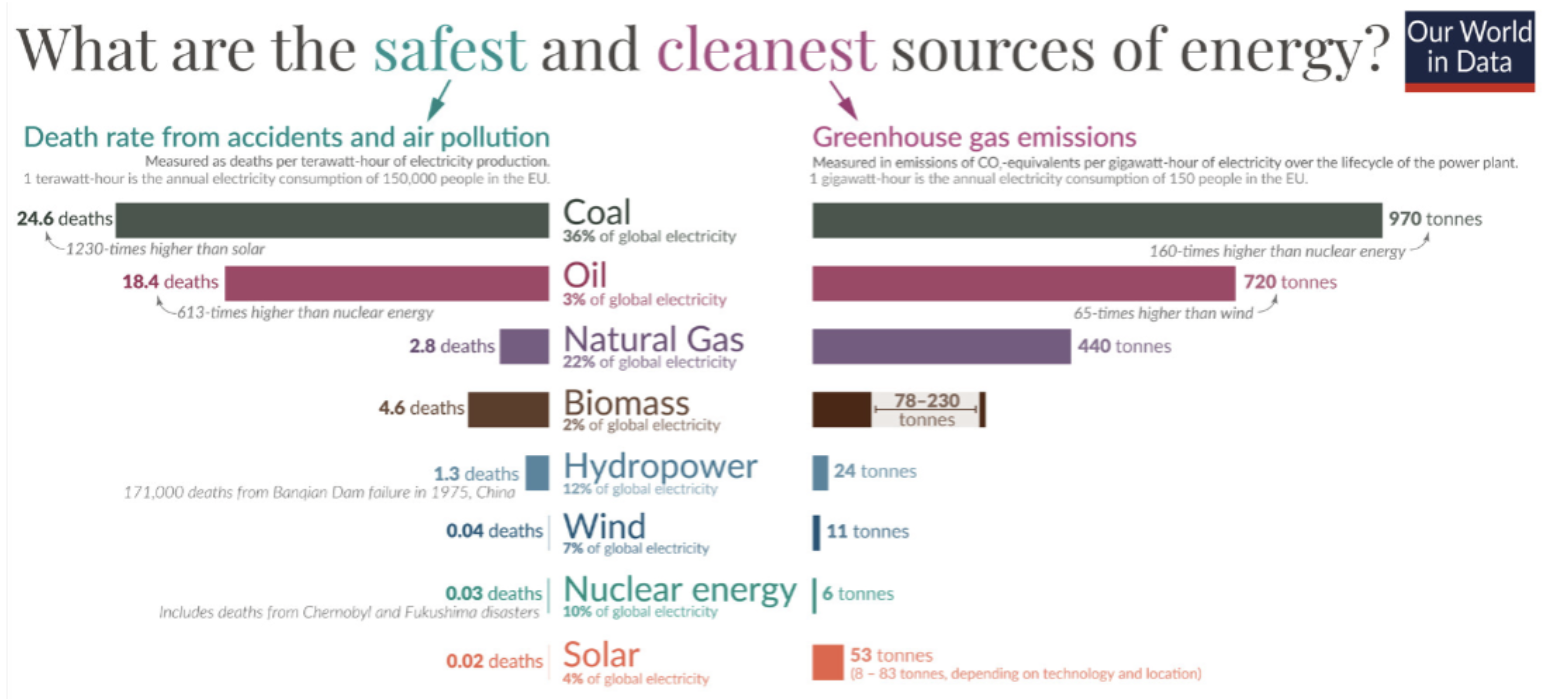
Renewable energy is energy derived from natural sources that are replenished at a higher rate than they are consumed. Renewable energy sources are plentiful and all around us.
Non-renewable resources take hundreds of millions of years to form. Some need to be burned to produce energy, causing harmful greenhouse gas emissions, such as carbon dioxide.
Generating renewable energy creates far lower emissions than burning fossil fuels. Transitioning from fossil fuels, which currently account for the lion’s share of emissions, to renewable energy is key to addressing the climate crisis.
Renewable sources are now cheaper in most countries, and generate three times more than fossil fuels.
Solar, Wind, HydroElectrical, Geothermal, Biomass
88% of New Zealand’s electricit is generated from renewable energy sources
Total energy consumption of New Zealand is 30% from enewable energy source
Forms of energy generation have impact (wind with birds etc, geothermal mining of minerals etc) always looking at the best one available in your site
Energy in Pacific Islands
Energy security in the Pacific Island Countries and Territories (PICTs) has progressed in some areas such as energy access and renewable electricity generation but less in others such as affordability and energy efficiency, while a significant dependence on petroleum imports remains.
This vulnerability is further compounded by very high dependence on imported fuel for commercial energy production (UNDP 2007) and constrained access to reliable, affordable energy.
Design Positive-Energy buildings
On-site renewable energy generation with active systems
reduce energy consumption in buildings with passive systems and efficient active systems
Positive Energy Buildings
Positive Energy Homes are houses that provide superior comfort and health for their occupants while generating more energy than they need through onsite renewables. They empower people to live healthy and comfortable lives, providing clean energy to power transport, work and play, with enough left over to share. Geometry of buildings matter in order to maximise systems for example solar panelling.
Solar PV
Solar panels are made up of a series of interconnected solar cells (see figure) where the (square) cells can be easily seen within the panel. The voltage generated across a single solar cell is typically less than 1 V, so multiple cells are combined into a solar panel and wired together in series to create a more useful voltage (e.g. 12 V). Cells are typically wired together in parallel with other 12 V series in a combination that facilitates the desired voltage and current output.
can be integrated to building and landscape
Orientation
In southern hemisphere, The azimuth angle is the angle clockwise from true north describing the direction that the array faces. An azimuth angle of 180° is for a south- facing array, and an azimuth angle of zero degrees is for a north-facing array. For maximum energy generation, in the Southern Hemisphere: Panels to face North If a North orientation is not possible, then West is the second-best option, followed by East South-facing solar panels will have minimum generation.
Tilt angle
The tilt angle is the angle from horizontal of the photovoltaic modules in the array. For a fixed array, the tilt angle is the angle from horizontal of the array where 0° = horizontal, and 90° = vertical.
The tilt angle influences the annual generation and the seasonal generation of the panels. For equator-facing panels, maximum annual generation is typically achieved by tilting the panels at a similar angle to the latitude of the location (e.g. at tilt angle of 37° in Auckland).t
The tilt angle also influences the seasonal distribution of generation. For example, in Melbourne, flat panels generate significantly more energy in summer than winter, whereas panels with a high tilt angle have a more even distribution across the year.
Therefore the ideal tilt angle can be a balance between maximising annual generation and matching generation against seasonal energy demands for heating and cooling.
There are several parameters to consider when selecting the ideal angle for a solar panel, such as the energy use patterns of the building, the energy consumption in different seasons, etc
In Auckland, ideal tilt angles range between 27° and 52°. 37° is usually considered the most effective angle for most buildings.
On a flat roof, laying panels flat can decrease the ability of rain to wash dirt and other debris off the panels, allowing it to build up and reduce output if not cleaned. A pitch angle of at least 10° is recommended to facilitate self-cleaning by rainfall. Panels can be mounted on frames to achieve this angle.
Grid & Off-grid
Off-grid when no electricity available
On-grid feeling electricity to the house and giving back to the grid when not being used
Hybrid where store energy with battery so share back and take from the grid when you need it, high in reslience and giving back to the community
lot of buildings in NZ solar panels but when power cuts they don’t have storage and resilience
In many New Zealand homes, solar panels generate energy when it is least needed–during high sunshine hours in the middle of the day.
However, integrating home battery storage with a solar panel system is a great solution to store unused energy, which can then be used at night, on days with low sunlight and when utility lines are down.
Energy Storage
In most cases, electricity storage in the home will take the form of batteries. Batteries store electricity as chemical energy that can be rapidly released on demand.
An alternative method of storing electricity is through pumping water to a high point, storing the energy as potential energy in the water, which can be converted back to electricity via a micro-turbine when required. This may be practical for a rural property with dams or where a header tank is used for domestic water pressure.
Other methods of storing electricity include electricity to gas (hydrogen or methane) and capacitor banks, but at the time of writing these technologies are not practical or common in the home.
Electric Vehicles with bidirectional (two-way) charging capability can be used to power a home, feed energy back into the electricity grid and even provide backup power in the event of a blackout or emergency. An EV is essentially a large battery on wheels, so bidirectional chargers can enable a vehicle to store cheap off-peak electricity or solar power to reduce household electricity costs. This emerging technology is known as vehicle-to-grid (V2G),
Common solar panels in New Zealand have roughly these dimensions: 1.6m x 1m x 0.04m.
Allow for at least 18mm in between panels.
Where are the panels oriented? How much energy is being generated? How does it integrate with the architecture?
Solar Energy Costs and Equity
In many cases, clean energy technologies are already more cost competitive over their lifespans than those reliant on conventional fuels like coal, natural gas and oil. Solar PV and wind are the cheapest options for new generation.
However, realising the gains of clean energy transitions hinges on unlocking higher levels of upfront investment. This is especially the case in emerging and developing economies where clean energy investments are lagging due to real or perceived risks that hinder new projects and access to finance.
“The data makes it clear that the quicker you move on clean energy transitions, the more cost effective it is for governments, businesses and households,” - IEA Executive Director Fatih Birol.
New Zealand is one of the first countries to reach what’s called the ‘electrification tipping point’, where households can save money and also significantly reduce their emissions by electrifying their appliances and vehicles. On average, homes currently using gas appliances and petrol vehicles could save around $1,500 per year at current interest rates and around $4,500 per year with a low-interest loan if they bought electric equivalents and got their electricity from a combination of rooftop solar, home battery and New Zealand’s already highly renewable grid.
Solar Power: BIPV
Integrated into facade of the building discreet in comparison to the glass, titled up are solar panels, tilted down is normal glass
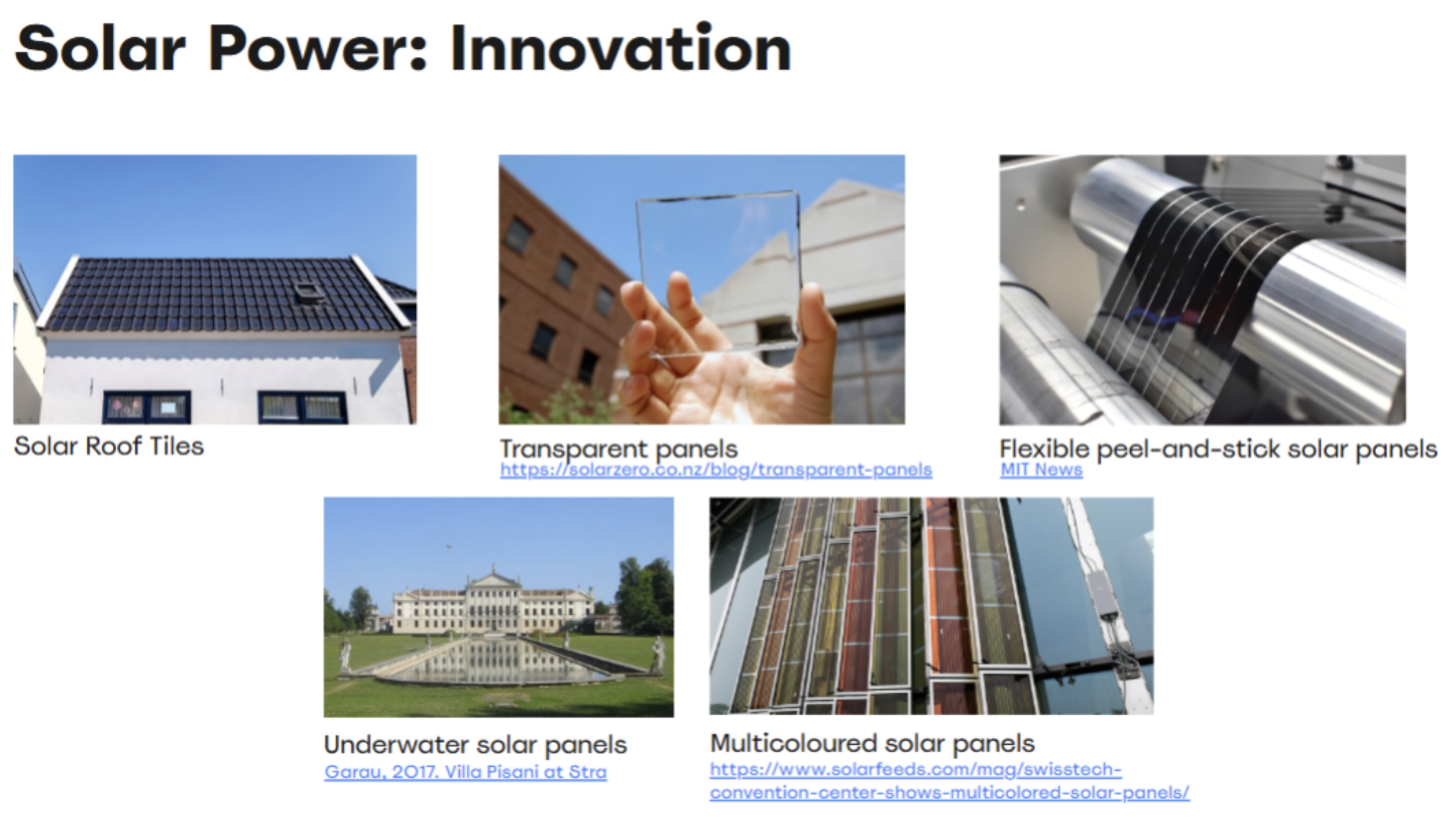
More architects are learning how to also incorporate solar cells and modules into things like curtain walls, roof tiles and railings known as building integrated photovoltaics (BIPV).
A BIPV system consists of solar cells or modules that are integrated in building elements or material as part of the building structure. This way, they replace a conventional building element, rather than attaching to one. BIPV modules not only generate electricity, they can also provide added functionality to the building.
For example, they can provide sun protection, thermal insulation, noise protection or safety.
Solar Energy Environmental Impacts and Embodied Carbon
manufacturing the panels cost energy to make it so then they can produce energy, long term it is okay for a bit of carbon impact for manufacturing them, this offset because it generates more benefit than its original impact
Solar Water Heating
Collector for hot water, uses suns energy to heat water efficiently where water is heated in tubes and connected to a tank
Evacuated Tube Collector
Flat Plate Collector
Wind
Studies have found that average wind speeds in a particular location need to exceed at least 6–8 metres per second (m/s) for a small wind turbine to be economically viable.
Wind speed typically increases with height so there are opportunities for integration into tall buildings.
looking at wind speeds and frequencies on site to justify using this
not just big turbines but can be integrated into architecture on the roof of high rise buildings
Micro-Hydro Power
Micro-hydro systems use flowing water to turn a water turbine that generates electricity in an alternator.
doesn’t create impacts of flooding huge areas like a hydropower plant and instead uses existing flowing water