W3 L1: Qualitative Data Analysis
THEMATIC ANALYSIS
the analytical process
involves developing codes, categories and/or themes
it begins with transcription and reading - raw data
researchers immerse themselves in the data
checking, revising, and refining emergent knowledge by returning to data
coding
examining emperical material, labelling it and identifying related content across the dataset
word or short phrase
multiple approaches
grouped theory
content analysis
conversational analysis
conversational analysis
narrative analysis
thematic analysis
etc.
Thematic Analysis
approaches that focus on identifying themes
minimally organises and describes your data in detail
3 types of TA
small q approach
- oriented around coding reliability
medium q approach
- based on a structure codebool and qualitative philosophy
big q approach
- reflexive approach based on ‘organic’ coding
refelxive thematic analysis
Braun & Clarke’s approach to TA
first proposed in 2006
2019 renames to Reflexive TA - highlights the emphasis on researcher reflecivity
MUST READ BEYOND 2006 PAPER
Flexibility
not tied to particular theoretical framework but not atheoretical
used to address most questions and most types of qualitative data
researcher woll need to make choises
be clear about decisions when writing
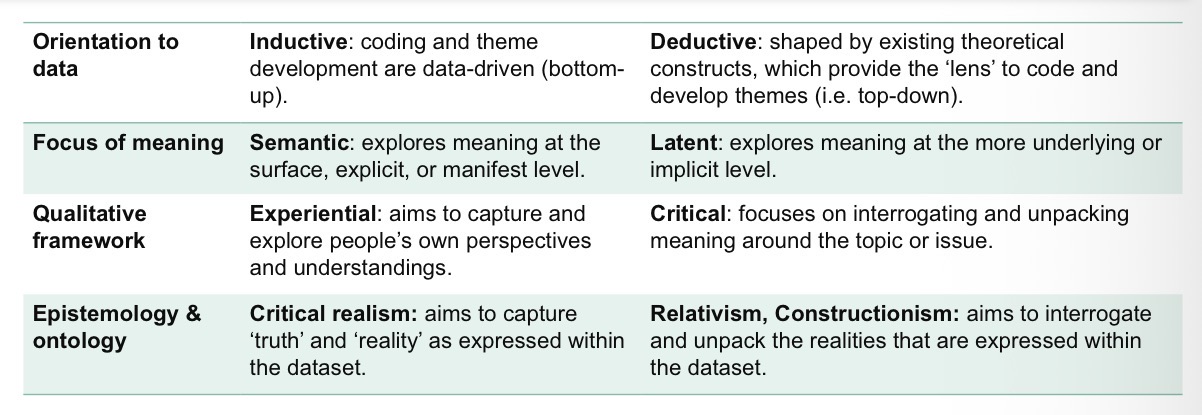
analytical decisions
orientation to data - inducive (bottom-up) or deductive (top-down)?
focus on meaning - semantic or latent (more implicit, requires more interpretation from reader)?
qualitative framework - experiemental or critical?
episstemology & ontology - critical realism or relativisim, constructionism?
6 phases
familiarisation with data
decisions about level of detail wanted in analysis
reading and notes (thoughts) about data
not findings - just reflexion
pay equal attention to data
coding data
start finsings
capture meaning of data
represent meaning of what ppts are saying
doesn’t need to be Nvivo
decide between inductive and deductive code - or combination of both
decising between semantic and latent code
generating initial themes
what is presented in report
final output
cluster together codes that have a similar meaning - creating a theme
name the themes - organise story in data, need to be very specific
the story that the data is telling
3-5 themes (no more)
reviewing and developing themes
ask questions:
is this a theme? what is the quality of this theme? what are the boundaries? is there enough data to support this theme? is the data too diverse and wide ranging?
refining, defining, and naming themes
name or lable
‘headline’ that captures the central organising concept - gives reader instant insight into meaning of theme
avoid topic summaries
write short description for each theme - usually at the beginning of the results section
draw on quotations
themes are actively generated/ developed by researcher - not passively emerge from data
subthemes can be used if needed
writting up
set of themes are presented
select vivid and copelling data
relate analysis to research question
draw out analytical conclusions across themes
doing reflexive TA
messy
not linear
organic
back and forth
semantic - using words used by ppt
latent - use code arojund ‘moral/ good’ implying a meaning