Amendments 19 to 27
In this lesson, we'll finish up our study of the twenty-seven amendments to the Constitution by looking at the Nineteenth Amendment through the Twenty-Seventh Amendment.
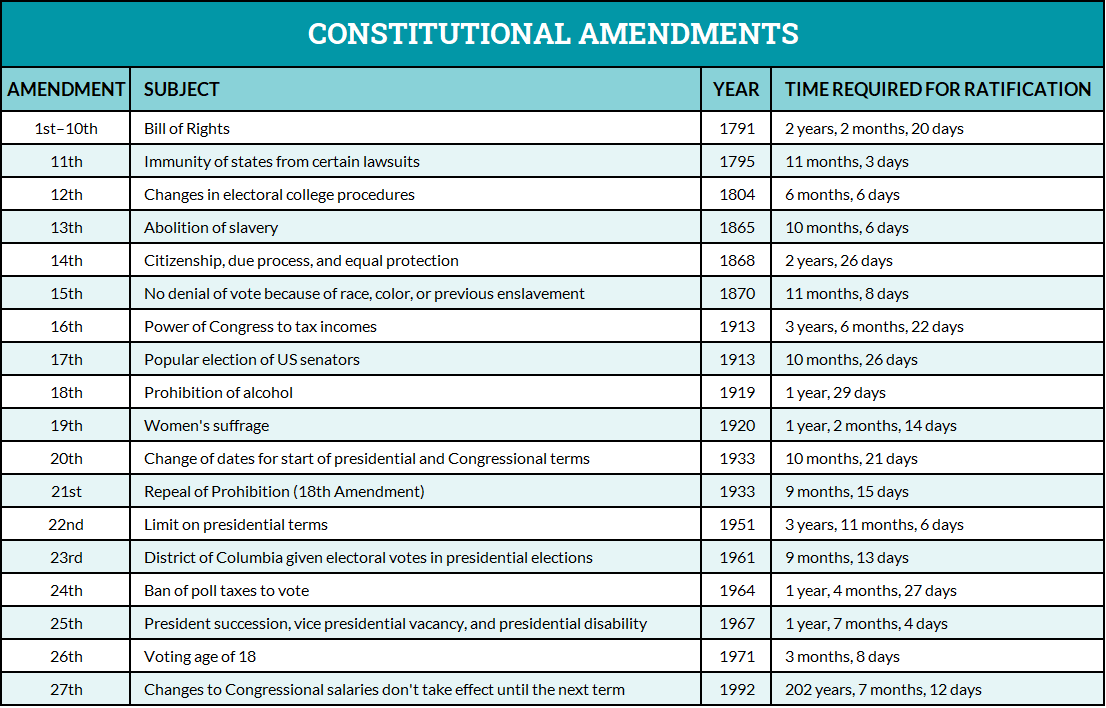
Nineteenth Amendment (1920)
TEXTEXPLANATION
The right of citizens of the United States to vote shall not be denied or abridged by the United States or by any State on account of sex.
Congress shall have power to enforce this article by appropriate legislation.
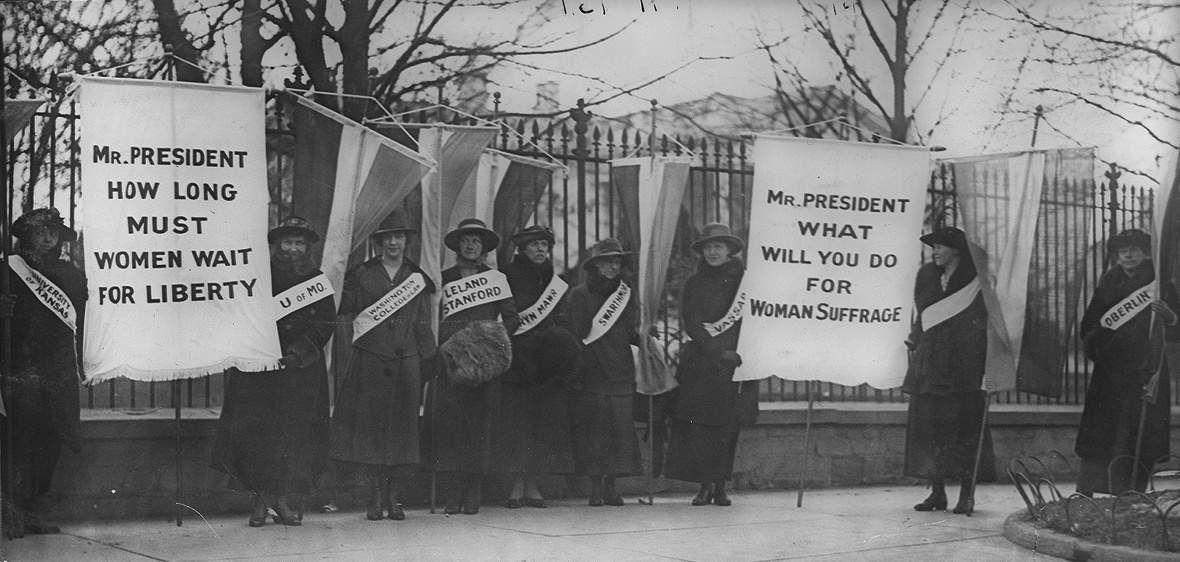 The right to vote is given to women. Congress was given the power to enforce this amendment with legislation.
Twentieth Amendment (1933)
TEXTEXPLANATION
1: The terms of the President and the Vice President shall end at noon on the 20th day of January, and the terms of Senators and Representatives at noon on the 3d day of January, of the years in which such terms would have ended if this article had not been ratified; and the terms of their successors shall then begin.
2: The Congress shall assemble at least once in every year, and such meeting shall begin at noon on the 3d day of January, unless they shall by law appoint a different day.
3: If, at the time fixed for the beginning of the term of the President, the President elect shall have died, the Vice President elect shall become President. If a President shall not have been chosen before the time fixed for the beginning of his term, or if the President elect shall have failed to qualify, then the Vice President elect shall act as President until a President shall have qualified; and the Congress may by law provide for the case wherein neither a President elect nor a Vice President elect shall have qualified, declaring who shall then act as President, or the manner in which one who is to act shall be selected, and such person shall act accordingly until a President or Vice President shall have qualified.
4: The Congress may by law provide for the case of the death of any of the persons from whom the House of Representatives may choose a President whenever the right of choice shall have devolved upon them, and for the case of the death of any of the persons from whom the Senate may choose a Vice President whenever the right of choice shall have devolved upon them.
5: Sections 1 and 2 shall take effect on the 15th day of October following the ratification of this article.
6: This article shall be inoperative unless it shall have been ratified as an amendment to the Constitution by the legislatures of three-fourths of the several States within seven years from the date of its submission.
 Section 1: The Twentieth Amendment is also known as the Lame Duck Amendment. Prior to this, new presidents, representatives, and senators who were elected in November would not take office until the following March. This amendment changed this inauguration date to January 3 for Congress and January 20 for the president. This limited the lame-duck period after an election. The term lame duck refers to an elected official whose replacement has already been voted in. For instance, after Trump was elected president in November 2016, President Obama remained president until January 20, 2017. During these two months, Obama was a lame-duck president. Having a longer lame-duck period makes the government less effective because it means that new officials have to wait longer before they can implement their plans and start working toward their goals. A longer lame-duck period also gives outgoing officials more time to possibly pass laws or make political appointments that will hamper the incoming officials.
There have been many times throughout American history that important events have occurred during this lame-duck period, and the consequences have sometimes been severe. The most difficult event that happened during a lame-duck period occurred after Abraham Lincoln was elected president in 1860. During the four months between Lincoln's election and the time he actually became president, states across the South began seceding from the Union. The sitting president, James Buchanan, refused to do anything significant about the situation, and Lincoln was powerless to intervene. Other examples of volatile situations during lame-duck periods include America's response when Chinese troops entered Korea in 1950 and arguments around how America should handle an escalating World War II in 1940.
Section 2: The new term for Congress will begin at noon on January 3, unless another day is appointed.
Section 3: If the president-elect dies or is disqualified before the term begins, the vice president-elect shall act as president until a president is qualified. Congress will pass a law to provide for the office if the president-elect and the vice president-elect are both disqualified.
Section 4: This section has a provision for the death of a candidate when an election is thrown to the House because no candidate received a majority of the electoral votes for president or vice president. It says that Congress will make a provision for choosing another candidate.
Image: This political cartoon from 1915 depicts lame-duck Democrats who were defeated in the November election lining up at the White House in the hopes of receiving political appointments from President Woodrow Wilson.
Twenty-First Amendment (1933)
TEXTEXPLANATION
1: The eighteenth article of amendment to the Constitution of the United States is hereby repealed.
2: The transportation or importation into any State, Territory, or possession of the United States for delivery or use therein of intoxicating liquors, in violation of the laws thereof, is hereby prohibited.
3: This article shall be inoperative unless it shall have been ratified as an amendment to the Constitution by conventions in the several States, as provided in the Constitution, within seven years from the date of the submission hereof to the States by the Congress.
 Section 1: This amendment repeals the Eighteenth Amendment (Prohibition).
Section 2: The rights of the states are protected if they have laws prohibiting alcohol.
Section 3: This amendment had to be approved by state conventions.
Image: During Prohibition, doctors were allowed to write prescriptions for whiskey, which was supposed to help treat high blood pressure, tuberculosis, anemia, and other conditions.
Twenty-Second Amendment (1951)
TEXTEXPLANATION
1: No person shall be elected to the office of the President more than twice, and no person who has held the office of President, or acted as President, for more than two years of a term to which some other person was elected President shall be elected to the office of the President more than once. But this Article shall not apply to any person holding the office of President when this Article was proposed by the Congress, and shall not prevent any person who may be holding the office of President, or acting as President, during the term within which this Article becomes operative from holding the office of President or acting as President during the remainder of such term.
2: This article shall be inoperative unless it shall have been ratified as an amendment to the Constitution by the legislatures of three-fourths of the several States within seven years from the date of its submission to the States by the Congress.
Image: President Franklin D. Roosevelt
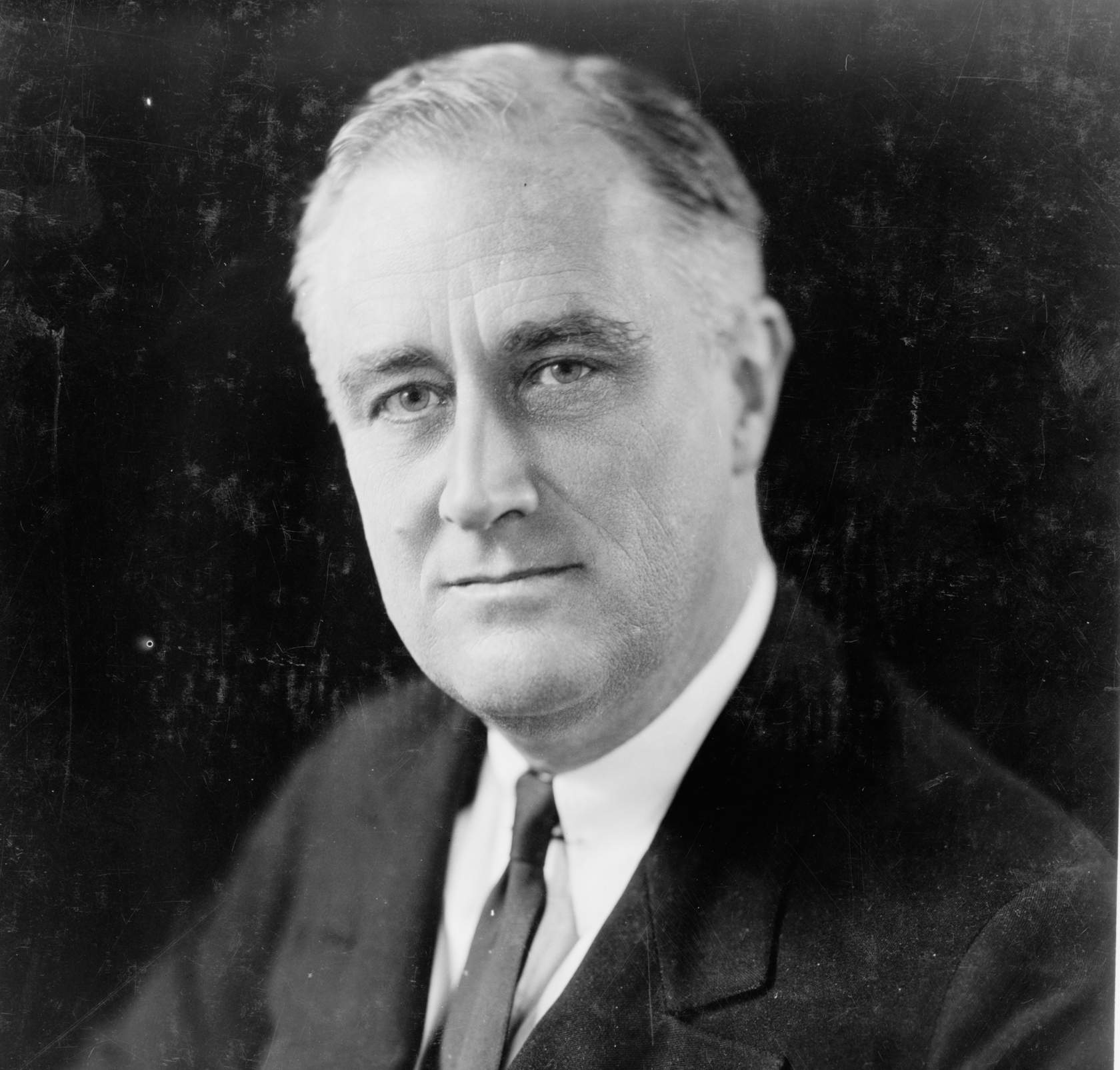 In 1951, the Twenty-Second Amendment introduced term limits for the president. Because of this amendment, presidents are limited to two full terms (eight years). However, a president is allowed to serve up to ten years if he or she serves a partial term. Partial terms happen when a vice president takes over for a president after that president dies or is removed from office. If a president serves more than two years of a former president's term, he or she cannot run for president for more than one additional term. If a president serves a partial term of less than two years, however, he or she can run for two more terms.
For example, Lyndon Johnson assumed the presidency when John F. Kennedy was assassinated in 1963. However, he only served the last fourteen months of Kennedy's term. Therefore, Johnson was eligible to serve two full terms in addition to this partial term—the total time served in office would have been less than ten years (eight years from two full terms plus a fourteen-month partial term).
Conversely, Gerald Ford served the last two years and four months of President Nixon's term. Because this partial term was over two years, Ford was only eligible to serve one additional full term as president. Two full terms would have put Ford over ten years in office (eight years from two full terms plus a partial term of twenty-eight months).
Image: The Twenty-Second Amendment was passed largely in response to Franklin D. Roosevelt successfully winning four terms as president (though he would die shortly into his fourth term). The picture below shows Roosevelt early in 1941, the first year of his third term.
Twenty-Third Amendment (1961)
TEXTEXPLANATION
1: The District constituting the seat of Government of the United States shall appoint in such manner as the Congress may direct:
A number of electors of President and Vice President equal to the whole number of Senators and Representatives in Congress to which the District would be entitled if it were a State, but in no event more than the least populous State; they shall be in addition to those appointed by the States, but they shall be considered, for the purposes of the election of President and Vice President, to be electors appointed by a State; and they shall meet in the District and perform such duties as provided by the twelfth article of amendment.
2: The Congress shall have power to enforce this article by appropriate legislation.
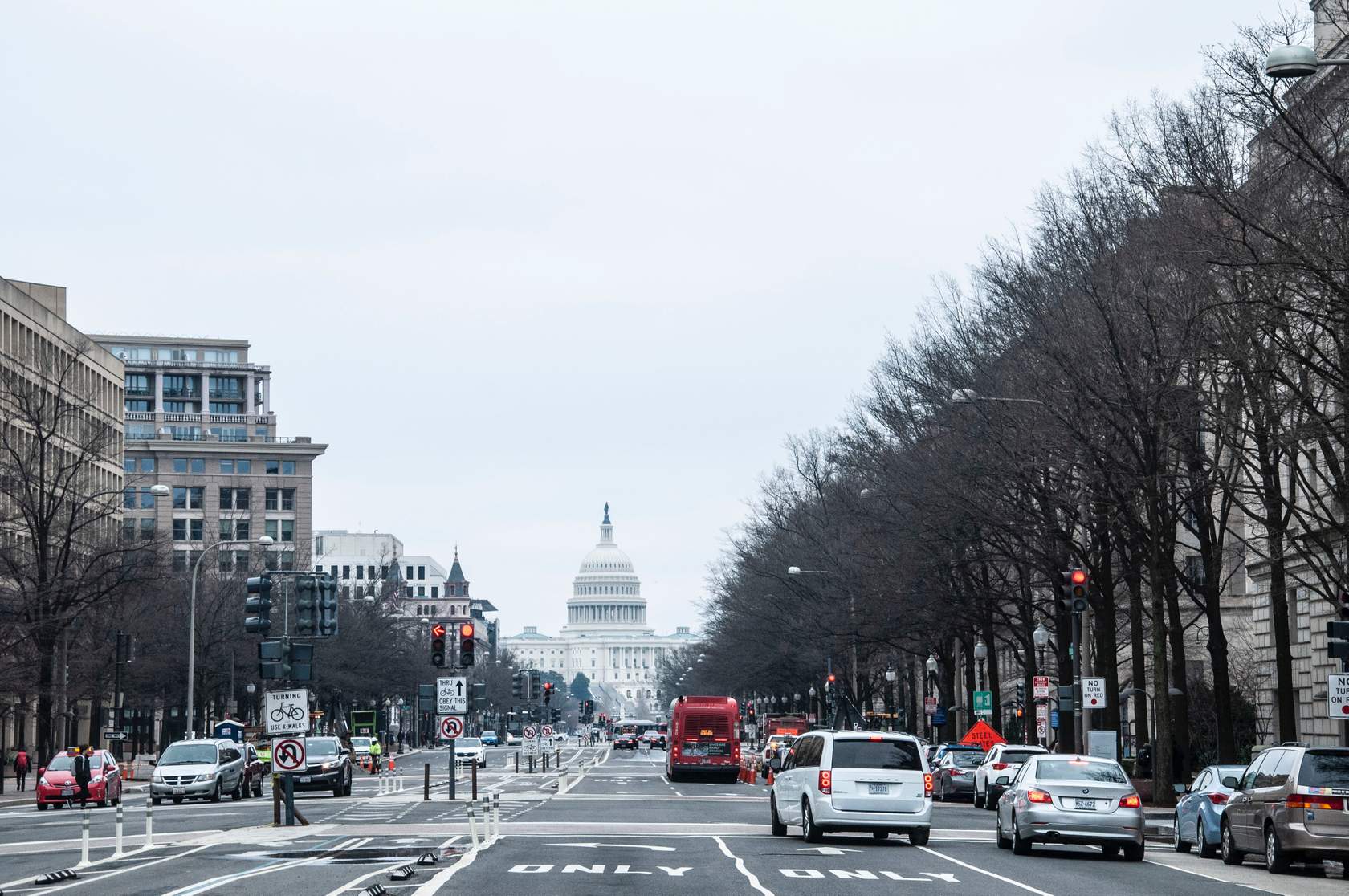 This amendment gives the citizens of Washington, DC, the right to vote in presidential elections. It allows the District of Columbia to appoint three electors because it would have three representatives in Congress if it were a state.
Twenty-Fourth Amendment (1964)
TEXTEXPLANATION
1. The right of citizens of the United States to vote in any primary or other election for President or Vice President, for electors for President or Vice President, or for Senator or Representative in Congress, shall not be denied or abridged by the United States or any State by reason of failure to pay any poll tax or other tax.
2. The Congress shall have power to enforce this article by appropriate legislation.
 Citizens cannot be denied the right to vote by failing to pay poll taxes, and poll taxes are deemed illegal.
Image: Poll tax receipt from 1917
Twenty-Fifth Amendment (1967)
TEXTEXPLANATION
1: In case of the removal of the President from office or of his death or resignation, the Vice President shall become President.
2: Whenever there is a vacancy in the office of the Vice President, the President shall nominate a Vice President who shall take office upon confirmation by a majority vote of both Houses of Congress.
3: Whenever the President transmits to the President pro tempore of the Senate and the Speaker of the House of Representatives his written declaration that he is unable to discharge the powers and duties of his office, and until he transmits to them a written declaration to the contrary, such powers and duties shall be discharged by the Vice President as Acting President.
4: Whenever the Vice President and a majority of either the principal officers of the executive departments or of such other body as Congress may by law provide, transmit to the President pro tempore of the Senate and the Speaker of the House of Representatives their written declaration that the President is unable to discharge the powers and duties of his office, the Vice President shall immediately assume the powers and duties of the office as Acting President.
Thereafter, when the President transmits to the President pro tempore of the Senate and the Speaker of the House of Representatives his written declaration that no inability exists, he shall resume the powers and duties of his office unless the Vice President and a majority of either the principal officers of the executive department or of such other body as Congress may by law provide, transmit within four days to the President pro tempore of the Senate and the Speaker of the House of Representatives their written declaration that the President is unable to discharge the powers and duties of his office. Thereupon Congress shall decide the issue, assembling within forty-eight hours for that purpose if not in session. If the Congress, within twenty-one days after receipt of the latter written declaration, or, if Congress is not in session, within twenty-one days after Congress is required to assemble, determines by two-thirds vote of both Houses that the President is unable to discharge the powers and duties of his office, the Vice President shall continue to discharge the same as Acting President; otherwise, the President shall resume the powers and duties of his office.
Image: Spiro Agnew, who was the first vice president replaced under the terms of the Twenty-Fifth Amendment
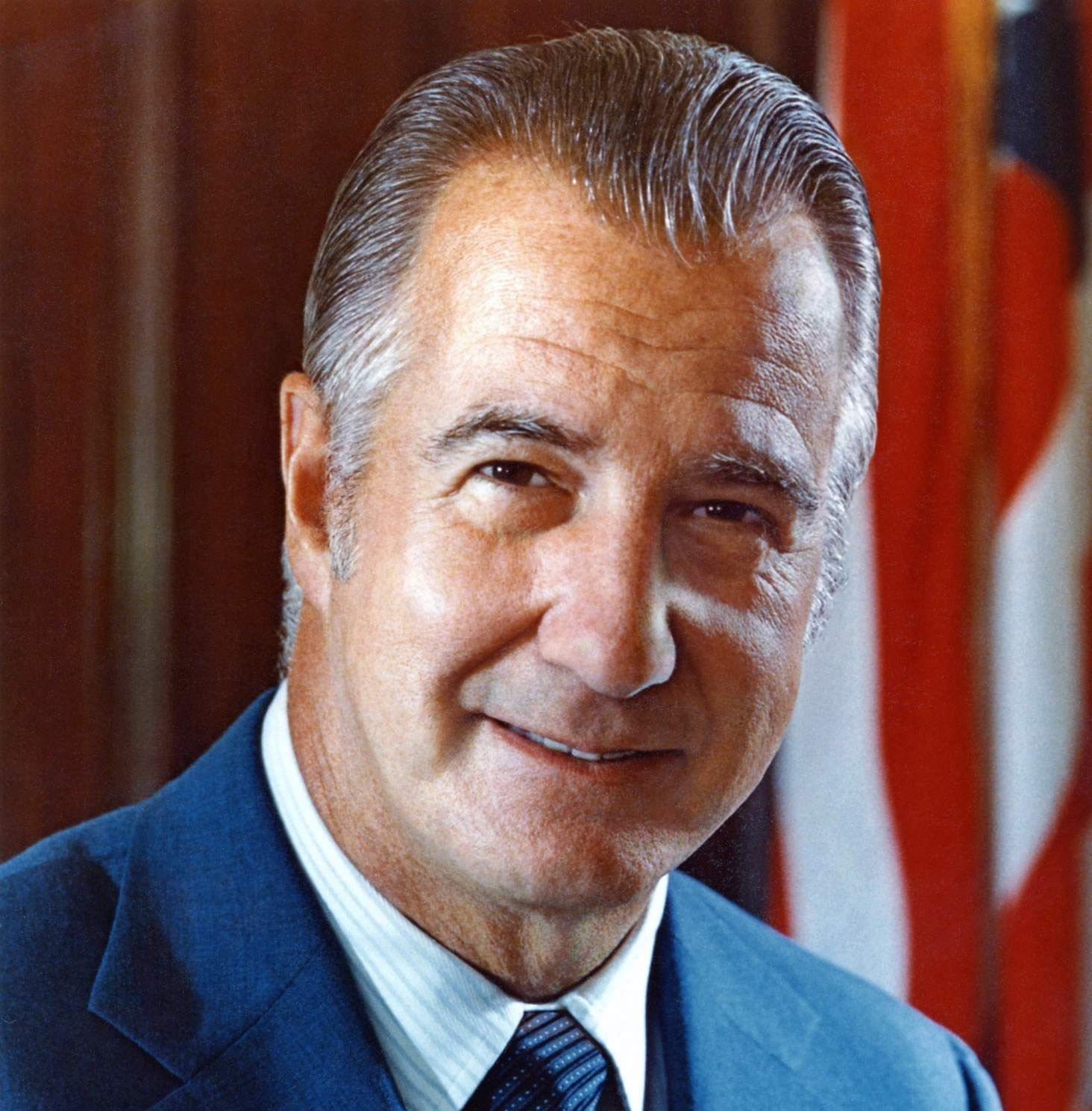 Section 1: If the president dies or resigns, the vice president becomes the president. Until this amendment, the vice president would only act as the president.
Section 2: If there is a vacancy in the vice presidency, the president will nominate a vice president, who must be confirmed by a majority vote of both houses of Congress.
Section 3: The president must inform the president pro tempore and the Speaker of the House by written declaration if he or she is not able to fulfill the duties of the office of the president. As a result, the vice president will become the acting president. When the president is able to carry out the duties of the office again, the president will again inform the president pro tempore and the Speaker through a written declaration.
Section 4: If the vice president and a majority of the executive departments (Cabinet) inform (in writing) the president pro tempore and Speaker of the House that the president is unable to carry out his or her duties, the vice president will become acting president. If the president informs the president pro tempore and the Speaker that he or she is able to carry out the duties of the office, but the vice president and a majority of the Cabinet declare in writing within four days that the president is not able, Congress will have to make the decision in this matter. Congress must meet within forty-eight hours if its members are not in session. If Congress decides within twenty-one days by a two-thirds vote that the president is unable to fulfill the duties of the office, then the vice president will continue as acting president. If Congress does not decide within the twenty-one days, the president will assume the duties of the office.
Image: Gerald Ford, pictured below, replaced Spiro Agnew as vice president after Agnew resigned in a bribery scandal. Ford would then ascend to the presidency less than a year later, following President Nixon's resignation.
Twenty-Sixth Amendment (1971)
TEXTEXPLANATION
1: The right of citizens of the United States, who are eighteen years of age or older, to vote shall not be denied or abridged by the United States or by any State on account of age.
2: The Congress shall have power to enforce this article by appropriate legislation.
 Citizens of the United States who are eighteen years or older are granted the right to vote.
Twenty-Seventh Amendment (1992)
TEXTEXPLANATION
No law, varying the compensation for the services of the Senators and Representatives, shall take effect, until an election of Representatives shall have intervened.
 If Congress makes a change regarding salary, the new salary increase cannot take place until after the next election. This means that if voters disagree with Congress's decision to raise its members' own pay, they can vote the officials out of office before the pay raise occurs.
This amendment's history is quite long—it was proposed over 202 years before it was eventually ratified! Some people questioned the legality of ratifying an amendment that had been proposed over two centuries earlier, but the amendment had enough support that it was successfully approved in the required number of states.