Speed
Formula for speed
- The formula for speed is distance equals speed times time
- This can be drawn as a triangle
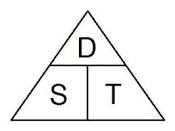
Using a formula triangle
- Cover up the quantity you want to find with your finger
- The position of the other two quantities tells you the formula
Units
- The most common units of speed are
- metres per second
- kilometres per hour
- miles per hour
- To convert between measures of speed you need to convert one unit firs then the other
- Write the new units at each step of your working
Minutes and hours
- For questions on speed, you need to be able to convert between minutes and hours
- Remember there are 60 minutes in 1 hour
- To convert from hours to minutes you multiply by 60
Speed checklist
- Draw formula triangle
- Make sure units match
- Give units with answer
Typical speeds
When people walk, run, or travel in a car their speed will change. They may speed up, slow down or pause for traffic. The speed at which a person can walk, run or cycle depends on many factors including:
age
terrain
fitness
distance travelled
It is not only moving objects whose speed can vary. The speed of the wind and the speed of sound also vary.
- A typical value for the speed of sound in air is about 330 m/s.
The velocity of an object is its speed in a particular direction. Velocity is a vector quantity because it has both a magnitude and an associated direction.
To calculate velocity, displacement is used in calculations, rather than distance.
Unlike distance, which is a scalar quantity, displacement is a vector quantity. It includes:
the distance travelled, measured in a straight line from start to finish
- the direction of the straight line