Lab 7
🧠 DETAILED MULTI-PARAGRAPH SUMMARY
Drug metabolism refers to the enzymatic modification of drug molecules, primarily occurring in the liver, where intracellular enzymes transform drugs into more water-soluble compounds for excretion. The rate of drug metabolism is critical: if metabolism is too fast, drugs may become ineffective, while slow metabolism can lead to toxicity and adverse effects. Liver function plays a major role in determining drug clearance, and diseases affecting the liver can alter pharmacokinetics by influencing absorption, enzyme activity, blood flow, and excretion pathways.
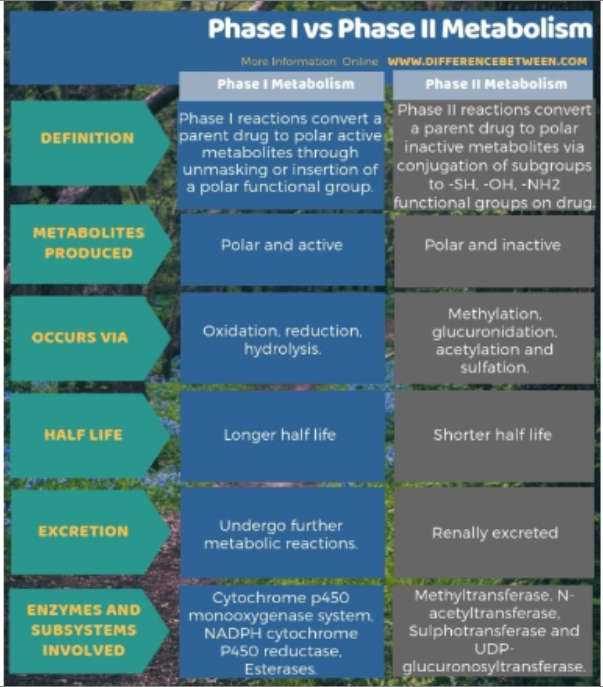
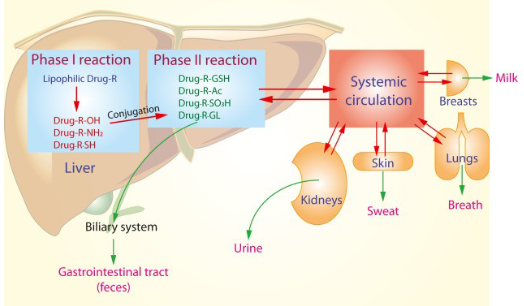
Drug metabolism occurs in two major phases. Phase I reactions (oxidation, reduction, hydrolysis) introduce or expose polar functional groups such as –OH or –NH₂, often mediated by the cytochrome P450 (CYP450) enzyme system. These reactions may inactivate drugs, activate prodrugs, or leave activity unchanged. Phase II reactions involve conjugation with endogenous molecules (e.g., glucuronic acid, amino acids), making the compounds more water-soluble and typically inactive, allowing for easier elimination via urine or bile.
The cytochrome P450 enzyme system is a large family of heme-containing monooxygenases located in the smooth endoplasmic reticulum (SER) of hepatocytes. These enzymes metabolise approximately 75% of commonly used drugs. Their activity can be altered by drugs or environmental chemicals through induction (increased enzyme activity) or inhibition (reduced activity). These changes are central to drug-drug interactions, where one drug modifies the metabolism of another, potentially leading to antagonism, where the effect of one drug is reduced or abolished.
A key example is phenobarbitone, a known inducer of CYP450 enzymes, particularly CYP2E1. When administered, it increases the metabolic rate of certain drugs, such as aminopyrine, reducing their therapeutic effectiveness. Aminopyrine metabolism produces formaldehyde as a by-product, which can be measured experimentally. This forms the basis of the practical: assessing enzyme activity by quantifying formaldehyde production.
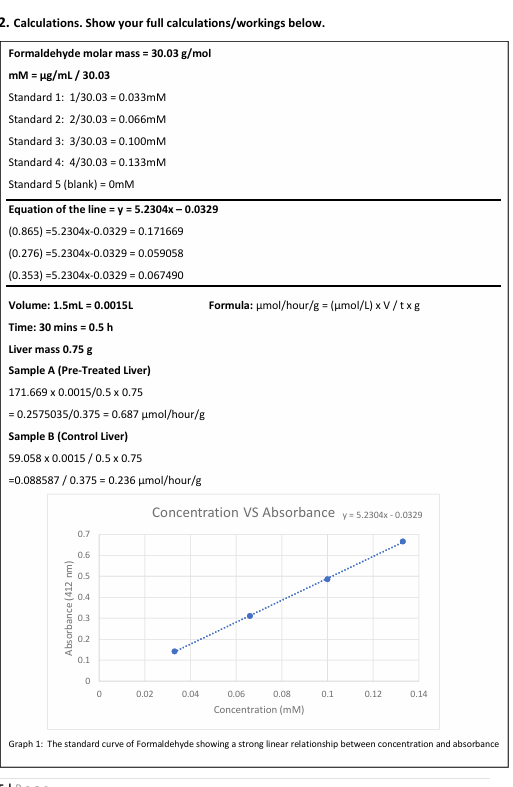
In the laboratory experiment, liver microsomal fractions (post-mitochondrial supernatants) from control and phenobarbitone-treated rats are used. Aminopyrine metabolism is measured by detecting formaldehyde using the Nash reagent, which produces a yellow colour measurable at 412 nm via spectrophotometry. A standard curve of known formaldehyde concentrations allows quantification of unknown samples. Increased absorbance corresponds to higher enzyme activity, demonstrating enzyme induction in treated samples.
Overall, this practical illustrates how enzyme activity can be measured in vitro and how drug metabolism can be altered by enzyme induction. It highlights the clinical importance of understanding drug interactions, variability in metabolism, and the biochemical basis of pharmacokinetics.
📌 BULLET POINT SUMMARY
Drug metabolism = enzymatic modification of drugs (mainly in liver)
Too fast metabolism → ineffective drug
Too slow metabolism → toxicity
Two phases:
Phase I: oxidation, reduction, hydrolysis (CYP450)
Phase II: conjugation → increased solubility → excretion
CYP450 enzymes:
Located in smooth ER
Heme proteins
Metabolize ~75% of drugs
Key enzymes: CYP3A4, CYP2D6, CYP2C9, CYP1A2, etc.
Enzyme activity can be:
Induced → increased metabolism
Inhibited → decreased metabolism
Drug interactions can lead to antagonism
Example:
Phenobarbitone induces CYP enzymes
Increases metabolism of aminopyrine
Aminopyrine metabolism → produces formaldehyde
Formaldehyde detected using Nash reagent
Yellow colour measured at 412 nm
Standard curve used to calculate concentration
Higher absorbance = higher enzyme activity
Experiment compares:
Control liver vs treated liver
Treated liver → higher metabolism
✏ FILL-IN-THE-BLANK SUMMARY
Drug metabolism is the _Enzymatic_____ modification of drug molecules and occurs mainly in the __liver___. It involves two phases: Phase I and Phase II. Phase I reactions include __oxdation____, __reduction_____ and ___hydrolysis_____, and are largely mediated by the _CYP450_____ enzyme system.
Phase II reactions involve _conjugation_________ of drugs with endogenous molecules, making them more _water____ soluble and easier to _execrete_____. The most important enzyme system in drug metabolism is the ____P450______, which is located in the ___smooth____ endoplasmic reticulum.
Some drugs can alter enzyme activity through __induction________ or inhibition__________. Induction increases enzyme activity, while inhibition __reduces________ it. These changes can result in drug-drug __interaction________.
Phenobarbitone is an example of an enzyme _inducer_______ that increases the activity of __CYP450_______ enzymes. Aminopyrine is metabolised by these enzymes to produce __formaldehyde________, which can be measured experimentally.
The detection of formaldehyde uses the ___NASH_______ reagent, which produces a _____yellow_____ colour. This is measured using a __spectrophmetror________ at ____412______ nm.
A ____stanard______ curve is used to determine the concentration of formaldehyde in unknown samples. Higher absorbance indicates ____higher______ enzyme activity.
✅ Answers
enzymatic
liver
oxidation
reduction
hydrolysis
cytochrome P450
conjugation
water
excrete
cytochrome P450 system
smooth
induction
inhibition
decreases
interactions
inducer
CYP450
formaldehyde
Nash
yellow
spectrophotometer
412
standard
higher
📝 40 EXAM-STYLE MCQs
Questions
Drug metabolism primarily occurs in the:
A. Kidney
B. Liver
C. Brain
D. LungPhase I reactions include:
A. Conjugation
B. Oxidation
C. Excretion
D. FiltrationPhase II reactions involve:
A. Hydrolysis
B. Oxidation
C. Conjugation
D. ReductionCYP450 enzymes are located in:
A. Nucleus
B. Mitochondria
C. Smooth ER
D. RibosomesCYP450 enzymes are:
A. Lipids
B. Heme proteins
C. Carbohydrates
D. DNAEnzyme induction results in:
A. Decreased metabolism
B. Increased metabolism
C. No change
D. Toxicity onlyEnzyme inhibition results in:
A. Increased metabolism
B. Decreased metabolism
C. Faster excretion
D. ActivationPhenobarbitone is a:
A. Inhibitor
B. Inducer
C. Substrate
D. AntagonistAminopyrine metabolism produces:
A. Glucose
B. Ammonia
C. Formaldehyde
D. CO₂Formaldehyde is detected using:
A. Benedict’s reagent
B. Nash reagent
C. Biuret reagent
D. IodineNash reagent produces:
A. Blue colour
B. Green colour
C. Yellow colour
D. Red colourAbsorbance is measured at:
A. 260 nm
B. 340 nm
C. 412 nm
D. 600 nmPhase I reactions make drugs:
A. Less polar
B. More polar
C. Insoluble
D. ToxicPhase II reactions make drugs:
A. Less soluble
B. More soluble
C. Active
D. Lipid solubleDrug antagonism means:
A. Increased effect
B. Decreased effect
C. No interaction
D. ToxicityMicrosomes are derived from:
A. Nucleus
B. ER
C. Golgi
D. LysosomeMixed function oxidases are also called:
A. Kinases
B. Monooxygenases
C. Hydrolases
D. LigasesCYP450 enzymes metabolize approximately:
A. 25% of drugs
B. 50%
C. 75%
D. 100%Increased metabolism leads to:
A. Toxicity
B. Reduced drug effect
C. No effect
D. AccumulationReduced metabolism leads to:
A. Decreased toxicity
B. Increased toxicity
C. No change
D. Faster clearanceLiver disease affects:
A. Only absorption
B. Only metabolism
C. Multiple pharmacokinetic processes
D. Only excretionPhase II reactions usually produce:
A. Active drugs
B. Inactive drugs
C. Toxic drugs
D. GasesStandard curves relate:
A. Time vs concentration
B. Absorbance vs concentration
C. pH vs temperature
D. Volume vs massSpectrophotometry measures:
A. Weight
B. Absorbance
C. Pressure
D. TemperatureFormaldehyde concentration is proportional to:
A. Time
B. Absorbance
C. Temperature
D. VolumeControl sample lacks:
A. Liver
B. Substrate
C. Enzyme
D. WaterTreated sample contains:
A. No enzyme
B. Induced enzyme
C. Inhibited enzyme
D. No substrateAminopyrine is:
A. Antibiotic
B. Analgesic
C. Hormone
D. VitaminCYP2E1 metabolizes:
A. Glucose
B. Aminopyrine
C. DNA
D. RNAInduction increases:
A. Drug half-life
B. Drug metabolism
C. Toxicity always
D. AbsorptionInhibition increases:
A. Clearance
B. Drug levels
C. Excretion
D. BindingNash reagent detects:
A. Proteins
B. Lipids
C. Formaldehyde
D. SugarsYellow colour intensity reflects:
A. Enzyme inhibition
B. Enzyme activity
C. pH
D. TemperatureLiver microsomes are used to study:
A. DNA replication
B. Drug metabolism
C. Protein synthesis
D. Cell divisionZnSO₄ is used to:
A. Increase reaction
B. Precipitate proteins
C. Add colour
D. Heat solutionBa(OH)₂ is used to:
A. Neutralize
B. Precipitate impurities
C. Add substrate
D. Measure absorbanceDrug metabolism mainly occurs in:
A. Blood
B. Liver
C. Skin
D. BrainEnzyme induction is:
A. Rare
B. Clinically important
C. Irrelevant
D. ImpossibleDrug interactions occur due to:
A. Absorption only
B. Enzyme changes
C. Temperature
D. PressureHigher absorbance indicates:
A. Lower metabolism
B. Higher metabolism
C. No metabolism
D. Error
✅ MCQ ANSWERS
B
B
C
C
B
B
B
B
C
B
C
C
B
B
B
B
B
C
B
B
C
B
B
B
B
B
B
B
B
B
B
C
B
B
B
B
B
B
B
B
Abstract MCQs — Drug Metabolism
1. Clinical Interpretation
A patient rapidly metabolises a prescribed drug. Which outcome is MOST likely?
A. Increased toxicity
B. Reduced therapeutic effectiveness
C. Drug accumulation in tissues
D. Complete inhibition of excretion
Answer: B
2. Pharmacokinetic Reasoning
Why is the liver considered the primary organ of drug metabolism?
A. It stores all administered drugs
B. It contains high concentrations of intracellular metabolising enzymes
C. It directly excretes all drugs into urine
D. It prevents drugs from entering circulation
Answer: B
3. Phase I Logic
What is the primary purpose of Phase I metabolism?
A. Eliminate drugs immediately in urine
B. Introduce or expose polar functional groups
C. Bind drugs permanently to proteins
D. Prevent drugs entering hepatocytes
Answer: B
4. Functional Consequences
Which statement BEST describes the possible outcomes of Phase I reactions?
A. Drugs are always inactivated
B. Drugs are always activated
C. Drugs may be activated, inactivated, or unchanged
D. Drugs become immediately excreted without modification
Answer: C
5. Abstract Biochemistry
Why does increasing drug polarity generally enhance excretion?
A. Polar molecules diffuse more easily through lipid membranes
B. Water-soluble molecules are more readily eliminated in urine
C. Nonpolar compounds are filtered faster by kidneys
D. Polarity prevents hepatic metabolism
Answer: B
6. Mechanistic Thinking
Which cellular structure is MOST associated with CYP450 enzymes?
A. Rough endoplasmic reticulum
B. Nucleus
C. Smooth endoplasmic reticulum
D. Golgi apparatus
Answer: C
7. Enzyme Modulation
If a drug inhibits CYP450 activity, what is the MOST likely consequence for another drug metabolised by the same enzyme?
A. Faster metabolism
B. Reduced plasma concentration
C. Slower metabolism and possible toxicity
D. Increased renal filtration only
Answer: C
8. Induction Concept
Phenobarbitone increases CYP450 activity. This is an example of:
A. Antagonism
B. Hydrolysis
C. Induction
D. Conjugation
Answer: C
9. Drug Interaction Logic
Why can enzyme induction reduce the effectiveness of certain drugs?
A. Drugs become less water soluble
B. Drugs are metabolised and cleared more rapidly
C. Liver blood flow decreases
D. Excretion pathways become blocked
Answer: B
10. Experimental Interpretation
In the practical, increased formaldehyde production indicates:
A. Reduced enzyme activity
B. Greater aminopyrine metabolism
C. Lower CYP450 expression
D. Decreased spectrophotometer sensitivity
Answer: B
11. Abstract Experimental Design
Why is formaldehyde measured instead of aminopyrine directly?
A. Formaldehyde is easier to quantify spectrophotometrically
B. Aminopyrine cannot be metabolised in vitro
C. Formaldehyde inhibits CYP450 enzymes
D. Aminopyrine has no absorbance properties
Answer: A
12. Clinical Pharmacology
A patient with severe liver disease may require lower drug doses because:
A. Drug metabolism may be impaired, increasing toxicity risk
B. Liver disease always increases excretion
C. CYP450 enzymes become permanently activated
D. Drugs cannot enter circulation
Answer: A
13. Antagonism
Drug antagonism in metabolism refers to:
A. One drug increasing another drug’s effect
B. One drug reducing or abolishing another drug’s effect
C. Complete absence of metabolism
D. Conjugation failure
Answer: B
14. Phase II Understanding
Phase II metabolism MOST commonly results in compounds that are:
A. More lipid soluble and active
B. More water soluble and inactive
C. Unable to leave hepatocytes
D. Resistant to renal excretion
Answer: B
15. Conceptual Physiology
Why are CYP450 enzymes considered “mixed-function oxidases”?
A. They catalyse only reduction reactions
B. They participate in oxidation reactions involving oxygen transfer
C. They only metabolise endogenous compounds
D. They function independently of electron transfer
Answer: B
16. Experimental Logic
What is the role of the Nash reagent in the practical?
A. To induce CYP450 enzymes
B. To metabolise aminopyrine
C. To detect formaldehyde by producing a yellow colour
D. To inhibit liver enzymes
Answer: C
17. Spectrophotometric Reasoning
Why does higher absorbance at 412 nm indicate greater enzyme activity?
A. More yellow product formed from formaldehyde detection
B. Reduced formaldehyde concentration
C. Lower CYP450 activity
D. Increased protein precipitation
Answer: A
18. Abstract Drug Metabolism
A prodrug is BEST described as:
A. A drug immediately excreted unchanged
B. A drug activated through metabolism
C. A permanently inactive compound
D. A drug resistant to enzymatic modification
Answer: B
19. Systems Thinking
Why are drug-drug interactions involving CYP450 enzymes clinically significant?
A. CYP450 enzymes metabolise a large proportion of commonly used drugs
B. CYP450 enzymes only metabolise toxic compounds
C. Drug metabolism occurs exclusively in kidneys
D. CYP450 enzymes are unaffected by environmental chemicals
Answer: A
20. Integrative Interpretation
A phenobarbitone-treated rat shows much greater absorbance at 412 nm compared with controls.
Which conclusion is MOST valid?
A. Aminopyrine metabolism decreased
B. CYP450 enzyme induction increased metabolic activity
C. Nash reagent failed
D. Formaldehyde production was inhibited
Answer: B