CHEM26/28 Exam 3 Study Guide
Page 1
Simple Sugars (Monosaccharides)
Empirical formula: CH2O
Aldose: sugars with an aldehyde group at one end of the molecule
Ketose: sugars with a ketone group located at one end of the molecule
Enantiomers/stereoisomers: non-superimposable mirror images.
Fischer Projection:
all carbons in a vertical line
Most oxidized carbon is at the top (carbonyl carbon)
Page 2
Monosaccharide Chirality
Chiral Carbon:
all single bonds
that are attached to four different groups
The Chiral carbon: furthest from the most oxidized end in a Fischer Projection.
D-stereoisomer: OH points right
L-stereoisomer: OH points left
Haworth Projection: 5-carbon and 6-carbon Fischer projections can cyclize
what does Hemiacetal linkage (C-O-C-O-H) do: allows ring to reopen/close between cyclic and linear form
Anomers: Alpha (hydroxyl down) and Beta (hydroxyl up) forms
cyclic monosaccharides: 6-carbon ring; nutritional (glucose, galactose, fructose) and 5-carbon ring; structural (ribose, deoxyribose
Page 3
Complex Sugars (Disaccharides)
Glycosidic Bond (oxygen bridge): Converts hemiacetal/hemiketal to acetal/ketal, locking linkage.
Maltose: D-Glucose + D-Glucose via alpha(1-4) bond.
Lactose: D-Galactose + D-Glucose via Beta(1-4) bond.
Sucrose: D-Glucose + D-Fructose via alpha(1)-Beta(2) bond.
Page 4
Polysaccharides
Dietary Starch: Amylose (liner) and Amylopectin (minimal branching)
The body's method of glucose storage: glycogen (highly branched)
Structural polysaccharide in plants: Cellulose; Beta (1-4) bonding
Page 5
Chapter 17: Lipids and Functions
Roles of lipids: Energy source, cell-membrane structure, steroid hormones.
Saturated fatty acids: max amount of hydrogens
unsaturated fatty acids: double bond (C=C’s always cis).
Melting Point: Lower for unsaturated due to disruptive packing; more double bonds lower the melting point
Omega-3 (ω-3): first double bond appears on 3 carbon in on the methyl end
Omega-6 (ω-6): first double bond appears on 6 carbon in on the methyl end
Page 6
Derivatives of Unsaturated Fatty Acids
Types of Eicosanoids from Arachidonic Acid: Prostaglandins, Thromboxanes, Leukotrienes
Waxes: Long fatty acid traditional esters; examples include Beeswax and Carnauba Wax.
Glycerides: non-traditional esters formed form glycerol and fatty acids (mono-, di-, tri-); Neutral glycerides; used for energy storage and stored in adipose fat cells
Page 7
Charged Glycerides
charged glycerides: phosphoglycerides; structural precursor for building blocks of the cell membrane
Examples of charged glycerides: Phosphatidate, Phosphatidylethanolamine, Phosphatidylcholine, Phosphatidylserine.
Cell membrane fluidity controlled by:
Ratio of unsaturated to saturated fatty acids.
Cholesterol content.
Page 8
Sphingolipids
Sphingolipids: formed from sphingosine; component for nerve cell membranes.
Difference between other glycerides: Direct connection to 3-carbon and amide linkage instead of ester.
Steroids nucleus: 4 carbon rings connected together
squalene derived steriods: Cholesterol (found in cell membrane), Bile salts (helps form dietary fats in digestive tract, made in liver stored in galbladder), estrogen+testosterone (sex hormones)
Page 9
Chapter 18: Protein Structure and Function
D/L determination in amino acids: based on NH3+ orientation, Only L-amino acids are naturally occurring.
Page 10
Peptide Bonds and Protein Structure
Peptide bond: Amide linkage between amino acids, n-terminus to c-terminus
Primary Structure: Linear sequence of amino acids.
Page 11
Secondary and Tertiary Structures
Secondary Structures: alpha-helix and Beta-sheet, stabilized by hydrogen bonds between amide backbone
Tertiary Structure: globular proteins, only between sidechains Stabilized by:
Hydrophobic interactions
Hydrogen bonds
Salt bridges
Disulfide bonds.
Page 12
Quaternary Structure
Quaternary structure of protein: stabilized by same 4 forces as tertiary; multiple tertiary structure grouped together
Page 19: Enzymes
Enzyme Functions
Enzymes: biological catalysts, lowers activation energy to make reaction run quicker; doesn’t affect equillibrium
Oxidoreductases: (redox reactions)
Transferases: (functional group transfers)
Hydrolases: (hydrolysis: splits with water)
Lyases: (addition of water over C=C)
Isomerases: (functional group rearrangement creating constitutional isomer)
Ligases: (addition of substiuent).
Proteolytic enzymes: enzymes that split peptide (amide) bonds on the carbonyl side (right side) into small amino acids sections
Chymotrypsin: splits at aromatic amino acids (phe, tyr, trp)
Trypsin: Basic sidechains (arg, lys)
Elastase: small sidechains (gly, ala)
Page 14
Enzyme-Substrate Complex
Enzyme-Substrate complex: E+S, ES transition state: ES*; enzyme-product complex: EP, E+P
Transition state 1: substrate in active site can put stress on bond; leading to breakage
Transition state 2: two substrates in active sites can lead to bonding of substrate and enzyme
Transition state 3: Create a different catalytic pH "microenvironment" within the active site
Active Site: Area binding substrate.
Key and Lock model: enzyme=lock, substrate=key; they perfectly fit together naturally
Induced fit model: enzymes active site is flexible and changes it’s shape to fit substrate
Cofactors: used to help maintain the correct shape of enzyme active site active sites
examples of cofactors: metal ions and small organic molecules
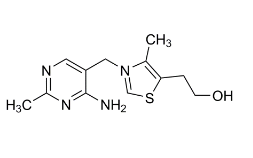
Thiamine: cofactor for decarboxylation reactions
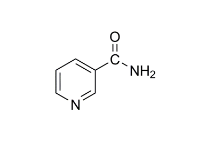
Niacin: cofactor carrier of hydrogen atoms
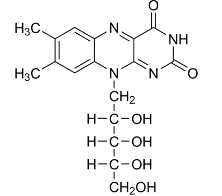
Riboflavin: cofactor carrier of hydride ions