The Modern Period
Poetry during the Modern Period
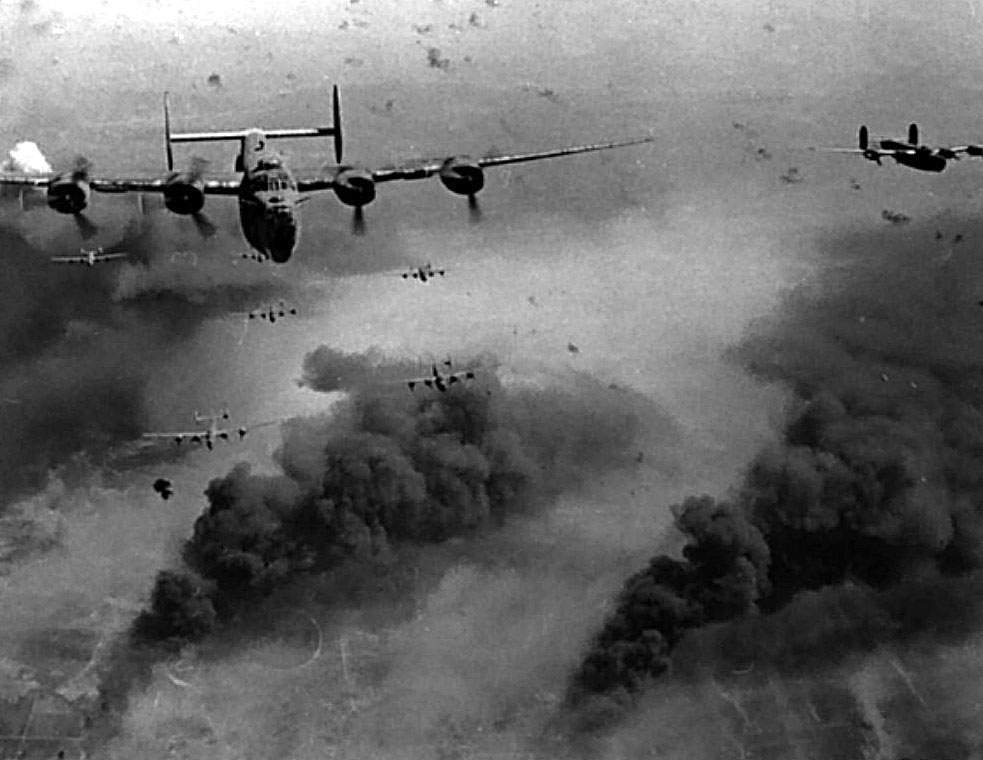
In the 20th century, the world blew up: both literally, as the World Wars applied industrial "progress" to terrible means, and culturally, as conventions and morals that had been in place for hundreds of years were turned on their heads. Although it had seemed like humanity was on a slow, steady climb upward, the 20th century proved that humans would only commit bigger atrocities with the new tools they have crafted for themselves.
Like every generation of poets, modernist poets (from 1910 to around 1950) responded to and expressed the horrors and anxieties of the era.
There was no time for the lengthy, sentimental verse of the Romantics and Victorians; the world had become too frenetic. Instead, the imagist movement insisted on "hard, clear, precise images" within poetry "in reaction to what it saw as Romantic fuzziness and facile emotionalism" (Norton Anthology of English Literature). In the spirit of urgency and artistic perfection, imagists cut all the unnecessary blubber from a poem so that every word plays a part in the overall meaning. Although the meanings were often enigmas (hidden in wordplay or syntax), the presentation was always purposeful.
Modernist Literature
For a bigger picture understanding of the explosion of modernist literature in Britain, Ireland, and the U.S., read the section titled "The Modernist Revolution," linked below. What were these writers reacting against? What did they stand for? If you wish, you may also read past this section to learn about the entire modernist period.
"The Modernist Revolution"
Britannica.com
How Does Modernist Poetry Stand Apart?
Modernist poets were keenly aware of the poetry that came before them. Michael Whitworth, the author of Reading Modernist Poetry, explains how these 20th-century writers used poetry not as a means of personal expression but as impersonal description or observation. Nevertheless, despite their differing perspectives on nature, man's "goodness," and imagination, modernist poets and the Romantics before them did share something in common. Read below to find out what.
Modernist poetry sometimes challenges and sometimes flatly rejects received ideas about the aims of poetry and about the means by which it achieves those aims. ... Though it has become the critical practice to write of the "speaker" in expressive and descriptive lyrics, the assumption in the early twentieth century was that the speaker could be identified with the poet. Such poems are vulnerable to the criticism that they are valuable not because of the poem in itself, but because of something external to and prior to it: the emotion which the poem expresses, the message it conveys, or the scene it depicts. In opposition to this tradition many modernist poets – most influentially T. S. Eliot in "Tradition and the Individual Talent" (1919) – insisted that poetry should be impersonal. Poetry, wrote Eliot, refuting Wordsworth's definitions, "is not a turning loose of emotion, but an escape from emotion; it is not the expression of personality, but an escape from personality" (Rainey 156).
...
While the majority of modernist references to Romanticism are critical in tone, their criticisms are informed by an awareness that the Romantics had similarly ambitious expectations for the public functions of poetry. The modernists' criticisms were several. First, as indicated earlier, many modernists were skeptical about the idea of poetry as the expression of personal feeling, and they associated this view most strongly with the romantics. Second ... many modernists questioned the centrality of nature to the Romantics' worldview. For the Romantics, nature was the source of all value, in contrast to a civilization believed to be corrupt and corrupting. By the later nineteenth century, especially among minor poets, this outlook had led to the expectation that rural scenes were the proper subject matter of poetry, and that the city should be represented only as a means of highlighting the value of nature. Romantic representations were infused with a subtle anthropocentricity: nature, whether terrifying, elevating, consoling, or invigorating, existed only in relation to human feelings, values, and expectations. Many modernist poets rediscovered the city as valid subject matter, and those who made reference to nature were aware of the shortcomings of the romantic outlook. (That is not to say that they succeeded in freeing nature from anthropocentricity: in many respects, human needs and desires are built deeply into human language.) Third, many modernists, particularly the politically conservative modernists, felt that the Romantic worldview was too optimistic about human nature. The position was expressed most trenchantly by T. E. Hulme in "Romanticism and Classicism," a lecture dating from around 1912, which became more influential with the posthumous publication of Hulme's works in 1924. Hulme blamed the eighteenth-century philosopher Jean-Jacques Rousseau for promoting the view that man "was by nature good" and that "it was only bad laws and customs that had suppressed him. Remove all these and the infinite possibilities of man would have a chance."6 This view manifested itself in Romantic poetry in the idea of the infinite, and in images of flight. Hulme argued instead that man "is an extraordinarily fixed and limited animal whose nature is absolutely constant. It is only by tradition and organisation that anything decent can be got out of him." What Hulme called "classical" poetry was marked by "a holding back, a reservation," the classical poet was always aware of man's limitations. For the modernists who adopted Hulme's position, the reservation often manifested itself as irony; any glimpse of the miraculous or the infinite is severely circumscribed by the earthly and the everyday. Expressions of feeling are marked by the awareness that someone else might take a different view; the worship of nature is prevented by the awareness that nature is indifferent to man.
Though they criticized the Romantics, modernist poets shared many assumptions with them about poetry and its place in society. Above all, they shared a belief in the importance of poetry. Though modernists criticized Percy Bysshe Shelley more than any other Romantic poet, his claim in "A Defence of Poetry" (1821) that poets "are the unacknowledged legislators of the world" sets the scale of ambition for modernist poetry. While the Romantics have often been seen as primarily private poets, the work of the major Romantics was informed by political awareness, and the modernists shared their sense of the importance of poetry in the public sphere. Yeats, Eliot, and Pound all engage with national and with European concerns, and although their poetic modes share little with the rhetoric or discourse of political prose, they are nevertheless political in a broad sense of the word. Many modernist poets also shared with the Romantics the belief that the poetic imagination was capable of creating new insights and new forms of knowledge. Although many modernists were careful to avoid using the key romantic term, "imagination," they nevertheless believed that the poet possessed a faculty of mind which allowed him or her to make connections unavailable to other people. ... Although many modernists subscribed to the idea that man was limited in his nature, the same limitations did not apply to poetry.
Whitworth, Michael. "Introduction." Reading Modernist Poetry, Wiley-Blackwell, 2010, pp. 5, 9–11.