Kingdom Protista
Kingdom Protista
All single-celled eukaryotes come under this kingdom.
Currently, we include Chrysophytes, Dinoflagellates, Euglenoids, Slime molds, and Protozoans under Protista.
Characteristics of members of Kingdom Protista:-
They are primarily aquatic****.
Being eukaryotes, the protist cell body contains a well-defined nucleus and other membrane-bound organelles.
Some have motile organelles like cilia and flagella.
Protists reproduce asexually and sexually by a process involving cell fusion and zygote formation.
This kingdom forms a link with the others dealing with plants, animals, and fungi.
Dinoflagellates: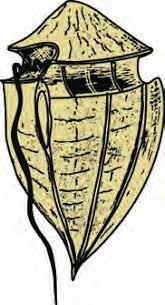
These organisms are mostly marine and photosynthetic and appear yellow, green, brown, blue, or red depending on the main pigments present in their cells.
The cell wall has stiff cellulose plates on the outer surface.
Most of them have two flagella - one lies longitudinally and the other transversely in a furrow between the wall plates.
Other species of Dinoflagellates are photosynthetic endosymbionts that live in the cell of other organisms such as coral reefs.
Very often, red dinoflagellates undergo such rapid multiplication that they make the sea appear red (red tides).
Toxins released in such large numbers may even kill other marine animals such as fish.
Example: Gonyaulax (red dinoflagellate).
Apicocomplexans
They all share the apical complex, a mass of organelle contained in the apical end of the cell.
Diseases caused by apicocomplexans:
Malaria : by Plasmodium
Taxoplasmosis
Ciliates
Have hairlike cilia, two types of nuclei, and contractile vacuoles - regulate salt and water balance within the cell.
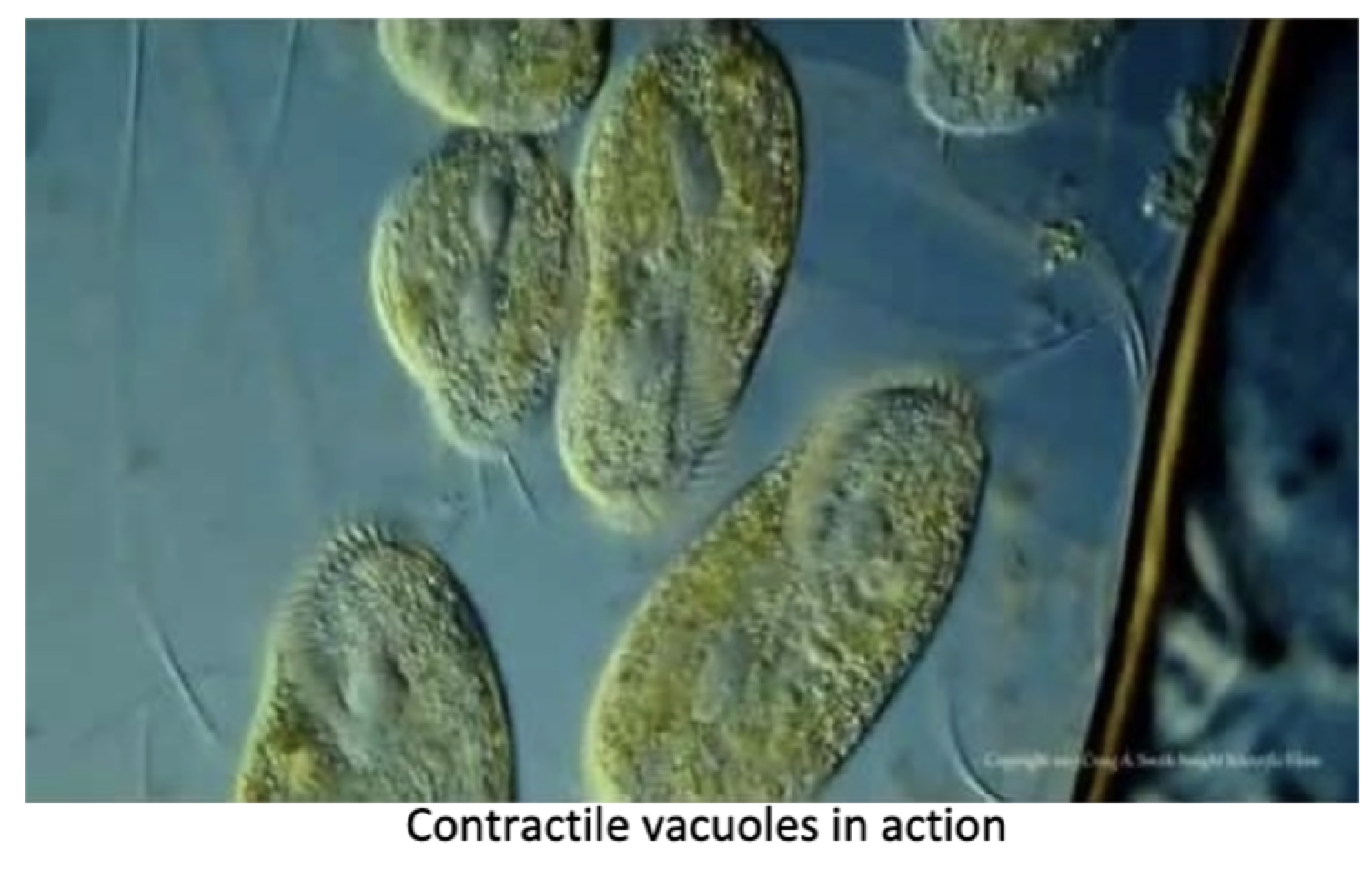
Ex - Paramecium
Stramenopiles 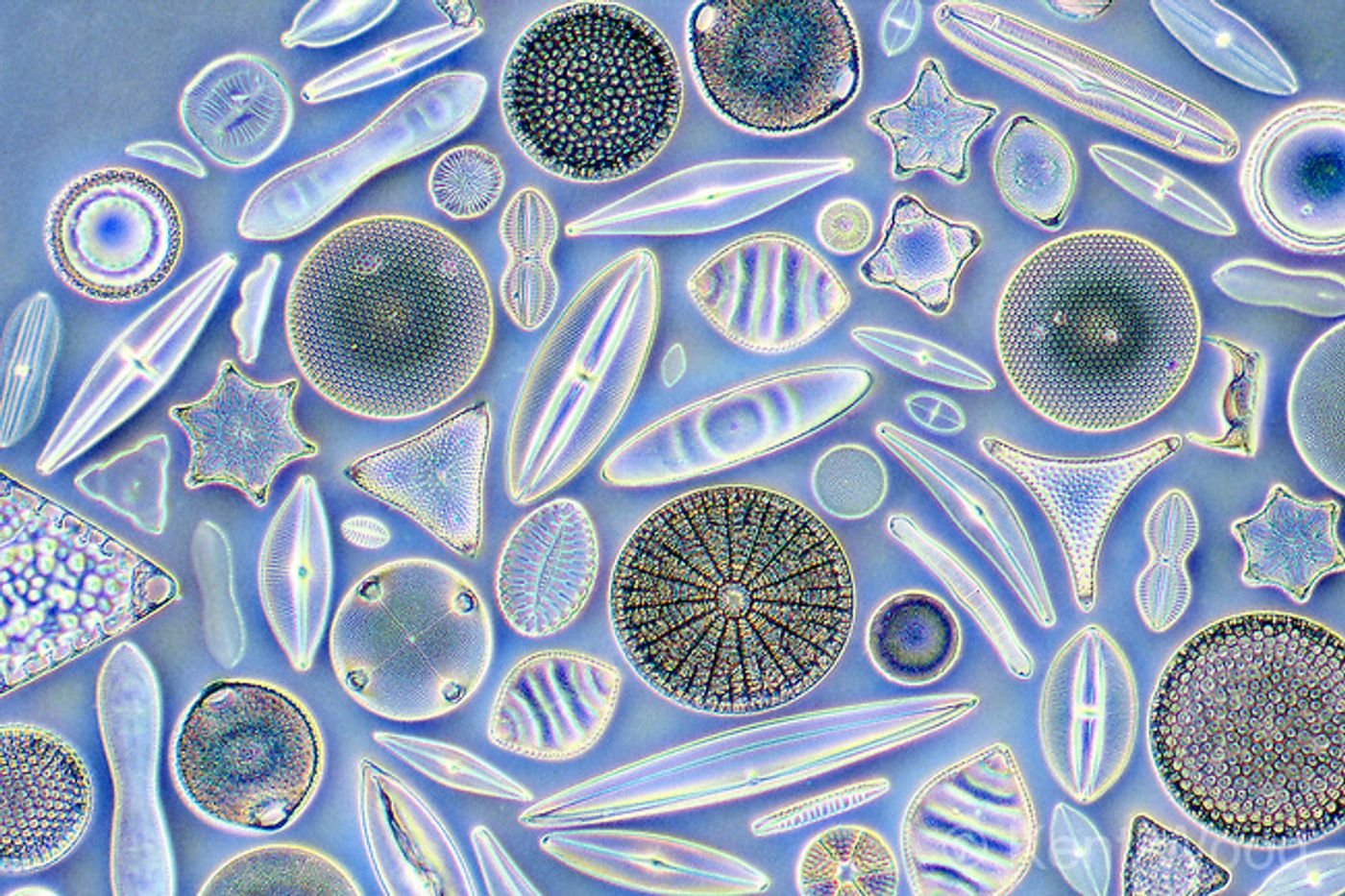
Characteristics - descend from ancestors that posses flagella.
Oomycetes - not autotrophic
Diatoms
Major producers
Have silica glass cell wall
Go through asexual reproduction followed by sexual reproduction (petri dish or box)
They are the chief producers of the ocean.
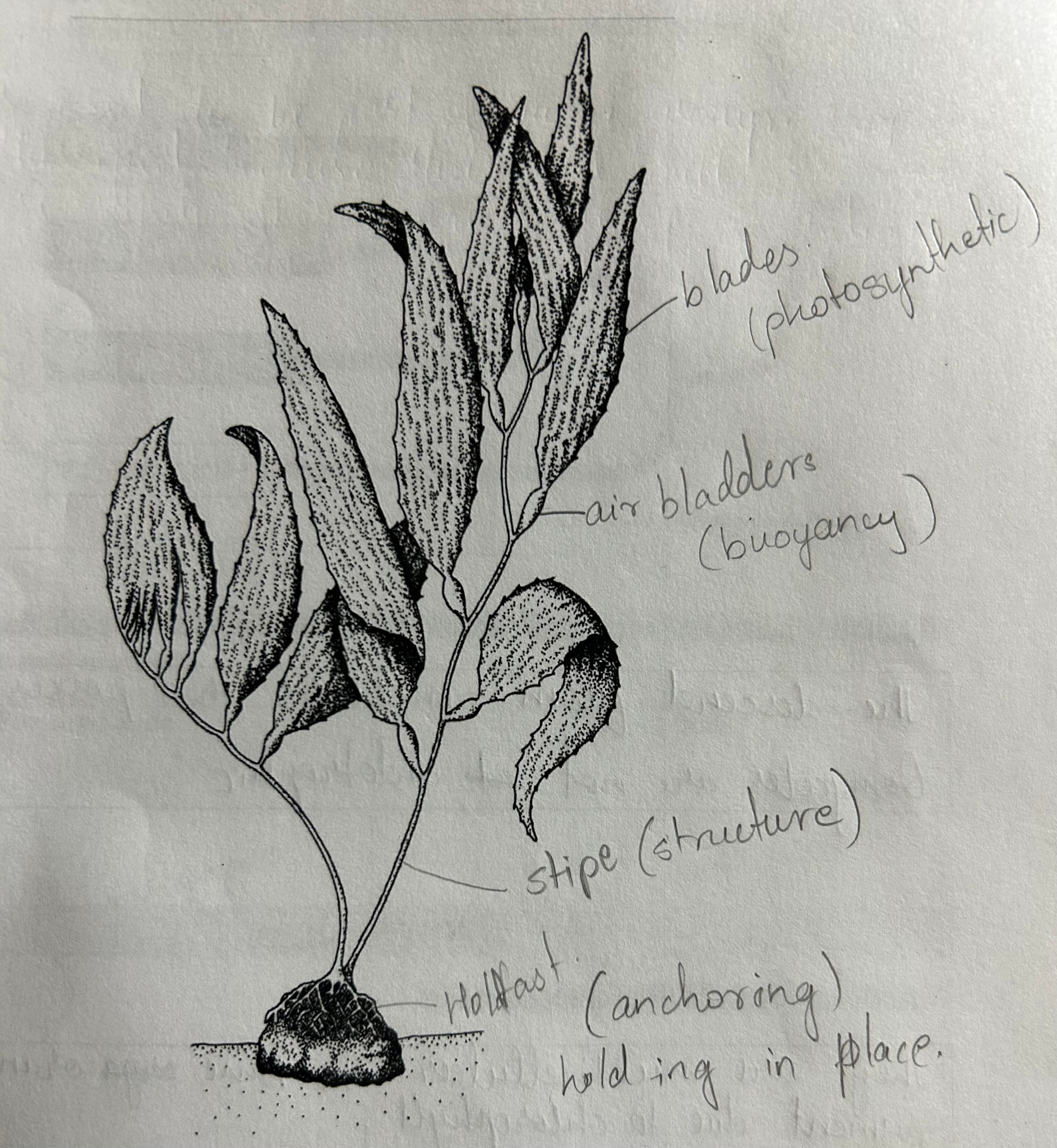
Brown Algae
Multicellular, Orange-yellow pigment due to cholorphyll.
Oomycetes
Sperm and zoospores have two flagella.
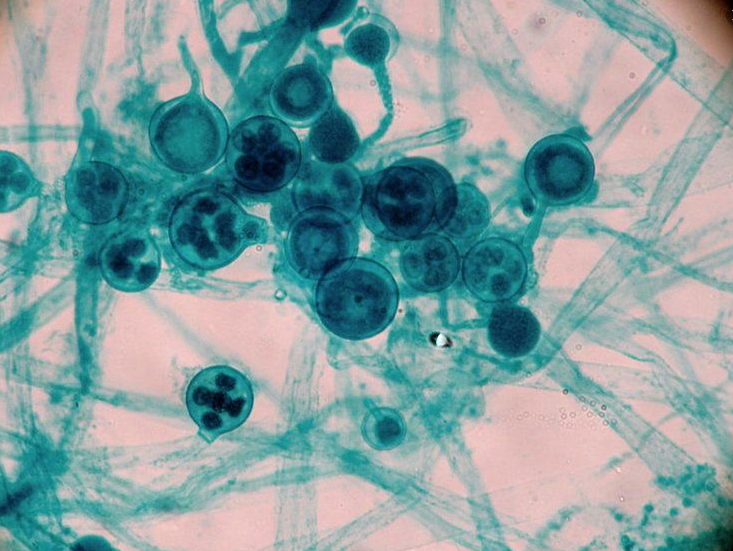
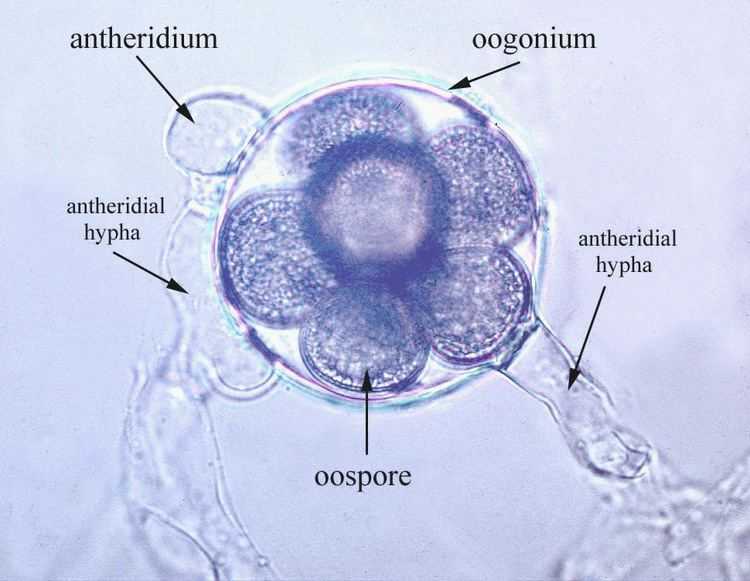
Sexual stages of Saprolegnia
Rhizaria 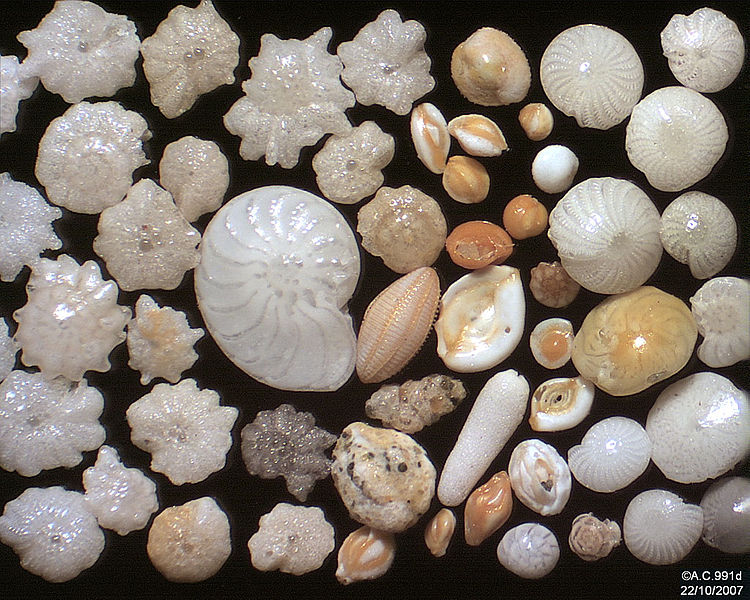
Unicellular and mostly aquatic
Foraminiferans
Bethnic - crawl at the bottom of the ocean
Planktonic - Float in the ocean
Foraminiferans shells produce limestones.
Functions :
Locomotion
Sticky net for plankton
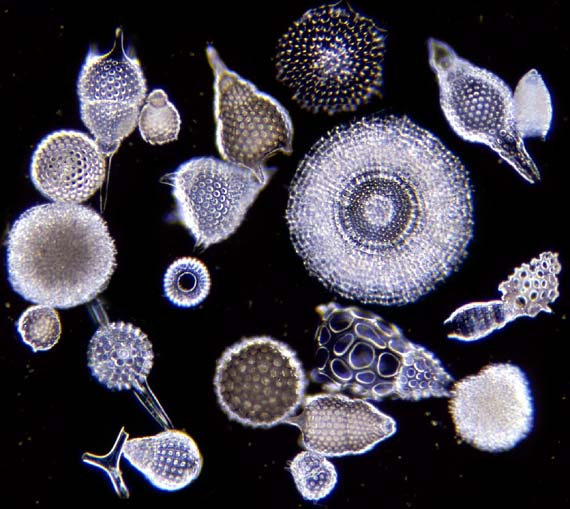
Radiolarians ➡️
Excavates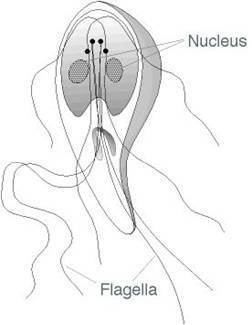
Mitochondria lost in excavates
Diplomonads
The cyst stage of the parasite can be found in river water
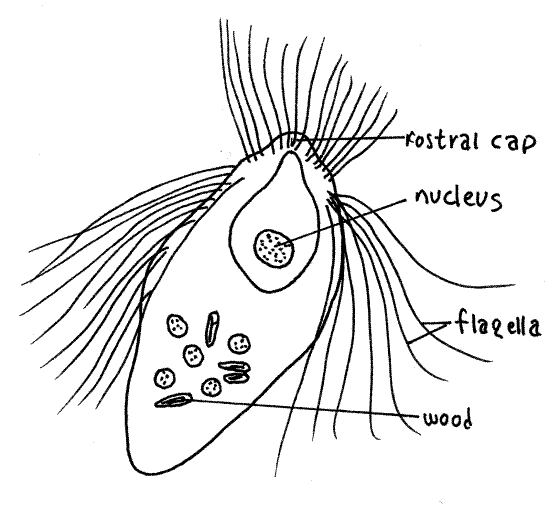
Parabasalids
Symbiotic with Termites
Heteroloboseans
Ex. - Naegleria found in warm fresh water like rivers and lakes.
Euglenoids:
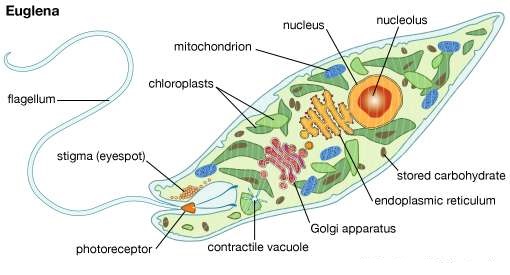
The majority of them are freshwater organisms found in stagnant water.
They have two flagella****, a short and a long one.
Though they are photosynthetic in the presence of sunlight, when deprived of sunlight they behave like autotrophs and heterotrophs by predating on other smaller organisms.
The pigments of euglenoids are due to the algae they eat and chloroplast.
Example: Euglena.
Amoebozoans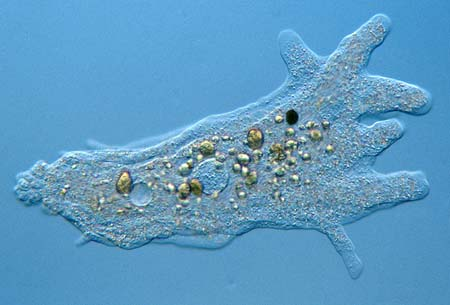
Loboseans
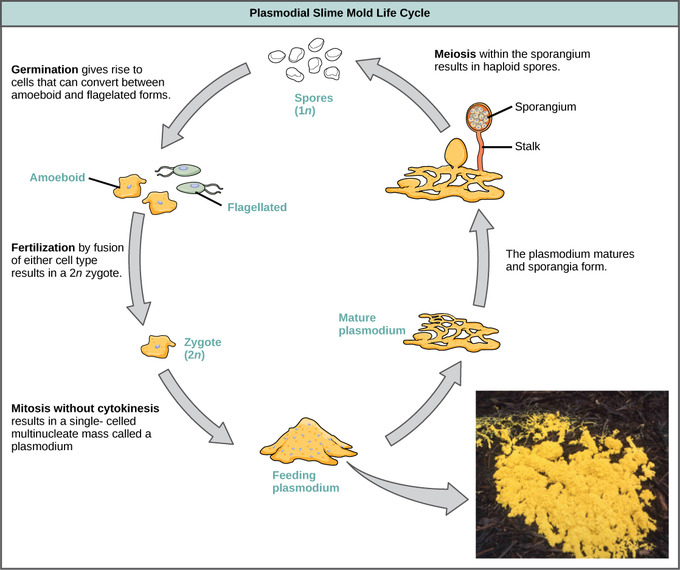
Includes plasmodialslime molds and cellular
slime molds and Amoebas
Amoebas – Amoeboid Locomotion Using pseudopods
Plasmodial Slime molds
Described as coenocytic because the nucleus enclosed in single cell membrane.
4 Stages of plasmodial slime molds exist in :
Plasmodial slime molds have fruiting structures when conditions become unfavorable. They feed on multinucleate and cellular feed on single cells.
Cellular Slime Molds
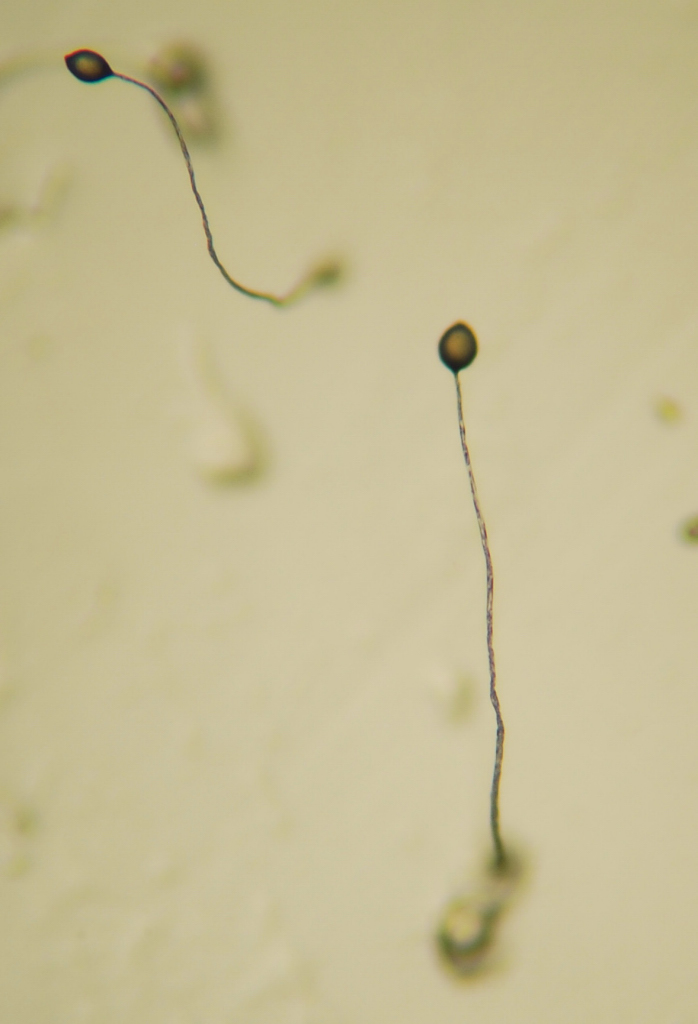
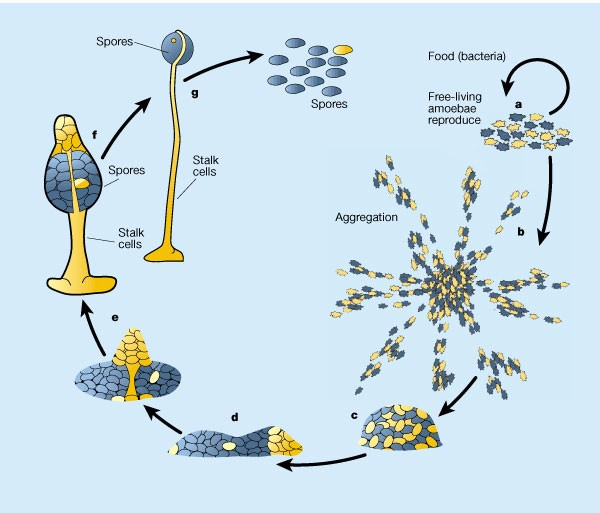
Conditions unfavorable - aggregate into a slug. The slug migrates over to construct a dedicated staked fruiting structure.
Protozoans: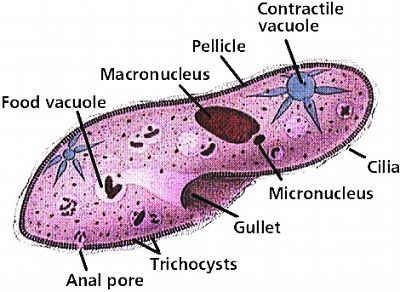
All protozoans are heterotrophs and live as predators or parasites.
They are believed to be primitive relatives of animals.
There are four major groups of protozoans:
Amoeboid Protozoans:
These organisms live in freshwater, seawater, or moist soil.
They move and capture their prey by putting out pseudopodia(false feet).
Marine forms have silica shells on their surface.
Some of them are parasites.
Examples: Amoeba, Entamoeba.
Flagellated protozoans:
The members of this group are either free-living or parasitic.
They have flagella.
The parasitic forms cause diseases such as sleeping sickness.
Examples: Trypanosoma.
Ciliated protozoans:
These are aquatic, actively moving organisms because of the presence of thousands of cilia.
They have a cavity (gullet) that opens to the outside of the cell surface.
The coordinated movement of rows of cilia causes the water laden with food to be steered into the gullet.
Examples: Paramecium.
Sporozoans:
It includes diverse organisms that have an infectious spore-like stage in their life cycle.
The most notorious is Plasmodium (malarial parasite) which causes malaria, a disease that has a staggering effect on the human population.
Chrysophytes:
Characteristics:
They are found in freshwater as well as in marine environments.
They are microscopic and float passively in water currents (plankton)
Most of them are photosynthetic.
Examples: Diatoms and Golden Algae (Desmids).