Coastal Erosion
Processes of Coastal Erosion
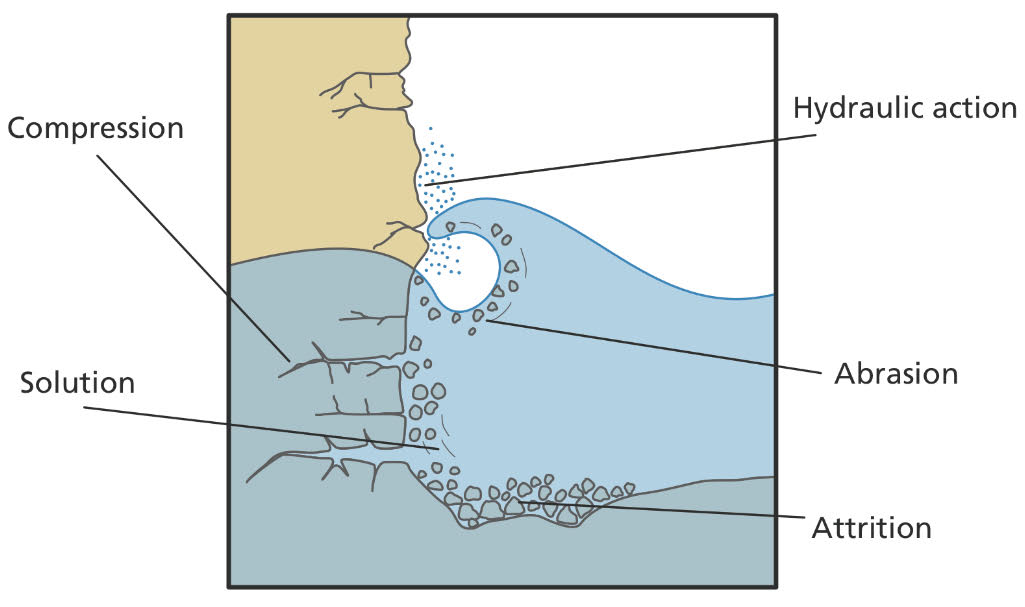
Hydraulic Action
The physical force of the waves breaks material off the coastline. During a storm, waves are stronger and their ability to erode increases.
Abrasion
Loose material(rocks and sand) is thrown against the coastline by waves. This action breaks more material off the coastline.
Compression
When waves crash against a cliff, air gets trapped in the cracks and joints on the cliff face and becomes compressed. When the waves retreat, the pressure is suddenly released. This process of compression and release happens repeatedly until the rock eventually shatters.
Solution
Some rocks, such as limestone and chalk, are dissolved by water.
Attrition
The stones that are carried in the water are constantly hitting against each other. Over time, they become worn down, smooth and rounded. This can eventually lead to a formation of sand.
Landforms of Coastal Erosion
Bays and Headlands
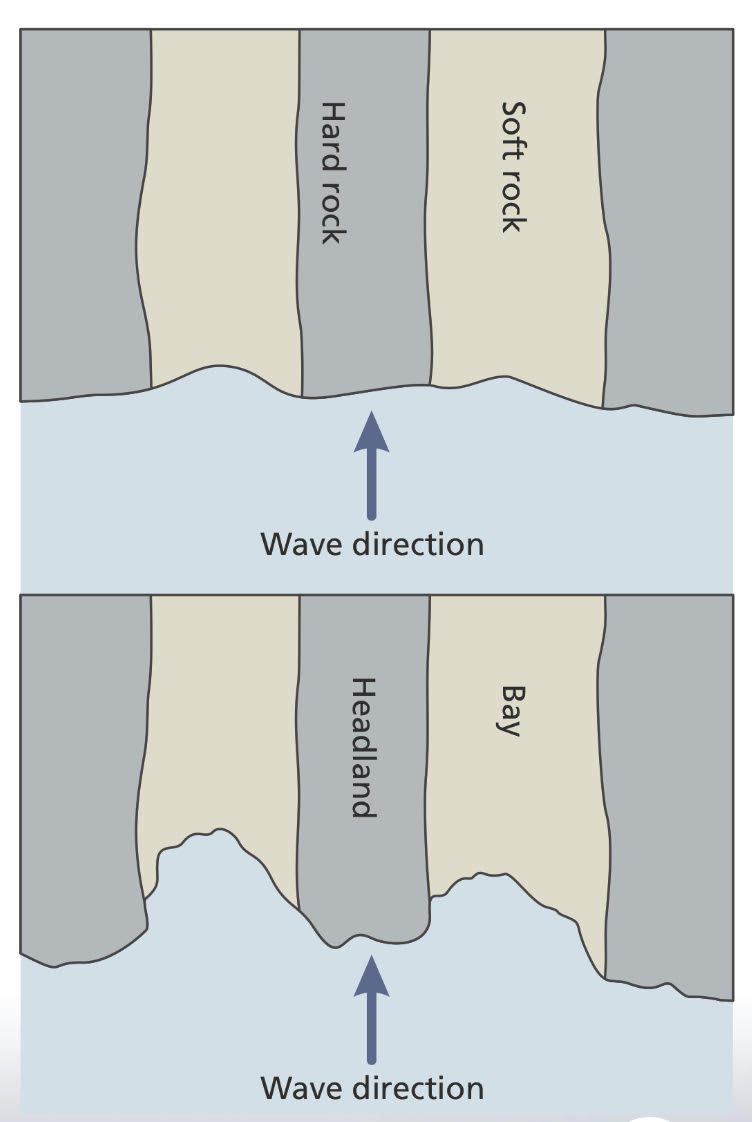
A bay is a curved area where the waves have eroded the coastline. A headland is an area jutting into the sea.
Formation
The coastline is made up of hard rock and soft rock. As waves crash against the coastline, soft rock such as limestone is eroded faster than hard rock such as basalt.
The process of hydraulic action, abrasion, compression and sometimes solution erode the softer rock to form a bay.
The harder rock stands out on either side of the bay to form headlands.
An example of a bay is Dublin Bay. An example of a headland is Bray headland.
Sea Stacks and Stumps
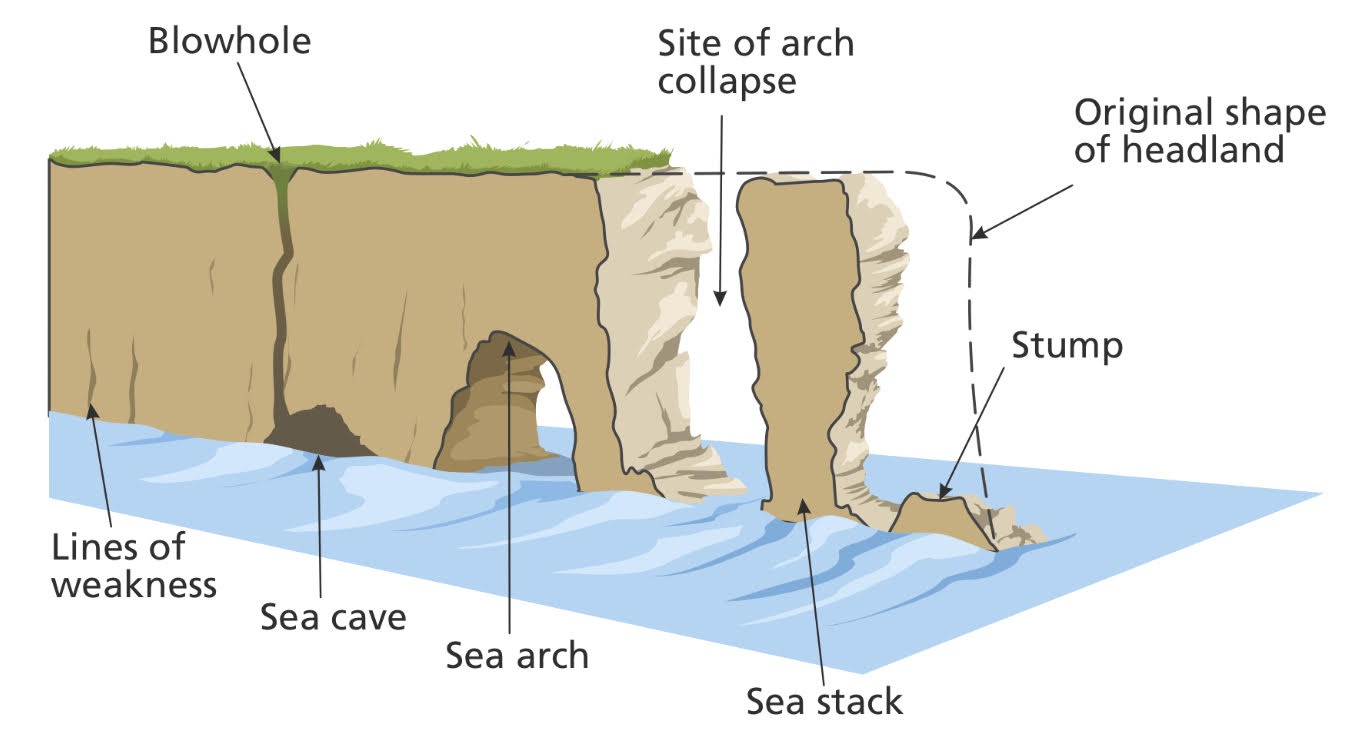
A sea stack is a pillar of rock cut off from the cliff or headland and left standing on its own.
Formation
A sea stack is formed when a sea arch collapses. Over time, the sea stack is eroded and it collapses. A sea stump is formed. These sea stumps can be seen at low tide.
An example of sea stacks are Dún Briste off Downpatrick Head in Mayo.
Blowholes
A blowhole is a passage that links the surface of the cliff top with the roof of a sea cave. They can be seen on OS maps as small circles near the coast.
Formation
When waves crash into a sea cave, air is trapped and compressed inside, causing rock in the roof of the sea cave to shatter. The rock eventually collapses, forming a blowhole. During stormy weather conditions, sea spray can be seen coming out of the blowhole.
An example of a blowhole is The Two pistols and McSwynes Gun on the Donegal Coast.
Coastal Transportation and Deposition
Longshore Drift
The material transported by waves such as shingle, mud and eroded material, is called the load. The movements of the load along the coastline is called longshore drift.
Longshore drift involves two steps
Waves approac and move up the shore at an angle(matching the direction of the prevailing wind). When a wave breaks, the swash