women's rights
Gender inequality - the unequal treatment of individuals based on their gender. A situation where men and women do not enjoy the same rights and opportunities across all sectors of society specifically because they are male or female.
Gender inequality challenges
Three main challenges:
Educational Opportunities:
Access to secondary and tertiary education
% of women who are illiterate compared to men
Reproductive health:
Sexual violence against women
Forced marriage
Trafficking including forced labour - sex slavery
Access to reproductive health services
Employment opportunities:
Wage equality
Political participation
Barriers to employment
Evidence of Gender Inequality:
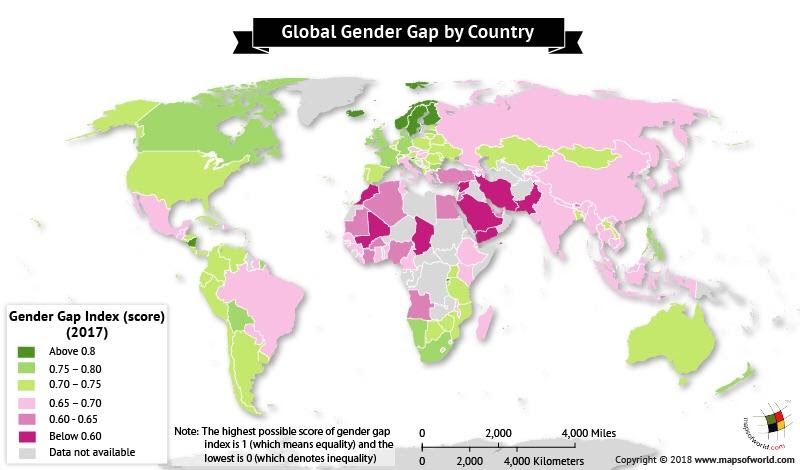
33,000 girls become child brides each day.
Women in rural parts of Africa spend 40 billion hours a year collecting water
It will take 108 years to close the gender gap
Only 6 countries give women equal legal work rights as men
In the UK for every £1 earned by a man a woman earns 82p.
For the first time in a decade more women are giving up work due to the cost of childcare.
Economic Participation & Opportunity
Labour force participation
Wage equality
Estimated income
Legislators, senior officers & managers
Professional & technical workers
Educational Attainment
Literacy rate
Primary school enrolment
Secondary school enrolment
Tertiary school enrolment
Health and Survival
Sex ratio at birth
Healthy life expectancy
Political Empowerment
Women in parliament
Women in ministerial positions
Years with female head of state
Educational Opportunity
Girls suffer severe disadvantages and exclusion in education in the poorer countries, in particular in rural areas and among the rural poor.
Obstacles to education to female secondary school participation are greatest in sub-Saharan Africa and South Asia.
Female education is key to empowering women and achieving gender equality in all respects.
It helps women move into the labour market and increases production capacity of the labour force.
Areas with greater parity in education have had declines in total fertility rates, population growth rates, and infant mortality rates.
Family health and child nutrition have improved meaning a significant effect on poverty.
Factors affecting female educational participation in developing countries
Costs may prohibit all the children in a family from continuing in secondary education, but particularly girls
Household obligations fall on the eldest girl because of male out-migration
Patriarchal systems mean female education may only benefit the family she marries into not her own family
Negative classroom environments- girls face violence, exploitation and corporal punishment
Inadequate sanitation in schools
Insufficient numbers of female teachers
Girls being exploited for child labour
Prevalence of child marriage
Differing levels of support for different religions
Early pregnancy
Inadequate legislation
Insufficient government investment
Access to Reproductive Health
Factors affecting female reproductive health in developing countries
Early forced marriage
High rates of young pregnancies
Sexually transmitted disease inc. HIV
Harmful traditional practices e.g. FGM
Forced sterilisation or abortion
Sexual violence
Gender bias in education/ access to information
Lack of empowerment in family size/spacing of pregnancies
Employment Opportunity
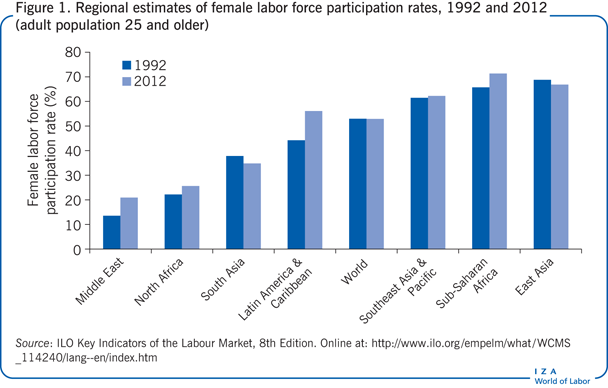
Significant global variation; countries with high HDI have a high Labour Force Participation Ratio, although none have achieved female-male employment parity. India has a relatively low ratio compared to other rapidly emerging economies. North Africa and Middle East states have the lowest ratios.
Factors affecting the spatial variation:
social norms e.g. where the main responsibility to secure an income through employment is attributed to men, women are expected to spend time in unpaid domestic care
cultural beliefs & practices of religious/ social groups
level of governmental & company support for child care
level to which equal opportunities are safeguarded by law
social acceptance of women as contributors to household income
gender-based norms that shape educational and job decisions
levels of discrimination by employers
What are the barriers to overcome? Some are easier than others
•Forced marriage – especially child brides
•Trafficking into forced labour including sex slaves
•Access to education and health care, especially when it costs
•Employment opportunity and political participation (delay following eventual education and priority of families)
•Wage equality (still an issue in developed countries)
•Access to family planning clinics/information
•Violence (inc domestic abuse where women cant speak out)
•During times of violent conflict, rape is frequently used as a military tactic to harm, humiliate and shame. Violence and war can also weaken systems of protection, security and justice. For these reasons, conflicts often exacerbate and escalate sexual violence.