Cadt Reviewer
[[Military Leadership[[
- to cooperate toward achieving a common goal.
- Directing men in such a manner to obtain their willing obedience, respect, confidence and loyal cooperation
[[3 Basic Elements of Leadership[[
- Character
- good moral character is honesty, good manners, industry, self-control, and bravery.
- Intelligence
- Ability to grasp knowledge easily.
- Alertness
- The ability of a person to be watchful and observant about his surroundings.
TYPES OF ALERTNESS
- Physical Alertness
- to a bodily movement that should be fast, nimble, and agile with stealth.
- Mental Alertness
- Means watchfulness, vigilance, and observance
18 Traits of a Leader
- Bearing
- denotes desirable physical appearance,
- Courage
- perseverance to accomplish a goal, regardless of the seemingly insurmountable obstacles.
- Decisiveness
- make decision promptly
- Dependability
- doing one’s duty with or without supervision.
- Endurance
- Both mental & physical is necessary to continue and complete any reasonable task.
- Enthusiasm
- positive zeal or interest
- Force
- impose one’s will
- Humility
- freedom from arrogance
- Humor
- appreciate the many amusing or whimsical happenings
- Initiative
- willingness to act in the absence of orders
- Integrity
- honesty and moral character of the leader must be unquestioned
- Judgment
- the power of the mind to weigh various factors and arrive at a wise decision.
- Justice
- equitable and impartial in bestowing favors and punishment
- Knowledge
- understanding of the characteristics of men.
- Loyalty
- A leader cannot expect loyalty from his subordinates unless he is conspicuously loyal to them and to his superiors.
- Sympathy
- capacity of sharing the feelings of those with whom one is associated.
- Tact
- Ability to deal with subordinates and superiors
Unselfishness
- avoidance of caring for or providing for one’s own comfort
[[11 Principles of a Leadership[[
- Fundamental rules, characteristics, traits or policies which is applied by a leader to control or guide the actions of subordinates
- Know your job
- professionally and culturally prepared
- Know yourself and seek self-improvement
- analyze himself to determine his good qualities and recognize his weakness.
- Know your men and look after their welfare
- know very well each of his men and should positively act on their problems.
- Keep your men informed
- informed on matters pertaining to his service or mission is more effective in his job than one who is uninformed.
- Set an example
- strive to improve and maintain his personal and official standard
- Be sure that orders are understood, supervised, and accomplished
- A leader should give clear and concise orders
- Train your men to work as a team
- to perform and must cooperate with others in achieving the common objective.
- Make sound and timely decisions
- ability to make a rapid estimate of the situation
- Develop responsibility among subordinates
- should train his subordinates
- Employ your command in accordance with its capabilities
- thorough knowledge of the capabilities and limitations
- Assume responsibility for your actions
- commander is responsible for all that his unit does or fails to do.
Objectives of a Leader
- Discipline
- Espirit-de-Corps
- mental and emotional state of a unit or selfless and often enthusiastic jealous devotion of a group
- Espirit-de-Corps
- Morale
- Mental and emotional state of an individual
- Efficiency
- ability to accomplish successfully an assigned task in the shortest possible time
[[TYPES OF LEADERSHIP[[
- Authoritarian Type
- dogmatic use of authority or power.
- tell their subordinates what they want done, how they want it accomplished, without getting the advice of their subordinates
- Persuasive Type
- knows what he wants and works hard to convince others that that’s the way
- Takes into consideration the human element with all its complex
[[KINDS OF LEADERS[[
- Inherent Leaders
- inherit their position
- Leaders by authority
- appoint themselves
- Appointed/Elected Leaders
- voted or designated to the position
MAP READING
Map
- graphical representation of the earth's surface
- permit one to visualize an area of the earth's surface
PARTS OF A MAP
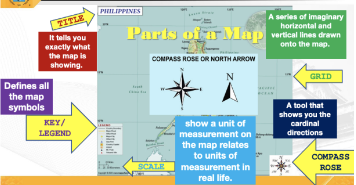
- Title
- tells you what the map is showing
- Key/Legend
- defines all the map symbols
- Scale
- a unit of measurement on the map which relates to the unit of measurement in real-life
- Compass rose
- shows you the cardinal directions
- Grid
- series of imaginary horizontal and vertical lines drawn onto the map
[[Military Map[[
- include all maps designed for use by the Department of Defense, except aeronautic and hydrographic charts.
TYPES OF MILITARY MAPS
- Small Scale map
- 1:100,000,000
- Very little detail
- Medium-scale map
- 1:250,000
- More detailed
- Large-scale map
- 1:24,000
- lots of detail
[[TYPES OF MAPS[[
a. Planimetric Map
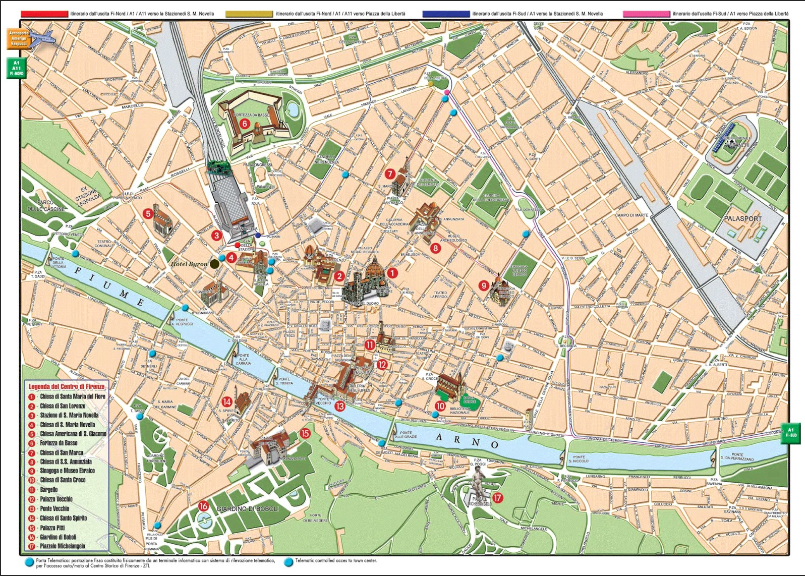
- Shows only the horizontal (flat) position
b. Topographic Map
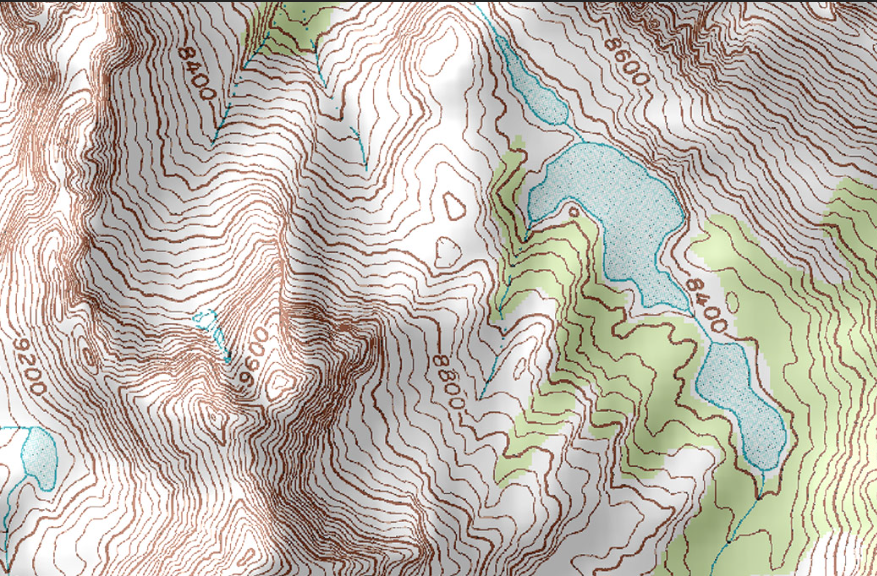
- a two-dimensional map that presents the horizontal (flat) and vertical (relief)
c. Plastic relief Map
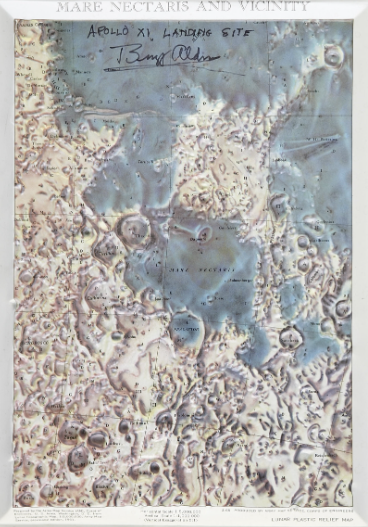
- a topographic map printed in plastic and molded into a three-dimensional form
d. Photo map
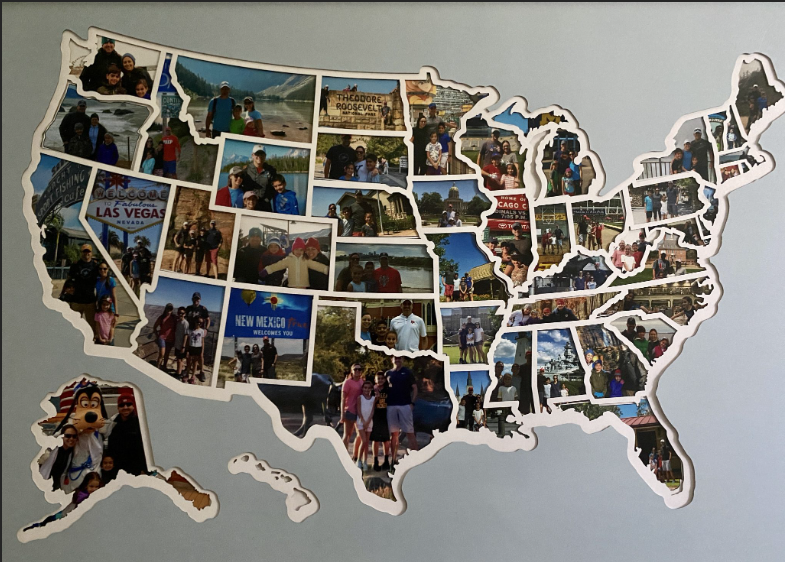
- A map reproduction of a photograph or photo mosaic upon which grid lines, marginal data, place names, and boundaries may be added.
e. Joint Operation Map
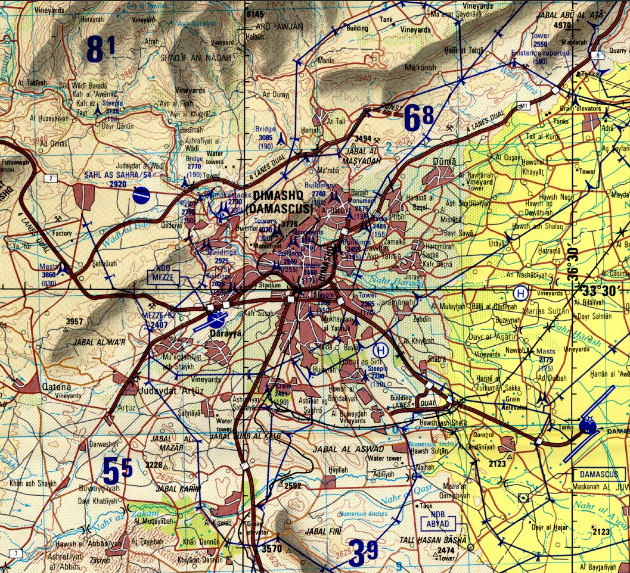
- used for ground and air operations. The maps are published in ground and air editions.
f. Pictomap
- a map on which the photographic imaginary of a standard photomap has been converted into interpretable colors and symbols.
g. Photomosaic
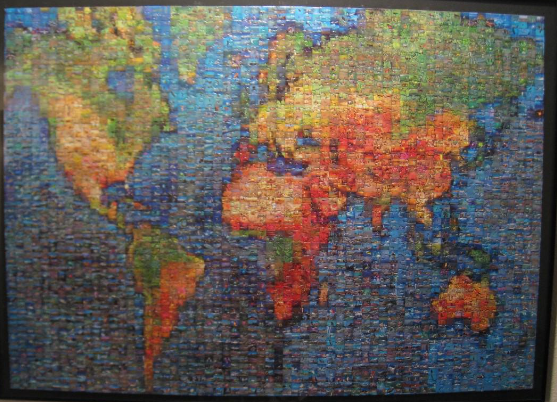
- An assembly of aerial photographs to form a composite picture.
h. Military City Maps
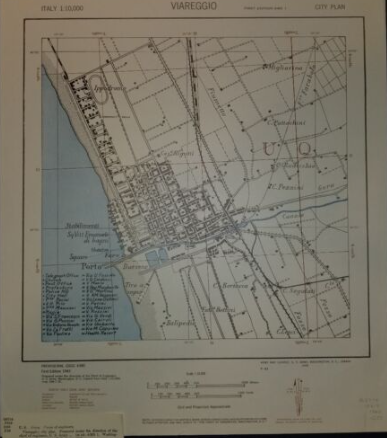
- A large-scale of a topographic map of a city usually at a scale of 1:12,500
i. Special Maps
- Maps for special purposes such as trafficability maps, transportation maps, boundary maps, etc.
j. Terrain Model
- a three-dimensional representation of an area Molded on plastic, rubber, or another material symbolically.
k. Hydrographic Map
- a nautical map used as navigational aid either above or below the surface.
[[PARTS OF THE MAP[[
- Sheet Name
- found at the upper center margin.
A map is named after its outstanding cultural or geographic features.
- Sheet Number
- found in the upper right margin and used as a reference number assigned to each map.
- Declination Diagram
- located at the lower margin and indicates the relationships of the true north and magnetic north.
- Adjoining Sheets
- appears in the lower margin, it identifies the map sheet covering areas around the area covered by the map you are using.
- Boundaries
- appears at the lower margin, this is a miniature map that shows the boundaries and special show line that occurs within the map area.
- Marginal Information
- printed notes outside the printed diagram of maps used as an instructional guide in reading maps.
- Bar Scale
- located in the center of the lower margin and in the lower margin used for the determination of map distance to the corresponding ground distance with three different units of measures.
- Contour Interval Note
- located at the center of the lower margin. It states the vertical distance between adjacent contour lines on the map. When supplementary contours are used the interval is indicated
- Credit Notes
- Located at the lower left margin, the primary purpose is to list the procedures and references, the method of compilation used by technicians.
- Grid Reference Box
- located at the lower margin and contains information or identifying the grid zone and 100,000-meter square in which the area presented by the map is located and instructions for giving grid reference on the map.
- Legend
- Located at the lower left margin, illustrates identifies the topographic symbols used to depict some of the prominent features on the map.
[[MAP SYMBOL COLORS[[
- Black
- all man made features, such as buildings, roads not shown in red, etc.
- Blue
- all water features, such as lakes, rivers, swamps, streams, etc.
- Brown
- All landforms, such as contours, cuts, fills, etc.
- Green
- All vegetation, such as forests, orchid, hide grass, jungles, etc.
- Red
- All main roads, built-up areas, and special info
[[TYPES OF MILITARY SYMBOLS[[
a. Troops Unit Symbols
- are shown by rectangle. (Basic symbols for military unit and activities).
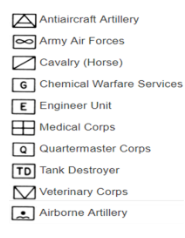
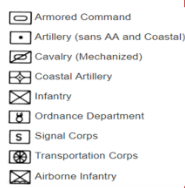
b. Branch Arm of Service and Type - Org. Symbol
- used in conjunction either other symbols to signify a military unit activity or installation.
c. Size of unit
- Used to identify the size of a unit or installation
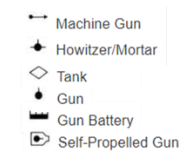
d. Weapons on a military map
- Large weapon types
REFERENCE LINES
a. Grid Lines
- Parallel lines that run from east to west, north to south forms a square.
b. Coordinates
- The numbered grid lines on the map are further subdivided to show specified locations.
c. Geographic Coordinates
- location of any point on the earth’s surface
d. Polar Coordinates
- determined or plotted from a known point by giving a distance along that direction.
e. Grid Squares
- Can be located or identified by combining the number of the vertical grid line and horizontal grid line which intersect at the lower left corner of the square.
f. Grid Coordinates
- It divides the earth’s surface into many 100,000-meter squares.
SCALE AND DISTANCE
a. Scale and Distance
- scale of the map permits the user to convert the distance on the map to the distance on the ground or vice versa
b. Graphic (bar) Scales
- printed on the map and is used to convert distances on the map to actual ground distances.
- Extension Scale
- To the left of the zero, the scale is divided into tenths
- Primary Scale
- To the right of the zero, the scale is marked in full units to measure
[[DIRECTION[[
- express as units of angular measurement.
- Degree
- The most common unit of measurement is the degree (o) with its subdivision of minutes (‘) and seconds (“).
- Mil
- mainly used in artillery, tank, and mortar gunnery.
- Grad
- metric unit of measurement found on some foreign maps.
[[BASE LINES[[
- express direction as a unit of angular measure,
a. True North
- A line from any point on the North Pole. All lines of longitude are true north it is usually represented by a star.
b. Magnetic North
- The direction to the north indicated by the north seeking needle of a Magnetic North is usually symbolized by a arrow head
c. Grid North
- The north that is established on the grid lines by the map. The grid north may be a GN or the letter y