Human Physio Respiratory Physiology
Overview of Respiratory System
The upper respiratory system
- consists of the nose, nasal cavity, sinuses, and pharynx
- filters, warms and humidifies the air
The lower respiratory system
- consists of the larynx, trachea, bronchi, bronchioles, and alveoli
- conducts air and provides a respiratory surface for gas exchange
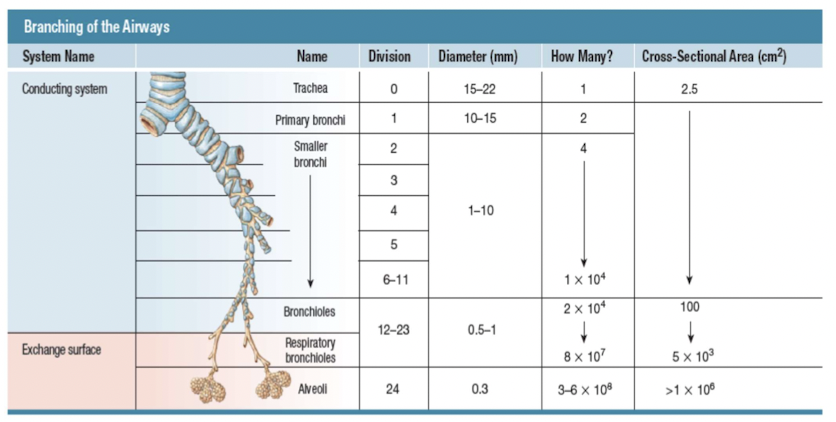
Airway branching in the lower respiratory tract
Major functions of the respiratory system
- Exchange of gases between atmosphere & blood
- body brings in O2 for distribution to tissue and eliminate CO2
- Homeostatic regulation of body pH
- lungs alter body pH by selectively retaining or excreting CO2
- Protection from inhaled pathogens and irritating substances
- respiratory epithelium with defensive mechanisms to trap & destroy harmful substances
- Vocalization
- air moving across vocal chords creates vibrations
Respiration
Process of gas exchange
Internal respiration
- intracellular reaction of O2 with organic molecules to produce CO2, H2O and ATP
- or cellular respiration (blood to cells)
External respiration
- gases exchange between environment and body tissues
4 integrated processes of external respiration:
- exchange of air between atmosphere and lungs -
- exchange of gas by between lungs and blood (==alveoli==)
- of gases by the blood
- exchange of gas by between blood and tissues
External respiration - coordination between respiratory and cardiovascular system
Structures involved in ventilation and gas exchange
- Conducting zone (airways; nasal cavity, trachea, bronchus, bronchiole)
- components of respiratory tract that involved with flow of air
- Respiratory zone sites of gas exchange within lungs - ==alveoli==
- series of interconnected sacs and pulmonary capillaries
- exchange surface between blood and lung tissue
- bones and muscles of thorax and abdomen
- to increase or decrease pressure, assist in ventilation
Structures of the thoracic cavity
Bones and muscles form thoracic cage (chest cavity)
Muscles of thorax, neck and abdomen create force to move air during breathing
Pleural Fluid
Serves 2 purposes:
- reduce friction to allow two layer membranes to slide across one another when lungs move within thorax
- hold lungs tight against thoracic wall (protection)
Air conditioning
Important function of the upper airways and bronchi - components of conditioning:
- Warming to body temperature (37C)
- core body temperature does not change and alveoli not destroyed by cold air
- Adding water vapour
- air reaches 100% humidity, moist exchange epithelium does not dry out
- Filtering out foreign material
- viruses, bacteria and inorganic particles do not reach alveoli
Alveoli - site of gas exchange in lungs
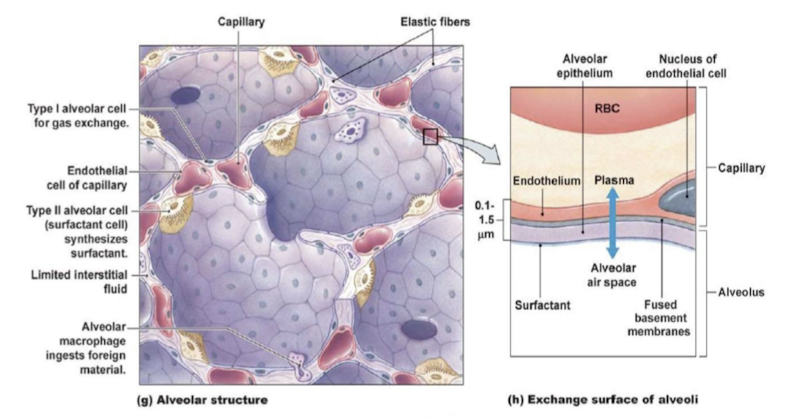
Type I alveolar cells carries out gas exchange
Type II alveolar cells line the air sacs to synthesise surfactants
Alveolar macrophage ingests foreign material that may harm the alveolus
Capillaries are in close proximity to the alveolar cells to allow gas exchange to occur efficiently
Gas laws within the body
Respiratory air flow - similar to blood flow in cardiovascular system:
- Air - compressible mixture of gases
- Blood pressure and environmental pressure (atmospheric pressure) - (mmHg)
- Gas pressure - kPA
Boyle’s Law
- Inverse relationship between pressure and volume
- volume increase, pressure decrease
- air flow from regions of higher to lower pressure
- changes in volume of chest cavity during ventilation creates pressure gradients that create air flow
- e.g. chest volume increases, alveolar pressure falls, air flows into respiratory system
Ventilation process
- bulk flow exchange of air between atmosphere and alveoli
- single respiratory cycle consists of an inspiration followed by an expiration
- pulmonary function tests
- measure of how much air the person moves during quiet breathing, then with maximum effort
Mechanics of breathing
Primary muscles involved in ==quiet== breathing:
- diaphragm
- external intercostals
- scaleness
Muscles involved during active expiration
- internal intercostals
- abdominal muscles (rib cage)
Factors affecting ventilation
- Compliance (ability of lungs to stretch)
- expressed as change in volume over pressure exerted
- high compliance stretch easily, but has low recoil
- low compliance - more force to stretch a stiff lung
- e.g. restrictive lung diseases (pathology conditions of decreasing compliance)
- depends on elasticity of lungs and ==surface tension of liquid in alveoli==
- Elastance
- ability to return to its resting volume when stretching force is released
- e.g. emphysema (can be caused by smoking) destroyed elastin fibers in lung tissues → decreased elastance
Surface tension and surfactants
<<Surface tension<<
- created by thin fluid layer between alveolar cells & air
- increased surface tension cause alveolar walls to stick to each other
<<Surfactants<<
- secreted into alveolar space by Type II alveolar cells
- reduces surface tension, decrease resistance of lungs to stretch
- e.g. newborn respiratory distress syndrome - premature babies have inadequate surfactant concentrations - difficult to breathe
- Resistance
Affected by:
- passive force on the airways - changes in the transpulmonary pressure during inspiration and expiration
- changes in the diameter of bronchioles
- secretion of mucous in the airways
Bronchoconstriction
- increases resistance to air flow under parasympathetic stimulation
- histamine (released during an allergic reaction) increases resistance and secretion of mucus
Bronchodilation
- relaxation of smooth muscle due to sympathetic stimulation (epinephrine)
- used in treatment of asthma and allergic reactions
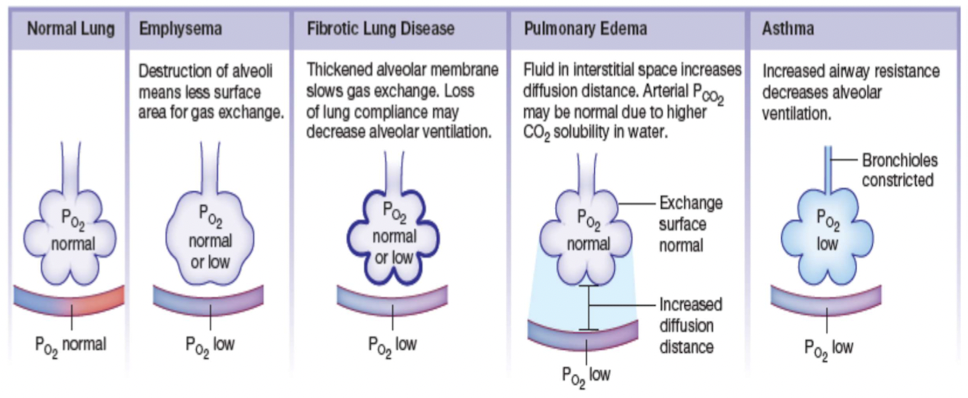
Hypoxia
State of too little oxygen
- If the diffusion of gases between alveoli and blood is significantly impaired, or if oxygen transport in the blood is inadequate
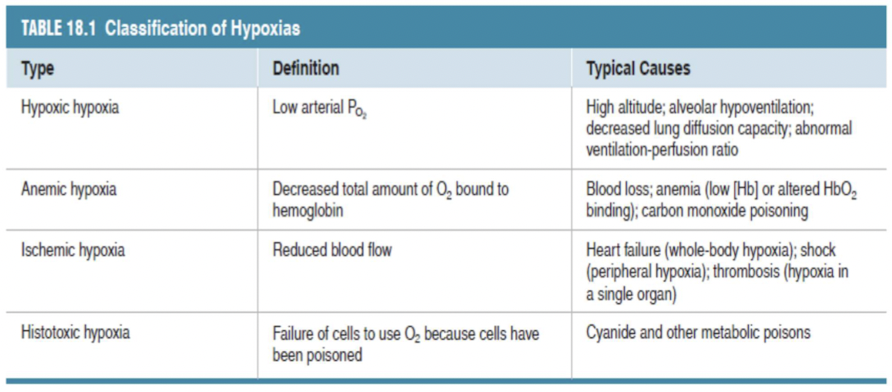
<<Pathologies that causes hypoxia<<
Pulse oximeter
- to measure SBO2 (concentration of oxygen in the arteries, arterial blood)
- pulse oximeter clips onto skin and in seconds gives a digital reading of arterial heamoglobin saturation
- oximeter works by measuring light absorbance of the tissue’s haemoglobin at two wavelengths
Gas transport in blood
Overview
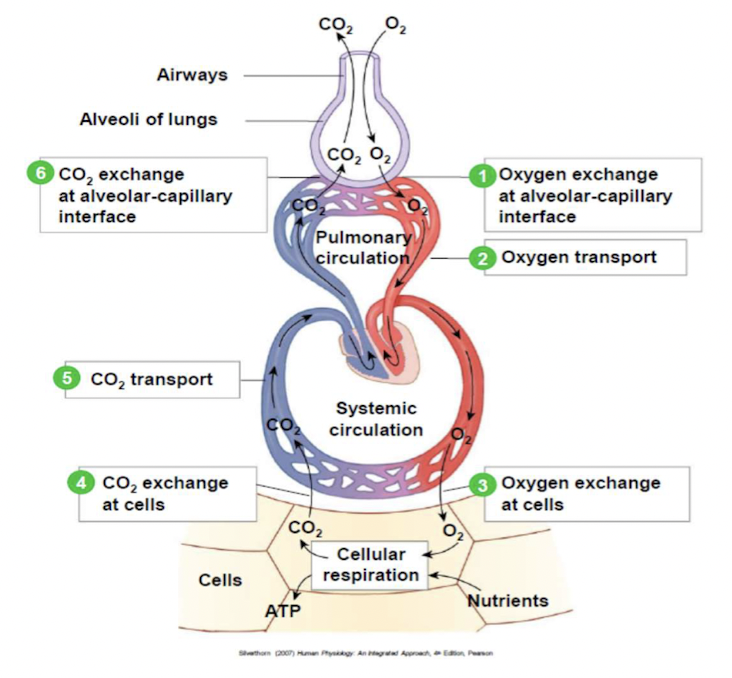
Oxygen transport by haemoglobin
- 98% of oxygen is bound to haemoglobin and 2% is dissolved in plasma
- Oxygen bound to haemoglobin is in equilibrium with the oxygen dissolved in plasma which is related to PO2 (partial pressure of oxygen)
Haemoglobin molecule
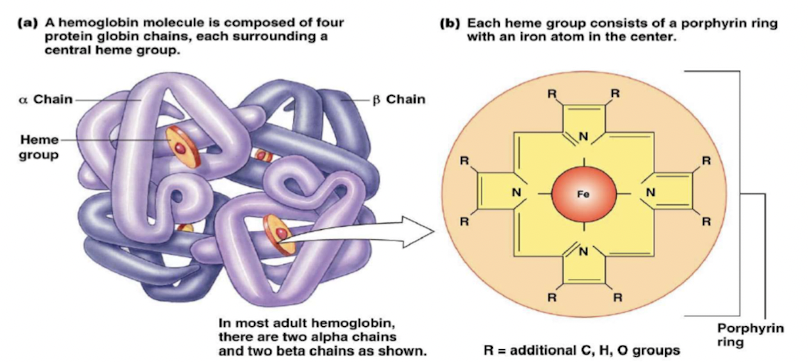
- oxygen binds to heme portions of haemoglobin molecule
- binding of oxygen to haemoglobin depends on PO2 of plasma
Oxygen haemoglobin binding
Amount of O2 bound to haemoglobin (Hb) depends on:
- PO2 in plasma surrounding the RBCs
- primary factor determining percentage of available haemoglobin binding sites are occupied by O2
- Number of potential Hb binding sites available in RBCs (amount of haemoglobin available)
- amount of oxygen bound to haemoglobin at any given PO2
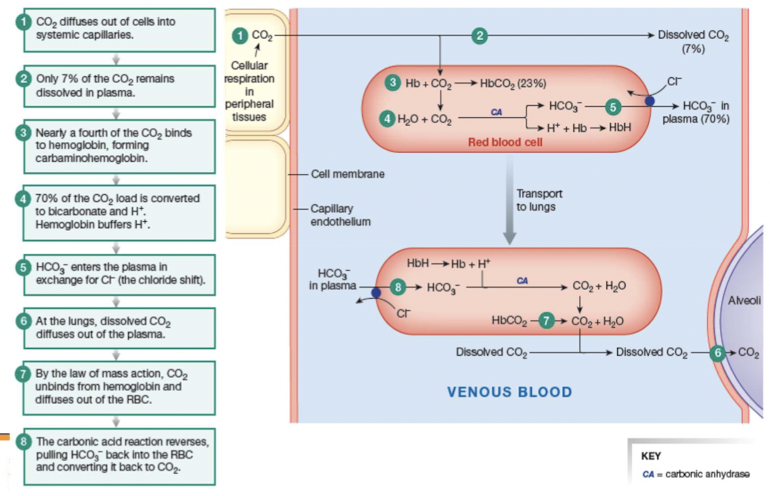
Carbon dioxide transport in blood
- Most CO2 in blood has been converted to bicarbonate ion, HCO3-
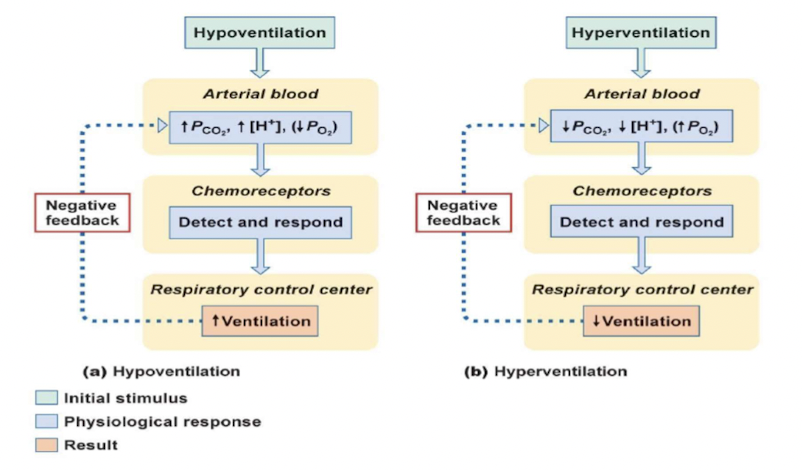
Control of ventilation
- Higher brain centers
- pons and medulla
- chemoreceptors
- found in arterial blood and cerebrospinal sfuid
- arterial: peripheral chemoreceptors
- cerebrospinal : central
- If high hydrogen ions, more acidic, chemoreceptors will detect and the respiratory control centres (pons and medulla) will increase oxygen uptake (increased ventilation)