Central Nervous System II
The CNS consists of the brain and spinal cord
the PNS (peripheral) consists of nerves that lie outside the CNS
The nervous system receives sensory input. Sensory receptors in the skin and other organs generate nerve signals that travel from PNS to the CNS.
The CNS performs information processing and integration. It reviews and stores information and creates the appropriate motor responses.
Meninges = protective coverings for the brain and spinal cord. The meninges are three protective layers of tissue that cover the brain and spinal cord.
Cerebrospinal fluid = protective liquid around the brain and spinal cord.
Cerebrospinal fluid = Brain & Spine Cushion
Ventricles (Venti = 4)
ventricles - four connected spaces inside the brain that contain cerebrospinal fluid (CSF).
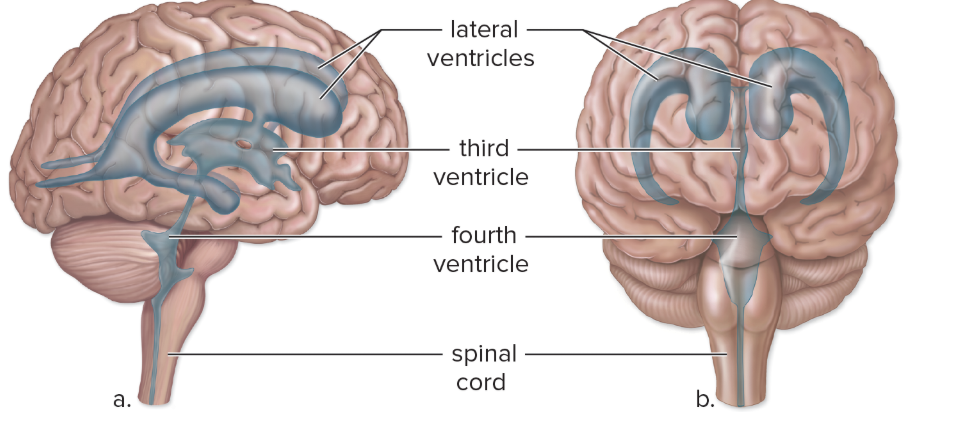
The brain has four ventricles
Spinal cord - a bundle of nerve tissue that carries messages between the brain and the rest of the body.
summarize motor control
Motor control: The brain controls muscle movements.
Areas of the central nervous system that contain myelinated axons appear as white matter.
Protective membranes called meninges surround the spinal cord as well as the brain
The correct parts of the brain from the list are cerebellum, brain stem, cerebrum, and diencephalon.


In the CNS, gray matter contains cell bodies and short non nonmyelinated nerve fibers
the protective membranes that surround the brain and spinal cord are called the meninges
the human brain is comprise of the cerebrum, diencephalon, brain stem and cerebellum
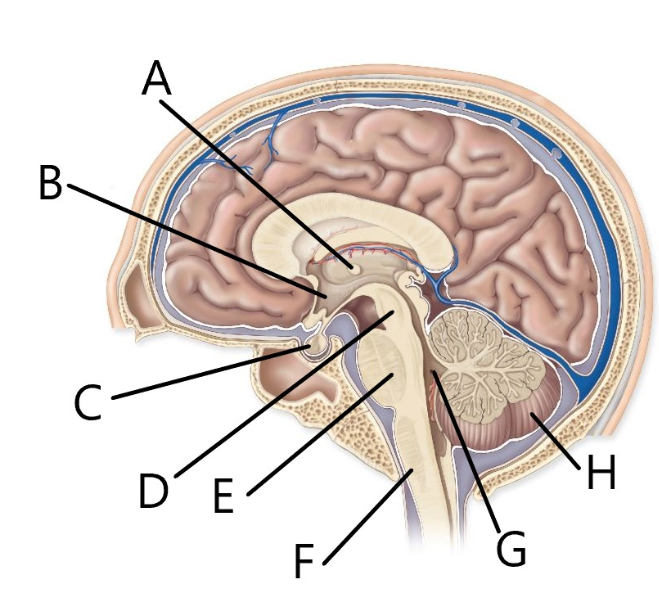
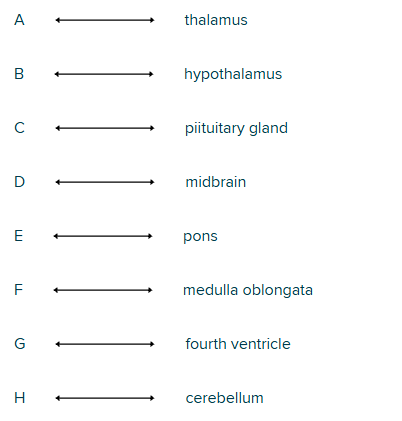
the largest part of the brain in humans is the cerebrum
Areas of the central nervous system containing cell bodies and short, nonmyelinated axons form the gray matter (also spelled grey matter).