Rational Functions and Their Graphs
Rational Functions Basics
Definition: Rational functions are ratios of polynomials, expressed as
where (p(x)) and (q(x)) are polynomial functions, and (q(x) cannot = 0. The domain of a rational function excludes values of x that make the denominator zero, ensuring the function remains well-defined. 0).Domain Identification: The domain consists of all real numbers except the values that make the denominator zero. For example,

Reciprocal Functions: The most basic rational function is the reciprocal function, defined by
f (x) = 1 / x
. The denominator of the reciprocal function is zero when x=0, so the
domain of f is the set of all real numbers except 0.
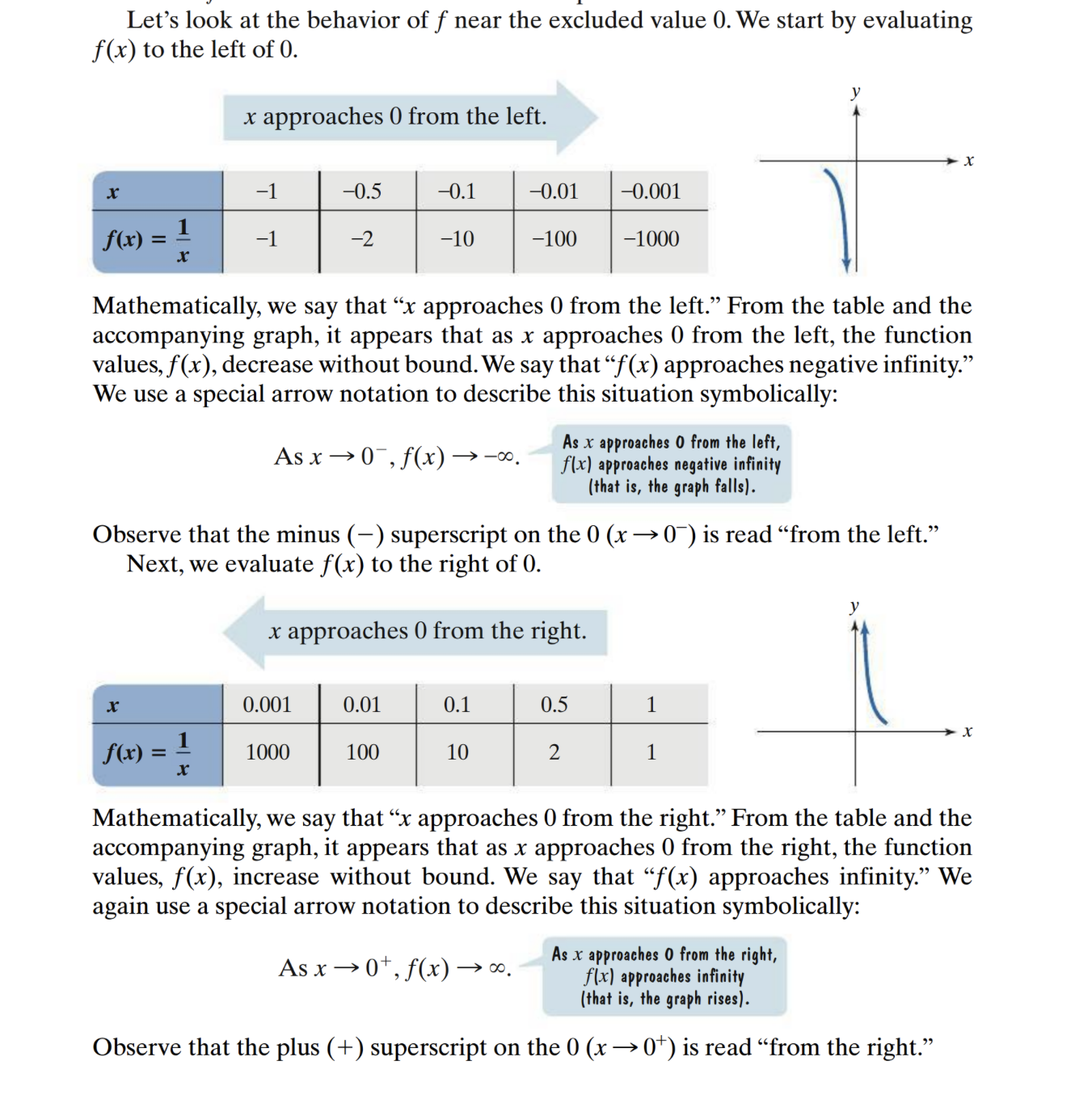
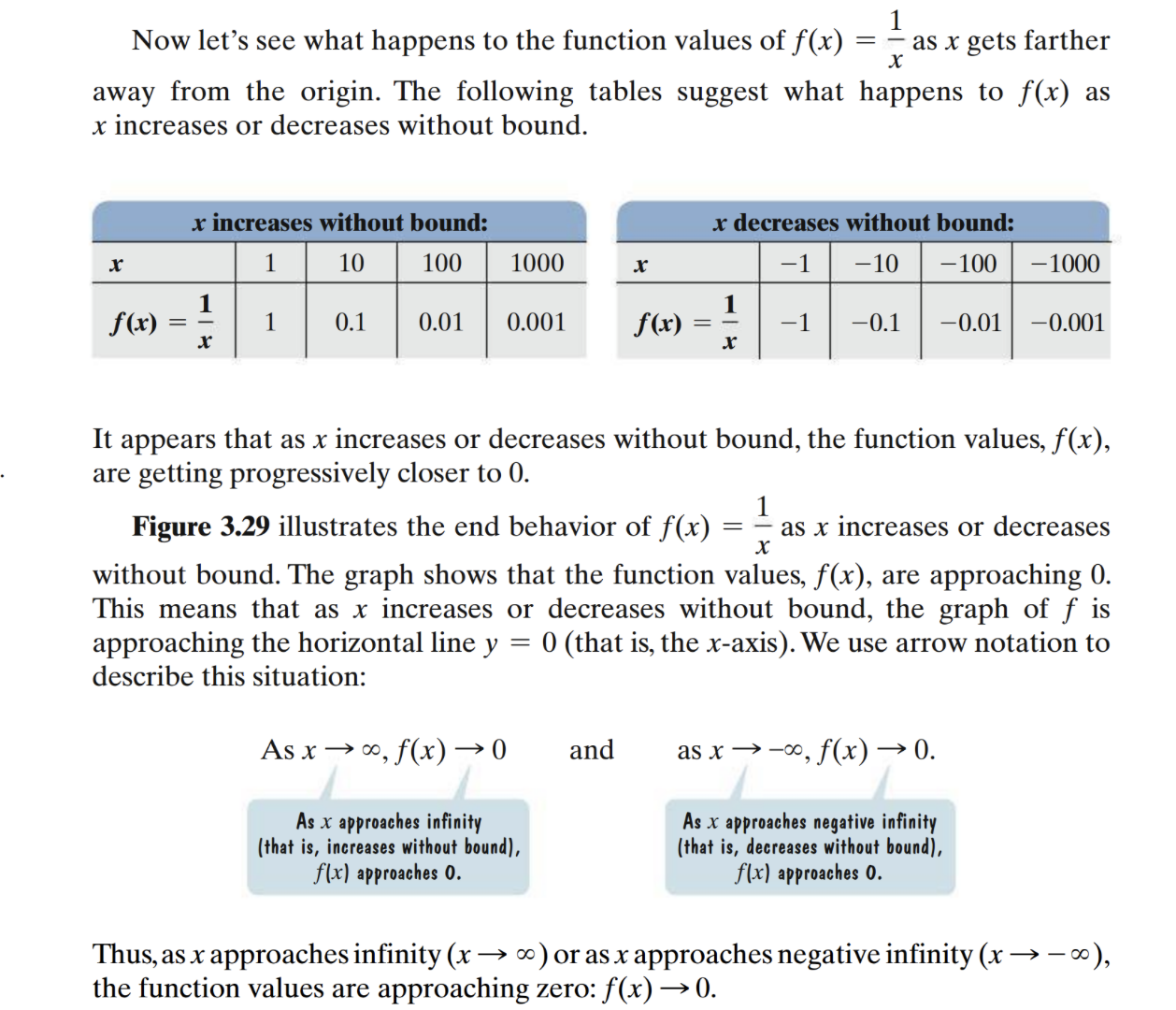
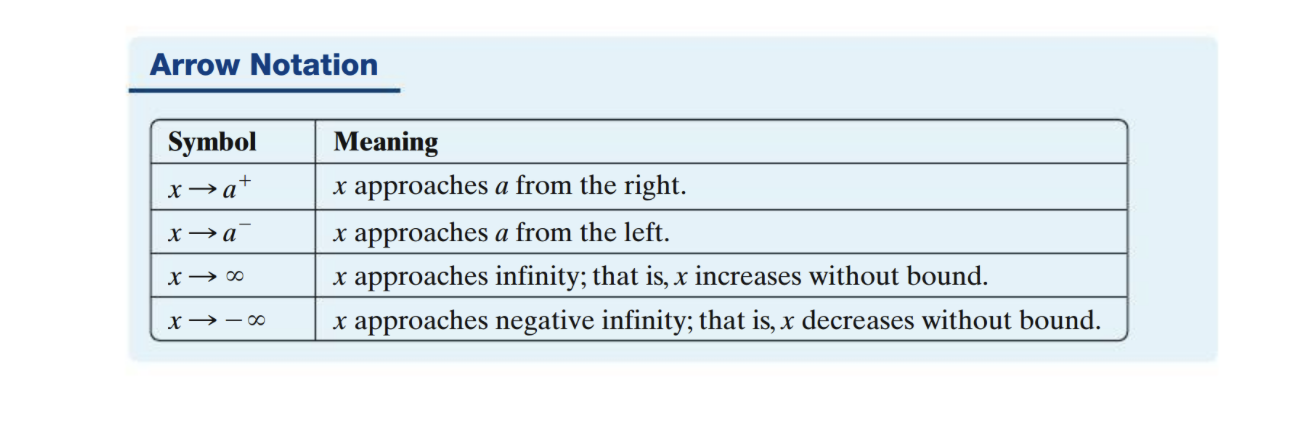
Example: Evaluating the End Behavior of f near excluded value 0.
Finding the Domain of Rational Functions
To find the domain, identify values of (x) that make the denominator zero and exclude them.
Example:
a.
Denominator is 0 when (x = 3)
Domain:
Asymptotic Behavior
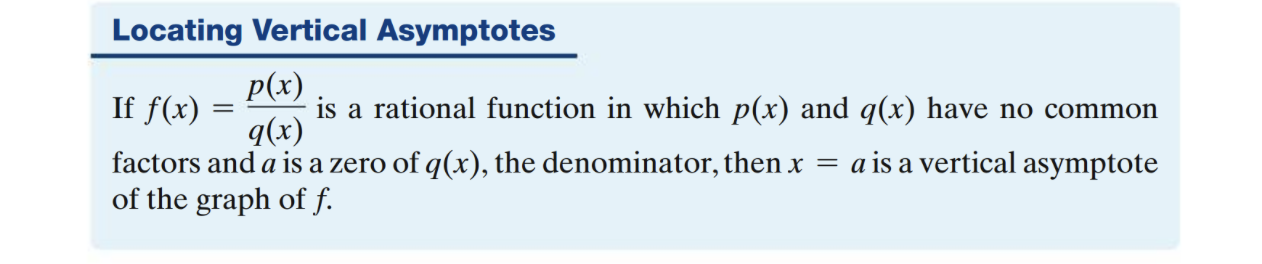
Vertical Asymptotes:
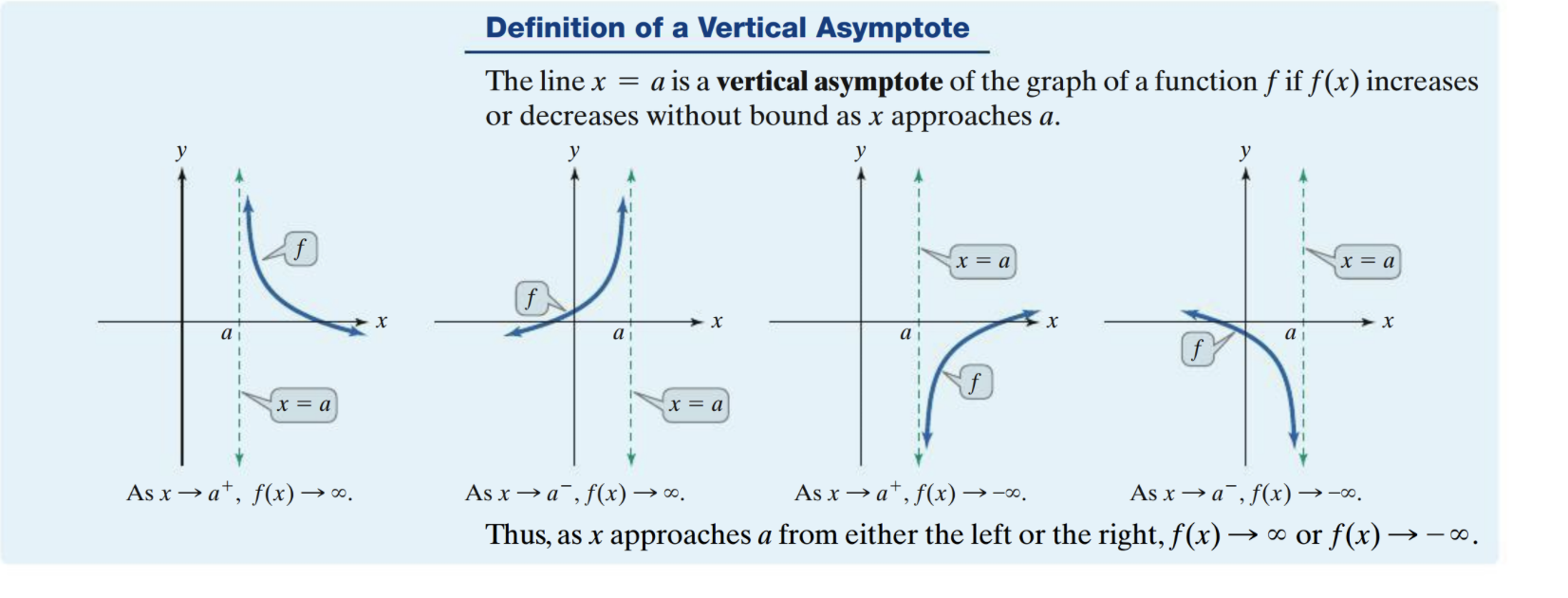
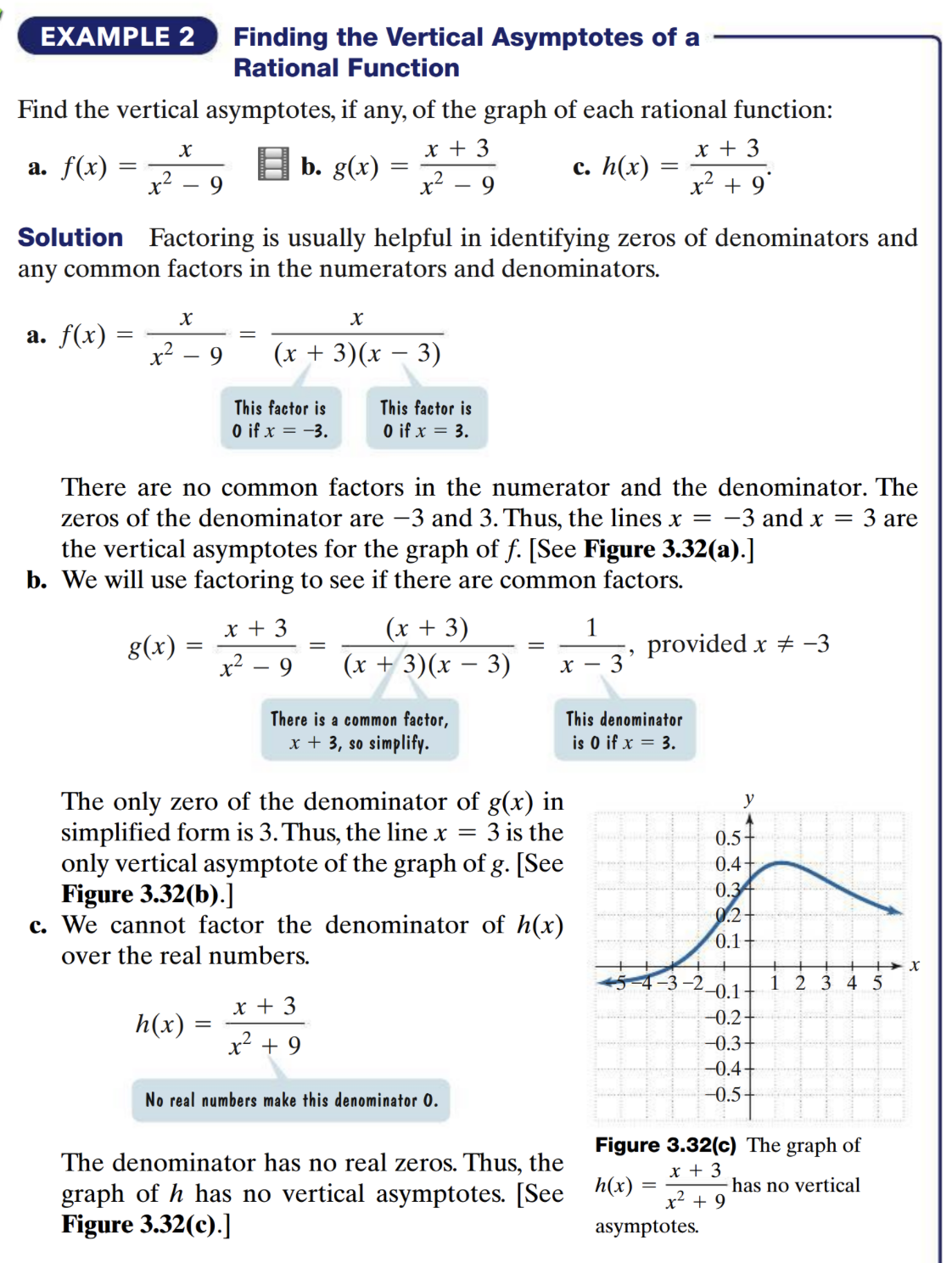
Example: Finding the Vertical Asymptotes of a Rational Function
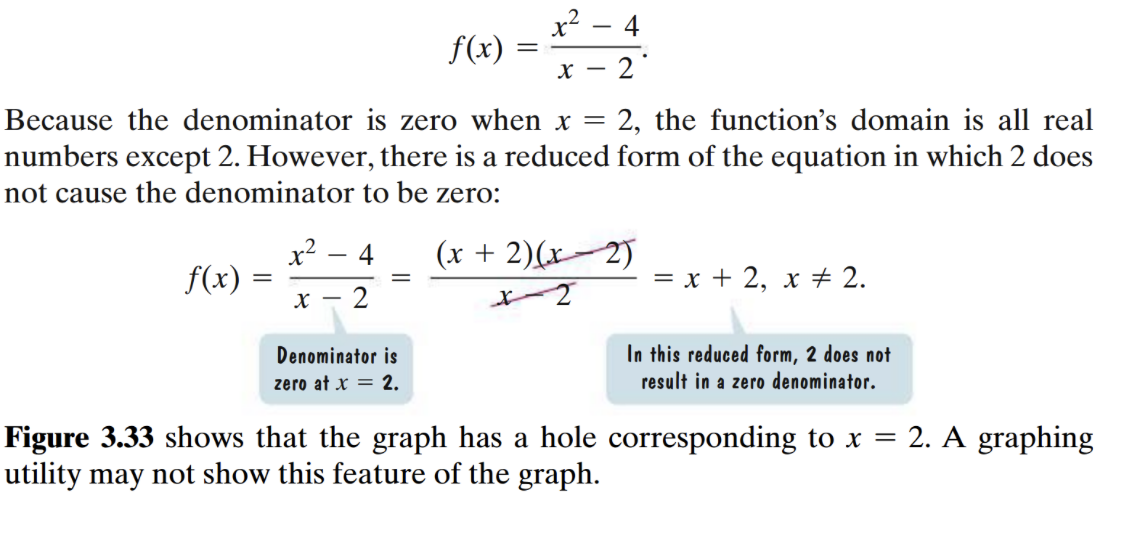
Exceptions: A value where the denominator of a rational function is zero does not necessarily result in a vertical asymptote. There is a hole corresponding to x=a, and not a vertical asymptote, in the graph of a rational function under the following conditions:
The value a causes the denominator to be zero, but there is a reduced form of the
function’s equation in which a does not cause the denominator to be zero.
Example:
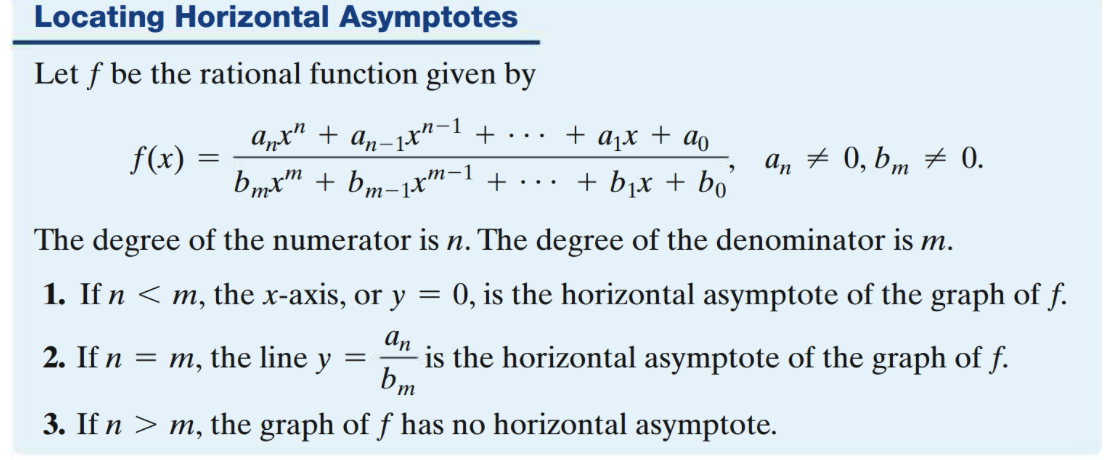
Horizontal Asymptotes:
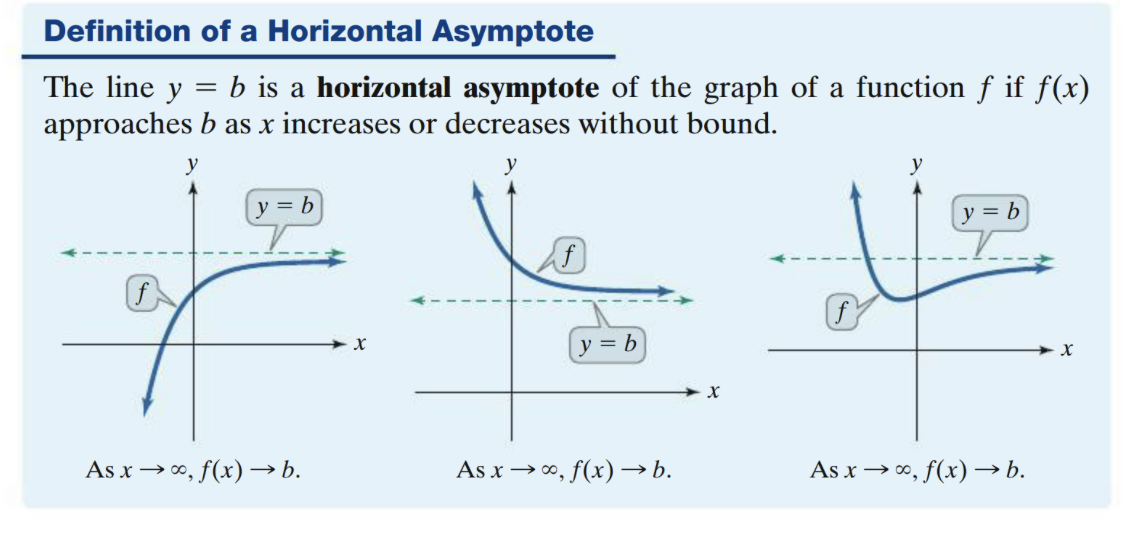
A graph can at most have one horizontal asymptote. Although a graph can never intersect a vertical asymptote, it may cross its horizontal asymptote.
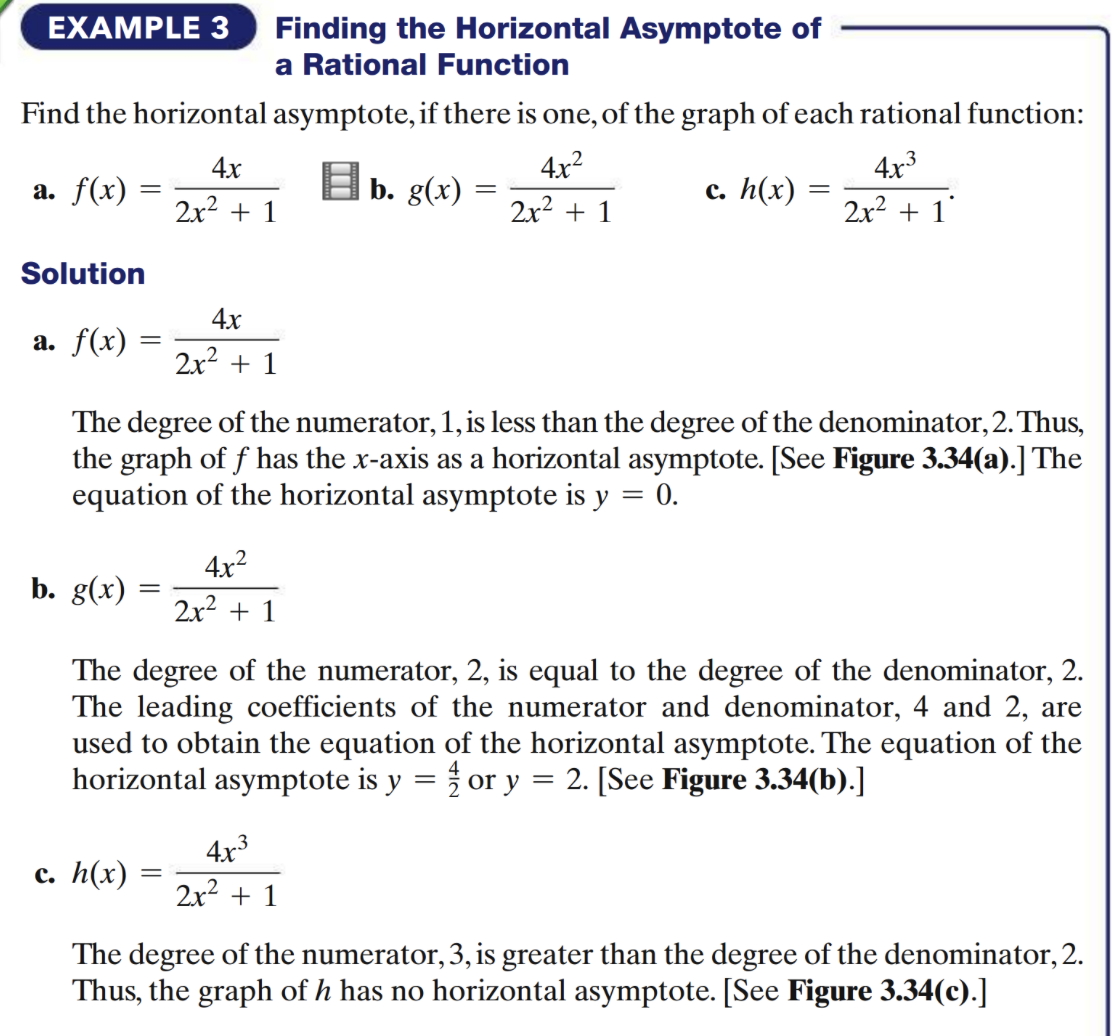
Example: Finding the Horizontal Asymptote of a Rational Function
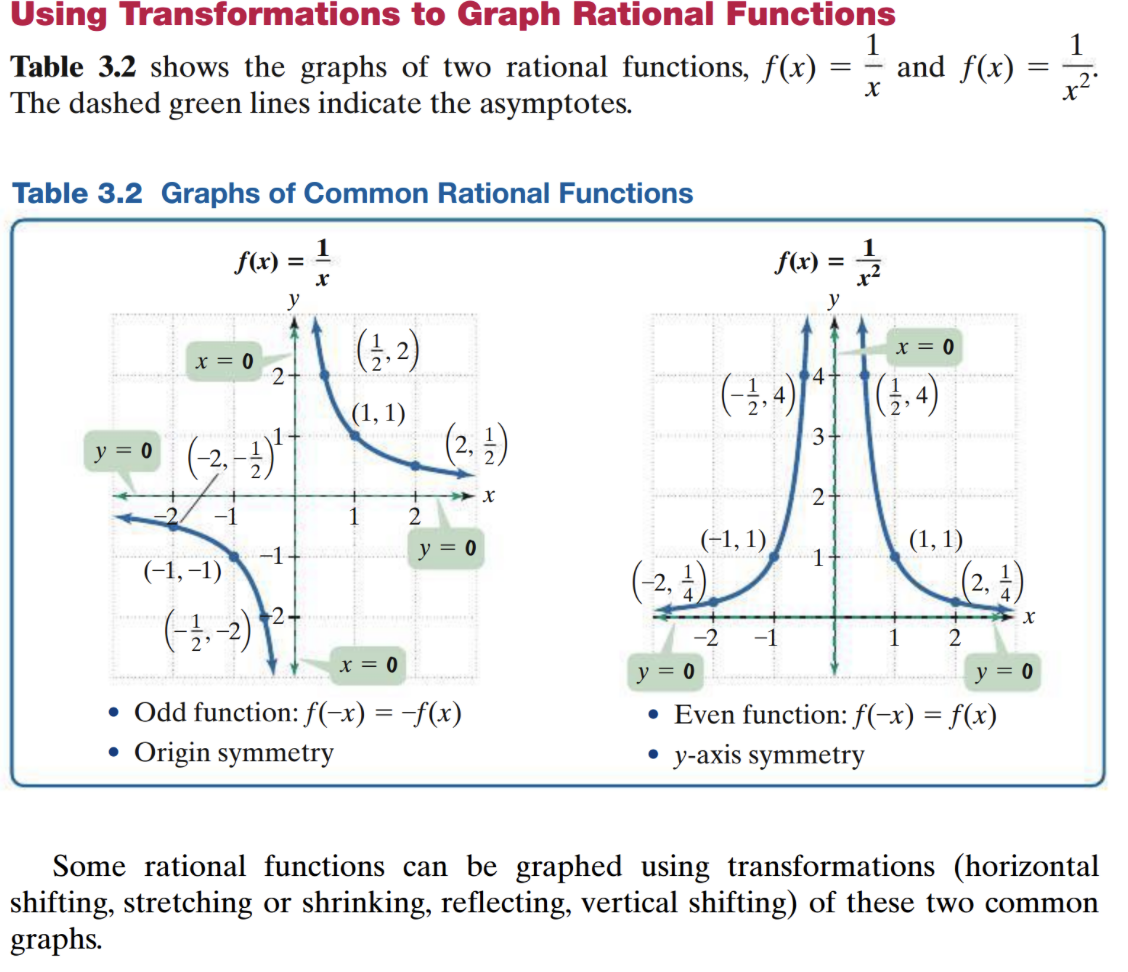
Graphing Rational Functions
Using Transformations to Graph Rational Functions can provide insights into the behavior of the function as it approaches infinity.
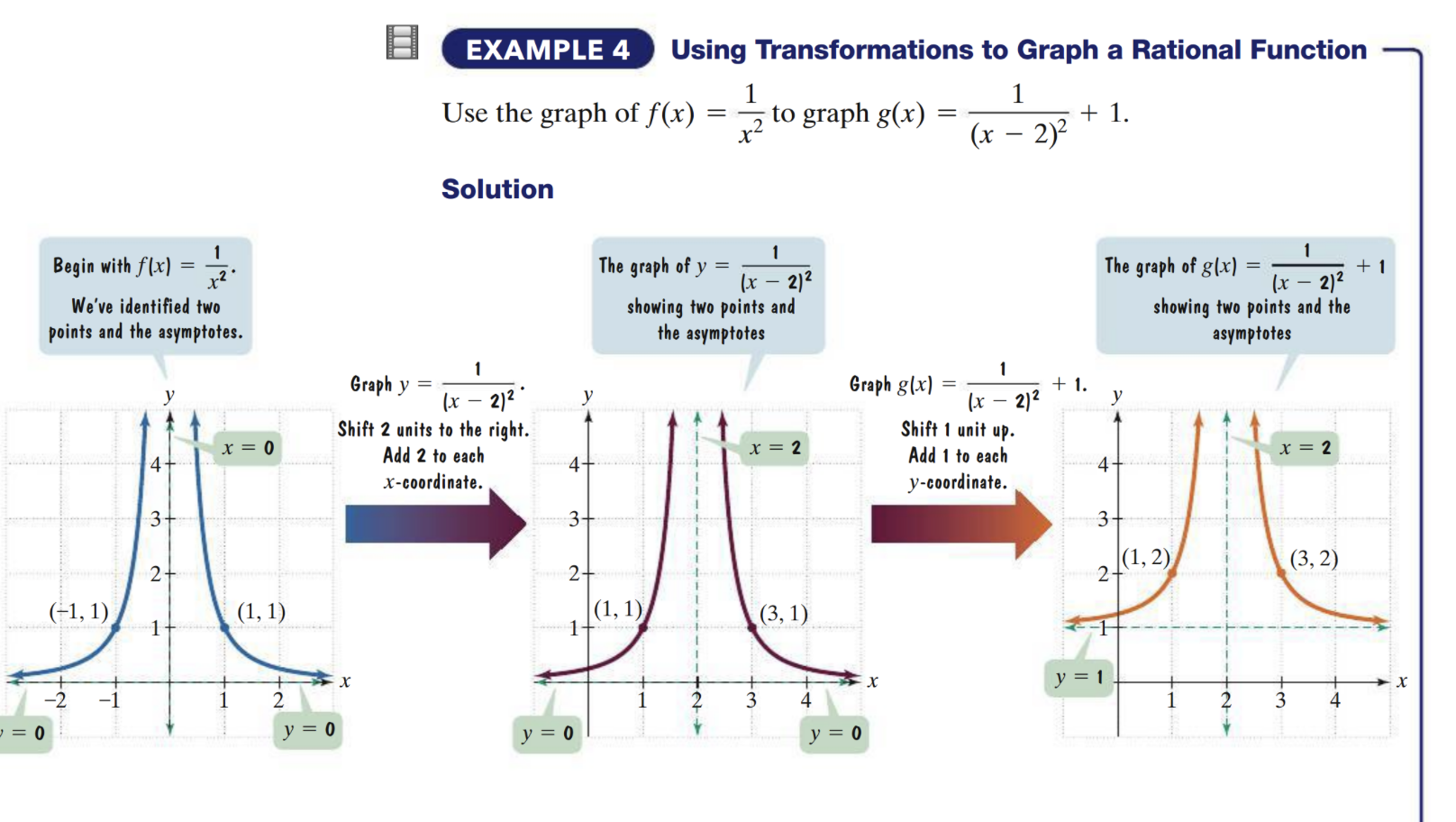
Example: Using Transformations to Graph a Rational Function
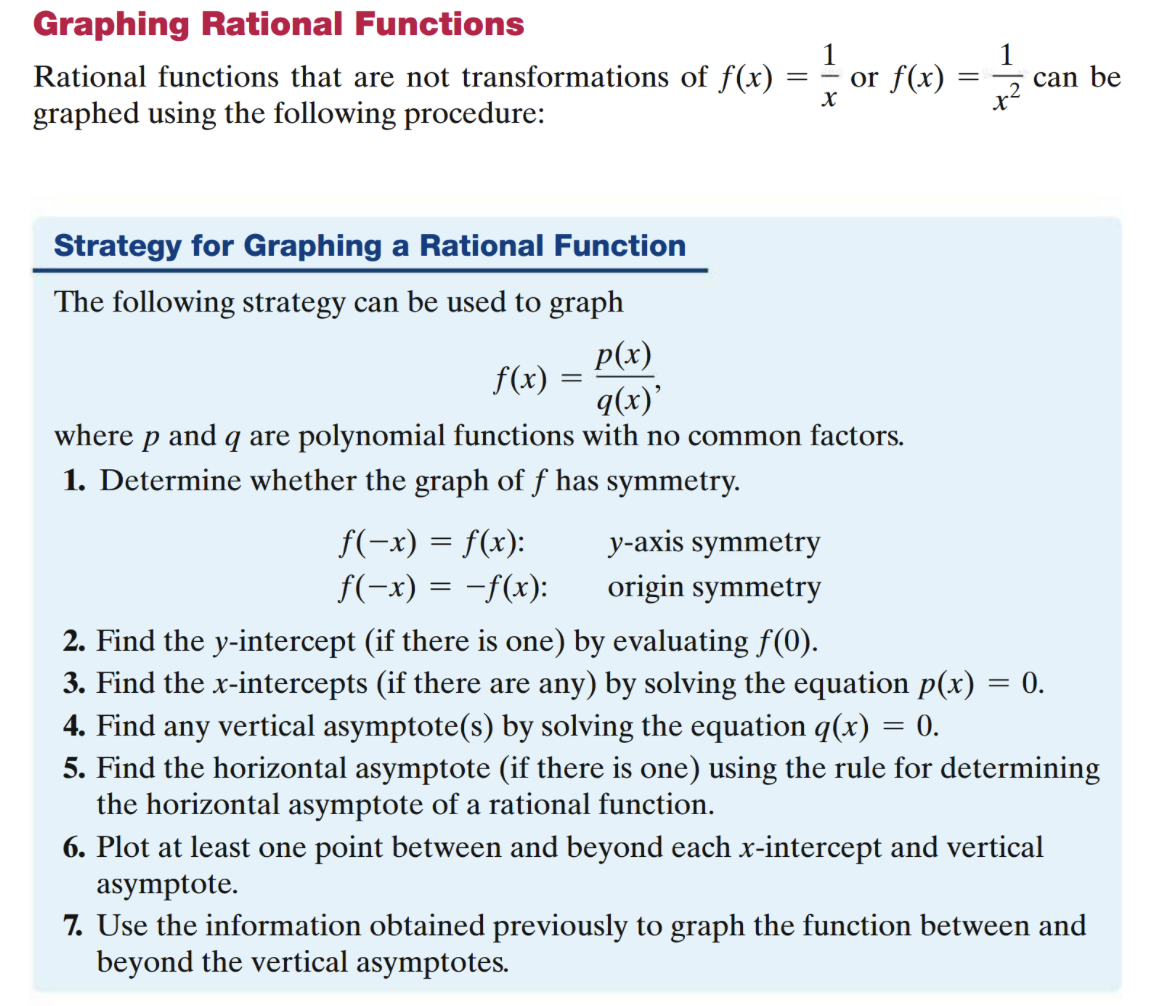
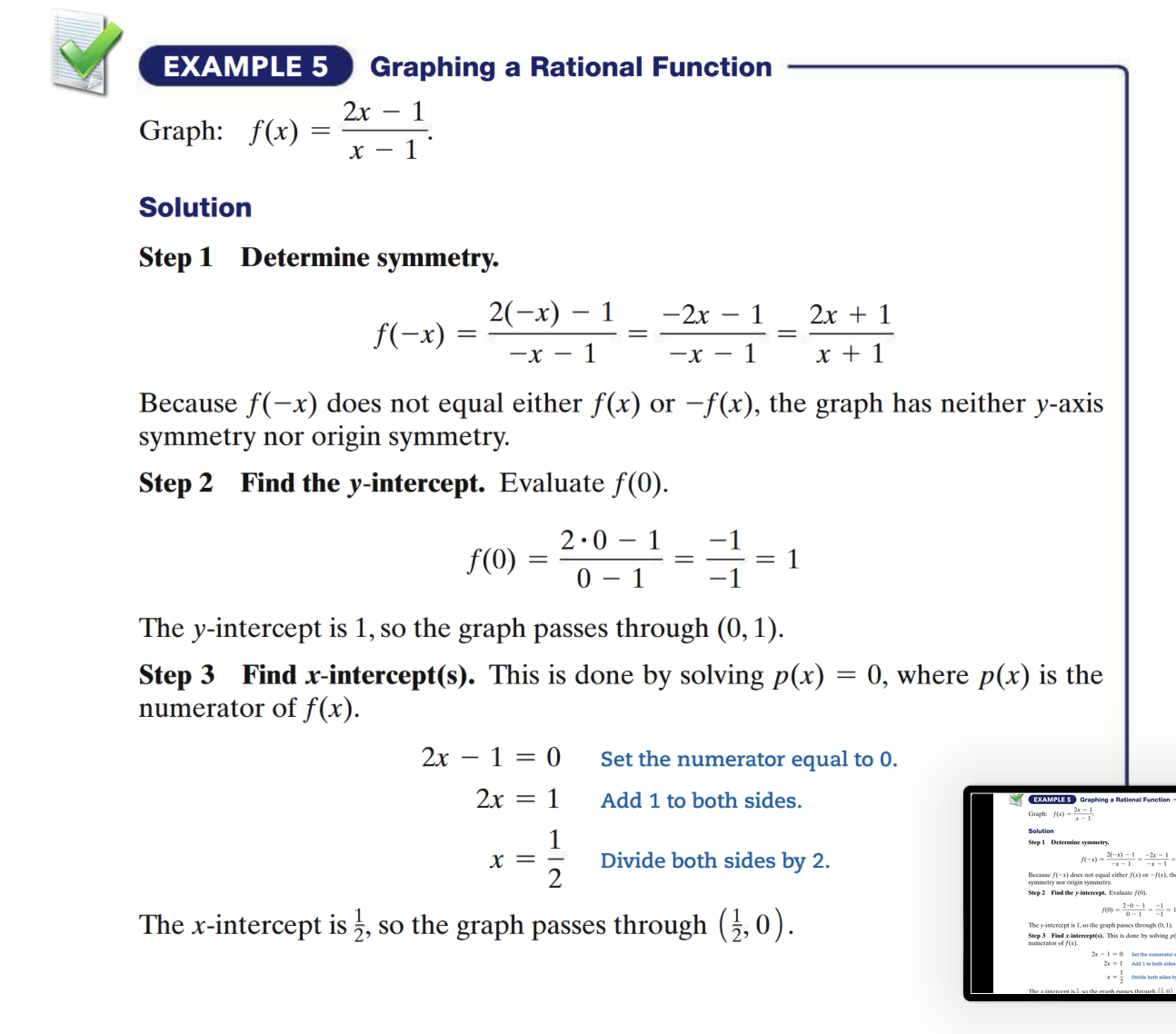
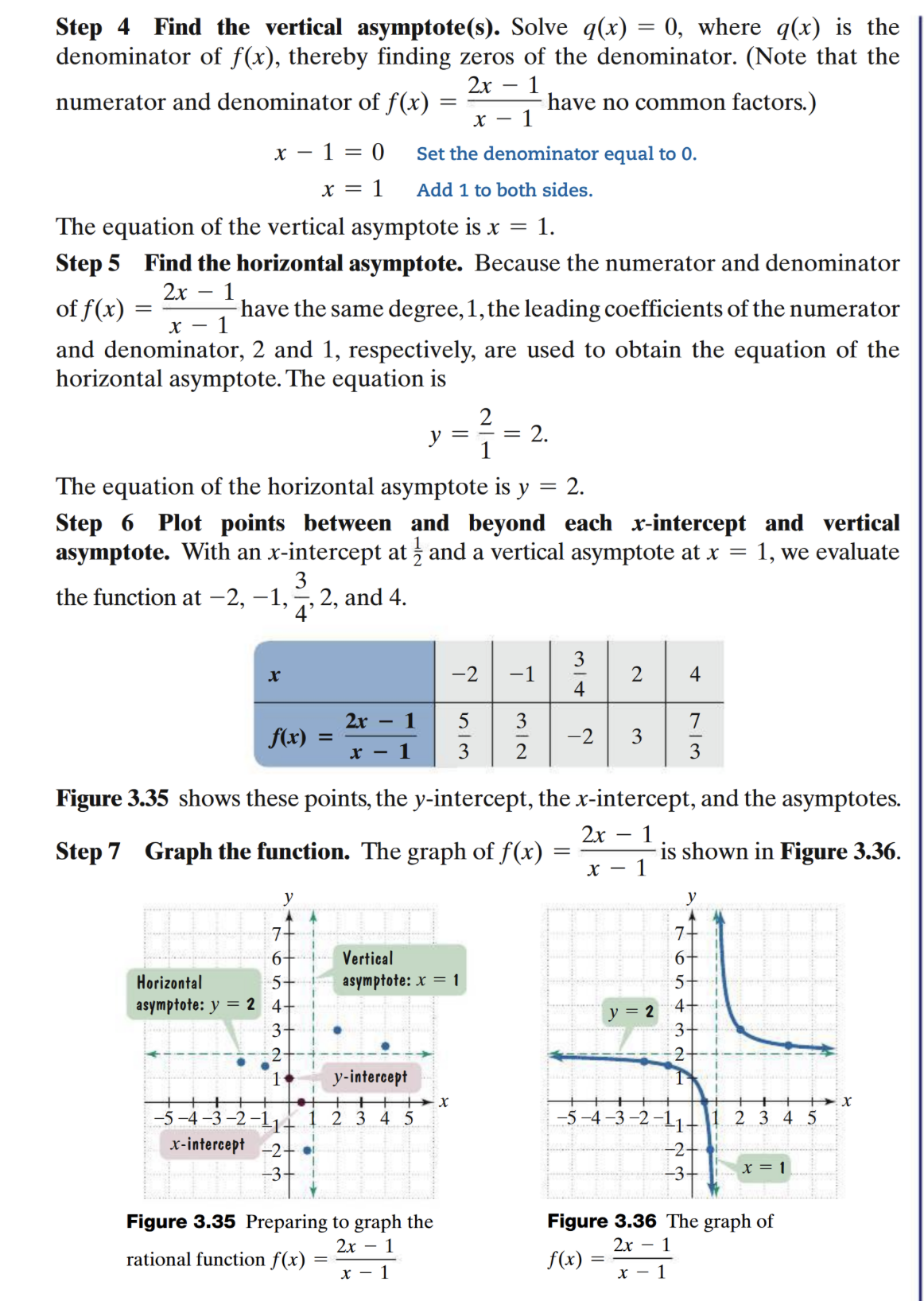
Example: Graphing a Rational Function
Identifying Slant Asymptotes
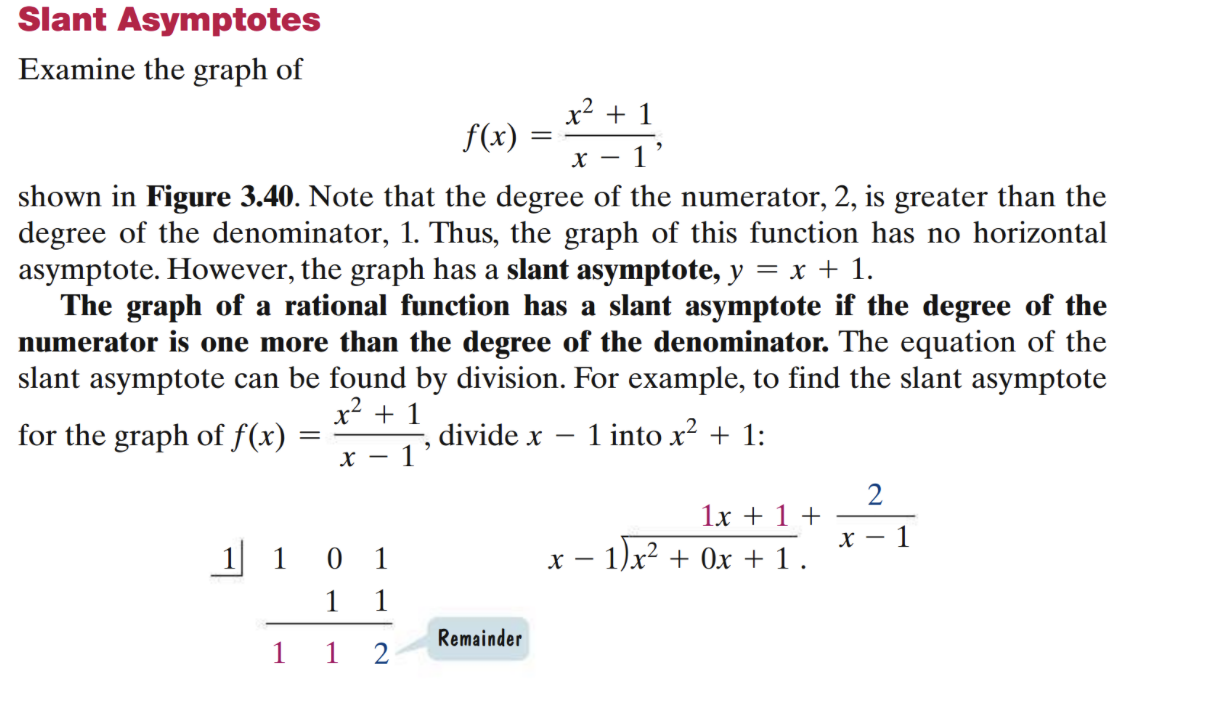
Occur when the degree of the numerator is one greater than the degree of the denominator.
Found using polynomial division (long or synthetic).
Example:
Applications
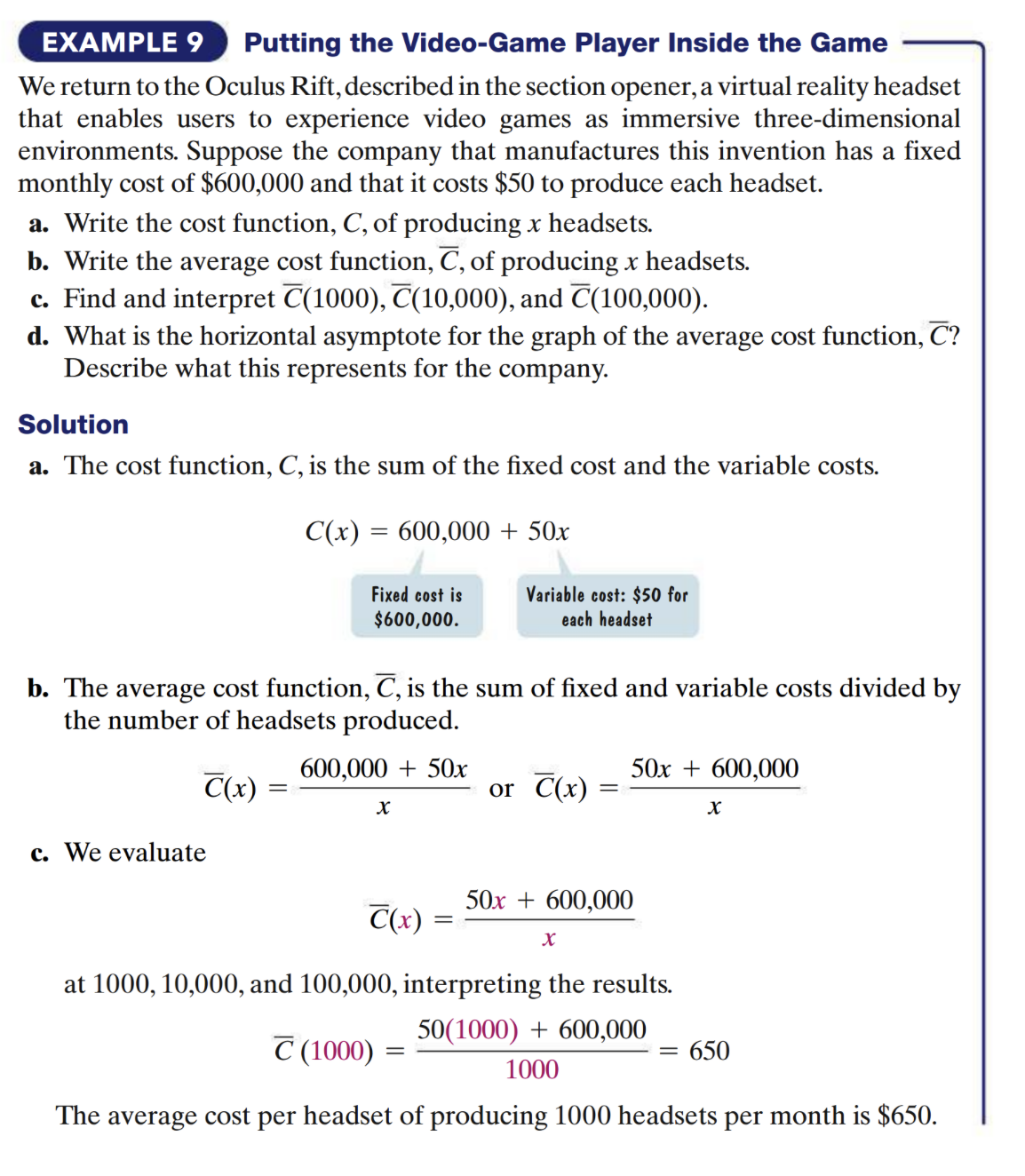
Cost Function:
Average Cost Function:
The average cost per unit for a company to produce x units is the sum of its fixed and variable costs divided by the number of units produced. The average cost
function is a rational function that is denoted by C.

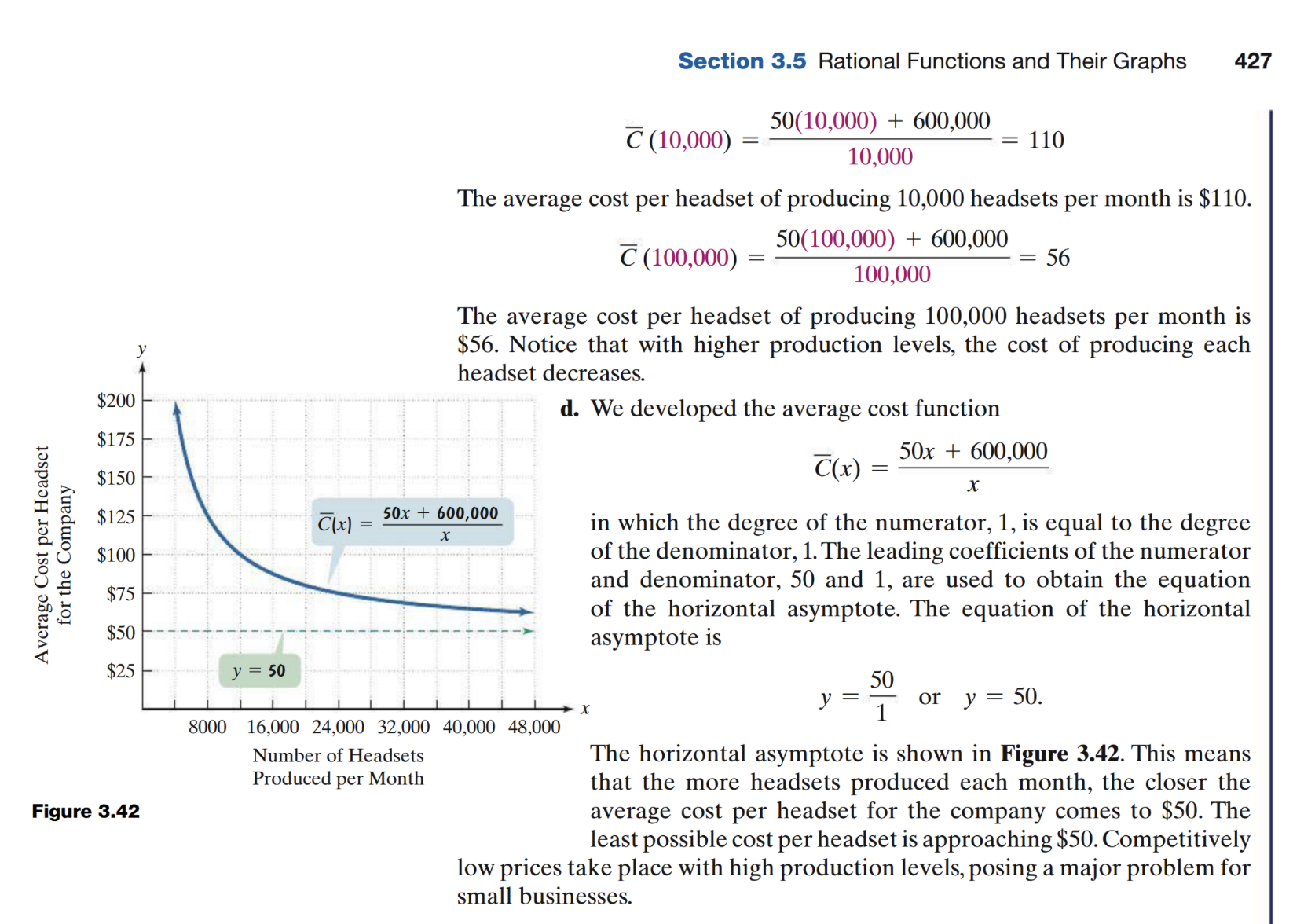
When analyzing costs at high production levels, the average cost approaches the variable cost per unit.
Example:
Important Notes
Always check for common factors in numerator and denominator for vertical asymptotes.
Use limit notation to describe end behavior as it approaches infinity.
- **Definition**: Rational functions are defined as the ratio of two polynomials, expressed in the form: where and are polynomial functions, and it is crucial that to ensure the function is well-defined. The domain of a rational function specifically excludes any values of that lead to a zero denominator, ensuring that calculations and behaviors can be correctly analyzed without encountering indeterminate forms. - **Domain Identification**: The domain of a rational function includes all real numbers except for those that make the denominator zero. To determine these disallowed values, one must solve for where . For example: - Given the function the denominator is equal to zero when . Therefore, the domain is expressed as:  - **Reciprocal Functions**: The most fundamental example of a rational function is the reciprocal function defined by: . Here, the denominator is zero when , resulting in the domain of being all real numbers except zero. This function is instrumental in understanding the behavior of rational functions near excluded values. - **Example: Evaluating the End Behavior of f near excluded value 0**: As approaches 0 from the left, decreases without bound, while as approaches 0 from the right, increases without bound. This behavior is indicative of a vertical asymptote at that point.   - **Finding the Domain of Rational Functions**: To accurately find the domain, identify values of that result in a zero denominator and systematically exclude these values from the domain. - **Example**: - Given , the denominator equals zero when , thus the domain is: #### Asymptotic Behavior - **Vertical Asymptotes**: Vertical asymptotes occur at values of where the function diverges to infinity or negative infinity, provided these values do not cancel out with a common factor in the numerator.   - **Exceptions**: A value causing the denominator to equal zero will not lead to a vertical asymptote if there exists a simplified form of the rational function where that value does not impact the denominator. - **Example**: For the function , the denominator is zero at , but the function simplifies to for , indicating a hole instead of a vertical asymptote at that point.  - **Horizontal Asymptotes**: A rational function can exhibit at most one horizontal asymptote. These asymptotes reflect the behavior of the function as approaches infinity or negative infinity, determined by the degrees of the numerator and denominator: - If the degree of is less than that of , then the horizontal asymptote is . - If the degrees are equal, then the horizontal asymptote is . - If the degree of is greater than that of , there is no horizontal asymptote.   
**Graphing Rational Functions** **Using Transformations to Graph Rational Functions** allows for insights into the behavior of the function as it nears asymptotic values or approaches infinity. Applying transformations also helps visualize shifts, stretches, and compressions of the graph.  **Example: Using Transformations to Graph a Rational Function** can assist with pinpointing critical points and behavior.   - **Example: Graphing a Rational Function** demonstrates the techniques utilized in effectively sketching the graph, capturing asymptotic behavior and critical points to create an accurate representation of the function’s behavior.   #### Identifying Slant Asymptotes - Slant asymptotes, also known as oblique asymptotes, occur when the degree of the numerator polynomial is one greater than the degree of the denominator polynomial. This unique situation requires polynomial division, either through long division or synthetic division, to find the equation of the slant asymptote. - **Example**: If one is looking at the function , dividing out the polynomials will reveal the slant asymptote.  #### Applications - **Cost Function**: Rational functions find application in economics, where they can model cost functions. A general cost function can be expressed as: - **Average Cost Function**: The average cost function is given by: This represents the average cost per unit for a company producing units by dividing the total costs by the number of units produced.  - In the analysis of costs at high production levels, the average cost typically aligns closely with the variable cost per unit, thus simplifying decision-making and predictions for production scalability. - **Example**:  
##### Important Notes - Always verify for common factors in both the numerator and denominator to properly assess vertical asymptotes and their implications on the graph. - Utilize limit notation to accurately describe the end behavior of rational functions as they approach infinity or negative infinity, ensuring clarity in mathematical communication. - Recognizing both vertical and horizontal asymptotes is crucial in sketching accurate graphs and understanding the behavior of rational functions in various scenarios