Bio
Ecology:
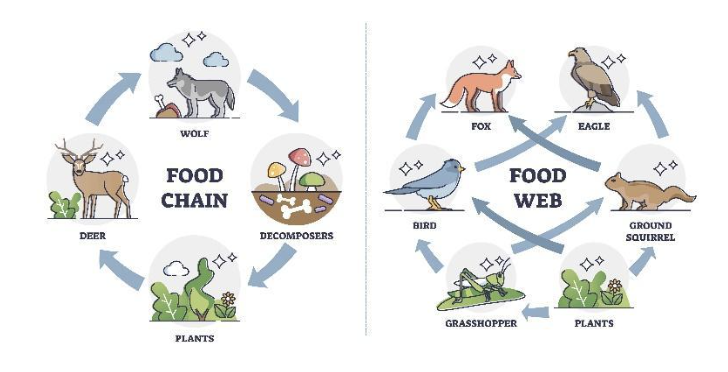
Feeding relationships between organisms in a community.
Food chains link trophic levels from producers to top carnivores.
A food web is a branching food chain with complex trophic interactions.
Energy Flow:
All organisms require energy to live, grow, and reproduce and use different strategies to maintain homeostasis in regard to temperature and metabolism.
Size determines the metabolic rate of an organism, smaller organisms, on average, have a higher metabolic rate.
Energy net gains are used by an organism to grow or to store excess energy
Net loss of energy results in a loss in mass and, ultimately, the death of the organism.
Autotrophs- utilize energy from sunlight or chemical sources
Photosynthetic organisms- Capture energy from sunlight
Chemosynthetic organisms- capture energy stored in small inorganic molecules; this can even occur in the absence of oxygen.
Heterotrophs- Capture energy present in other organisms
Heterotrophs gain energy through metabolization of carbohydrates, lipids, proteins.
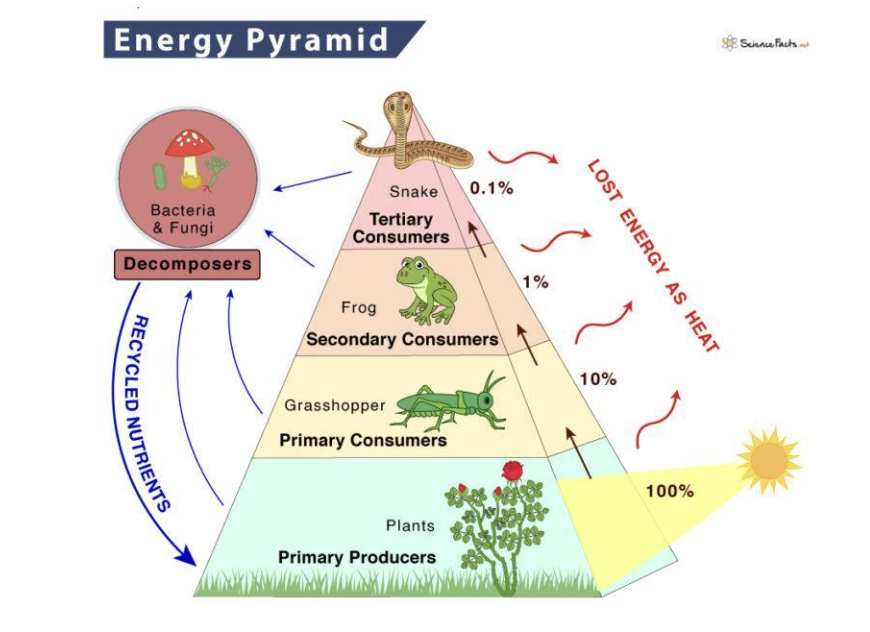
Trophic efficiency is the percentage of production transferred from one trophic level to the next. -10% Law of Energy Transfer- (10% of energy is transferred to the next trophic level)
A pyramid of net production represents the loss of energy with each transfer in a food chain.
Population Ecology
Organisms have many adaptations that are useful in obtaining/using energy in a specific environment.
Population growth can be calculated with the following equation
dNdt=B-D
dt= change in time
B = birth rate
D = death rate
N = population size
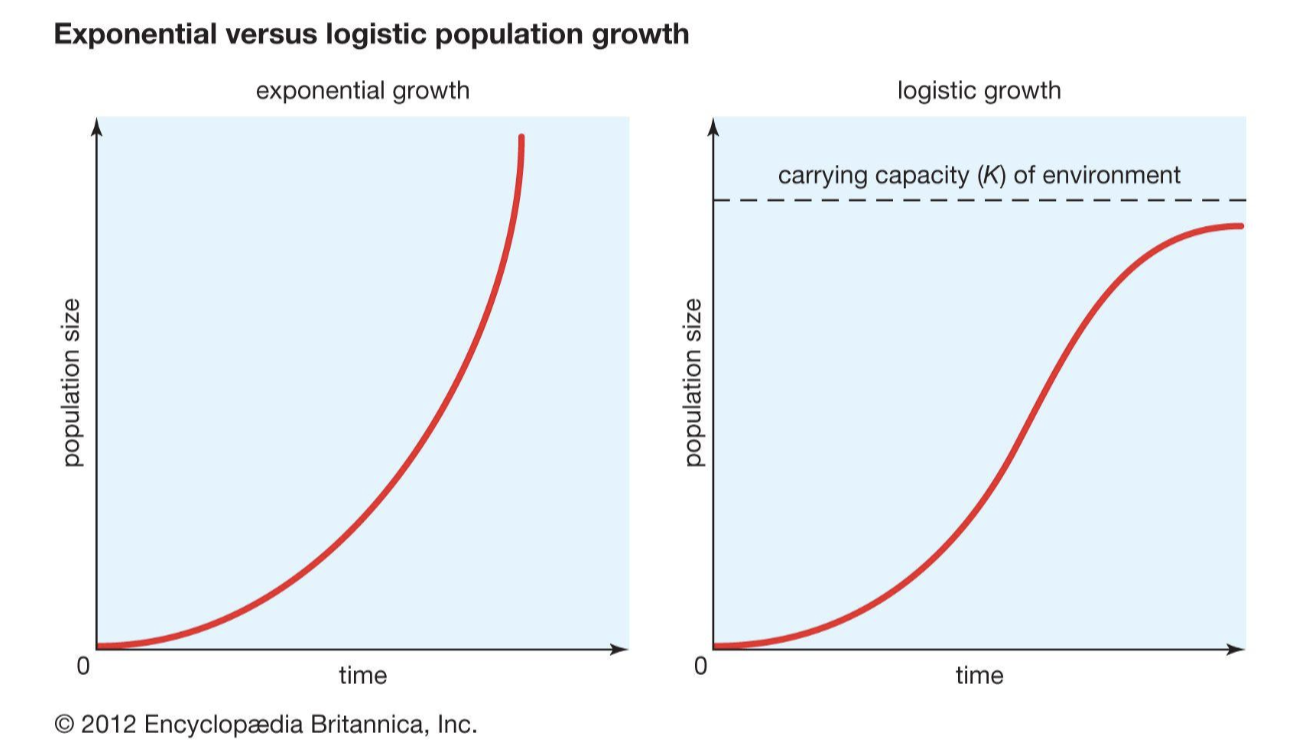
Reproduction without constraints results in exponential growth of a population.
There are constraints to population growth due to density- dependent (food, water, shelter, and density-independent factors (weather, natural disasters, human activity).
Community Ecology
Relationships between different populations can be positive (+), negative (-), or neutral (0). Parasitism (+) (-), predation (+) (-), commensalism (+) (0), and mutualism (+) (+) drive population dynamics.
Predator/Prey (+) (-) one species, the predator, kills and eats the other, the prey.
Herbivory (+) (-) an herbivore eats parts of a plant or alga
Parasitism (+) (-) one organism, the parasite, derives nourishment from another organism, its host, which is harmed in the process.
Mutualism (+) (+) is an interspecific interaction that benefits both species
Commensalism (+) (0) one species benefits and the other is apparently unaffected
Cooperation and coordination between organisms, species, and populations can result in enhanced fitness.
Similar species can exist within the same ecosystem due to resource partitioning, where similar species will occupy two distinct niches. (Niche = ecological role/place)
Biodiversity
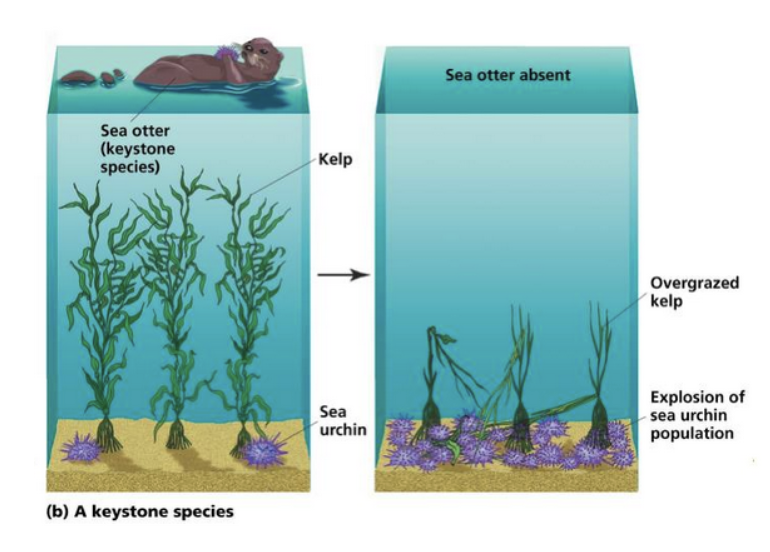
Ecosystems, natural and artificial, with fewer components and less diversity are often less resilient to changes in the environment. A keystone species, producers, abiotic, and biotic factors for example contribute to the diversity/health of an ecosystem.
Diversity of a species within an ecosystem can influence the organization of said ecosystem. Keystone species have an enormous impact on the ecosystem, when the entire ecosystem collapses. Keystone species are not always the most abundant species in the ecosystem.
Ecosystem Disruptions
An adaptation is a genetic variation that is favored by selection and is expressed as a trait that provides a competitive advantage for an organism in its environment. (Mutations are random and thus not directed by environmental pressures)
The intentional or unintentional introduction of an invasive species to a new environment allows the invasive to exploit a new niche. Free of natural predators or competitors allows an invasive species to outperform native species. (Kudzu, zebra mussels)
Animal Behavior
Organisms respond to environmental changes through behavioral and physiological means
Organisms can exchange information with each other in response to environmental changes, internal changes, and external cues. These can influence behavior
When information is communicated individuals can act on this information and communicate it to other organisms. Examples include
Signaling behaviors (Territorial marking, coloration in flowers) – these produce changes in the behavior of other organisms that can result in reproductive success
Animals can use visual, audible, tactile, electrical and chemical signals to indicate dominance, find food, establish territory, and ensure reproductive success. (ex. Bird songs, pack behavior, predator warnings, coloration)
Responses to communication, and the information carried within it, are vital to natural selection and evolution
Natural selection favors innate and learned behaviors that increase survival and fitness. (Parent and offspring interactions, courtship/mating behaviors)
Cooperative behavior tends to increase the fitness of not only the individual but also the population (Schooling behavior, predator warning, colony/swarming behavior, kin selection)
Human Population
History of Human Population
-Human populations were kept in check by diseases, famines and wars until the middle ages
ex: Infanticide, Bubonic Plagues
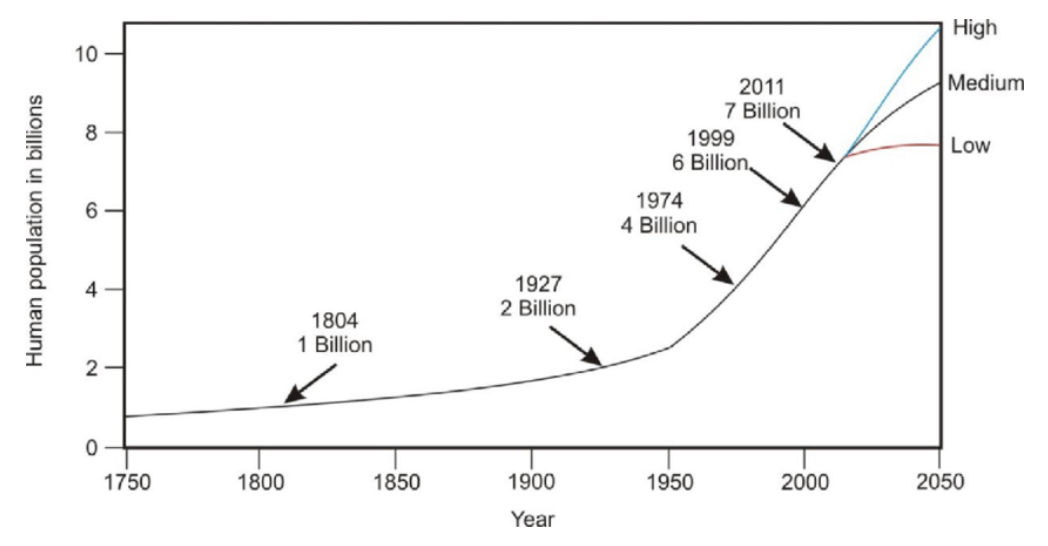
-Populations began to increase rapidly after A.D. 1600 (Increased sailing and navigating skills, agricultural developments, better sources of power, better health care and hygiene)
-We are now in a J-curve, and the population is increasing at an exponential rate.
Demographics- vital statistics about people (births, deaths, where people live, total population size)
1) Crude Birth rate-the number of births in a year per thousand persons
2) Crude Death rate-the number of deaths per thousand persons in any given year
3) Life Expectancy-the average age that a newborn infant can expect to attain in any given society
-Developing countries have seen the greatest progress
-Discrepancies in how benefits are distributed within a country are shown by varying life
expectancies at different areas in a country
-Annual income has a strong correlation to life expectancy
Developing Countries-residents live for about twice as long as they used to
Developed Countries-increase not as great because it was higher to begin with
Impact on Resources-The more people there are, the more resources are used.
Especially in developed countries like the U.S. where the amount of resources used per person is greater than in less developed countries.
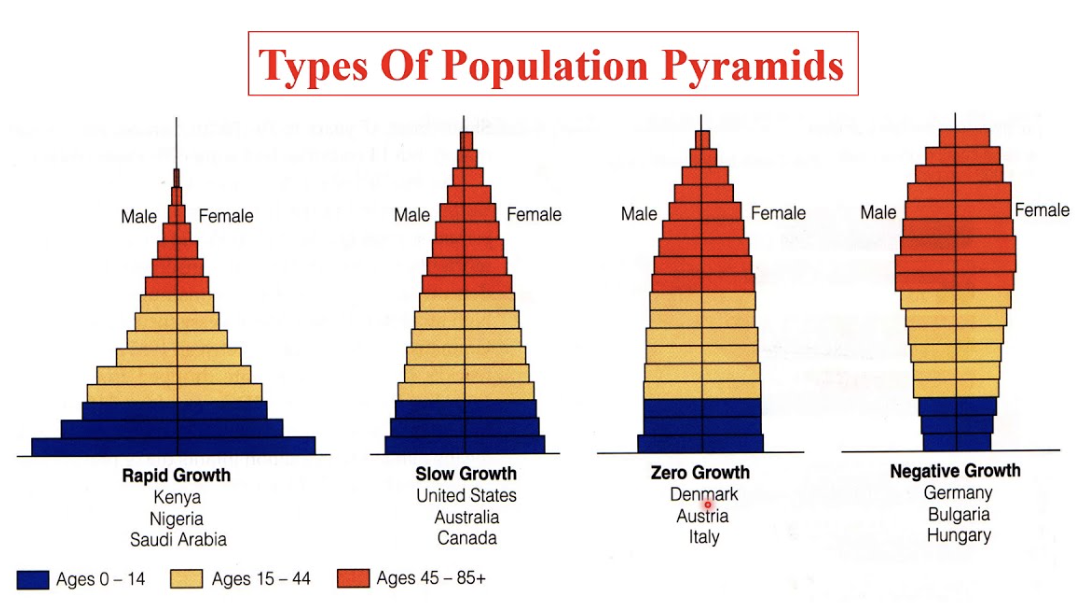
Carrying Capacity-local, regional and global
-The number of individuals who can be supported in a given area within natural resource limits, and without degrading the natural social, cultural and/or economic environment for present and future generations.
Population Projections and Solutions
-There could be a population overshoot past the carrying capacity and then a die-off or we could adjust our population growth to an S-curve
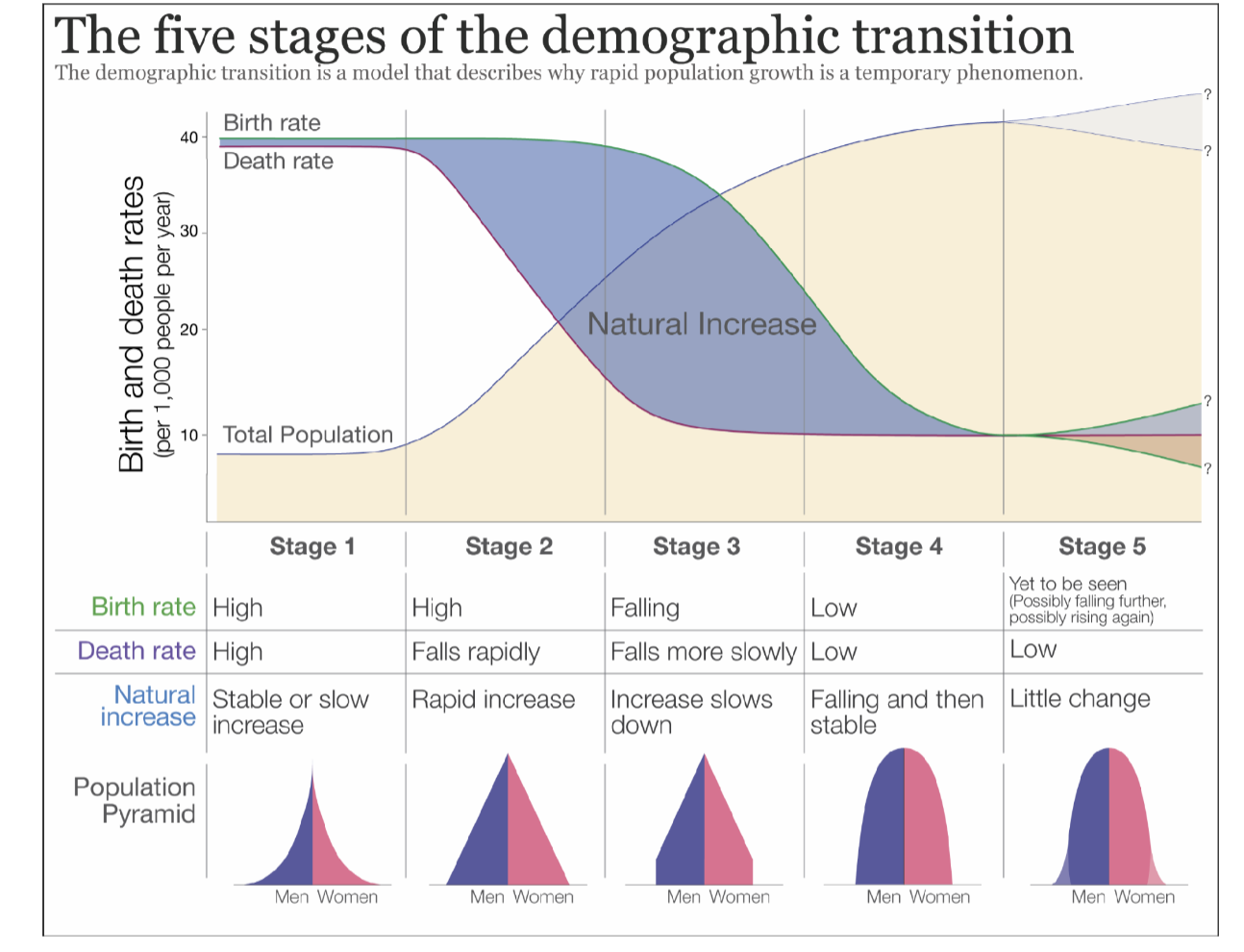
-Estimated Demographic Transitions-from high birth and death rates to lower birth and death rates due to improved living conditions and economic development.
*Female Education and Economic Status-If females are educated about birth control, and made aware that they do not need to have many children to replace them, they will not have as many babies. Also, if their economic status is improved, many women will get jobs instead of having children. Other factors include:
-Family Planning
-Abortion,
-Barrier-Condom
-Chemical-"The Pill"
-Surgical-Tubal litigation, vasectomy
Agriculture:
Ecosystem services are the processes by which life-supporting resources such as clean water, timber, fisheries, & agricultural crops are produced.
Sustainable environmental systems- Must allow for maintaining clean air, water, land, and biosphere systems; Must maintain human well being, the status of being healthy, happy, and prosperous
Traditional subsistence agriculture- just enough food for person's family
Slash and burn- vegetation cut and burned down before being planted
Shifting Agriculture - Land is farmed every few years until the soil is depleted of nutrients.
Advanced Agriculture Practices
Pesticides- Natural or synthetic that kill or control organisms people would consider pests.
Insecticides - Target a specific species of insects
Herbicides - Target unwanted plant species
Concentrated animal feeding operations (CAFOs) - large structures designed to produce the maximum output of meat
Free Range Grazing - animals graze outdoors for most of their lifecycle. They are designed to have larger spaces than CAFOs
Nomadic Grazing - Animals are moved over large distances to productive feeding grounds.
Sustainable Cities: Urban Land Use & Management
Causes of urban growth
better sanitation & health care in cities lowers the death rate immigration
cities are centers for new jobs, education, higher incomes, culture
Urban pros:
recycling is economically feasible
birth rates are lower
concentrated people take up less space
Urban cons:
a great deal of land is used to provide food, energy, & water
production of enormous quantities of waste that pollute air, water, & land in & outside boundaries
urban heat islands & noise pollution
Urban sprawl
A combination of cheap gasoline, plentiful land, & a network of highways produces dispersed, automobile–oriented cities with low population density.
Characteristics of urban sprawl
single family housing
unshared walls are not energy efficient houses & lawns replace natural landscapes & farmland
dependence on the automobile
residents must drive to work, services, & recreational facilities
contributes to expanding development, air pollution, global warming, & non–renewable resource use
Almost half of the world’s population lives in urban areas and half in rural areas.
Government policies, poverty, lack of land to grow food, declining agricultural jobs, famine, and war that force people out of rural areas are all factors that determine how urban areas develop.
Urban areas are rarely self-sustaining, threaten biodiversity, destroy and damage ecosystems, lack trees, grow little of their own food, concentrate pollutants and noise.