B4.1 Adaptation to environment
Chapter 1: Adaptations of organisms to a habitat and species distribution
Ecology - branch of biology that deals with the relationships between organism, and their interactions with their physical surroundings
Organisms - any individual life form, with all organism having at least one cell
habitat - a place where an organism or a group of organisms lives and interacts with its surroundings. Can also be defned as a geographical or physical locations that provides the necessary resourse for an organism’s survival and reproduction
Describing the habitat of a species, look at:
geographical location (on a map or in a specific area)
physical location (includes environmental factors like soil type, water and food availability, other organims, etc.)
ecosystem (or the bigger picture of biotic and abiotic factors
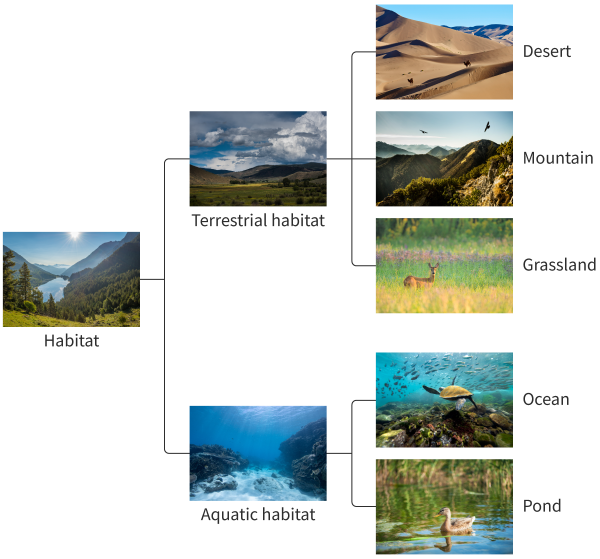
Two types of habitats: terrestrial habitats (land-based environments) and aquatic habitats (all water-based environments)
adaptation - a genetic change that increases an organism’s chances of survival and reproduction in a particular environment OR characteristic or behaviour that helps an organism survive and reproduce in its environment.
Adaptation can occur randomly through mutation or driven by selective pressures in the environment. They can be the result of genetic changes and natural selection but also the result of behavioral and physiologival changes
natural selection - the mechanism that drives the spread of beneficial genetic mutations throughout a population
Natural selection happens because individual with more advantageous traits are more likely to survive and reproduce. These advantageous traits are passed down generation by generations, causing the advantageous traits to spread over a population and become more common. This is extremely important for the survival of a population of a species because organisms develop adaptations to their physical or abiotic conditions of their habitat (temperature, moisture, light, etc.)
Case Study 1: Sand Dunes Habitat and marram grass
Sand dunes are made by the accumulation of sand that was blown inland by wind and trapped by debris or plants. Sand dunes have harsh unstable conditions that only a few select plants have adapted to survive to, one example being marram grass (Ammophila arenaria).
Marram Grass Adaptations
Tolerance to drought due to a deep root system that allows the grass to access water and nutrients in periods of drought
High tolerance to salt in soil which make it ideal for growing in sand
Strong roots allow them to anchor firmly in the sand to resist erosion from wind and waves
Lead adaptations include a strong leathery texture and leaves that are rolled in on themselves to protect the stomata; these reduce water loss through transpiration and thereby aiding water conservation
Ability to trap sand particles with its roots and stems to help stabilize the sand dunes and prevent erosion.
Rhizomes, which are horizontal underground stems that grow below the sand surface, allow the plant to spread, anchor itself, access water, and stabilize sand dunes
Case study 2: Mangrove forests habitats
Mangroves are places where saltwater and freshwater mix and the water level fluctuates with the tides. They have high levels of salinity in their environment, making it a tough place for plants to live. One of the plants that thrive in mangroves is the Rhizophora apiculata. One reason for this is that Rhizophora apiculata are halophytes, meaning it is a plant that can survive extremely high salinity. They also have specialize roots called pneumatophores that help provide the roots with oxygen in waterlogged soil.
Rhizophora apiculata Adaptations
High salt tolerance suitable for a mangrove ecosystem
Pneumatophores that provides roots with oxygen in waterlogged soil
Flood tolerance thanks to the development of stilt roots that support the tree and keep it above water
A unique method a propagation where the seeds germinate and beging to grow whilst still be attached to the tree, allowing it to establish itself in new areas without be swept away by water.
Shelford’s Law of Tolerance
According to the law (proposed in 1911)
Organisms have optimal survival rates for abiotic factors.
As an organism moves from areas with optimum conditions, there is a decrease in survival rates.

Chapter 2: Limitations of adaptations and range of tolerance
Abiotic variables affecting species distribution
Species distribution range - the geographic location and range of occurrence of a particular species. This can be influenced by a variety of factors, like range of tolerance of a species for different abiotic factors.
Abiotic factors can affect the distribution, abundance, and diversity of living organisms within an ecosystem. Because certains species has adapted to their own set of specific abiotic conditions and may not survive in other regions, this keeps them in regions where these conditons are more favorable.
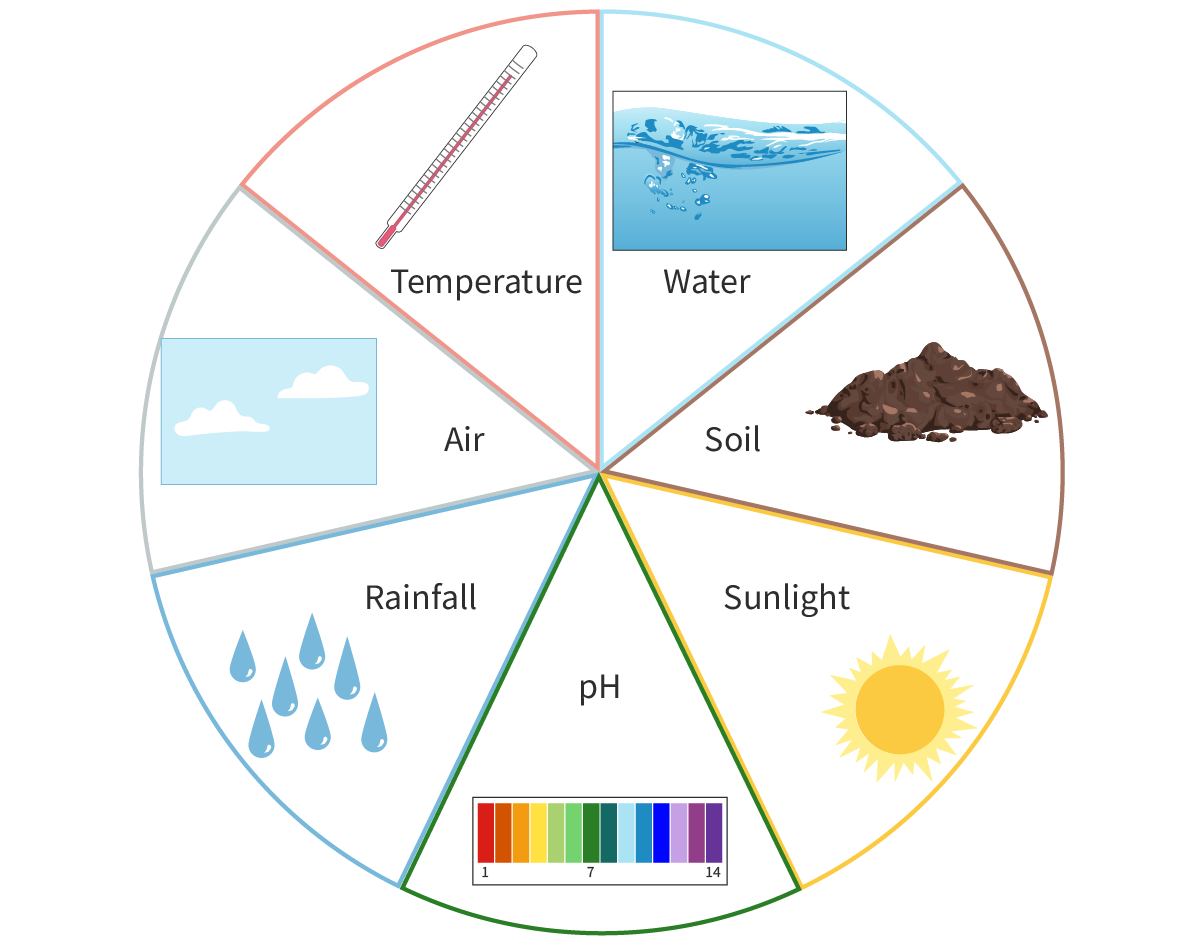
Abiotic variables can influence the interactions between the different species in an ecosystem. For example, in a desert ecosystem, water availability can lead to competition for access to water between different animal and plant species, resulting in hierarchical systems in an effort to conserve water.
Because no species is able to survive ALL the varying abiotic conditions found on Earth, scientists have understood that abiotic factors have an impact on the distribution of species, often putting restrictions. Analyzing these factors can lead to an understanding of the ecology and evolution of living organisms.
Abiotic factors that affect the growth of plants and animals
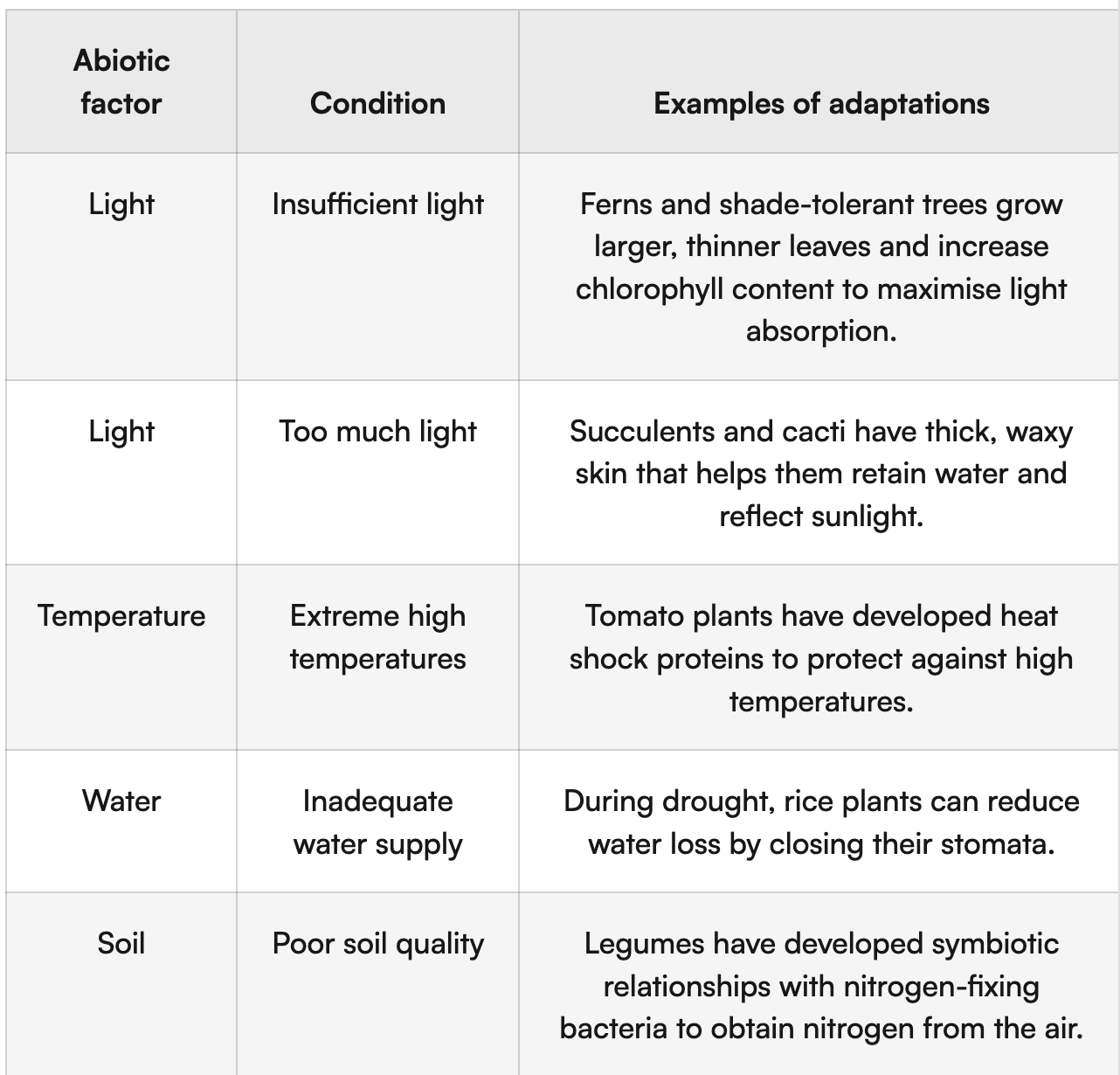
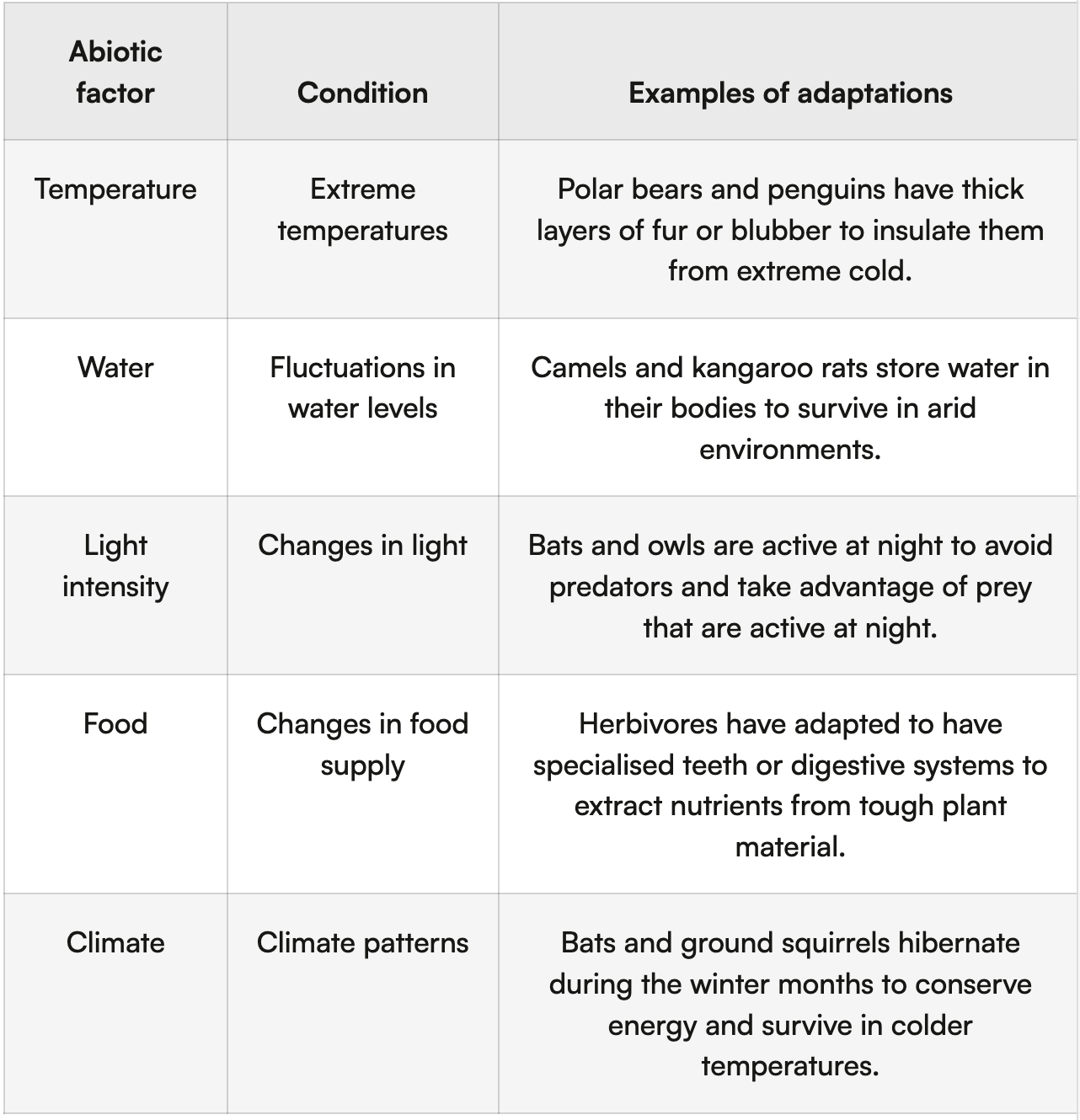
Plants and animals are highly sensitive to abiotic factors including light, intensity temperature, soil composition, atmospheric gases and water availability. Some plants and animals can survive extreme abiotic conditions while others may struggle to survive the same conditions.
Range of tolerance as a limiting factor
Range of tolerance - refers to the range of environmental conditions in which an organism can survive and function optimally. Each organism have a specific range of tolerance to each environmental factor and going beyond that range can cause stress or even death to that organism. This means that each animal species resides in a geographical location with environmental conditions that are within their range of tolerance.
The range of tolerance and environmental conditions can be affected by numerous environmental changes like climate change, pollution and habitat loss. This leads to populations having to migrate to a new location that is within their range of tolerance.
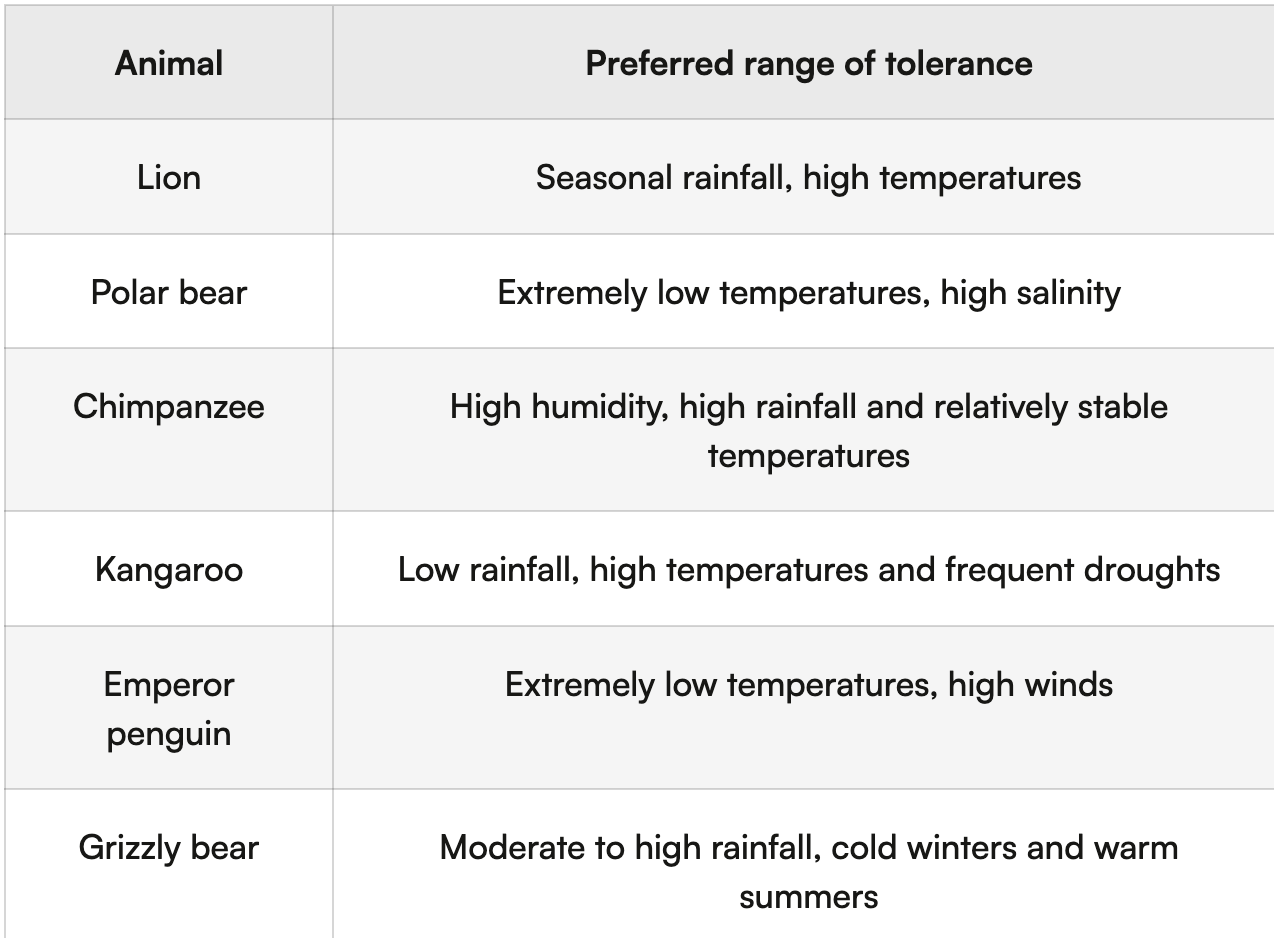
How does range of tolerance act as a limiting factor?
The range of tolerance of a species is determine by the limiting factors. The availability of these limiting factors sets the maximum limit for the size of species in a ecosystems. When one or more limiting factors are in short supply, this can have a significant affect on the distribution, abundance, and diversity of a species in an ecosystem.
En example of this would be the canopies in the rainforest. The dense canopies of trees limits the availability of sunlight, making it a limiting factors. The high rainfall in rainforest also leads to waterlogged soil, making it difficult for plants to obtain nutrients and oxygen. This makes water availability a limiting factor in a tropical rainforest ecosystem.
Use of transect lines for sampling
Sampling techniques are used to study the correlation between abiotic factors and species distribution.
The transect line method or belt transects is a sampling technique used to gather data on the distribution and abundance of a species in a particular area. It is done so through establishing a straight line through a habitat and counting and recording occurrences of a species along the path.
Abiotic variables that could be measured include:
Temperature
Light intensity
Soil pH
Other transect line methods include:
Observational transect: Used in environmental monitoring to observe and record data along a designated linear path or transect in a specific habitat or ecosystem.
Line intercept sampling: Used to measure the abundance and distribution of plant species in a particular habitat by recording the points where a line or tape intersects with plant stems or foliage.
Sensors and data loggers
Sensors - devices the measure physical and chemical properties like temperature, pressure, humidity, light intensity, and sound level
Data loggers - electronic devices that record data from sensors over time.
Advantages include:
They can provide continuous and precise measurements of physical or chemical properties.
They can operate in hazardous or remote environments where human observation is impractical or dangerous.
They can provide real-time data that can be analysed and acted upon quickly.
They can take multiple readings quickly.
Chapter 3: Coral Reef Formation
Coral reefs are one of the most biodiverse ecosystems in the aquatic world and on Earth. It is strongly influenced by various abiotic factors like water depth, temperature, salinity, pH, and currents; these factors have a significant impact on the survival and growth of marine organisms.
Corals are marine invertebrates that typically grow in colonies. Corals are slow-growing animals (up to a hundred years) that come in a variety of colors. They also have the ability to regenerate and rebuild their skeletons, making them resilient to environmental stress.
Conditions required for coral reef formation
Coral reefs are formed of the calcified skeletons of coral polyps (tiny invertebrate animals). Coral reefs are essential to the livelihood of millions around the world as the provide food, coastal protection, and touristic opportunities. Coral reels are extremely sensitive to changes in abiotic conditions.
Conditions required for coral reef formation:
Water depth: shallow waters between 2-45 meters
pH: 8.0-8.4 (slightly alkaline) (ocean acidification is a threat)
Salinity: stable salt concentration; range is 23-42 ppt (salt concentration) *parts per thousand
Water clarity: Clear water for sunlight penetration
Temperature: 18-40°C (optimal 23-29°C)
Low temperatures kill coral, high temperature cause zooxanthellae to detach, resulting in the death of the coral
Adaptations of Coral
Symbiotic/mutualistic relationships with algae (zooxanthellae) for food and oxygen.
Camouflage, protective hard shells, stingers, spines, are used to help protect the coral reef system from predators
Diverse reproductive strategies to ensure the survival their species, including egg-laying and asexual reproduction
Threats to coral reefs include climate change, overfishing, pollution, and coastal development. This causes coral bleaching and death, leading to the degradation of coral reef ecosystems.
Conservation efforts include marine protected areas, sustainable fishing, and reducing greenhouse gas emissions to protect reefs.
Chapter 4: Determinants of biome distribution and biomes as groups of ecosystem
biome - a large community of organisms adapted to specific climate and environmental conditions that occupy a major habitat. The main terrestrial biomes are tropical rainforest, temperate forest, taiga, grassland, tundra and hot desert biomes.
The two main abiotic factors of a biome are temperature and rainfall:
Temperature: Affects biological processes like photosynthesis, growth, and metabolism.
Rainfall: Determines water availability for plant and animal survival.
climograph (temperature vs rainfall graph): shows that there is a relationship between temperature and precipitation that determines the type of biome that can exist in a given area. (Temperature is on x-axis, rainfall on y-axis)
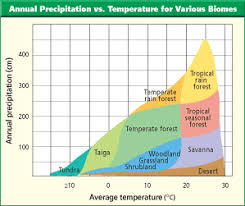
Biomes as groups of ecosystems with similar communities
Convergent Evolution: when different species evolve to have similar traits in response to similar environmental pressures despite different evolutionary histories. (e.g., similar plant and animal species in similar biomes)
Biomes: a larger and more broadly defined area containing ecosystems sharing similar abiotic conditions (climate, soil, water), leading to similar plant and animal communities. Greatly influenced by latitude
Ecosystems: Smaller, specific areas within biomes that can exist in a variety of climates influenced by a variety of factors like, latitude, altitude, topography and human activity.
Each biome has a unique set of plant species that are adapted to the specific abiotic conditions of that biome, such as temperature, precipitation and soil type.
Chapter 5: Adaptations to desert and rainforest biomes
Adaptations in Hot Deserts:
Desert Conditions: Arid, extreme temperature variation, low rainfall, and scarce vegetation.
Example Species:
Ant (Sericomyrmex radiohead) : Adapted to the Atacama Desert by living underground and feeding on fungi. Reproduces asexually (parthenogenesis) to quickly colonize new areas.
Ocotillo (Fouquieria splendens): Adapted to extreme heat in the Sonoran Desert by having a deep root system and additional horizontal root system to access water, green bark containing chlorophyll to carry out photosynthesis, thorny, expandable stems to store water and deter herbivores, vibrant red flowers to attract pollinators
Gila Monster (Heloderma suspectum): Adapted to desert conditions by being able to store fat in its tail, bumpy scales that cover the skin to retain moisture, slow metabolic rate to go for long periods of food and water, powerful jaw and venomous saliva to protect itself from predators and catch prey, and venom that contains toxins to cause intense pain and swelling.
Adaptations in Tropical Rainforests:
Rainforest Conditions: High rainfall, warm temperatures, humid, and moist environment.
Biological Diversity: High diversity of plants and animals.
Example Species:
Amazon water lily (Victoria amazonica): large circular with waxy coating leaves (up to 3m diameter), helps to repel water and float, a root system that allows it to anchor its self to the bottom and extracts nutrients from the soil, large and fragrant flower to attract pollinators
Harpy eagle (Harpia harpyja) - binocular vision that allows eagle to accurately judge distance and track fast-moving prey, strong and sensitive hearing to detect prey movement, sharp beak to capture prey, broad and strong wings to move through forest canopy silently, sharp talons to crush the skulls of prey
parthogenesis - Reproduction from an ovum without fertilisation.