Safety Procedures
Many factors play a part in the safety of the laboratory and in performing blood collections. Knowing and understanding these factors is important as a phlebotomist to keep oneself and the patients safe, before, during, and after the procedure. Understanding proper disposal of biohazardous materials and sharps can help prevent contamination or accidental needle sticks of phlebotomists and patients. Knowing the disease transmission cycle and ways to stop the cycle of infection, such as standard precautions, PPE, hygiene, and other infection control, helps eliminate adverse events and disease transmission.
Disposing of Sharps and Biohazards
Biohazards are disease-producing pathogens that, when not handled and disposed of properly, can have substantial consequences. They can cause significant health and safety risks for phlebotomists and patients. Some more common biohazards phlebotomists may come across in the laboratory include blood or other body fluids and sharps. Sharps are the tools used to puncture the skin of the patient during blood collection, most often a needle or lancet. The blood from the patient can be found on the gauze, bandage, needle, tubes, the gloves of phlebotomists, and even on the tourniquet.
Knowing the best place to dispose of each type of biohazard. Any materials contaminated with the patient’s blood or other body fluids must be disposed of in the proper biohazard container. If the item has the potential to cut or become sharp or is a sharp item already, it should be disposed of in a sharps container. These are classified as biohazard containers made from puncture-resistant material that protect those handling them from possible accidental puncture.
Materials that should be placed in the sharps container include needles, cracked glass vacutainer tubes, and glass microscope slides. Contaminated materials such as bandages or gauze should be disposed of in a marked or labeled trash receptacle with a biohazard bag inside.
Routine Blood Collections
Exposure Control Plans
Exposure control plans protect employees from bloodborne pathogen exposure by putting a plan, in writing, for how to prevent or reduce exposure to bloodborne pathogens and what to do if exposure happens. The facility puts the exposure control plan in place and should provide detailed steps on what to do if exposure to bloodborne pathogens occurs. By law, an exposure control plan must be in place if there is any risk of bloodborne pathogen exposure. Having an exposure control plan helps protect employees and the facility or employer from workers’ compensation claims and the cost of post-exposure testing, treatment, and counseling.
The exposure control plan must be easily accessible by any employee at any given time, and employees should be notified when any changes or updates occur to the plan. Besides the exposure control plan, the Bloodborne Pathogen Standard includes universal precautions, PPE, training, hazard labeling, and Hepatitis B vaccines. It also provides work practice controls such as sharps containers and safety devices on needles.
In the event of an exposure to bloodborne pathogens, immediately flood the exposed area with water. If there is exposure due to the splashing of body fluids into the eyes, nose, or mouth, use the eye wash station to immediately flush the affected area, allowing water to run over the affected area. Avoid swallowing the water. If wearing contacts, remove them promptly and continue flushing the area. If there is a wound, clean thoroughly after rinsing it with soap and water or a skin disinfectant. A report should be immediately made to the employer, and medical attention should be sought within 24 hours. The medical provider may recommend HIV and hepatitis B and C testing. They may also recommend post-exposure prophylaxis, which may mean beginning an antiretroviral medication or receiving the hepatitis B vaccine if unvaccinated previously. The provider will provide instructions for recommended additional follow-up.
In addition to an incident report, OSHA’s Bloodborne Pathogen Standard also requires that any sharps injury is logged in a sharps injury log. At the very least, the sharps injury log must include the type and brand of device involved in the injury, if known, the department or area where the incident occurred, and an explanation of how it happened. This log is kept confidential, leaving out any personal identifiers.
The Needlestick Safety and Prevention Act was designed to reduce the incidence of needlestick injuries among health care workers from bloodborne pathogens like hepatitis B, hepatitis C, and human immunodeficiency virus (HIV). The act mandated revisions to OSHA’s standards for bloodborne pathogens. It required employers to identify, evaluate, and implement safer medical devices, such as needles with engineered sharps injury protections and needleless systems. The act also called for the involvement of frontline workers in selecting these safer devices and required the maintenance of a log of injuries from contaminated sharps. The Needlestick Safety and Prevention Act emphasized the importance of worker training, proper sharps disposal, and maintaining detailed records of needlestick and other sharps-related injuries to improve workplace safety for health care professionals.
Precautions
Universal precautions are a set of infection control practices used to prevent transmission of diseases that can be acquired by contact with blood, body fluids, non-intact skin (including rashes), and mucous membranes. These precautions are designed to reduce the risk of transmission of pathogens, including those that are bloodborne, such as hepatitis B virus (HBV), hepatitis C virus (HCV), and HIV.
The key principle is to treat all human blood and certain human body fluids as if they were known to be infectious for bloodborne pathogens.
Here are the main components of universal precautions.
Hand hygiene: Washing hands with soap and water immediately after any exposure to blood or body fluids, after removing gloves, and between patient contacts is crucial. If soap and water are unavailable, an alcohol-based hand sanitizer can be used.
Personal protective equipment: Depending on the anticipated exposure, appropriate PPE such as gloves, gowns, masks, and protective eyewear should be worn. PPE is a barrier to protecting skin, clothing, mucous membranes, and the respiratory tract from infectious agents.
Needlestick and sharps safety: Needles and other sharp instruments should be used, handled, and disposed of carefully to prevent injuries and exposure to blood and body fluids. Safety-engineered devices and proper disposal containers can reduce the risk of needlestick injuries.
Safe injection practices: Use aseptic technique for the preparation and administration of parenteral medications. Do not reuse needles or syringes and ensure that medications and solutions are not contaminated.
Environmental cleaning: Surfaces contaminated with blood or body fluids should be promptly cleaned and disinfected using appropriate disinfectants.
Waste disposal: Proper disposal of biohazardous waste, including sharps, is essential to prevent exposure to infectious materials.
Respiratory hygiene/cough etiquette: Covering the mouth and nose during coughing or sneezing, using tissues to contain respiratory secretions, and disposing of them properly can help prevent the spread of respiratory pathogens.
Patient care equipment: Clean and disinfect reusable medical equipment before use on another patient to prevent cross-contamination.
Universal precautions apply to the following body fluids.
Blood
Semen and vaginal secretions
Cerebrospinal fluid (CSF)
Synovial fluid
Pleural fluid
Peritoneal fluid
Pericardial fluid
Amniotic fluid
Universal precautions do not apply to sweat, saliva (except when visibly contaminated with blood), urine, feces, nasal secretions, vomitus, and breast milk unless they contain visible blood.
It is important to note that universal precautions are a part of standard precautions, which are the minimum infection prevention practices that apply to all patient care, regardless of suspected or confirmed infection status of the patient, in any setting where health care is delivered.
Standard precautions are used in caring for all patients in the health care setting. This is one of the easiest, most comprehensive ways of preventing the transmission of infection pathogens. Standard precautions were created around the idea that all blood, body fluids, secretions, mucous membranes, or open skin can contain transmittable pathogens. Standard precautions are to be used regardless of whether there are known infection symptoms or not. Standard precautions include using gloves when there is any potential contact with blood or body fluids and wearing gowns during procedures or any patient care activities that could involve contamination of skin or clothes. Goggles, a face mask, or a shield should be used when there is any concern for spraying or splashing blood or body fluids.
Transmission-based precautions are used when a suspected or known illness or disease is communicable. Transmission-based precautions fall into three categories: contact precautions, droplet precautions, and airborne precautions. These precautions can be used individually or multiple at a time.
Contact precautions are used when there is concern for transmission of infection pathogens by direct or indirect contact with the patient or their environment. Examples of when contact precautions are used include things like methicillin-resistant Staphylococcus aureus (MRSA), vancomycin-resistant Enterococci (VRE), Clostridioides difficile (C. difficile), and gastrointestinal pathogens such as noroviruses. PPE used for contact precautions include gloves and a gown.
Droplet precautions are used when there is concern for transmission of pathogens through respiratory or mucous membrane contact with respiratory secretions. Examples of when droplet precautions are used include influenza, rhinovirus, group A streptococcus, and pertussis. PPE used for droplet precautions consists of a mask, goggles, or a face shield.
Airborne precautions are used when there is concern for transmission of pathogens that remain infectious even over significant distances such as through a sneeze. Examples of illnesses that require the use of airborne precautions include tuberculosis, measles, and smallpox. PPE used for airborne precautions include a fit-tested N95 or N99 mask or a respirator. A surgical mask is not effective enough for airborne pathogens.
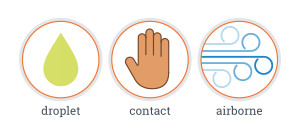
PRECAUTIONS
Chain of Infection
To help understand how illness or disease is spread, it is essential to know the components that help encourage the spread of infection. Called the chain of infection, these components consist of an infectious agent, reservoir, exit pathway, means of transmission, entry pathway, and susceptible host.
Infectious agent: The microbe or organism that causes the infection.
Reservoir: Where the agent resides while attempting to reproduce, infect the host or grow in numbers.
Portal of exit: How the agent leaves the reservoir to spread or attempt to spread to other humans or animals. This can be accomplished by sneezing or fluids from the nose, tears, or other fluid from the eyes, or by releasing urine, feces, or blood.
Mode of transmission: How the agent is transported from the reservoir to the host by four transmission methods.
Contact: This mode allows the transfer of the microorganism by what a person touches. It can also be an agent that touches the person.
Droplet: This mode transmits the agent to the eyes, nose, and mouth of the host.
Vector: This mode transmits the agent via animals or insects
Vehicle: This mode transmits the agent via contaminated food, water, or drugs.
Portal of entry: How the infectious agent enters the host’s body. It can be through an existing body opening such as the eyes, nose, or mouth, or an accidental opening such as a cut. A puncture for blood collection can also be an area where the infectious agents can enter the body.
Susceptible host: The person whose resistance to disease is lessened enough to allow the agent to cause the infection. This may include very young or very old patients, those with underlying illnesses, or who are undergoing medical treatment such as chemotherapy.
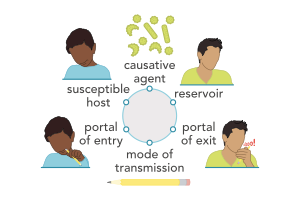
CHAIN OF INFECTION
Like a chain, every one of these links needs to be in place for infection to spread. Breaking one link can help reduce the spread of infection. One of the best ways to break the infection cycle is performing good hand hygiene before and after every patient or procedure involving bodily fluids. Other ways include increasing the immune system by eating well, exercising, confirming that all supplies chosen are not expired or opened. Proper use of PPE, sharps containers, and safety devices also help to reduce the risk of infection for the patient and phlebotomist.
Nosocomial Infection
Nosocomial infection: Sometimes a patient may come to a medical facility healthy or with another condition and may receive an infection in the hospital or other medical facility. This is known as a nosocomial infection, caused by either the facility personnel, supplies used while in the facility, or by the air or conditions in the building. To help prevent the spread of infections in all medical facilities, follow all PPE, hand hygiene, and surface cleansing requirements.
Personal Protective Equipment (PPE)
Each type of precaution requires different personal protective equipment (PPE). For standard precautions, the type and amount of PPE is determined by the kind of patient interaction and anticipated exposure to blood, body fluids, or other pathogens. For example, if performing a venipuncture, gloves are required, and only occasionally would a mask or face shield be necessary. But a different type of health care worker, such as a physician performing a surgical procedure, would use gloves, a gown, a face mask, and goggles.
When caring for a patient with contact precautions, a gown and gloves should be worn for every interaction with that patient. A mask should always be worn when caring for a patient with droplet precautions. It is recommended that those with airborne precautions be placed in a negative pressure room so the air is being exchanged often and gets exhausted directly outside versus moving through the facility. When caring for a patient with airborne precautions, an N95 mask or respirator should be put on before entering the room and kept on throughout the entire time, providing direct patient care to the patient in their room.
There is a specific order in which PPE must be applied and removed to keep health care workers safe and avoid contamination or disease transmission.
Order for applying (donning) PPE:
Gown: Cover the body from neck to knees, arms to wrists, and then wrap around the back. Fasten at the neck and waist.
Mask or respirator: Tie in the middle of head and neck or secure elastic around ears. Fit the flexible band to the bridge of the nose. Ensure that both the nose and mouth are covered at all times. Ensure it is snug to the face and below the chin. If wearing a respirator, ensure a fit check is done.
Goggles or face shield: Apply over the face and adjust as needed.
Gloves: Pull cuffs up to cover the wrist of the gown.
Order for removing (doffing) PPE:
Gloves: The outside of the gloves are contaminated. Grasp the palm area of one hand with the other gloved hand and peel off the first glove. Hold this glove in the hand still gloved. Then slide the fingers of the ungloved hand under the cuff of the gloved hand and peel off the second glove over the first glove. Discard in the trash.
Goggles or face shield: The outside is contaminated. Remove from the back by lifting.
Gown: The front and sleeves are contaminated. Untie or unfasten the gown, ensuring the sleeves do not touch the body. Pull the gown away from the neck and shoulders, turning the gown inside out. Fold or roll it into a ball and discard properly.
Mask or respirator: The front of the mask is contaminated. Grab the ties or elastics and remove without touching the front, then discard.
Wash hands using soap and water or an alcohol-based hand sanitizer immediately after removing PPE.
If at any point, in the process of removing PPE, the hands become contaminated, be sure to wash them immediately.
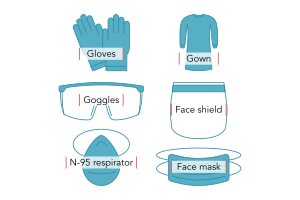
PPE
Fit Test for Respirators and Masks
Ensure a fit test is done through the employer’s occupational health department if working with patients placed under droplet precautions. A fit test checks that the mask or respirator worn seals appropriately to the face and that there are no gaps. This ensures that the mask or respirator provides the protection needed to keep health care workers safe and reduce transmission of pathogens.
Hygiene and Infection Control
Infection control is a set of procedures or policies to minimize or reduce the number of infectious pathogens spread. While precautions are one type of infection control, aseptic techniqueand hand hygiene play a vital role. Aseptic technique is a stricter standard used to minimize contamination of all pathogens. Things included in aseptic technique include maintaining equipment sterility and site cleanliness. It also includes using the proper PPE, adhering to standard precautions, and following appropriate hand hygiene. Ensuring that hands are clean before providing care to a patient and immediately following patient care can significantly reduce the spread of communicable pathogens or diseases.
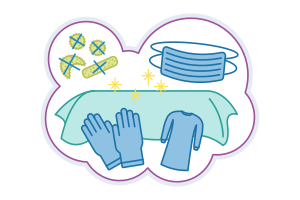
ASEPSIS
Hand hygiene can include using an alcohol-based hand sanitizer or soap and water. Alcohol-based hand sanitizer should never be used if the hands are visibly soiled. However, an alcohol-based hand sanitizer is preferred for cleaning hands when not visibly dirty because it kills harmful germs on the hands more effectively than soap. It is also easier and quicker to do while providing care, like moving between patients. It also is not as hard on or drying of the skin as soap and water. Outside of when the hands are visibly soiled, soap and water should be used before eating, after the restroom, and in caring for patients with C. difficile and norovirus. When washing with soap and water, follow the following steps to ensure complete and proper handwashing.
Wet hands with water.
Apply the recommended amount of soap to hands.
Rub hands together vigorously for at least 15 seconds, covering all areas of the hands and fingers.
Rinse the hands with water and use disposable towels to dry them. Then use a towel to turn off the sink faucet.
Avoid using hot water to prevent burning or drying the skin.
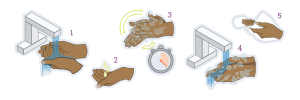
HANDWASHING
The education and training of health care personnel are crucial for infection control. Ensuring education, understanding, and acceptance of infection control processes can decrease exposure and infections among health care personnel. It can also encourage recognition and quick management of potential exposure to pathogens. Organization leaders must work with health care personnel to provide ongoing training and review of information when changes or updates occur.