Resonance
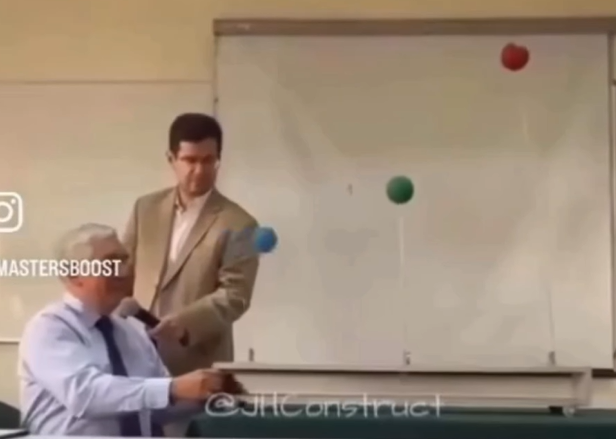
A resonant frequency demonstration shows how objects vibrate most powerfully at their natural frequency. Every system that can oscillate, from a swing to a wine glass to a bridge, has specific frequencies it naturally prefers. When you drive the system at exactly that frequency, energy accumulates with each cycle and the amplitude grows dramatically. Drive it at any other frequency and the motion stays small. This mismatch is why random pushes on a swing barely move it, but timed pushes at its natural rhythm build huge swings with minimal effort. The wine glass demonstration makes this visible. A glass has a natural frequency you can hear when you tap it. A singer or speaker producing sound at that exact pitch causes the rim to vibrate with growing intensity. If the amplitude gets large enough, the glass shatters, not because the sound is louder overall but because the frequency perfectly matches and energy keeps adding up in phase. Resonance tubes show the same principle with sound waves. A tuning fork vibrates at one set frequency, and an air column has resonant frequencies based on its length. Adjust the water level until the column length matches a resonant mode, and the sound suddenly amplifies as a standing wave forms. The effect disappears at non resonant lengths even though the fork vibrates identically. This phenomenon explains everything from why buildings collapse in earthquakes at certain frequencies to how musical instruments amplify specific notes. Resonance is the reason precise frequency matching creates outsized effects across physics and engineering.