Energy
Defenitions
Energy = The ability to make things happen. Measured in Joules (J)
Kinetic energy = Energy an object has because it is moving.
Potential energy = Stored energy.
Chemical potential energy = Energy stored in chemicals. E.g. Petrol, candle wax, chemicals in batteries.
Elastic potential energy = Energy stored in rubber and springs. E.g. rubber ball, rubber band, slinky.
Electrical energy = Energy flowing along wires. Electrical circuits.
Gravitational potential energy = Stored energy an object has when it is up high above the ground.
Light energy = Organized vibrational energy in a light wave. E.g. sunlight, torch light.
Sound energy = Organized vibrational energy that is in a sound wave.
Thermal energy = Disorganized (random) vibrational energy that atoms have (Heat).
Input energy = Energy put into a device of situation to cause change.
Output energy = Energy form(s) that come out of an energy transformation or situation.
Useful energy = Energy that has been produced in an energy transformation that was desirable.
Waste energy = Energy that has been produced in an energy transformation that was undesirable.
Energy efficiency = A percentage (%) representing what portion of the of the original energy has been converted into the new desirable form of energy.
Energy transfer = When energy is moved from one object onto another object(s).
Energy transformation = When an original form of energy is converted into different forms of energy.
Atom = Building block of matter. (Smallest particle of matter that has the properties of an element)
Electron = Negatively charged piece of an atom.
Charge = A characteristic of a material that expresses the extent to which it has more or fewer electrons than protons
Current = The rate of flow of charge in a circuit
Conductor = A material that permits the flow of electricity through it.
Insulator = A material that does not permit the flow of electricity through it.
Series circuit = A single path circuit
Parallel circuit = A circuit multiple path circuit
Electric Motor = A device that produces movement from electrical energy
Active Wire = A wire which carries electrons with energy
Neutral Wire = A wire which carries electrons with no energy
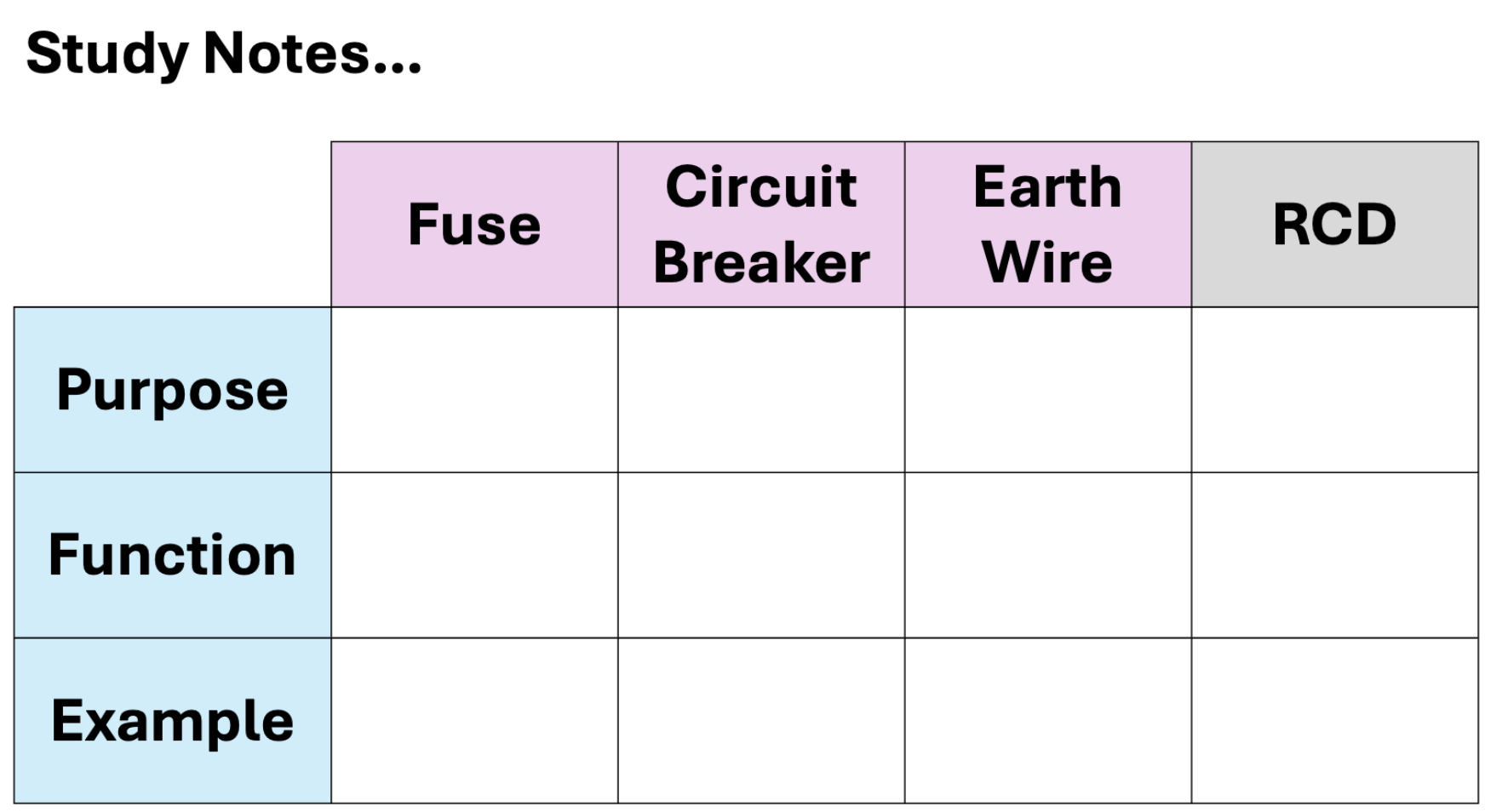
Earthed Wire = A wire which diverts electrons to the ground (rather than through the person)
Fuse = Thin wire that melts and breaks the circuit when too many electrons flow through it in a short period of time
Circuit breaker = A device which breaks the circuit when too many electrons flow through it in a short period of time
Earth Leakage Protection Device (or Safety Switch) = A device that breaks the circuit when it detects a different number of electrons travelling through the live/neutral wire in the same period of time
Double insulated = An appliance with two layers of insulation around the active wire
⚡ ENERGY & ELECTRICITY — NOTES THAT ACTUALLY WORK
🔋 1. Energy = “the ability to make things happen”
That’s it. That’s the whole idea.
Everything else is just types of energy or what energy is doing.
🧠 2. Two MAIN types (burn this into your brain)
🏃 Kinetic Energy = movement
If it’s moving, it has kinetic energy
Examples:
Running person
Rolling ball
Flowing water
👉 Memory trick:
“Kinetic = kinetic = moving chaos”
🪫 Potential Energy = stored energy
If it’s waiting to move, it has potential energy
Examples:
Stretched rubber band
Object held up high
Fuel before it burns
👉 Memory trick:
“Potential = has potential to do something later”
🔥 3. Types of Energy (group them or suffer)
Don’t memorise randomly. Group them:
📦 STORED ENERGY (Potential)
Chemical → stored in substances (fuel, batteries)
Elastic → stretched/squashed (rubber band)
Gravitational → height above ground
👉 Shortcut:
“CEG = stored energy gang”
🌊 MOVING / TRANSFER ENERGY
Electrical → energy moving through wires
Light → energy in light waves
Sound → energy in sound waves
Thermal → heat (random movement of particles)
👉 Shortcut:
“ELST = energy on the move”
🔄 4. Energy NEVER disappears (important)
Energy just:
Transfers (moves place)
Transforms (changes type)
🔁 Energy Transfer
Energy moves object → object
Example: bat hits ball
🔄 Energy Transformation
Energy changes form
Example:
Battery → electrical → light (torch)
👉 Core idea:
Energy in = Energy out (just different forms)
💀 5. Useful vs Waste Energy (real life is inefficient, like humans)
Useful energy = what you actually want
Waste energy = wasted (usually heat or sound)
Example:
Light bulb:
Useful → light
Waste → heat
📊 6. Efficiency (how “good” something is)
Measures how much useful energy you get
Always a percentage (%)
👉 Memory:
High efficiency = less wasted energy
⚛ 7. Atoms (tiny but important)
Everything = atoms
Inside atoms:
Electrons → negative charge ⚡
Movement of electrons = electricity
⚡ 8. Electricity Basics (don’t overcomplicate it)
Current
Flow of electrons
Basically: how fast charge moves
Charge
Whether something has more or fewer electrons
🔌 9. Conductors vs Insulators
Conductors
Let electricity flow
Example: metals
Insulators
Block electricity
Example: plastic, rubber
👉 Memory:
“Conductor = conducts (lets it pass)”
🔁 10. Circuits (this matters A LOT)
Series Circuit
ONE path
If one thing breaks → everything stops
👉 Think: Christmas lights dying all at once
Parallel Circuit
MULTIPLE paths
One breaks → others still work
👉 Think: normal house wiring
⚙ 11. Wires (this part saves lives, so maybe remember it)
Active wire → carries energy
Neutral wire → carries energy back
Earth wire → safety path to ground
🚨 12. Safety Devices (aka “don’t die” tech)
Fuse
Melts if too much current
Breaks circuit
Circuit Breaker
Switches off automatically
Safety Switch (ELPD)
Detects imbalance → shuts off
Double Insulated
Extra protection
No earth wire needed