Plant Cells
Plasma Membrane
barrier that separates inside of cell from environment
phospholipid bilayer
selectively permeable
Protein Receptors: use signal transduction to relay
Transport Proteins:
Channel proteins: form little tunnels in membrane to allow small molecules to pass quickly
Carrier Proteins: pick a molecule up on one side of the membrane and alter their shape to deposit it on the other side
Protoplast: everything inside cell minus nucleus and cell wall
Ribosomes
small structures in cells that help build proteins
made of Ribosomal RNA (rRNA) and proteins
rRNA and proteins are twisted together to form large and small subunits
come together to form a completed ribosome when the cell begins to make a protein
Protein Production
Transcription: mRNA reads DNA in nucleus, carries instructions to ribosome
Translation: ribosomes organize mRNA and other molecules needed to build proteins and assemble
Some organelles are only specific to plants: cell wall, plastids (incl. chloroplasts), large central vacuole, and plasmodesmata
Endomembrane System
Large network of membranes that helps construct proteins/lipids, package them, and sends them to the target destination
Endoplasmic Reticulum: set of folded membranes that begins at nucleus and extends into cytoplasm
Rough ER: studded with ribosomes that begin to make the protein then attach the proteins to the ER. After synthesis, the protein is packed by vesicles and sent to golgi apparatus.
Smooth ER: no attached ribosomes; produce lipids
Golgi Apparatus/Dictyosomes: stack of flattened membrane sacs
Vesicles
little sphere of membrane
Transport Vesicles: carry things around the cell
Lysosomes: contain digestive enzymes that break down molecules, organelles, and bacterial cells
Secretory Vesicles: bring materials to plasma membrane so they can be secreted by the cell
Peroxisomes
small organelles encircled by single membrane
break down lipids
Vacuoles
spheres of membrane differing from vesicles
used to dump wastes and store materials
up to 95% of cell volume
separated by membrane called tonoplast
Cytoskeleton
network of protein cables that function as:
Scaffolding: underlie membranes to provide shape and support
Movement of materials by vesicles and organelles along protein tracks
Movement of cells when found within the cilia and flagella
3 Types:
Microfilaments: made of protein Actin
involved in cell division, expansion, railroad tracks of vesicles/organelles
aid in cytoplasmic streaming (circulation)
help pinch cells in two during cell division
Microtubules: made of protein Tubulin
move chromosomes during cell division
railroad tracks
help organic formation of cell wall and determine the development of plant shape
Intermediate Filaments: made of various proteins to reinforce cellular structures
Chloroplasts
contain chlorophyll
green compartment organelle where photosynthesis occurs
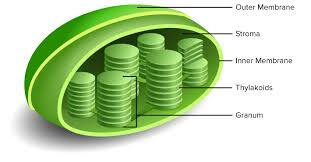
Thylakoid: little stacks of fluid-filled membranes
Stroma: fluid-filled interior
Granum: stack of thylakoids
Plastid: self-replicating organelles that are surrounded by double membrane and perform important chemical processes in plant cells
Types:
Proplastids (Eoplastids): small, colorless plastids that give rise to all types of plastids; found in seedlings and plant tissues that are unspecialized
Leucoplastids: colorless plastids that specialize in the synthesis and storage of important molecules
Amyloplastids: make and store starch. Found in roots and other starch storage tissues.
Elaioplasts (Oleoplasts): make and store oil. Found in tissues that provide support to developing pollen grains.
Proteinoplasts/proteoplasts/aleuroplasts: make and store proteins. Found in many seeds
Chromoplasts: red, orange, yellow that contain carotenoids. Found in flowers, fruit and leaves that are turning in the fall. They can be formed from chloroplasts, amyloplasts and proplastids.
Etioplasts: pale, yellowish plastids found in plant tissues growing in the dark. Develop into chloroplasts when exposed to light.
Mitochondria
site of cellular respiration where energy is released from food
double membrane
Intermembrane space: between the two membranes of the mitochondrion
Matrix: fluid-filled space inside inner membrane
Cell Walls and Extracellular Matrices
additional layers outside of plasma membrane that provide additional strength to cells and may attach cells together
Cell Walls: semi-rigid reinforcing layers that protect the cell
Extracellular Matrix (ECM): flexible layer formed around animal cells; made of long proteins (collagen) embedded in polysaccharide gel
plants form cell wall outside in
Plasmodesmata: little tunnels that pass through cell walls
Layers
Middle Lamella:
outermost layer that helps stick plant cells together
forms first when plants divide
thin, flexible layer made of sticky polysaccharides (pectin)
Primary Cell Wall: formed under middle lamella during and before active growth (cellulose)
Secondary Cell Wall: woody plants (lignin and cellulose)
'