Domain 2 Risk Treatment: Risk Response Options - Risk Frameworks
Risk Frameworks
Purpose and Importance of Risk Frameworks
Definition: Risk frameworks are structured compendiums of best practices compiled by industry experts who have identified effective and ineffective strategies over years of experience.
Usefulness:
They provide guidance for establishing new risk management functions.
They are invaluable for assessing existing functions against established best practices.
Starting Point:
Creating a risk management function from scratch is challenging; utilizing a pre-existing framework is recommended to ensure comprehensive coverage of risks and mitigation strategies.
Steps to Establish a Risk Framework
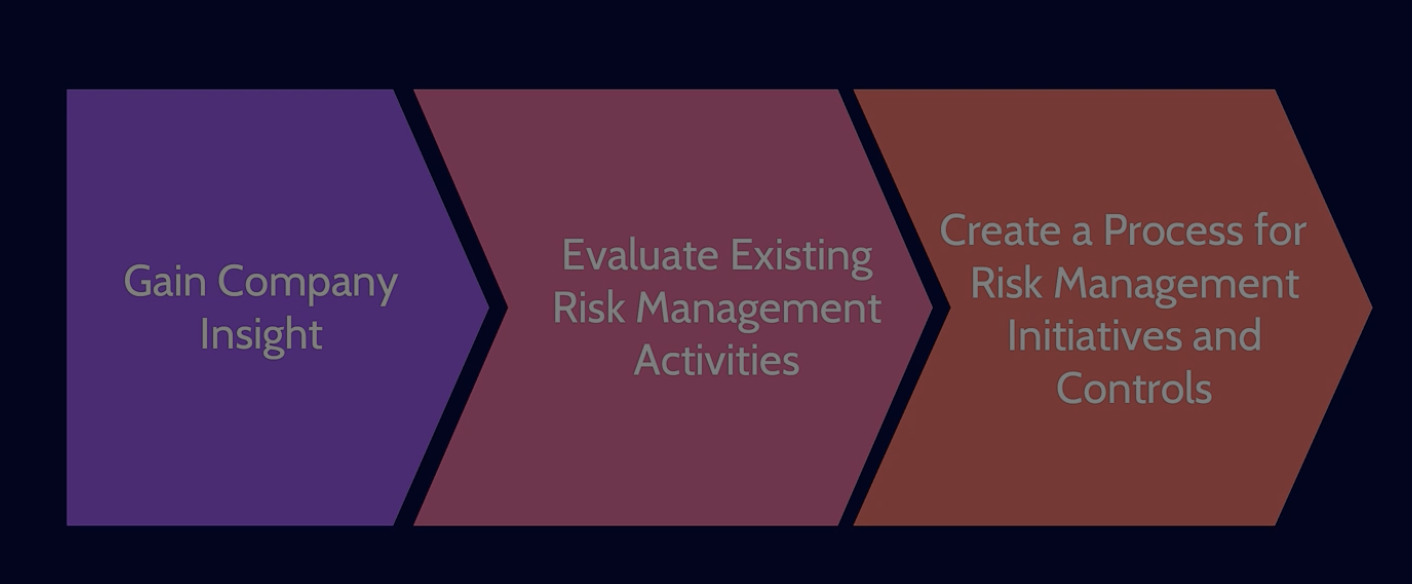
Understand Organizational Context
Assess the industry dynamics, external factors, and regulatory compliance requirements (e.g., HIPAA, GDPR).
Identify obligations to clients, including contractual requirements (e.g., certification like ISO 27001).
A clear understanding of the environment supports the selection of the appropriate framework.
Evaluate Current Risk Management Activities
Determine if a risk management framework is already established or if new strategies need to be implemented.
Perform a gap assessment to identify any existing framework's strengths and weaknesses.
Implement Framework and Controls
Follow a sequential process to implement the chosen framework and deploy the associated controls.
Overview of Risk Management Frameworks
Key Frameworks to Know
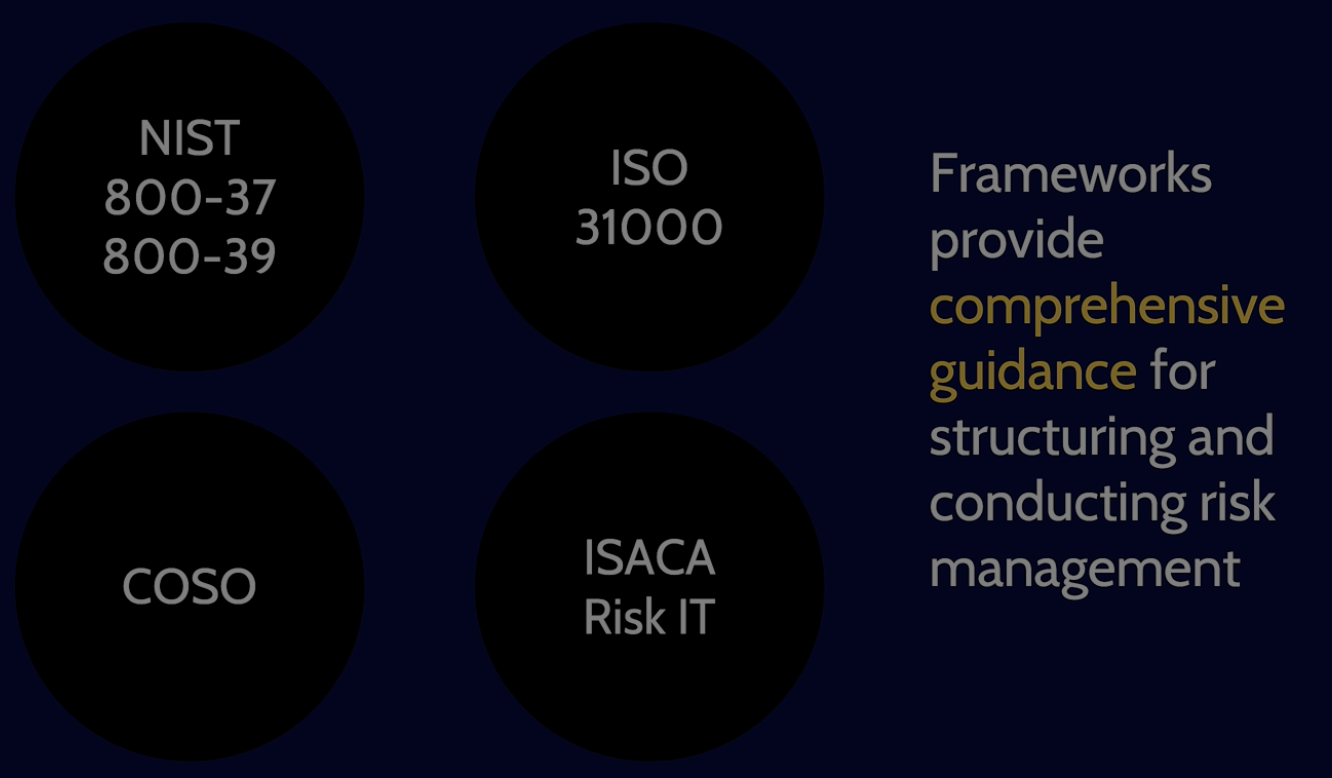
NIST 800-37
NIST 800-39
ISO 31000
COSO
ISACA Risk IT
Important Distinction:
NIST 800-37 focuses on tactical aspects (more detailed and operational).
NIST 800-39 provides a higher-level strategic view.
NIST 800-37 - Risk Management Framework (RMF)
Steps in the RMF
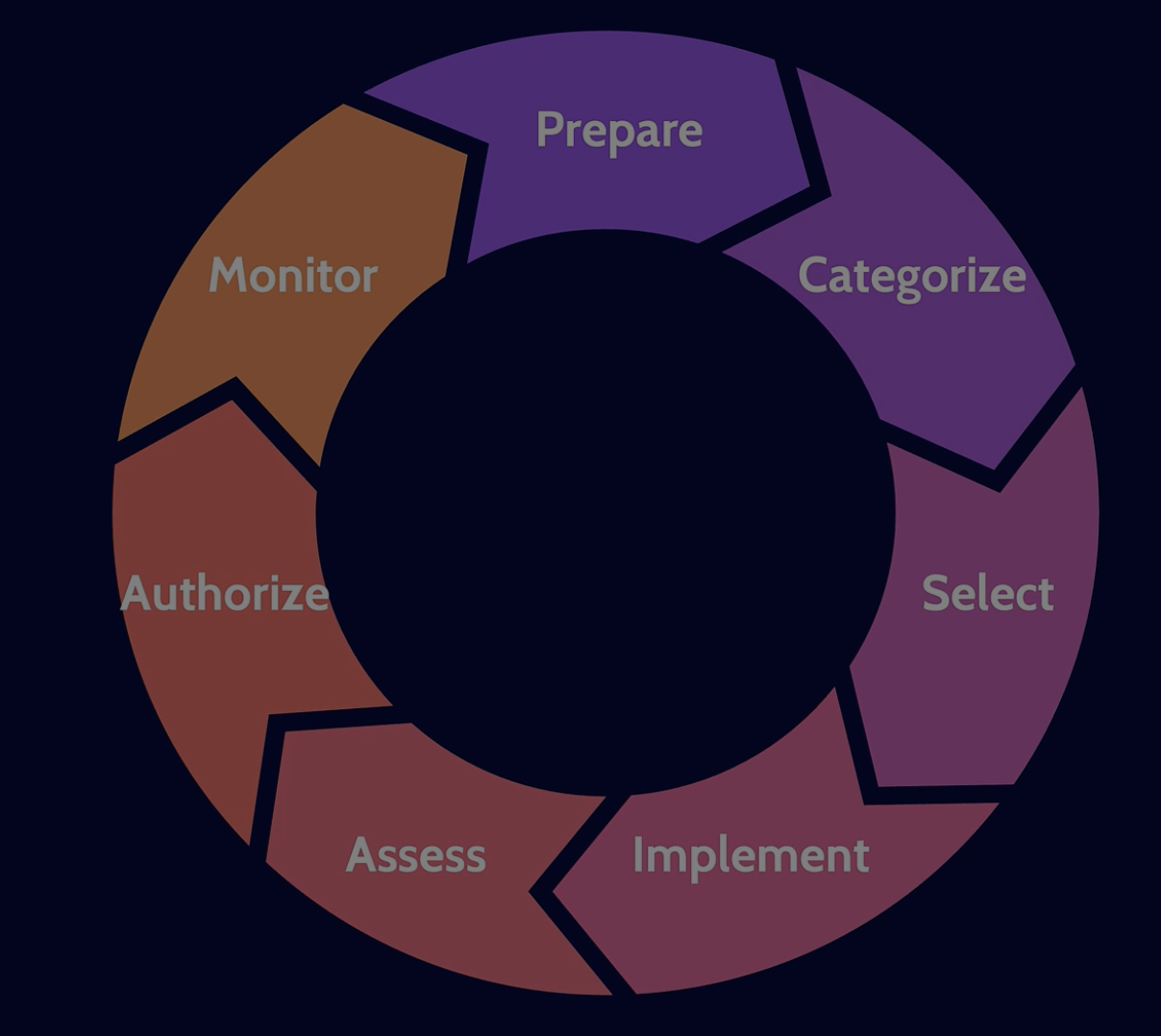
Prepare
Develop policies and establish a risk management function prior to execution.
Categorize
Identify risks associated with specific systems.
Note: This step might be misleadingly named; its primary focus is risk identification.
Select
Choose appropriate controls to mitigate identified risks from the categorization step.
Implement
Execute the selected mitigation controls in the organization.
Assess
Evaluate the effectiveness of the implemented controls in mitigating risks.
Authorize
The system owner makes the decision based on the assessment results whether to allow the system to go into production.
Monitor
Continuous monitoring is essential to adapt to changing risks and environments.
Updating controls as necessary ensures ongoing protection against evolving threats.
Authorization Decision
Responsibility: It is crucial that the system owner, the individual accountable for the system, makes the authorization decision based on the risk assessment outcomes.
Risk Environments
Internal and External Risks:
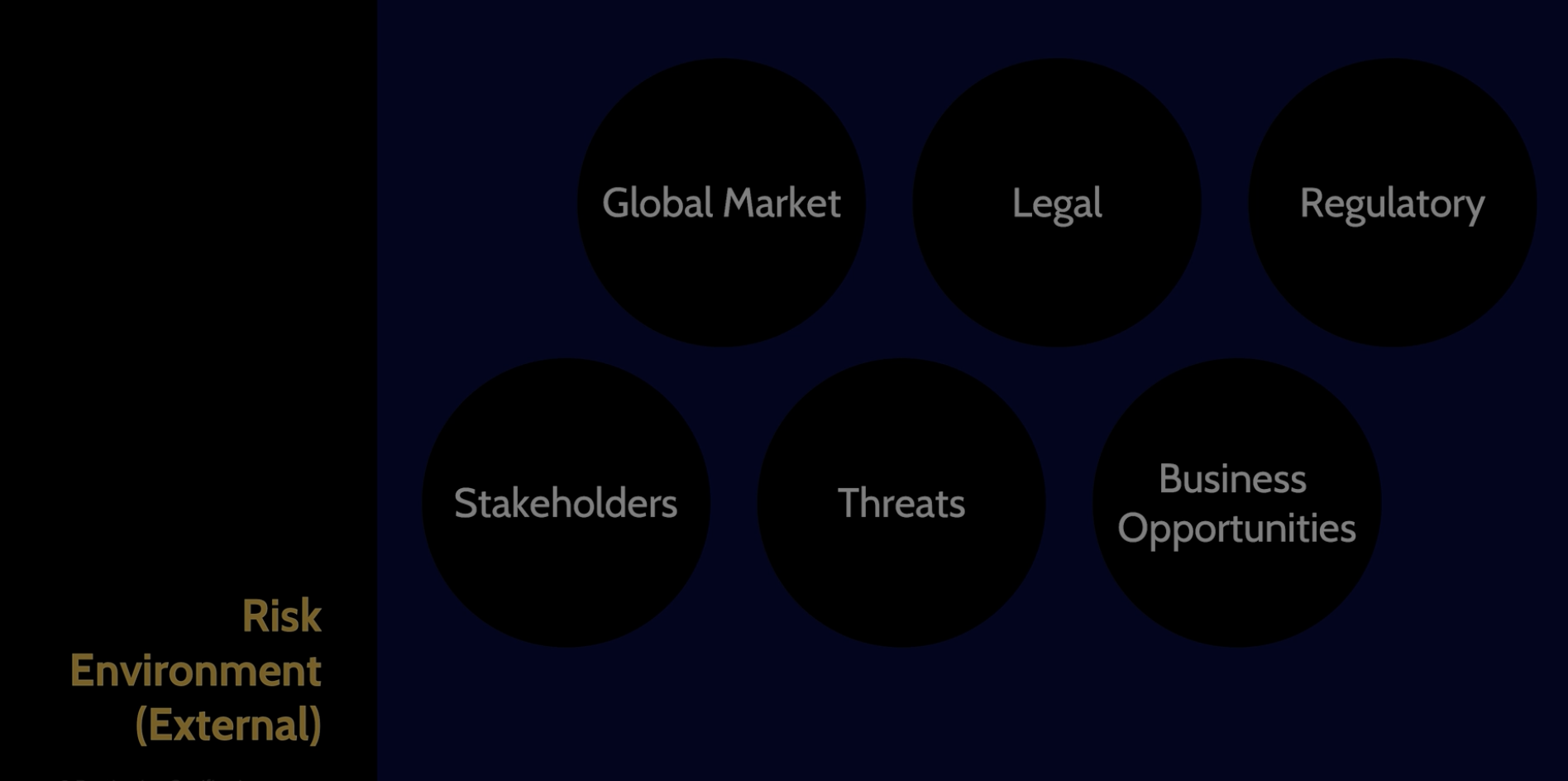
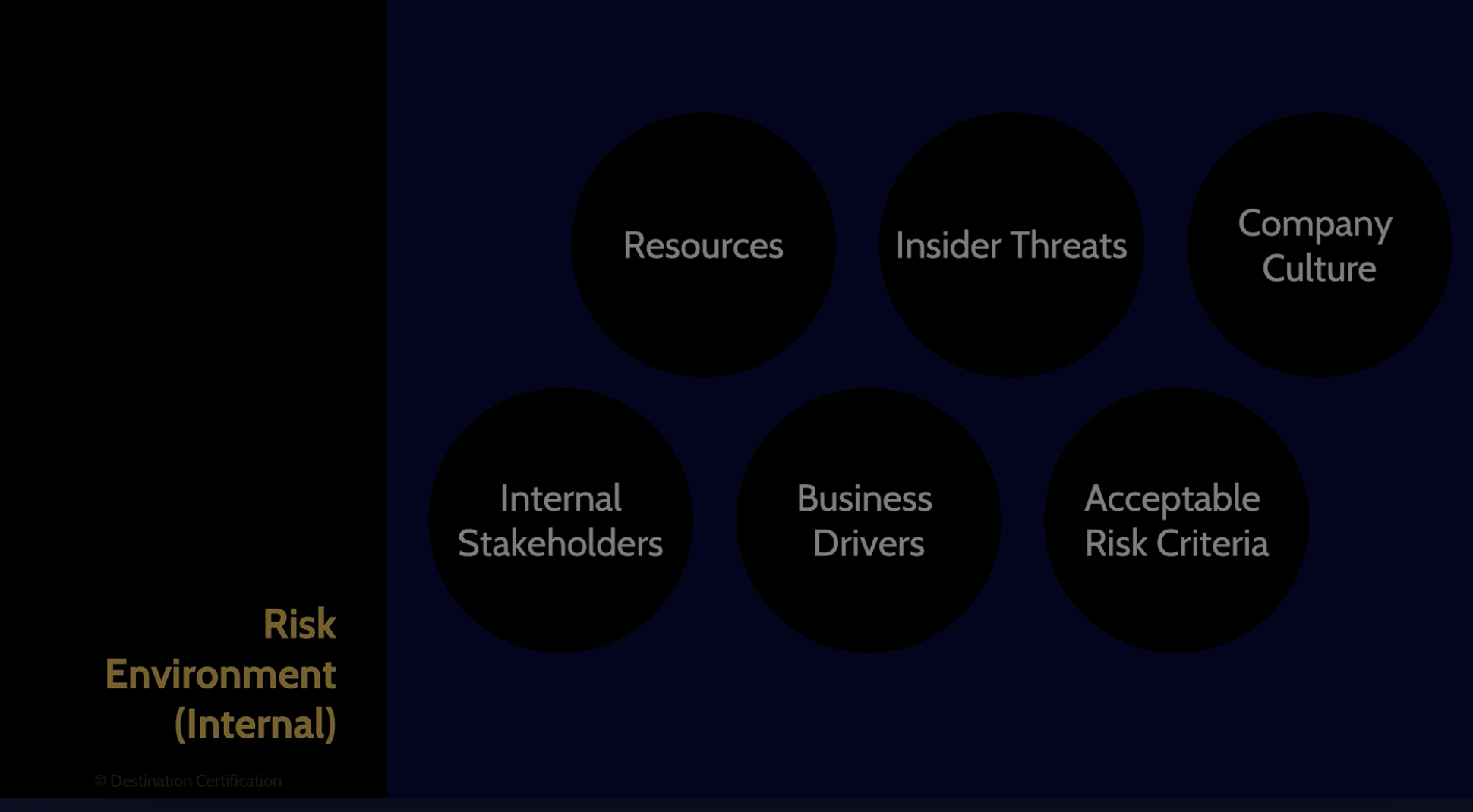
The frameworks can be applied to evaluate both internal (e.g., insider threats) and external risks (e.g., legal compliance).
Example of Internal Risk: Insider threat.
Organizations such as Google, Facebook, and Apple establish teams focused on identifying and mitigating insider threats.
Real-world example: UBS incident involving an employee's dissatisfaction over a bonus led to significant organizational damage, costing millions in losses due to insider threats.
Example of External Risk: Regulatory frameworks such as GDPR have substantial implications.
Companies like Google and Facebook faced immediate legal challenges post-GDPR implementation, highlighting the importance of adapting risk frameworks to address regulatory compliance proactively.
Conclusion
Framework Selection: As the risk landscape evolves, continually engaging with various organizational teams (legal, compliance) and regularly updating risk assessments and frameworks becomes essential for effective risk management.