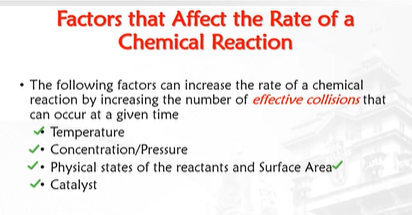
molecular polarity & collision theory
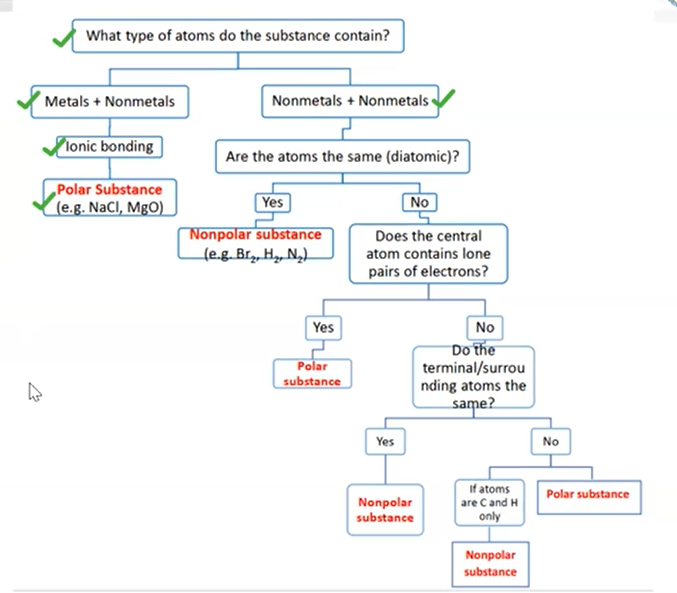
polar substance
strong attraction between the molecules
partially positive and negative ends
nonpolar substance
attraction is minimal
no positive or negative ends
dipole moments - positive end and negative end
COLLISION THEORY
atoms, ions, and molecules must collide in order to react
reaction rates differ for different reactions
not all collisions results to chemical reaction
proposed by max trauts (german) in 1916 and william lewis (british) in 1918
states that the reacting particles can form products when they collide with one another provided those collisions have enough kinetic energy and the correct orientation
what determines if a collision is successful?
must have enough energy (speed or KE)
lack of necessary KE may collide, but particles will simply bounce off one another unchanged
minimum amount of energy is called (Ea)
(Ea) breaks the existing bonds and form new bonds
must collide at the correct angles