breast milk
breast anatomy:
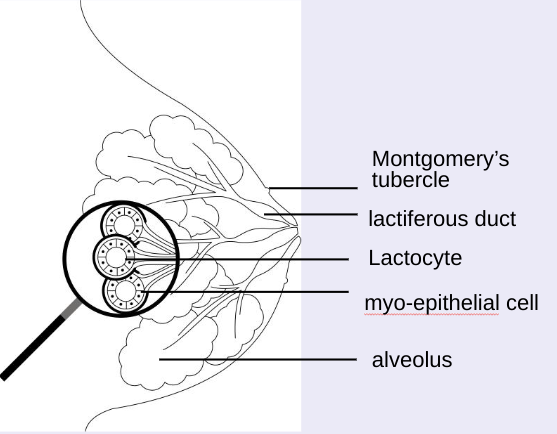
montgomery’s tubercles- secrete sebum to help lubricate nipple while breast feeding
nipple- sensitive, erectile structure that contains smooth muscle/ collagen/ elastic tissue. place where breast milk is expelled from
areola- darker area around nipple, gets darker in oregnancy to help baby locate nipple when breast feeding.
milk produced in alveoli
alveoli form clusters- lobules and lobules for lobes
milk transported via lactiferous duct.
alveolus:
lactocyte cell line inside of alveoli thhat produce milk
milk ejected from lumen of alveolus
surrounding capillaries allow componunts of blod to be secreated as well
myophelial cells contract due to oxytocin and push milk into duct

mammogenesis:
breast development happens at 4 weeks of fetus growth
by 12-16 weeks fetus developed nipple and areola.
in puberty progesterone and oestrogen levels increse and cause the growth of the alveoli/ nipple/ areolas and lactiferous ducts
week 6 pregnancy-
oestrogen cause lactiferous ducts to grow
progesterone and prolactin and human placenta lactogen (HPL) causes the alveoli to increase in size
common symptoms include breast tingling/ tenderness or heaviness.
week 12 pregnancy-
areola appear darker
montgomery tubercules begin to secrete sebum to protect nipple
week 16 pregnancy-
first breastmilk produced due to (HPL) and prolactin. procces called lactogenesis 1
at birth-
birth of placenta cause decrease in HPL and prolactin-inhibiting factors, cause breast to prep for ejection of breastmilk for baby- lactogenesis 2
when baby latches onto mum causes colostrum to be secreated.
postnatal 3-5 days-
colostrum develops into milk
often large increase in breast size
hormones involved:
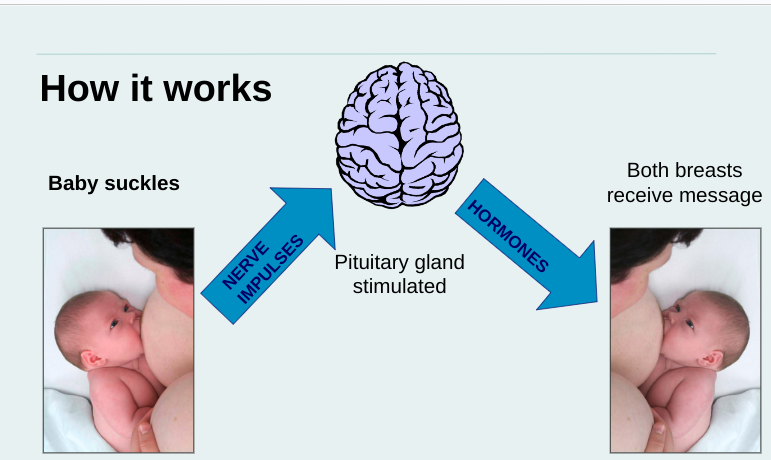
prolactin- main hormone in milk production, triggered by touch, stimulate mothering behaviour
human placental lactogen (HPL)- released by placenta, encorage grpwth of breast tissue and milk production in pregnancy
oestrogen- promote growth and development of breast tissue, stops milk production in pregnancy
oxytocin- contracts myoepithelial cells to eject milk from alveoli
progesterone- promote growth and development of breast tissue growth, stop milk production in pregnancy
prolactin-inhibiting factor (PIF/ FIL)- stops release of prolactin
lactogenesis 1:
happen in week 16 of pregnancy
lactocytes start producing milk due to increase in hormones
happens regardless if woman wishes to breastfeed or not
full milk production suppressed by oestrogen and progesterone
lactogenesis 2:
happens post birth
prolactin-inhibiting factor (PIF)/ progesterone/ oestrogen/ human placental lactogen (HPL) all decrease after borth
prolactin receptors open when placenta delivered- cause milk production
skin-to-skin contact promote oxytocin- promote milk production
lactogenesis 3:
once baby born and start of breastfeeding milk production stop being only controlled by endocrine and nervous system
endocrine and nervous system share milk production
feedback inhibitor of lactation (FIL) secreted by lactocytes when lumin is full- stops milk production
if milk not emptied from breat FIL produce more milk
regular draining of breast- essential for breastfeeding succesfully
if fetal loss occur woman adviced not stimulate nipple- stop breastmilk production
recommendations with breastfeeding:
breastmilk should be part of diet until 2 years old
exclusive breastfeeding for first 6 months
what breastmilk contains:
hormones
enzymes
white cells
antibodies
transfer factor
bindus factor
anti-inflammiroty molecules
colostrum:
first breastmilk produced
production starts in 16 weeks pregnant
continues to be produced 3-4 days postpartum
is thick/ yellow and produced in small quantities
first feed is usually 5ml as babys kidneys are small and colostrum is only milk being produced
easy for newborn to digest
helps baby empty bowels
large amounts of nutrience- concentrated
contains antibodies and white blood cells to help w immune system
contains anti-inflammatory properties and probiotics for baby gut and fight pathogens
contains hormones- insulin/ thyroid-stimulating hormone (TSH)/ growth factors


mature breastmilk:
produced around 3-4 days
large qualtities produced in
nurtience in milk:
fats:
main source of enerdy
long-chain fatty acids- support eye and brain development
triglycerides easily digestable
protien:
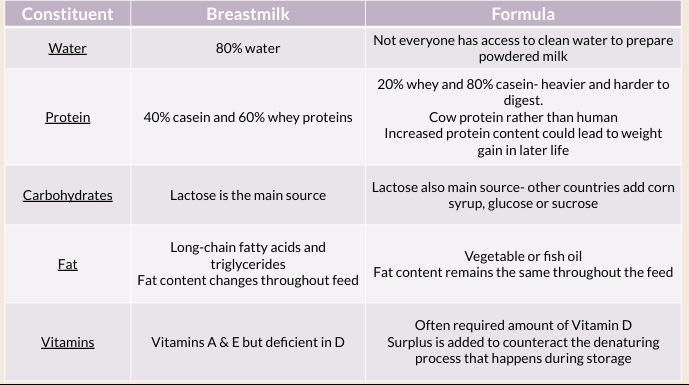
40% casein/ 60% whey protien
casein help transport calcium and phospherate from milk
whey forms curdles in stomach- easy to digest
promote good bacteria growth in stomach
prebiotics:
promote good bacteria growth in stomach
reduce PH of gut- harmful to bacteria+ cant grow
carbs:
lactose- main carb and easily broken into glucose
lactose aids brain development and growth of good gut bacteria
vitamins:
vitamin A
Vitamin E
vitamin D supplimentation needed for breastfeeding mothers
iron:
levels lower than formula milk but more bio-available in breastmilk than formula
immunoglobulins_
maternal antibodies contained in milk
new antibodies produces and transfered though milk- response to pathogens
breastmilk VS formula milk