CH.12 | PLC SUBROUTINE FUNCTIONS
INTRODUCTION
Subroutines
programs that contain additional ladder logic diagram files that work with the main ladder logic diagram.
Execution in a PLC program scan depends on the state of an input device or the result of a compare instruction.
Placed in Program files 3 through 255 (SBR3 - SBR255)
Number and size restricted by PLC memory.
12.3 RETURN FROM SUBROUTINE
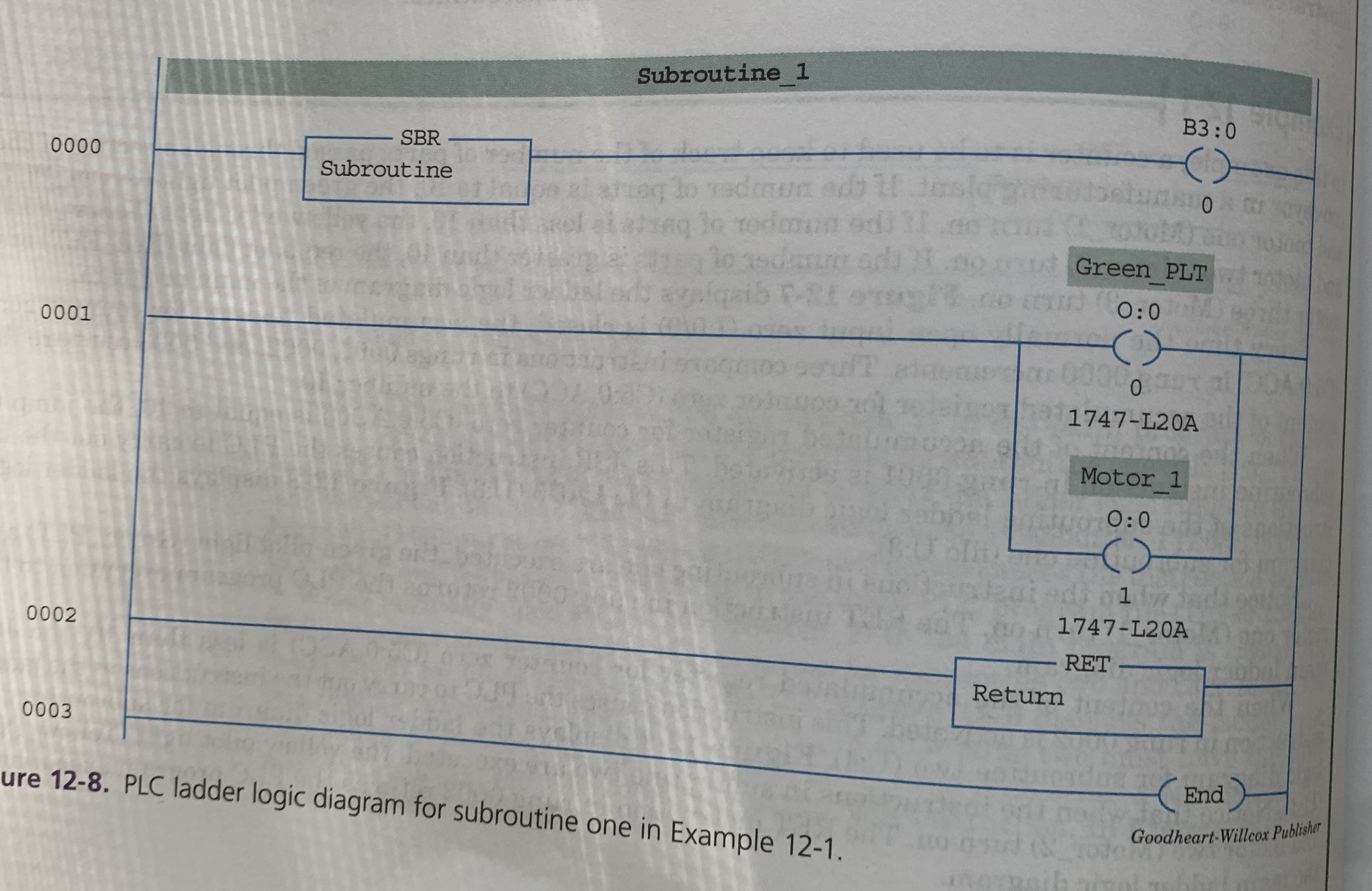
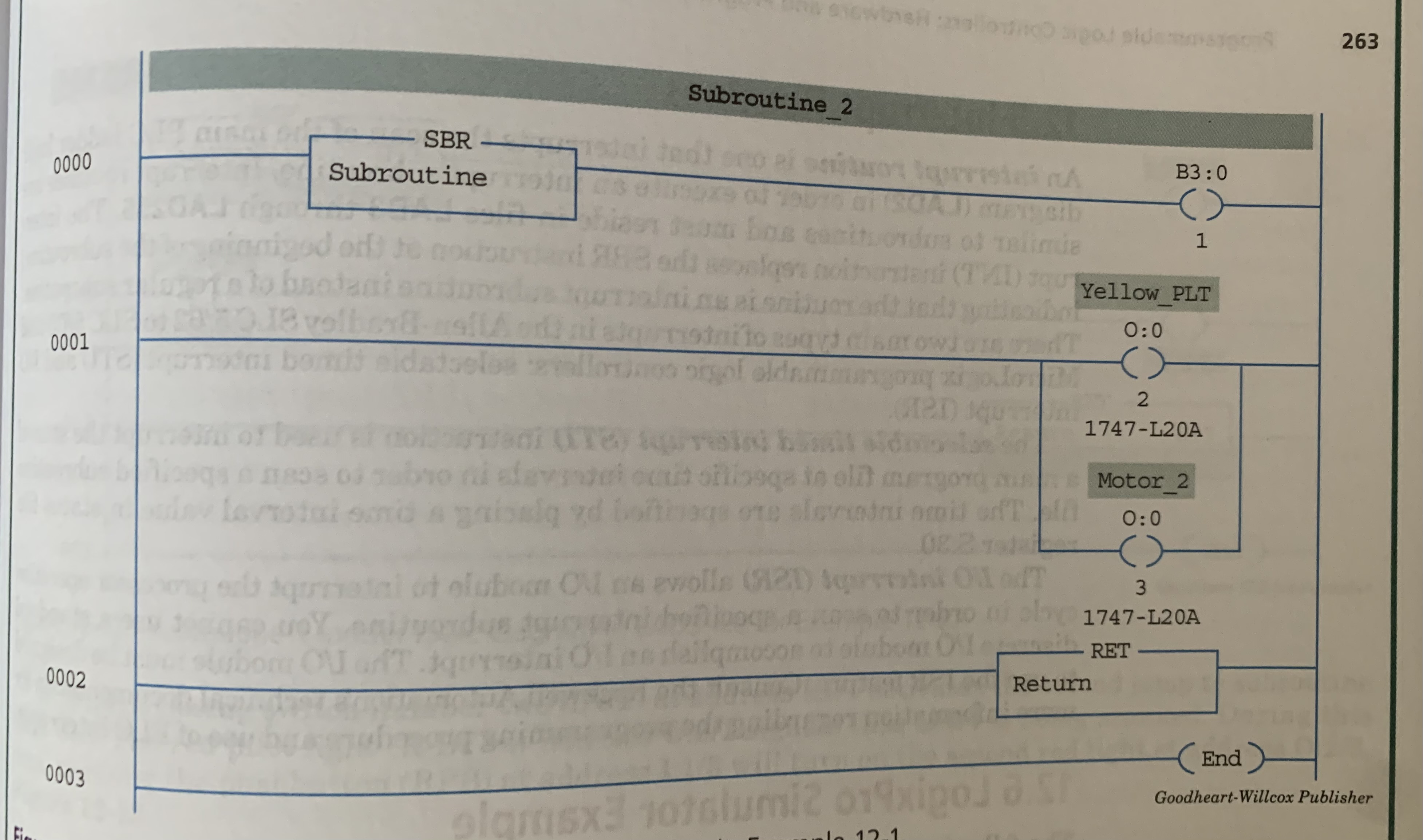
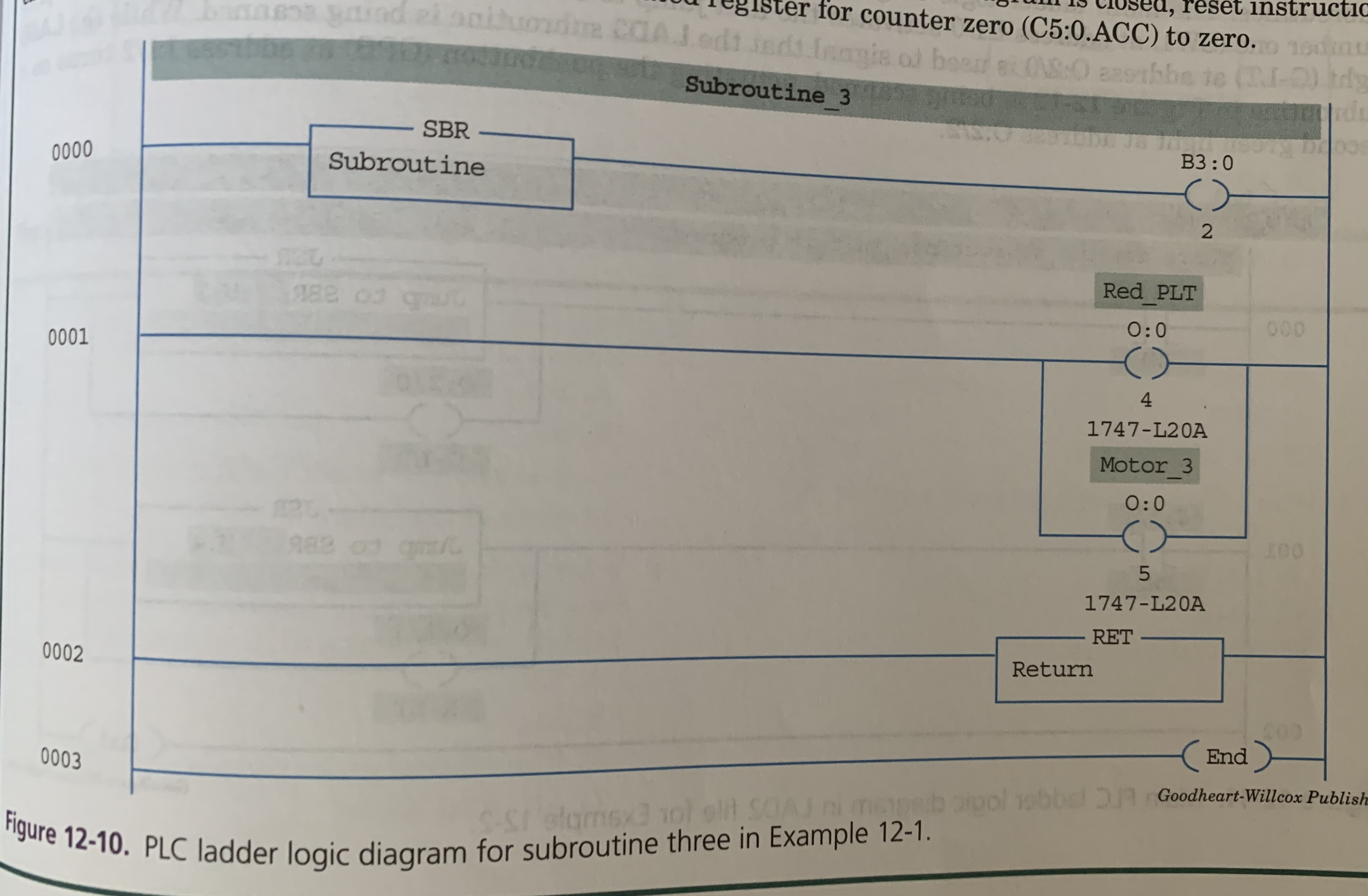
First rung must have SBR instruction, which indicates this program represents a subroutine
SBR must be connected to an OTE like B3:0.
Unless stated otherwise, using internal bits is recommended so that the limited # of outputs isn’t wasted.
The Return (RET) Instruction causes the instruction pointer to go back and point to the next rung in the main PLC program file.
SBR file must have a RET instruction.
12.4 SUBROUTINE APPLICATIONS
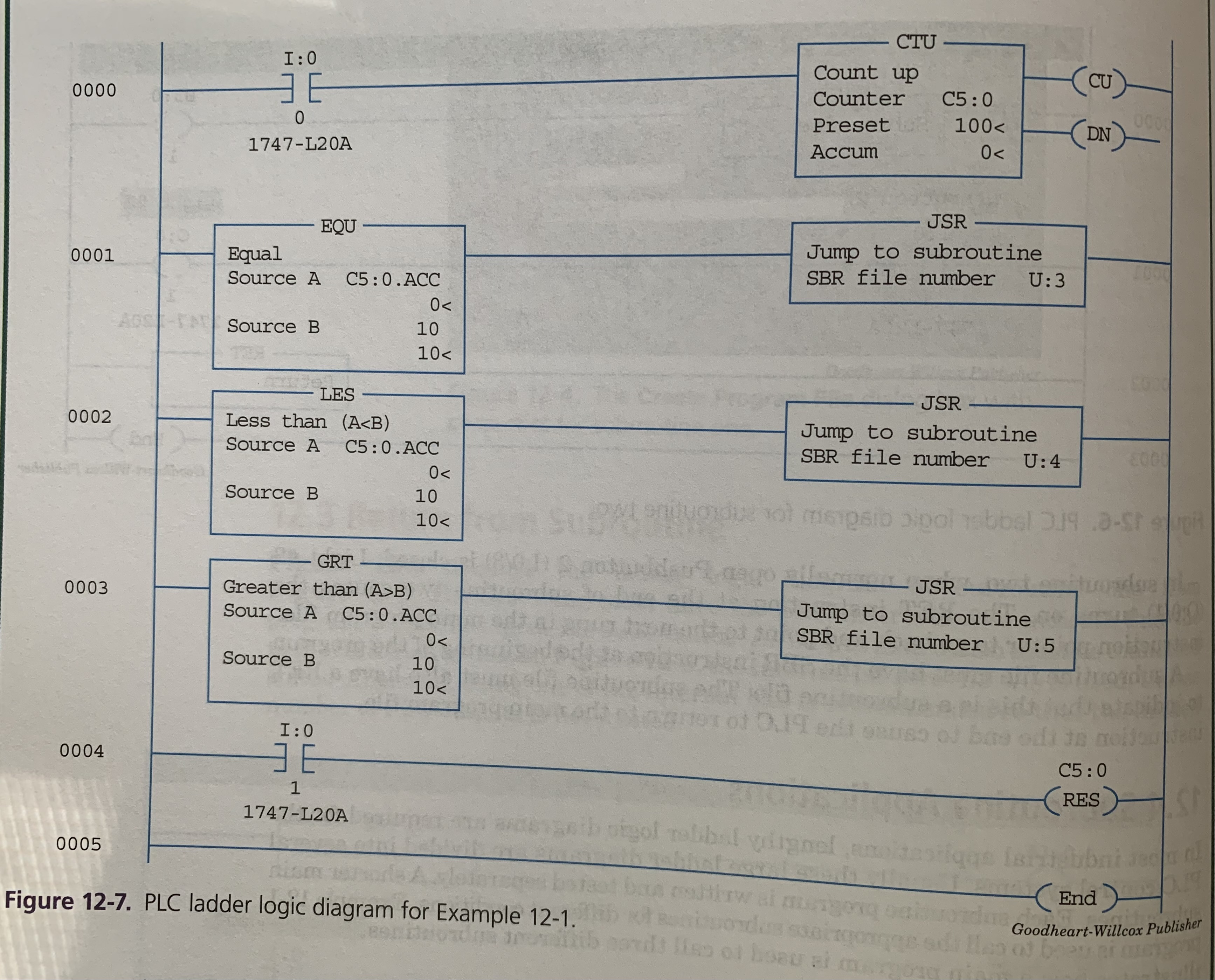
In most industrial applications
Lengthy LLDs are required
Usually divided into several SBR files
Each SBR is written and tested separately.
A shorter Main program used to call SBR for different conditions.
12.5 INTERRUPT ROUTINES
Interupt Routine
is one that interrupts the scan of the main PLC ladder logic diagram (LAD2) in order to execute an interrupt subroutine.
Similar to SBR and must reside in LAD3-LAD255
INT instruction replaces SBR at the beginning of SBR, indicating Interrupt Subroutine.
Two Types
Selectable Timed Interrupt (STI)
Used to interrupt the scan of a main program file at specific time intervals in order to scan a specified subroutine file.
Time intervals are specified by placing a time interval value in Status file register S:30.
I/O Interrupt (ISR)
Allows an I/O module to interrupt the processor operation cycle in order to scan a specified interrupt subroutine.
CANNOT use a standard discrete I/O module to accomplish I/O interrupt.
Module must be designed for ISR features.